

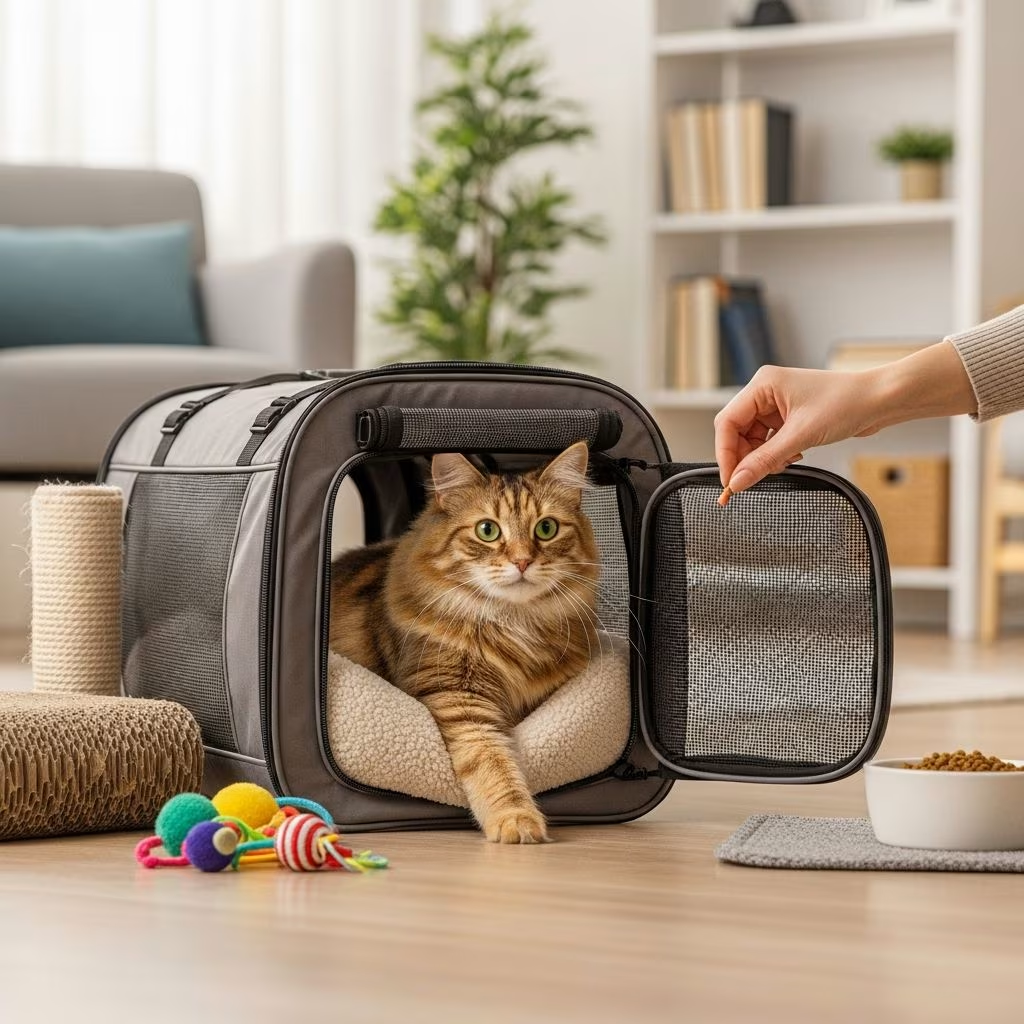
Many cat owners face the daunting task of convincing their pets to enter a carrier without drama. This guide provides a complete roadmap to turn that carrier into a welcoming haven, using science-backed positive reinforcement techniques. By following these methods, you’ll build your cat’s confidence, minimize stress, and prepare them for vet appointments, emergencies, or fun outings.
Why Carrier Training Matters for Your Cat’s Well-Being
Carriers are essential for safe transport, yet most cats associate them with fear due to past vet trips. Proper training shifts this mindset, promoting calmer travels and better health outcomes. According to veterinary experts, acclimating cats to carriers reduces anxiety indicators like vocalizing or hiding, making medical care more effective. Organizations like the San Diego Humane Society emphasize that gradual exposure prevents force-related trauma, fostering trust between pet and owner.
Neglecting this step can lead to injuries during rushed scrambles or heightened stress that suppresses immunity. Invest time now for lifelong benefits: safer road trips, easier evacuations, and a happier cat who views the carrier as a cozy retreat.
Selecting the Perfect Carrier for Your Feline Companion
Choosing the right carrier sets the foundation for success. Opt for one that’s spacious enough for your cat to stand, turn, and stretch comfortably—typically 1.5 times their length. Hard-sided models offer durability for car use, while soft-sided ones provide portability for walks.
| Carrier Type | Best For | Pros | Cons |
|---|---|---|---|
| Hard-Sided | Car travel, vets | Secure, easy to clean, stable | Bulkier, heavier |
| Soft-Sided | Airline, short trips | Lightweight, foldable | Less secure for escape artists |
| Backpack | Hiking, urban strolls | Hands-free, ventilated | Not ideal for cars |
| Sling | Quick errands | Cozy, close contact | Limited for larger cats |
Consider your cat’s size, temperament, and travel needs. Test stability by shaking it gently; it should remain upright. Line it with familiar bedding to absorb scents and add familiarity.
Preparing Your Home for Seamless Training Sessions
Transform your living space into a training hub. Place the carrier in a quiet, high-traffic area where your cat lounges daily, like near their favorite window perch. Prop the door open or remove it entirely to eliminate slamming risks.
Stock up on high-value rewards: smelly treats, pureed food, or interactive toys. Sessions should last 1-2 minutes, multiple times daily, ending on a high note. Track progress in a journal noting reactions and milestones to adjust pacing.
- Essential Supplies: High-reward treats, clicker (optional for precise marking), soft towel for covering, familiar blanket.
- Environment Tips: Minimize distractions, ensure escape routes, observe body language for stress signals like ear pinning or tail thrashing.
Phase 1: Building Positive Associations from Afar
Start slow to spark curiosity. Leave the carrier out 24/7 as a neutral fixture. Toss treats nearby whenever your cat glances its way, progressing to closer proximity without pressure.
This classical conditioning pairs the carrier’s sight with joy. If they sniff or paw it, jackpot with extra treats inside beforehand. Freedom to approach or retreat builds voluntary interest, often within days.
“Giving cats choice prevents learned helplessness, key to long-term comfort.” – Adapted from behaviorist insights.
Phase 2: Encouraging Voluntary Entry
Once curious, use shaping: reward micro-steps like peeking in, then front paw placement, building to full entry. Place irresistible lures like tuna inside.
Demonstrate enthusiasm by sitting nearby calmly. Sessions end when they enter willingly, jackpotting profusely. Most cats catch on in 3-7 sessions, eagerly anticipating rewards.
Phase 3: Mastering the Door and Lid Mechanics
Reattach the door, practicing open-close sounds paired with treats. Start with brief latches (1 second), rewarding calm stays, gradually extending durations.
- Squeeze latch while tossing treats from afar.
- Close door briefly, feed through gaps.
- Latch for seconds, then release with praise.
- Repeat until 30+ seconds without fuss.
For top-loaders, lower the lid slowly over a relaxed cat, treating continuously before lifting off. Watch for freeze responses; regress if needed.
Phase 4: Introducing Motion and Handling
Gently lift the loaded carrier, holding from the base for stability. Rock side-to-side, then carry short distances around the room, treating liberally.
Progress to hallways, rewarding post-lift calm. Associate movement with positivity to counterbalance vet memories. Pro tip: Cover with a breathable blanket during practice drives to muffle stimuli.
Phase 5: Road-Ready Car Rides
Begin with engine idling, treats flowing. Short drives (2-3 blocks) end at parks with play, decoupling carrier from negatives. Gradually extend to 10-15 minutes.
Secure carrier on flat seats with straps. Practice bi-weekly to maintain skills, varying destinations for positive variety.
Advanced Techniques for Stubborn or Rescued Cats
For trauma histories, start with a new carrier to erase bad scents. Use pheromone sprays or familiar litter inside. Double up rewards during plateaus.
Clicker training sharpens precision: click for desired actions, follow with treats. For multi-cat homes, train individually to avoid competition.
Common Hurdles and Proven Fixes
- Hissing at Door Sounds: Desensitize by clicking latch at distance, pairing with meals.
- Bolting Out: Shorten sessions, lift out gently instead of chasing.
- No Interest: Upgrade treats to meat baby food; hunger drives motivation.
- Motion Panic: More stationary lifts before driving.
Patience reigns; regress steps freely. Full proficiency takes 2-6 weeks.
Real-World Applications Beyond the Vet
Trained cats enjoy boarding, grooming, or vacations stress-free. Emergency readiness skyrockets—grab-and-go without wrestling. Occasional joyrides reinforce positivity.
Frequently Asked Questions (FAQs)
How long does carrier training take?
Varies by cat; 1-6 weeks with daily short sessions. Past experiences influence speed.
What if my cat hates treats?
Try toys, play, or affection. Identify ultimate motivators through observation.
Can kittens be trained this way?
Absolutely—earlier is easier, preventing aversion formation.
Is force ever okay?
Avoid it; erodes trust. Use towels for rare emergencies, then retrain immediately.
How often to practice post-training?
Monthly short trips keep skills sharp without overexposure.
Long-Term Maintenance for Lifelong Comfort
Rotate carriers if needed, refresh linens weekly. Periodic refreshers prevent regression. Celebrate milestones—your bond strengthens through this shared success.
References
- Training Tips: Carrier Training Cats — San Diego Humane Society. 2023. https://sdhumane.org/resources/training-tips-carrier-training-cats/
- Cat Carrier Training Simplified — Insight Animal Behavior Services. 2023. https://www.insightfulanimals.com/cat-carrier-training-simplified
- How To Get Your Cat Used to Their Carrier — PetMD. 2024-02-15. https://www.petmd.com/cat/general-health/how-to-get-your-cat-used-to-their-carrier
- Teaching Your Cat to Ride in a Carrier — ASPCApro. 2020-06. https://www.aspcapro.org/sites/default/files/resource/downloads/2020-2020-06/aspca-teaching-cats-to-ride-in-carriers.pdf
- Teach Your Cat to Love the Carrier — Wisconsin Humane Society. 2023. https://www.wihumane.org/behavior/ask-the-experts/cat-behavior/teach-your-cat-to-love-the-carrier



