
Cat Bunny Kicks Explained
Discover the instincts behind your cat's powerful bunny kicks and learn safe ways to handle this natural behavior.
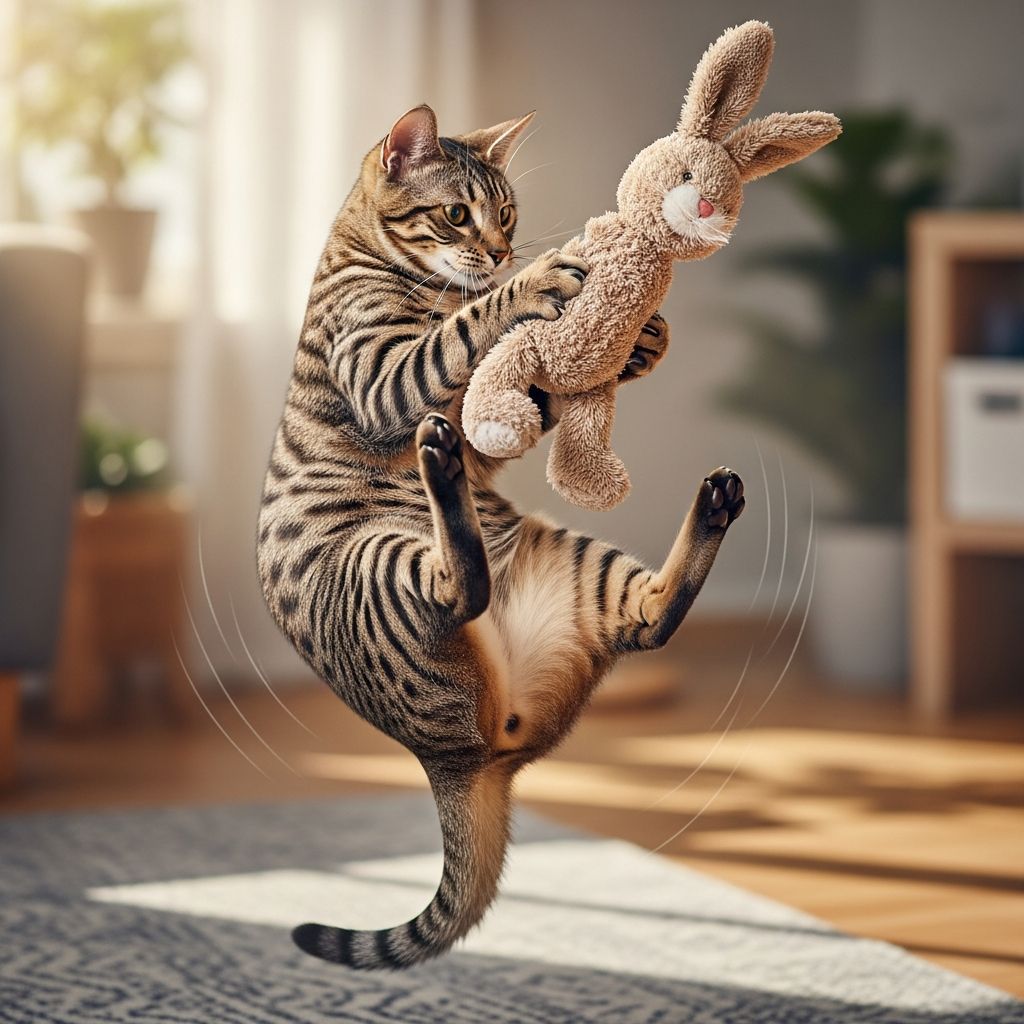
Many cat owners experience the sudden surprise of a bunny kick during play or petting sessions. This behavior involves a cat grabbing with its front paws and rapidly kicking with powerful hind legs, mimicking a rabbit’s thump. Rooted in instinct, it serves multiple purposes in a cat’s life.
The Instinctive Origins of Bunny Kicking
Cats descend from skilled predators, and bunny kicking is a key part of their ancestral toolkit. In the wild, this move helps secure prey or fend off threats. Domestic cats retain these behaviors, even in comfortable homes.
- Hunting Simulation: Cats use bunny kicks to ‘subdue’ toys, practicing the final stages of a hunt where they hold down captured prey.
- Defensive Strategy: When on their back, cats expose their belly—a vulnerable spot—but counter with kicks to protect vital organs.
- Play Development: Kittens learn it through roughhousing with siblings, building strength and coordination.
Common Scenarios Triggering Bunny Kicks
Understanding contexts helps predict and manage this action. It often arises during interactive play or when boundaries are tested.
| Scenario | Triggers | Body Language Signs |
|---|---|---|
| Playtime with Toys | Chasing, pouncing on stuffed animals | Relaxed ears, playful tail swish |
| Petting Sessions | Belly rubs, prolonged stroking | Tail flicking, ear twitching |
| Interactions with Other Cats | Mock fights, territory disputes | Arched back, dilated pupils |
| Stressful Situations | Loud noises, unfamiliar people | Flattened ears, hissing |
Overstimulation is frequent during human interaction. Cats enjoy affection up to a point, then signal ‘enough’ with subtle cues before escalating to kicks.
Decoding Your Cat’s Body Language
Reading signals prevents unwanted kicks. Cats communicate volumes through posture and expressions.
- Relaxed Play: Ears forward, whiskers relaxed, soft chirps or trills indicate fun mock hunting.
- Warning Signs: Skin rippling, low growls, or sudden stillness mean overstimulation; back off immediately.
- Aggressive Defense: Pinned ears, wide eyes, thrashing tail signal real threat perception—give space.
Age matters: Kittens bunny kick more playfully, while adults may mix play with assertion of dominance.
Safe Ways to Engage Without Getting Kicked
Channel instincts positively to strengthen your bond. Avoid hands as toys; use appropriate alternatives.
- Interactive Toys: Wand toys, kickers, or laser pointers let cats hunt safely. Dangle from a distance.
- Timing Petting: Short sessions on head and cheeks; watch for twitches before belly attempts.
- Enrichment Environment: Puzzle feeders, climbing trees, and window perches reduce pent-up energy.
- Play Schedule: 15-20 minute sessions twice daily mimic natural hunting rhythms.
Never punish kicks—it’s instinctive. Yelling erodes trust and heightens future aggression.
When Bunny Kicking Signals Health or Stress Issues
Occasional kicks are normal, but patterns warrant attention. Sudden increases might indicate pain or anxiety.
- Pain Response: Arthritis or wounds make touches painful, prompting defensive kicks. Vet check recommended.
- Anxiety Triggers: New pets, moves, or changes can heighten defensive behaviors.
- Hormonal Influence: Unneutered cats may kick more territorially; spaying/neutering often calms this.
Consult a vet if accompanied by hiding, appetite loss, or litter box issues.
Training Techniques for Gentler Interactions
Positive reinforcement shapes behavior over time. Reward calm responses.
Use clickers or treats for ‘settle’ commands during play. Gradually introduce handling by pairing with favorites like treats. Consistency builds association of touch with positivity.
Breed Differences in Bunny Kicking Tendencies
Not all cats kick equally. Active breeds show it more.
| Breed | Kick Frequency | Notes |
|---|---|---|
| Bengal | High | High energy, strong hunter drive |
| Abyssinian | High | Playful, athletic |
| Persian | Low | Laid-back, less intense play |
| Siamese | Medium | Vocal, social but feisty |
Individual personality trumps breed, but these trends guide expectations.
FAQs About Cat Bunny Kicks
Is bunny kicking always aggressive?
No, it’s often playful or instinctual, but context like growling indicates true aggression.
Why does my cat bunny kick me during cuddles?
Likely overstimulation from petting sensitive areas like the belly. Stop at early signs.
Can I stop my cat from bunny kicking entirely?
Not advisable or possible—it’s natural. Redirect to toys instead.
Does my kitten’s bunny kicking mean it’s aggressive?
Kittens practice hunting; it softens with age and proper play.
What if my cat bunny kicks other pets?
Monitor for injuries; separate if escalating to real fights. Consult behaviorist.
Building a Kick-Proof Play Routine
Structure daily routines around natural needs. Morning hunts with wand toys, evening wind-down scratches. Rotate toys to maintain interest. This satisfies instincts, reducing random kicks.
Observe breed and age to tailor. Seniors need gentler options; young cats crave intensity.
Expert Insights on Feline Predatory Drive
Veterinarians note bunny kicking peaks in young adults, waning slightly with age. Indoor cats benefit most from enrichment to curb excess energy.
Research from animal behavior studies confirms it’s a holdover from wild ancestors, essential for survival skills passed genetically.
References
- Vet Guide 2025: Why Do Cats Bunny Kick? — Ask A Vet. 2025. https://askavet.com/blogs/news/vet-guide-2025-why-do-cats-bunny-kick-%F0%9F%90%B1%F0%9F%90%BE
- Why Do Cats Bunny Kick? — PetMD. N/A. https://www.petmd.com/cat/behavior/why-do-cats-bunny-kick
- Why Does My Cat “Bunny Kick” Me? — Preventive Vet. N/A. https://www.preventivevet.com/cats/why-do-cats-bunny-kick
- 3 Reasons Why Your Cat Bunny Kicks And What To Do About It — Rover. N/A. https://www.rover.com/blog/cat-bunny-kick/
- Why Do Cats Bunny Kick? — Hill’s Pet Nutrition. N/A. https://www.hillspet.com/cat-care/behavior-appearance/cat-bunny-kicks
Similar Articles








Read full bio of medha deb




