

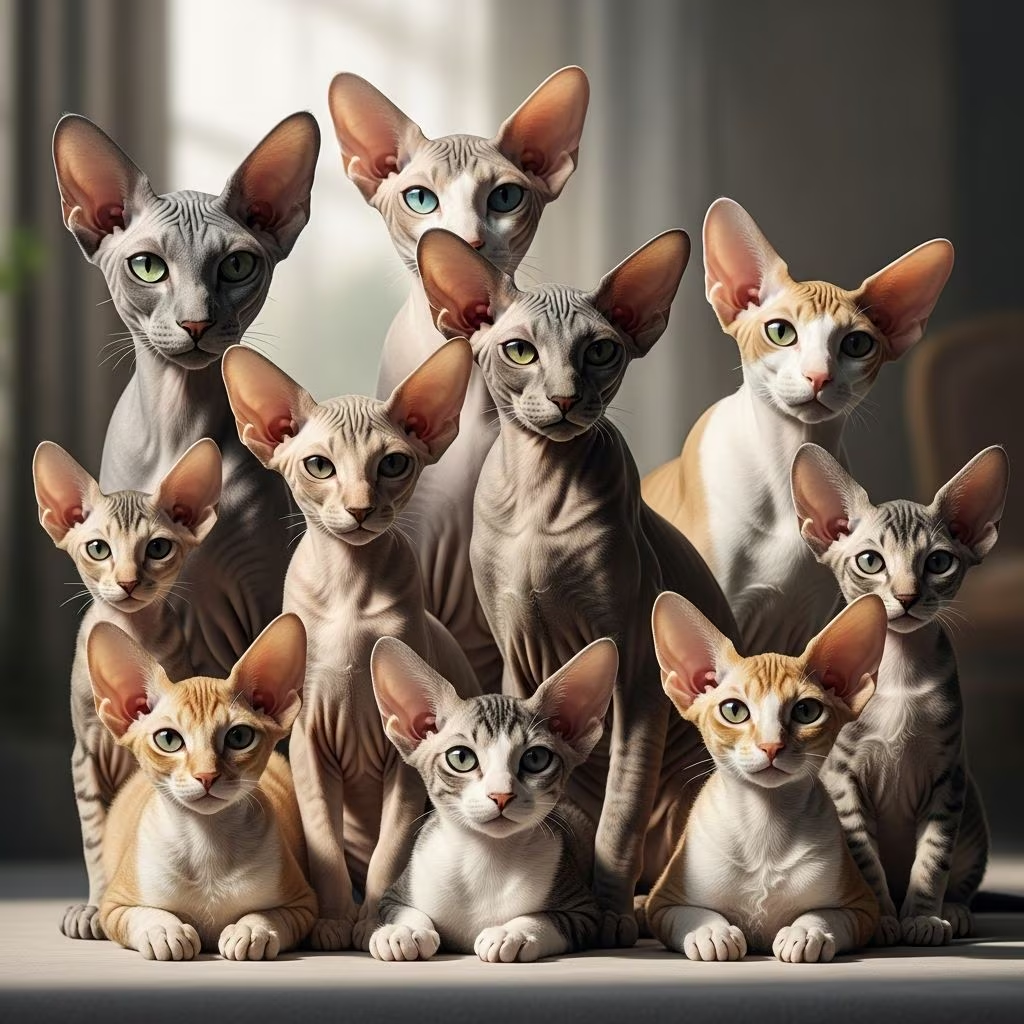
Cats with notably large ears capture attention with their alert expressions and distinctive profiles. These oversized features not only enhance their aesthetic appeal but also support superior hearing, aiding in hunting and environmental awareness. Breeds like the Siamese, Oriental Shorthair, and Savannah stand out for ears that are proportionally grand, often wide-set and pointed, contributing to their exotic allure.
The Evolutionary Edge of Oversized Ears in Felines
Large ears in cats serve practical purposes beyond looks. They amplify sound waves, allowing detection of high-frequency noises inaudible to humans, which is vital for predators. In desert-dwelling ancestors like servals, expansive ears dissipate heat and signal emotions through subtle movements. Domestic breeds inheriting these traits, such as the Savannah, blend wild heritage with home suitability. While ear size doesn’t always correlate directly with hearing acuity—inner ear structure matters more—these appendages make cats appear perpetually vigilant.
Top Breeds Showcasing Prominent Ears
Several pedigreed cats are celebrated for their ear proportions. Here’s a curated selection, highlighting their physical traits, origins, and behavioral hallmarks.
Siamese: The Vocal Visionaries
Siamese cats feature tall, triangular ears set wide on wedge-shaped heads, accentuating their sleek bodies and vivid blue eyes. Originating from Thailand, they were revered as temple guardians. These felines are extroverted, demanding interaction and known for melodic meows that mimic speech. Their ears swivel independently to pinpoint sounds, underscoring their inquisitive nature. Siamese thrive in active households, excelling at fetch and following owners room-to-room.
Oriental Shorthair: Sleek and Expressive
Closely related to Siamese, Oriental Shorthairs boast Dumbo-like ears on slender frames with diverse coat colors. Developed in the mid-20th century to expand Siamese palettes, their large ears frame angular faces, enhancing an elegant, alien-esque vibe. Highly intelligent and talkative, they bond deeply with families, adapting to children and dogs. Their ears contribute to acute auditory sensitivity, making them responsive to household rhythms.
Savannah: Wild Hybrids with Serval Legacy
Savannahs, bred from domestic cats and African servals, inherit enormous, rounded ears that dominate their spotted coats and long legs. Size varies by generation; first-generation (F1) cats closely resemble wild kin. Playful and dog-like, they love water, leashing, and adventures but require ample space. Their ears aid in heat regulation and spotting distant prey, reflecting serval roots.
Abyssinian: Ancient Alertness Personified
Abyssinians display forward-tilted, oversized ears on ticked, ruddy coats evoking ancient Egyptian art. Athletic and curious, they perch high to survey territories, ears perked for every rustle. Affectionate yet independent, they demand playtime, making ideal companions for engaged owners.
Devon Rex: Pixie-Like Charmers
With low-set, broad-based ears often fur-tufted, Devon Rexes resemble elves amid wavy coats and large eyes. Emerging from 1960s mutations, they’re acrobatic tricksters fond of puzzles and laps. Their prominent ears amplify a mischievous gaze, pairing with loyal, social temperaments suited for families.
Cornish Rex: Curly Coated Adventurers
Cornish Rexes sport high-set, erect ears on egg-shaped heads and velvety waves. Discovered in 1950s Cornwall, they’re boundless energy bundles, fetching toys and craving cuddles. Ears enhance perpetual readiness, complementing their clownish antics.
Sphynx: Hairless Wonders
Sphynx cats’ vast, wrinkled ears contrast naked skin, demanding cleaning to prevent wax buildup. Despite baldness, their hearing rivals furred peers. Affectionate “huggers,” they suit warm homes and interactive lives.
Balinese and Javanese: Longhaired Siamese Kin
Balinese and Javanese extend Siamese lines with silky coats and substantial ears on triangular heads. Climbers and conversationalists, they detest solitude, thriving in bustling homes. Their ears underscore lively, people-oriented dispositions.
Comparative Overview of Ear-Dominant Breeds
| Breed | Ear Shape | Key Personality Trait | Coat Type | Best For |
|---|---|---|---|---|
| Siamese | Tall, triangular | Vocal, social | Short, sleek | Active families |
| Oriental Shorthair | Dumbo-like, pointed | Talkative, loyal | Short, varied colors | Multi-pet homes |
| Savannah | Large, rounded | Adventurous, dog-like | Short, spotted | Spacious environments |
| Abyssinian | Forward-tilted | Curious, playful | Ticked shorthair | Engaged owners |
| Devon Rex | Low-set, tufted | Mischievous, trainable | Wavy, short | Families with kids |
| Cornish Rex | High-set, erect | Energetic, affectionate | Curly, soft | Playful households |
| Sphynx | Wide, wrinkled | Warm-seeking, loving | Hairless | Warm, social settings |
Caring for Cats with Prominent Ears
Maintenance focuses on hygiene and health monitoring. Check ears weekly for wax, dirt, or mites, using vet-approved cleaners—especially crucial for hairless types like Sphynx. Avoid Q-tips to prevent injury. Provide scratching posts to sharpen claws, reducing furniture damage. Diets rich in omega-3s support skin and ear health. Annual vet exams screen for infections, common in erect-eared breeds.
- Cleaning Routine: Damp cloth or solution; dry thoroughly.
- Environmental Enrichment: Tall perches leverage their alertness.
- Exercise Needs: Daily play mimics hunting, preventing obesity.
- Socialization: Early exposure fosters adaptability.
Health Considerations for Big-Eared Breeds
While enchanting, large ears heighten infection risks from debris accumulation. Breeds like Scottish Folds face cartilage issues, though not always big-eared. Monitor for tipping, discharge, or odor. Savannahs may carry hybrid vigor but need FIV/FeLV testing. Proactive care ensures longevity, with many reaching 15+ years.
Why Choose a Large-Eared Cat?
These breeds offer dynamic companionship: intelligence, playfulness, and expressiveness. Their ears symbolize curiosity, making every head-tilt endearing. Ideal for allergy sufferers (Rex variants shed little) or adventurers seeking interactive pets. Adopting from rescues connects you with purebreds needing homes.
Frequently Asked Questions
What cat breed has the absolute largest ears?
The Savannah tops lists, inheriting serval-sized ears that can span several inches.
Do big ears mean better hearing in cats?
Large outer ears funnel sounds effectively, boosting sensitivity, though inner ear anatomy ultimately determines acuity.
Are large-eared cats good with children?
Many, like Devon Rex and Abyssinian, excel with kids due to tolerant, playful natures.
How often should I clean my big-eared cat’s ears?
Weekly inspections suffice; clean only if dirty, per vet guidance.
Can large-eared cats live in apartments?
Yes, energetic types like Siamese adapt well with toys and attention.
References
- Cat With Big Ears: Breeds, Characteristics, and Care Tips — Uahpet. 2023. https://www.uahpet.com/blogs/hydration-health/cat-with-big-ears-breeds-characteristics-and-care-tips
- 13 Cat Breeds With Adorable Big Ears — Cats.com. 2024. https://cats.com/cat-breeds-with-adorable-big-ears
- 10 Cat Breeds with Big Ears — Purina. 2020-11-25. https://www.purina.co.uk/find-a-pet/articles/cat-types/breed-guides/cats-with-big-ears
- 7 Cat Breeds with the Most Unique Ears — iHeartCats.com. 2023. https://iheartcats.com/7-cat-breeds-with-the-most-unique-ears/



