

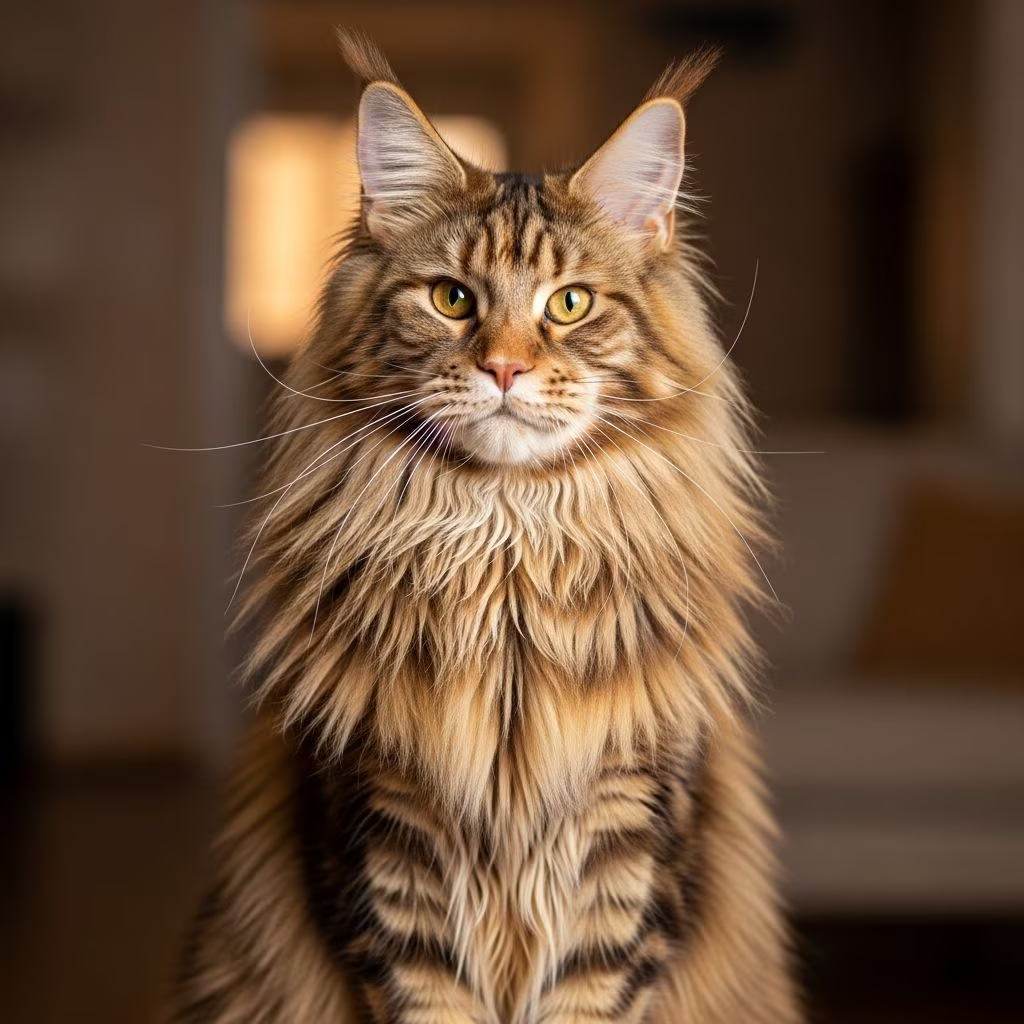
Large cats like lions captivate with their majestic presence and flowing manes, but keeping a wild lion as a pet is neither practical nor legal. Fortunately, several domestic cat breeds feature luxurious ruffs of fur around their necks, mimicking the iconic lion mane. These fluffy felines combine regal aesthetics with affectionate personalities, making them wonderful companions for lion enthusiasts. From massive Maine Coons to elegant Persians, this guide covers 11 breeds renowned for their mane-like collars, complete with origins, physical traits, temperaments, and care essentials.
These mane-bearing cats often hail from cold climates, where thick double coats provide insulation and form that distinctive neck fur. They tend to be gentle giants—playful yet cuddly—with sizes ranging from medium to extra-large. Whether you’re drawn to their wild-inspired looks or loving natures, these breeds offer the best of both worlds without the savanna dangers.
The 11 Cat Breeds With Manes Like a Lion
1. Himalayan
| Attribute | Details |
|---|---|
| Origin | United States |
| Lifespan | 9–15 years |
| Height | 10–11 inches |
| Weight | 7–12 pounds |
| Temperament | Cuddly, laid-back, playful |
The Himalayan blends the silky beauty of Persians with the vibrant personality of Siamese, resulting in a cat whose plush mane frames a striking color-pointed face. Developed in the 1930s through deliberate crosses, these cats boast long, dense coats that form a luxurious ruff around the neck, evoking a miniature lion. Their blue eyes and creamy bodies with dark points on ears, face, legs, and tail add to their exotic allure.
Himalayans thrive as lap cats, often seeking out warm spots to lounge. They’re calmer than Siamese but retain a playful streak, enjoying interactive toys and gentle games. However, their flat faces necessitate daily face cleaning to prevent tear staining and respiratory issues. Regular brushing—several times weekly—manages their mane and prevents mats. Ideal for apartments, they adapt well to indoor life but require companionship to avoid loneliness.
2. LaPerm
| Attribute | Details |
|---|---|
| Origin | United States (Oregon) |
| Lifespan | 10–15 years |
| Height | 8–10 inches |
| Weight | 5–10 pounds |
| Temperament | Affectionate, curious, social |
LaPerms stand out with their unique curly or wavy coats, including a soft, curly mane that gives them a wild, leonine appearance. A natural mutation discovered in 1982 on an Oregon farm led to this breed’s development. The texture varies from loose waves to tight curls, with the ruff around the neck and chest being particularly pronounced.
These active, people-oriented cats love perching on shoulders and exploring high spots. They’re adaptable to families, other pets, and children, thanks to their gentle demeanor. Grooming is surprisingly low-maintenance despite the curls; weekly brushing prevents loose fur buildup. LaPerms are healthy overall but benefit from regular vet checks for breed-specific issues like hypertrophic cardiomyopathy.
3. Maine Coon
| Attribute | Details |
|---|---|
| Origin | Maine, United States |
| Lifespan | 12–15 years |
| Height | 10–16 inches |
| Weight | 10–25 pounds |
| Temperament | Gentle, playful, dog-like |
Maine Coons, North America’s largest domestic breed, boast enormous tufted ears, bushy tails, and a spectacular bibbed mane that rivals any lion’s. Legends tie their origins to longhaired cats brought by sailors or even Marie Antoinette’s escapees, but they’re likely Polynesian cat descendants adapted to New England’s harsh winters.
Known as “gentle giants,” Maine Coons exhibit dog-like traits: they play fetch, walk on leashes, and greet newcomers warmly. Their sociable nature suits families, but they need ample space and daily exercise like climbing trees or puzzle feeders. Weekly grooming tames their water-repellent coat, which forms that glorious ruff. Hip dysplasia and heart conditions warrant screening in breeders.
4. Norwegian Forest Cat
| Attribute | Details |
|---|---|
| Origin | Norway |
| Lifespan | 12–16 years |
| Height | 9–11 inches |
| Weight | 12–20 pounds |
| Temperament | Independent, adventurous, affectionate |
Norwegian Forest Cats (Wegie) embody Viking heritage with their thick, waterproof double coat and prominent mane, perfect for Scandinavian forests. Ancient DNA links them to cats that accompanied Norse explorers, sustaining themselves on ships and hunts.
Hardy and athletic, these cats love climbing and leaping to lofty perches. They’re reserved with strangers but deeply loyal to family, often following owners room-to-room. Seasonal shedding requires frequent brushing, especially around the neck ruff. They’re low-maintenance health-wise but prone to glycogen storage disease.
5. Persian
| Attribute | Details |
|---|---|
| Origin | Persia (modern Iran) |
| Lifespan | 10–13 years |
| Height | 10–15 inches |
| Weight | 7–12 pounds |
| Temperament | Calm, sweet, quiet |
Persians, one of the oldest breeds, feature the quintessential lion mane: a dense frill encircling their flat-faced heads. Imported to Europe in the 1600s, they became royal favorites for their serene elegance.
These quiet aristocrats prefer lounging over antics, making them perfect for relaxed households. Daily grooming is essential to maintain their long coat and prevent eye issues from brachycephalic faces. Polycystic kidney disease is a concern, so choose health-tested lines.
6. Ragamuffin
| Attribute | Details |
|---|---|
| Origin | California, United States |
| Lifespan | 12–17 years |
| Height | 10–15 inches |
| Weight | 10–20 pounds |
| Temperament | Dog-friendly, loving, relaxed |
Ragamuffins, a Ragdoll offshoot, sport plush, rectangular bodies and rectangular muzzles framed by abundant neck fur. Bred in the 1990s for diverse colors and patterns, their mane adds to their teddy bear charm.
Exceptionally friendly, they adore dogs, kids, and strangers alike. Grooming twice weekly keeps their coat silky, and they’re generally robust.
7. Ragdoll
| Attribute | Details |
|---|---|
| Origin | California, United States |
| Lifespan | 12–15 years |
| Height | 9–11 inches |
| Weight | 10–20 pounds |
| Temperament | Sociable, floppy, tolerant |
Ragdolls go limp when held (hence the name) and flaunt semi-long coats with full neck ruffs. Developed in the 1960s, their colorpoint patterns enhance the lion-like vibe.
They thrive in social settings, often playing with children or other pets. Weekly brushing and hypertrophic cardiomyopathy screening are key.
8. Siberian
| Attribute | Details |
|---|---|
| Origin | Russia |
| Lifespan | 11–18 years |
| Height | 11–14 inches (males up to 17–25 cm body) |
| Weight | 10–20 pounds |
| Temperament | Intelligent, loyal, playful |
Siberians, Russia’s national cat, have triple-layered coats with impressive manes for forest survival. Hypoallergenic traits benefit sensitive owners.
Smart problem-solvers, they love games and water. Brush often during sheds; heartworm risk requires care.
9. Selkirk Rex
| Attribute | Details |
|---|---|
| Origin | United States |
| Lifespan | 14–15 years |
| Height | 9–11 inches |
| Weight | 6–16 pounds |
| Temperament | Patient, sociable, easygoing |
Selkirk Rex’s curly mane from a dominant mutation (1987) curls densely around the neck. All coat lengths allowed.
Family-friendly, minimal grooming needed. Kidney issues possible.
10. Sterling
| Attribute | Details |
|---|---|
| Origin | Russia (experimental) |
| Lifespan | 10–15 years |
| Height | 8–12 inches |
| Weight | 8–14 pounds |
| Temperament | Active, affectionate, shaded coat |
Sterlings (Russian Shorthair variants) have tipped coats with ruffs, rare and developing.
Energetic yet cuddly; grooming light.
11. Birman
| Attribute | Details |
|---|---|
| Origin | Burma (Myanmar) |
| Lifespan | 12–16 years |
| Height | 8–10 inches |
| Weight | 6–12 pounds |
| Temperament | Social, dog-like, gentle |
Birmans’ silky coats, white paws, and golden eyes pair with floofy manes. Sacred temple cats legend.
Devoted followers; moderate grooming.
Caring for Cats With Lion Manes
Mane-heavy breeds share grooming needs: daily brushing for long coats prevents mats, especially ruffs. Bathe monthly, check eyes/ears weekly. Provide scratching posts for coat health. Obesity risks demand measured feeding; high-protein diets suit active types.
- Grooming: Brush 3–7x/week; use wide-tooth combs on manes.
- Health: Screen for HCM, PKD, hips.
- Environment: Tall cat trees, windows for viewing.
Frequently Asked Questions (FAQs)
Which cat breed has the biggest mane?
Maine Coons and Norwegians often sport the most voluminous ruffs due to size and coat density.
Are mane cats hypoallergenic?
Siberians are; others shed seasonally.
Do they need special care?
Yes, intensive grooming and face cleaning for flat-faced breeds like Persians/Himalayans.
Are they good with kids?
Most are; gentle giants like Ragdolls excel.
How much do they cost?
$800–$3000 from reputable breeders.
References
- 11 Cat Breeds With Manes Like a Lion (With Info & Pictures) — Catster. 2023. https://www.catster.com/cat-breeds/cat-breeds-with-manes-like-a-lion/
- 5 CAT BREEDS That Look Like LIONS — AnimalWised (YouTube). 2023-05-15. https://www.youtube.com/watch?v=HaCL97TXwRc
- These Are 5 Cat Breeds That Just Look Like Lions — The Cat Spot (YouTube). 2021-08-01. https://www.youtube.com/watch?v=O5i4T3bRjrk
- 10 Long-Haired Cat Breeds That Have Manes Like a Lion — Woman’s Day. 2020-06-15. https://www.womansday.com/life/pet-care/g28482194/long-haired-cats/



