

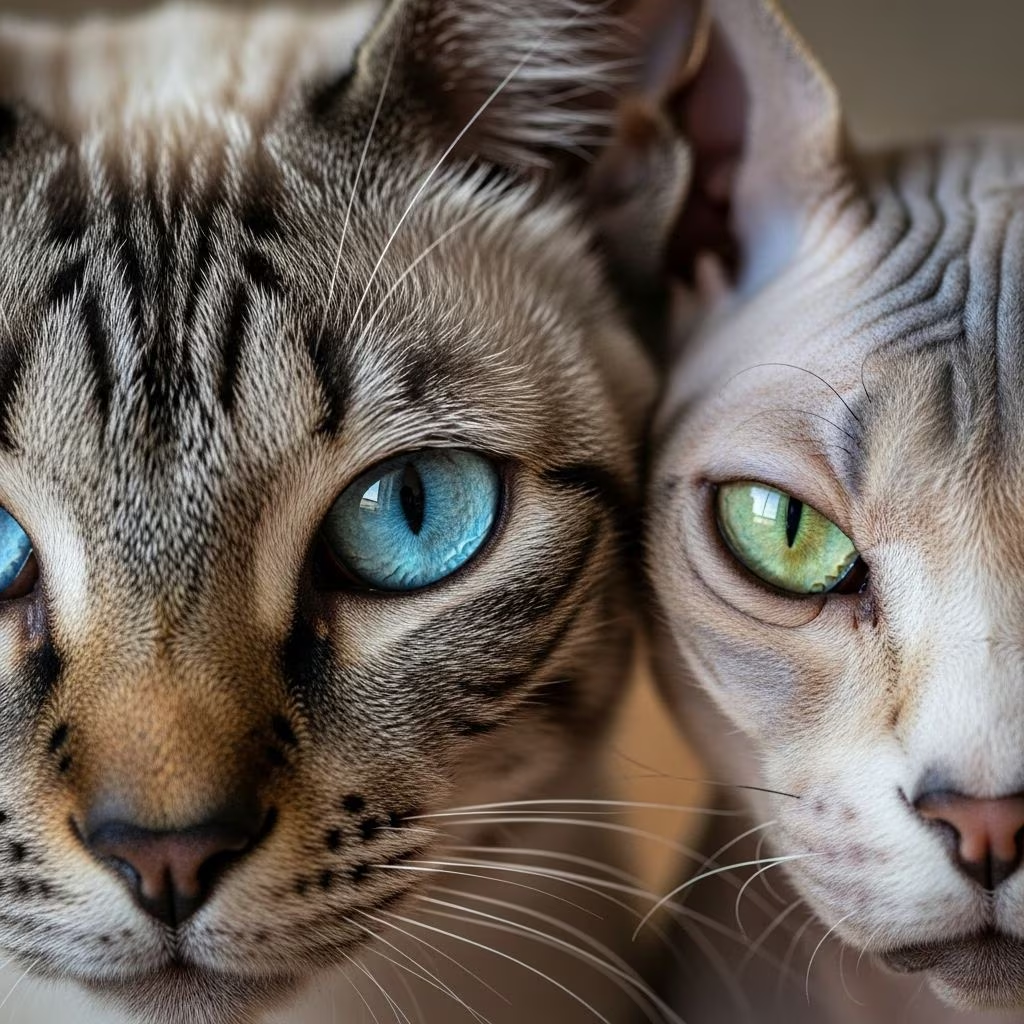
When selecting a feline companion, many potential cat owners find themselves drawn to certain aesthetic qualities. Among the most captivating features in cats are their eyes—particularly those breeds naturally blessed with distinctly large, expressive ocular characteristics. These oversized eyes often convey emotions, intelligence, and an almost human-like expressiveness that makes these breeds particularly appealing to families and individuals seeking emotionally engaged companions.
The prominence of eye size across various feline breeds stems from selective breeding practices that emphasized certain physical characteristics. Over generations, breeders have cultivated cats whose facial proportions and eye dimensions create striking visual impressions. Understanding which breeds possess these notable features can help prospective cat owners make informed decisions about their next pet.
Understanding the Appeal of Prominent Feline Eyes
Evolutionary psychology suggests that humans respond positively to facial features reminiscent of infancy—what researchers term “baby-like” or “neotenic” characteristics. Large, forward-facing eyes signal innocence and vulnerability, triggering protective instincts in caregivers. When combined with rounded facial structures and diminutive noses and mouths, these features create an undeniably appealing aesthetic that explains the popularity of big-eyed cat breeds.
Beyond mere appearance, prominent eyes often correlate with enhanced visual acuity in certain feline breeds. The size of the eye is directly related to the density of photoreceptor cells, which can influence a cat’s ability to perceive visual information in varying light conditions. Some breeds with notably large eyes demonstrate superior night vision and enhanced awareness of movement, traits inherited from their ancestral lineages.
Elegant and Refined Breeds with Luminous Gazes
The Burmese: Sophisticated Companion with Expressive Features
Burmese cats epitomize elegance, combining slender, muscular frames with strikingly round eyes that seem to communicate their every thought. The breed’s eye coloration typically ranges from warm golden hues to rich green tones, which contrast beautifully against their coat colors: sable, champagne, blue, and platinum. These felines are known for their vocal nature and strong attachment to human family members, making them responsive and interactive companions.
The Burmese temperament balances independence with affectionate neediness. They thrive in environments where human interaction is consistent and frequent, often following their owners throughout their homes and involving themselves in daily activities. Their prominent eyes serve as windows to their emotional states, making them particularly expressive among feline breeds.
The Tonkinese: Exotic Colorations and Striking Appearance
Tonkinese cats represent a deliberate cross between Burmese and Siamese breeds, inheriting the best physical and behavioral characteristics from both lineages. Their most distinctive feature lies in their eye coloration, which encompasses shades rarely seen in other domestic feline breeds: violet, sky blue, aquamarine, and gold. These unusual eye colors are largely dependent on coat pattern and genetics, creating remarkable variation within the breed.
These cats possess intermediate body structure—neither as robust as Burmese nor as sleek as Siamese specimens. Their personality traits include high intelligence, vocal communication, and demanding attention requirements. Tonkinese cats form deep bonds with their human families and often experience separation anxiety when left alone for extended periods.
The Scottish Fold: Distinctive Ear Structure and Round Ocular Features
While the Scottish Fold breed is primarily recognized for its distinctive folded ears, the feline’s ocular characteristics deserve equal appreciation. Their naturally rounded eyes appear even more prominent due to their diminutive nose and broad face. The breed exhibits remarkable flexibility in eye coloration, displaying virtually any shade from amber to blue to green.
Scottish Fold cats possess moderate energy levels and gentle temperaments, adapting well to various living situations. They demonstrate moderate grooming requirements and respond positively to interactive play sessions. Their overall demeanor reflects a balance between playfulness and calm companionship.
Long-Haired Breeds Showcasing Abundant Facial Fur and Large Eyes
The Persian: Luxurious Coat and Prominent Round Eyes
Persian cats represent one of the oldest recognized domestic feline breeds, celebrated for their extraordinarily long, flowing coats and characteristically flat faces. Their large, round eyes appear even more prominent against their shortened muzzles and cushioned cheeks. Eye coloration most commonly presents as bright copper or blue, though some Persians display heterochromia—the fascinating genetic condition resulting in two different colored eyes.
The breed’s grooming requirements are substantial, necessitating daily brushing to maintain coat health and prevent matting. Persian cats typically possess calm, gentle temperaments suited to quieter household environments. They prefer consistent routines and may become stressed by excessive activity or noise.
The Ragamuffin: Gentle Giant with Profoundly Expressive Gaze
Ragamuffin cats are considerably larger than many feline breeds, yet their enormous, expressive eyes convey gentle innocence rather than assertiveness. Their substantial size combined with enormous eye dimensions creates a distinctive appearance. These cats possess tremendous flexibility in eye coloration, with virtually any shade appearing among individuals in the breed.
The Ragamuffin temperament is notably docile and patient, making the breed exceptional for families with young children. They possess a somewhat surprising tendency to utilize their captivating eyes manipulatively—engaging in prolonged eye contact and expressions designed to convince owners to provide additional food or treats. Despite this charming behavior, these cats require consistent boundaries regarding feeding schedules.
Unique and Unusual Breeds with Distinctive Ocular Characteristics
The Sphynx: Hairless Elegance and Disproportionately Large Eyes
Sphynx cats represent one of the most immediately distinctive feline breeds, primarily recognized for their hairlessness. However, their large, oval eyes—wider-set than round—deserve significant attention. Common eye colorations include green, blue, and yellow, with occasional specimens displaying remarkable aquamarine shades.
The absence of fur emphasizes facial structure, making the Sphynx’s eyes appear even more prominent than they would on a furred cat. These cats require specialized care including regular bathing to remove skin oil accumulation and protection from extreme temperatures. Their personality traits include remarkable intelligence, strong human bonds, and elevated activity requirements compared to typical feline breeds.
The Devon Rex: Elfin Appearance with Enormous Eyes and Ears
Devon Rex cats possess distinctly unusual physical characteristics, including an elfin facial structure, disproportionately large ears, and notably large eyes. Their short, subtly wavy coat serves to emphasize rather than obscure their striking facial features. Eye coloration encompasses virtually any possibility, occasionally displaying remarkable shades of aqua and pale blue.
The Devon Rex personality is notably extroverted and playful, requiring significant interactive engagement and environmental enrichment. These cats demonstrate strong attachment bonds with human family members and adapt well to multi-cat households. Their energy levels are consistently high, necessitating access to vertical climbing structures and interactive toys.
The Cornish Rex: Curled Coat and Dramatically Expressive Eyes
Cornish Rex cats feature distinctly soft, curled coats that create an unusually delicate appearance. Their large, oval eyes dominate their slender facial structure, often appearing almost disproportionately oversized. The most prized eye coloration is deep gold, though green, hazel, and blue variations occur regularly within the breed.
Like the Devon Rex, Cornish Rex cats possess very high energy requirements and demonstrate exceptional intelligence. They excel in interactive environments with consistent mental stimulation and respond positively to training initiatives. Their moderate size combined with their striking appearance makes them appealing to individuals seeking distinctive feline companions.
Distinctive Breeds and Specialty Lines
The Russian Blue: Piercing Green Eyes Against Silvery Coat
Russian Blue cats present a striking color combination of piercing green eyes contrasting beautifully against their characteristically smoky blue-gray coats. Interestingly, kittens of this breed are born with yellow eyes that gradually transition to vivid green as the cat matures. This transformation occurs over several months, creating a visual journey in eye coloration development.
Russian Blue cats are moderately active, preferring consistent routines and calm household environments. They demonstrate reserved behavior toward strangers while forming deep bonds with familiar family members. Their grooming requirements are minimal despite their apparent plush coat texture.
The British Shorthair: Rounded Everything, Including Eyes
British Shorthair cats exemplify solidity and roundness throughout their physical structure—from their chunky bodies to their notably round eyes. This breed offers remarkable diversity in both coat and eye coloration, providing prospective owners with numerous aesthetic variations. Their short, thick coats require moderate grooming and provide excellent tactile qualities for petting and cuddling.
The British Shorthair temperament is generally calm and adaptable, making the breed suitable for various living situations. They are less demanding of constant interaction than some other breeds yet remain responsive and affectionate. Their moderate energy levels align well with both active families and quieter households.
The Abyssinian: Athletic Build with Almond-Shaped Alert Eyes
Abyssinian cats display dramatically different eye geometry compared to other prominent-eyed breeds, featuring large almond-shaped eyes rather than round ones. These eyes are encircled by distinctive darker lines, creating a naturally dramatic appearance. Remarkably, this distinctive eye outline appears consistent across all Abyssinian coat colors and patterns.
The Abyssinian breed is renowned for exceptional athleticism and intelligence. These cats require substantial environmental enrichment, vertical territory, and interactive engagement to maintain psychological wellbeing. They are notably social and often enjoy interactive games with human family members, distinguishing them from more independent feline breeds.
The Chartreux: Deep Orange Eyes Against Blue Coat
Chartreux cats, originating from France, feature striking color contrast between their deep steel-blue coats and luminous eyes. Eye coloration ranges from yellow to deep orange, with the most prized specimens displaying intense, piercing orange eyes. This combination creates a remarkably distinctive appearance immediately recognizable among various feline breeds.
Chartreux cats possess calm, somewhat reserved temperaments combined with surprising athleticism and hunting prowess. They adapt well to indoor living and respond positively to consistent routines. Their moderate grooming requirements and generally quiet nature make them suitable for various household environments.
The LaPerm: Curled Coat and Wide-Ranging Eye Colorations
LaPerm cats possess medium-length curled coats that create an entirely unique aesthetic, complemented by large, expressive eyes. These cats demonstrate remarkable flexibility in eye coloration, with any color appearing within the breed. The combination of their distinctive coat texture and large eyes creates a consistently appealing appearance across color variations.
LaPerm cats are notably sweet-natured and form strong bonds with human family members. They respond well to interactive engagement and demonstrate moderate energy requirements. Their grooming needs are moderate, requiring regular attention to maintain coat texture and prevent matting.
The California Spangled: Modern Breed with Wild Appearance
California Spangled cats represent a relatively recent addition to recognized domestic feline breeds, deliberately developed to resemble small wild cats while maintaining domestic temperament. Their striking long coats are patterned to mimic wild felines, yet their eye characteristics—notably large and expressive—convey domesticity and gentleness. These cats combine visually dramatic appearance with sweet, affectionate personality traits.
The breed remains relatively uncommon, contributing to their distinctive appeal for individuals seeking unusual feline companions. Their long coats require consistent grooming maintenance, and their generally gentle temperament makes them suitable for family environments despite their wild appearance.
The Singapura: Smallest Breed with Disproportionately Enormous Eyes
Singapura cats represent one of the smallest recognized feline breeds, yet they possess disproportionately large, almond-shaped eyes of remarkable expressiveness. Eye coloration encompasses yellow, green, and hazel tones, creating striking visual combinations with their warm sepia-toned coats. Despite their diminutive size, their oversized eyes command attention and convey intelligence and awareness.
Singapura cats possess high energy levels and require substantial interactive engagement. They form strong bonds with human family members and adapt well to active households. Their small size combined with their striking appearance makes them popular among individuals seeking distinctive, compact companions.
Health Considerations and Eye Care for Large-Eyed Cats
Large, prominent eyes, while aesthetically appealing, present specific health considerations requiring informed owner awareness. Prominent eye positioning increases exposure to environmental irritants, dust, and potential trauma. Certain breeds with shortened facial structure experience excessive tearing—a condition particularly prevalent in Persian and similar flat-faced breeds.
Entropion, a condition where eyelids roll inward and irritate eye tissue, occurs more frequently in certain breeds with prominent eyes. Progressive retinal atrophy, a degenerative genetic condition affecting vision, appears in some large-eyed breeds. Regular veterinary ophthalmologic examinations ensure early detection and management of potential complications.
Owners of big-eyed breeds should maintain consistent eye hygiene, gently cleaning tear stains and discharge as needed. Environmental management—maintaining consistent humidity, minimizing dust, and providing clean living conditions—supports overall eye health. Any unusual discharge, redness, or behavioral changes suggesting vision problems warrant immediate veterinary evaluation.
Selecting the Right Large-Eyed Breed for Your Household
Prospective cat owners should consider multiple factors beyond aesthetic appeal when selecting a large-eyed breed. Grooming requirements vary dramatically across breeds, ranging from minimal maintenance in short-haired varieties to substantial daily commitments in long-haired specimens. Energy requirements differ significantly—from calm, reserved breeds suitable for quiet environments to highly active breeds demanding extensive interactive engagement.
Household composition influences optimal breed selection. Families with young children often benefit from larger, more tolerant breeds such as British Shorthairs or Ragamuffins. Active households with older children or adults appreciate high-energy breeds like Devon Rex or Abyssinian cats. Quiet households with single occupants may suit reserved breeds like Russian Blues or Chartreux cats.
Individuals with allergies should note that no cat breed is genuinely hypoallergenic, though some produce lower levels of Fel d1 protein. Long-haired breeds generally require more grooming effort, potentially increasing allergen accumulation in home environments. Prospective owners with allergies should spend time with specific breeds before committing to adoption.
Frequently Asked Questions
Which cat breed has the largest eyes relative to body size?
The Singapura breed consistently demonstrates the most disproportionate eye-to-body ratio, with their enormous almond-shaped eyes appearing remarkably oversized relative to their compact body dimensions. This distinctive proportion contributes significantly to their appealing, wide-eyed expression.
Do large-eyed cat breeds require specialized care compared to other felines?
While not universally requiring specialized care, certain large-eyed breeds with flat faces—particularly Persians—benefit from regular eye cleaning to manage excessive tearing. Hairless breeds like the Sphynx require skin care but not specifically eye-focused attention. Generally, large eyes don’t necessitate extraordinary care beyond standard veterinary attention and environmental management.
Are large-eyed cats more prone to eye diseases?
Prominent eye positioning does increase exposure to environmental irritants and potential trauma. Certain genetic conditions like progressive retinal atrophy appear in specific breeds. However, responsible breeding practices have minimized many historical health concerns, and regular veterinary care ensures early detection and management of potential complications.
Which large-eyed breed is most suitable for apartment living?
British Shorthair and Chartreux cats adapt exceptionally well to apartment environments due to their calm temperaments and moderate activity requirements. Persian cats also thrive in quiet, controlled environments, though their grooming demands require significant owner commitment.
Do eye color and coat color correlate in large-eyed breeds?
Certain breeds, like Tonkinese and Siamese, demonstrate specific correlations between coat pattern and eye coloration. Genetics determine these relationships, with specific color combinations appearing more frequently in some breeds. However, significant variation exists within most breeds.
References
- Cat Breeds with Huge Eyes — Catster. 2024. https://www.catster.com/cat-breeds/cat-breeds-with-huge-eyes/
- Cutest Cat Breeds With Big Eyes — Cute Animals. 2024. https://cuteanimals.cc/cutest-cat-breeds-with-big-eyes/
- 5 Cat Breeds With Big Eyes (That Put Manga Faces To Shame) — Ultimate Pet Nutrition. July 3, 2020. https://www.youtube.com/watch?v=eg9fOCgNZZk
- Cats with Round Eyes — Animalia. 2024. https://animalia.bio/pets/cats/cats-with-round-eyes
- Cat Breeds That Stay Youthful Looking — World Animal Foundation. 2024. https://worldanimalfoundation.org/cats/cat-breeds-that-stay-youthful-looking/



