

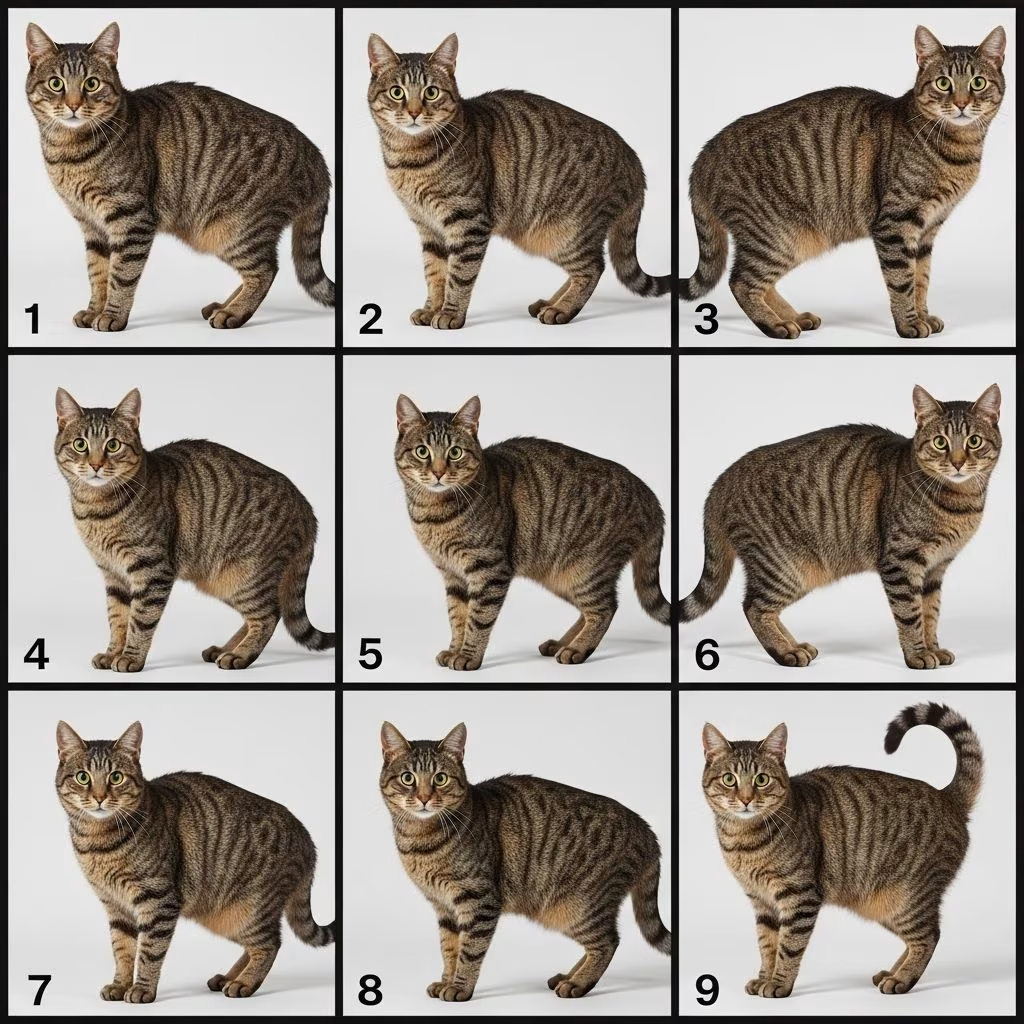
The **cat body condition score (BCS)** is a standardized, hands-on method to evaluate your cat’s body fat and muscle mass, helping determine if they are underweight, at an ideal weight, overweight, or obese. Unlike relying solely on bathroom scales, BCS provides a visual and tactile assessment that’s more accurate across different breeds, ages, and sizes. Veterinarians widely use the 9-point BCS scale for cats, where 5/9 represents the ideal condition—ribs easily palpable with a thin fat layer, visible waist, and slight abdominal tuck. Regular BCS checks empower owners to catch weight issues early, preventing diseases like diabetes, arthritis, and heart conditions.
What Is a Cat Body Condition Score?
A **cat body condition score** quantifies your feline’s overall body composition on a scale from 1 (emaciated) to 9 (severely obese). Developed by veterinary experts, it focuses on palpable fat coverage over ribs, spine, and hips, alongside visual cues like waist definition and abdominal profile. The 9-point scale offers nuanced gradations compared to the simpler 5-point version, allowing precise tracking of subtle changes. For instance, an ideal BCS of 4-5/9 means ribs are felt without pressure, with a smooth fat layer, noticeable waist from above, and tummy tuck from the side. This tool is crucial since over 60% of cats are overweight, per veterinary surveys, heightening risks for joint issues and reduced lifespan.
BCS transcends weight numbers because muscle mass, frame size, and coat thickness vary. A 10-pound ideal cat might look obese if sedentary, while a lean Maine Coon appears stocky naturally. Perform BCS monthly at home, but consult vets for professional accuracy, especially if scores indicate extremes.
Why Is the Body Condition Score Important for Cats?
Maintaining an ideal **cat BCS** directly impacts longevity and quality of life. Underweight cats (BCS 1-3) risk muscle wasting, organ failure, and immune suppression from malnutrition or illness. Overweight cats (BCS 6+) face diabetes (4x risk), osteoarthritis, hepatic lipidosis, urinary issues, and anesthesia complications. Ideal BCS cats exhibit better mobility, grooming ability, and playfulness.
- Health Prevention: Early detection averts chronic diseases; obese cats live shorter lives by 2-3 years on average.
- Diet Management: BCS guides calorie adjustments—overfeeders often misjudge “fat” as healthy.
- Breeding/Senior Care: Queens need optimal BCS for pregnancy; seniors combat sarcopenia via BCS monitoring.
- Vet Alignment: Standardized scores ensure consistent owner-vet communication.
Studies from the Association for Pet Obesity Prevention highlight BCS as the gold standard for feline weight management.
How to Do a Cat Body Condition Score: 9-Point Scale
Assessing **cat BCS** takes 2-3 minutes. Position your cat standing on a flat surface. Use both sight (top/side views) and touch (gentle palpation). Compare to the detailed 9-point chart below.
- View from Above: Look for waist behind ribs. Ideal: gentle hourglass. Absent waist = overweight.
- Side Profile: Check abdomen. Ideal: tuck upward to hips. Sagging = obese; extreme tuck = thin.
- Palpate Ribs: Run fingers along chest. Ideal: felt easily, not visible, thin fat cover.
- Feel Spine & Hips: Backbone smooth; hips rounded with fat.
- Abdomen: Minimal fat pads; no distension. Note primordial pouch (normal loose belly skin).
- Score: Match closest description.
Cat BCS 9-Point Chart
| BCS | Ribs | Spine/Hips | Waist (Above) | Abdomen (Side) |
|---|---|---|---|---|
| 1: Emaciated | Prominent, sharp, visible | Protruding bones | Extreme hourglass | Severe tuck, concave |
| 2: Very Thin | Visible (short-hair), minimal fat | Prominent, bony | Very narrow | Pronounced tuck |
| 3: Thin | Felt easily, slight fat | Visible hips | Visible waist | Tuck with small fat |
| 4: Moderately Thin | Felt, light fat cover | Spine felt, hips visible | Noticeable waist | Slight tuck |
| 5: Ideal | Felt easily, slight fat | Smooth, rounded hips | Gently curved waist | Slight tuck, small pad |
| 6: Moderately Over | Felt with difficulty | Felt, fat deposits | Barely visible | Minimal tuck, rounding |
| 7: Overweight | Pressure needed | Difficult to feel | No waist | No tuck, fat pad |
| 8: Obese | Very difficult | Buried in fat | Broad, rounded | Distended, sagging |
| 9: Severely Obese | Impossible | Not palpable | None, protruding | Heavy pendulous belly |
Adapted from VCA and Pet Obesity Prevention charts. Ideal range: 4-5/9.
Ideal Cat Body Condition Score
An **ideal cat BCS** is 5/9: ribs palpable like the back of your hand (slight give), visible waist from above, abdominal tuck from side, rounded hips without boniness. Cats here have energy for jumping, no breathing issues, and groom effectively. Note: Long-haired cats may mask fat; part fur for accuracy. Kittens/pregnant queens target slightly higher (5-6) for growth.
Underweight Cat BCS (1-4/9)
Cats scoring 1-4/9 need urgent vet evaluation for parasites, hyperthyroidism, diabetes, or dental disease causing weight loss. Signs: visible ribs/spine, extreme waist/tuck, lethargy.
- BCS 1-2: Emaciated—hospitalization for refeeding syndrome risk.
- BCS 3-4: Thin—gradual high-calorie diet, deworming.
Recovery: Frequent small meals, vet-monitored weight gain.
Overweight & Obese Cat BCS (6-9/9)
Affecting most household cats, BCS 6+ signals excess fat. BCS 7 correlates to 30% body fat (human overweight equivalent). Risks: immobility, incontinence.
- BCS 6: Early intervention via portion control.
- BCS 8-9: Vet-prescribed diet, exercise; 1-2% weekly loss max.
What to Do If Your Cat’s BCS Is Not Ideal
Underweight: Vet diagnostics first, then nutrient-dense food (e.g., 4000 kcal/kg), multiple feedings.
Overweight: Transition to prescription low-cal diets, puzzle feeders for activity, 15-min play sessions twice daily. Track BCS biweekly; aim 0.5-1% body weight loss/week.
- Measure food precisely—no free-feeding.
- Increase protein/fiber diets.
- Multi-cat homes: microchip feeders.
FAQs
What is a cat body condition score?
A 1-9 scale assessing fat/muscle via touch and sight; 5/9 is ideal.
How do I check my cat’s BCS at home?
Look top/side for waist/tuck; feel ribs, spine, hips. Use 9-point chart.
What is the ideal BCS for cats?
4-5/9: ribs easily felt, waist visible, slight tuck.
My cat’s ribs are visible—is that bad?
Yes if BCS <4/9; see vet for underlying issues.
How often should I check BCS?
Monthly, or after diet/life changes.
Can long-haired cats have accurate BCS?
Yes, palpate through fur; part if needed.
References
- Body Condition Score in Cats — VCA Animal Hospitals. 2023. https://vcahospitals.com/know-your-pet/body-condition-score-in-cats
- Cat Body Condition Scoring — Association for Pet Obesity Prevention. 2024. https://www.petobesityprevention.org/catbcs
- Cat Body Condition Score — PetMD. 2024. https://www.petmd.com/cat/nutrition/evr_multi_is_my_cat_fat_overweight
- Body Condition Scoring for Pets — Association for Pet Obesity Prevention. 2024. https://www.petobesityprevention.org/pet-weight-check
- Understanding Body and Muscle Condition Scoring — dvm360. 2023. https://www.dvm360.com/view/understanding-body-and-muscle-condition-scoring



