

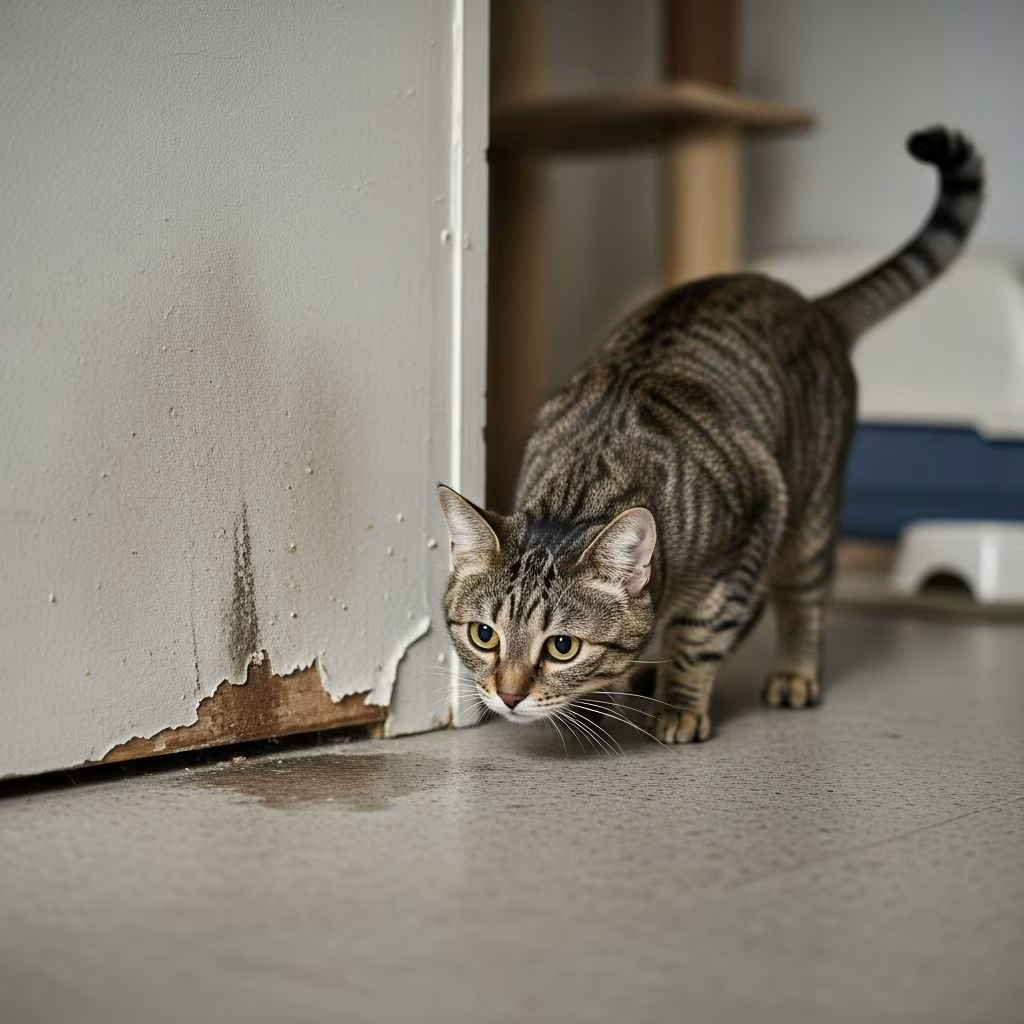
Understanding Cat Marking and Spraying Behavior
Cat spraying and urine marking represent one of the most common and frustrating behavioral problems faced by cat owners. While this behavior is completely natural for cats, having your feline companion spray urine throughout your home is far from desirable. Understanding why cats engage in this behavior is the first step toward implementing effective solutions. Whether your cat is responding to stress, establishing territory, or experiencing hormonal influences, the underlying causes can be identified and addressed through proper investigation and targeted interventions.
Urine marking is a form of communication for cats. When a cat sprays or marks, they are depositing pheromones—chemical substances that carry important messages to other cats. These messages communicate territory boundaries, reproductive status, and emotional states. For indoor cats, this natural instinct can become problematic when directed at household furnishings, walls, and other objects. However, with patience and a systematic approach, most marking behaviors can be significantly reduced or eliminated.
What Triggers Cat Spraying and Marking?
Several factors can motivate a cat to spray or mark within the home. Identifying which trigger or combination of triggers applies to your cat is essential for developing an effective treatment plan.
Territorial Marking
Cats are inherently territorial animals, and spraying is one of the primary mechanisms they use to claim an area as their own. This behavior becomes especially pronounced in multi-cat households, where competition for space and resources can intensify territorial responses. Even the sight of an outdoor cat through a window can trigger an indoor cat to begin spraying as a defensive measure against a perceived territorial threat. Cats deposit urine marks in prominent locations throughout the home to communicate boundaries and establish their domain. In homes with multiple cats, each feline may attempt to establish distinct territories by leaving marks in strategic areas, creating an ongoing cycle of marking and countermarking.
Stress and Anxiety
Cats are sensitive creatures that respond negatively to environmental changes and disruptions to their routine. Common stressors that can trigger marking behavior include:
- Moving to a new home or residence
- Introduction of new pets to the household
- Addition of new people, including babies
- Rearrangement of furniture or home renovation
- Changes in daily feeding or play schedules
- Alterations to the household routine
When a cat feels insecure or anxious, they may begin spraying to create a sense of familiarity and control within their space. The presence of their own pheromones appears to have a calming effect on cats. A cat that is frustrated—such as when faced with an empty food bowl or waiting by a closed door—may spray urine near the source of frustration as a coping mechanism. Additionally, indoor cats without sufficient access to social interaction and environmental enrichment may experience chronic stress that manifests as marking behavior.
Hormonal and Sexual Influences
One of the most prevalent reasons for cat spraying is related to hormonal status. Unneutered male cats are especially prone to spraying to attract mates and establish dominance. This behavior typically begins when male cats reach approximately six months of age. Female cats can also spray when they are in heat, using urine marking to advertise their reproductive status to potential mates. Spaying or neutering your cat significantly reduces the likelihood of hormonally-driven spraying, and in many cases, the behavior ceases completely.
Social Conflict and Multi-Cat Dynamics
When multiple cats share a home, underlying friction and conflict can trigger marking behavior. Cat communication is often subtle, making it difficult for owners to identify aggressive or fear-related postures between their pets. Tension between household cats may not be immediately obvious, yet it can motivate increased marking as each cat attempts to establish and maintain territory. The introduction of a new cat—whether through scent on secondhand objects or direct interaction—can create enough social stress to initiate or escalate marking in existing cats.
Medical and Physical Factors
Physical discomfort can also trigger or contribute to marking behavior. If an adult cat suddenly begins marking after a period without this behavior, or if a cat suddenly stops using the litter box appropriately and begins spraying inside or near the box, a veterinary examination is essential. Medical conditions such as urinary tract infections, kidney disease, or other health issues may underlie sudden changes in elimination behavior.
How to Treat Spraying and Marking Problems
Effective treatment for marking behavior focuses on decreasing your cat’s motivation to spray. This requires a systematic approach that begins with thorough investigation of the problem.
Investigation and Assessment
The first step in addressing spraying is to gather detailed information about the behavior:
- Where does the cat spray? (location and number of areas affected)
- How frequently does spraying occur?
- When does spraying typically happen? (time of day or in relation to specific events)
- How many different locations are being marked?
- Are there multiple cats in the home? If so, what is the relationship between them?
This information helps determine the underlying cause and guides treatment decisions. For example, if spraying occurs primarily in windows where outdoor cats are visible, territorial response is likely. If spraying coincided with a household move or the introduction of a new pet, stress is probably the primary factor.
Spaying or Neutering
If your cat is not already spayed or neutered, scheduling this procedure is one of the most effective interventions available. The majority of spraying behaviors are hormone-driven, and sterilization significantly decreases the urge to mark territory. Most cats stop spraying within weeks of being neutered or spayed, though it may require time for hormone levels to fully stabilize. For cats with otherwise good health that will not be used for breeding, spaying or neutering can sometimes cure marking behavior completely.
Creating a Stress-Free Environment
Since stress is a major contributor to spraying, creating a calm and stable environment is critical for prevention and treatment. Effective environmental modifications include:
- Providing abundant vertical space with cat trees, shelves, and wall-mounted perches
- Offering horizontal enrichment through tunnels, boxes, and exploration opportunities
- Using feline facial pheromone diffusers such as Feliway to create a calming atmosphere
- Establishing and maintaining a consistent daily routine for feeding and playtime
- Creating multiple hiding spots and escape routes, particularly important in multi-pet households
- Ensuring each cat has private spaces where they can retreat without fear
Cats thrive in environments that feel safe and predictable. Reducing stressors in their surroundings can significantly help in eliminating unwanted spraying behavior.
Addressing Social Conflict
If your cat’s marking is related to uncomfortable social interactions, particularly friction with another household cat, addressing the relationship dynamics is essential. A veterinary behaviorist or other qualified professional can assess social interactions between your cats and design targeted treatment to reduce conflict and marking behavior. This may involve separating cats temporarily, using scent swapping techniques, or implementing gradual reintroduction protocols.
Optimizing Litter Box Management
Providing clean, appealing litter boxes is always important for cats and becomes especially critical when addressing marking behavior. Best practices include:
- Ensuring all cats in the home can easily access litter boxes
- Providing one box for each cat, plus one additional box
- Placing boxes in easily accessible locations away from food and water bowls
- Using large boxes that accommodate your cat’s size comfortably
- Cleaning boxes daily and performing complete litter changes regularly
Thorough Odor Removal
When a cat sprays, the scent left behind can encourage repeat behavior in the same location. Using an enzymatic cleaner specifically designed for pet odors is crucial to removing pheromone traces completely. Avoid using ammonia-based cleaners, as the smell can resemble urine and may actually encourage your cat to spray again. Enzymatic cleaners break down the uric acid crystals in cat urine, completely neutralizing the odor that your cat can detect.
What to Do When Your Cat Keeps Returning to Spray the Same Spot
Even after thorough cleaning, cats sometimes continue to spray in the same locations. This occurs because cats mark to leave messages, and when the odor is cleaned away, a cat might immediately refresh the area with more urine.
Changing the Purpose of Marked Areas
For cats that consistently mark only one or two specific areas, changing the function of that space can sometimes resolve the problem entirely. Since most cats do not leave urine marks near their feeding or resting places, placing a feeding dish or cozy bed in the marked area could prove curative. This approach essentially repurposes the space from a marking location to a personal resource area.
Redirecting Marking to Acceptable Behaviors
It is possible to redirect marking behavior into more socially acceptable formats. Since cats naturally mark with their claws as well as urine, placing a scratching post near the spot where urine marking occurs may encourage your cat to scratch rather than spray. This provides an alternative outlet for territorial marking that is acceptable within the household.
Modified Litter Box Placement
Some cats can be encouraged to spray in a modified litter box placed in a prime marking location. A backsplash such as a plexiglass panel can protect the wall behind the box while allowing the cat to engage in marking behavior within an appropriate container. This approach acknowledges the cat’s need to mark while directing the behavior into a manageable location.
Frequently Asked Questions
Q: Is urine marking the same as inappropriate urination?
A: No. Urine marking typically involves spraying on vertical surfaces and occurs in small amounts, while inappropriate urination involves larger volumes deposited on horizontal surfaces like floors or bedding.
Q: Can female cats spray?
A: Yes, female cats can and do spray, particularly when in heat or in response to stress and territorial concerns, though the behavior is more common in unneutered males.
Q: How long does it take for spraying to stop after neutering?
A: Most cats stop spraying within weeks of being neutered or spayed, though it may take several weeks for hormone levels to fully stabilize and behavioral changes to become apparent.
Q: What should I do if I have multiple cats and don’t know which one is spraying?
A: Consult your veterinarian about using fluorescein dye, which can help identify which cat is responsible for marking. This allows you to target treatment specifically for the affected cat.
Q: Can pheromone diffusers really help with spraying?
A: Yes, feline facial pheromone diffusers like Feliway have evidence supporting their effectiveness in reducing marking behavior by creating a calming effect similar to natural feline pheromones.
Q: Should I punish my cat for spraying?
A: No. Punishment is ineffective and counterproductive, potentially increasing stress and worsening the behavior. Focus instead on identifying underlying causes and implementing positive interventions.
References
- Cat Behavior Problems – Marking and Spraying Behavior — VCA Animal Hospitals. 2025. https://vcahospitals.com/know-your-pet/cat-behavior-problems-marking-and-spraying-behavior
- Why Cats Spray and How to Prevent It — Harlingen Veterinary Clinic. 2025. https://harlingenveterinaryclinic.com/blog/cat-spraying/
- How To Stop a Cat From Spraying — Laurel Veterinary Clinic. 2025. https://laurelpets.com/blog/how-to-stop-a-cat-from-spraying/
- Cat Spraying: Why Cats Do It and How to Stop It — PetMD. 2025. https://www.petmd.com/cat/general-health/cat-spraying-why-cats-do-it-and-how-to-stop-it
- Stop Your Cat Spraying or Soiling in the House — Blue Cross. 2025. https://www.bluecross.org.uk/advice/cat/behaviour-and-training/stop-your-cat-spraying-and-soiling-in-the-house
- Cat Spraying/Marking — Wisconsin Humane Society. 2025. https://www.wihumane.org/cat-spraying
- Diagnosis and Management of Feline Urine Marking — Today’s Veterinary Practice. 2025. https://todaysveterinarypractice.com/behavior/on-your-best-behavior-diagnosis-management-of-feline-urine-marking/



