

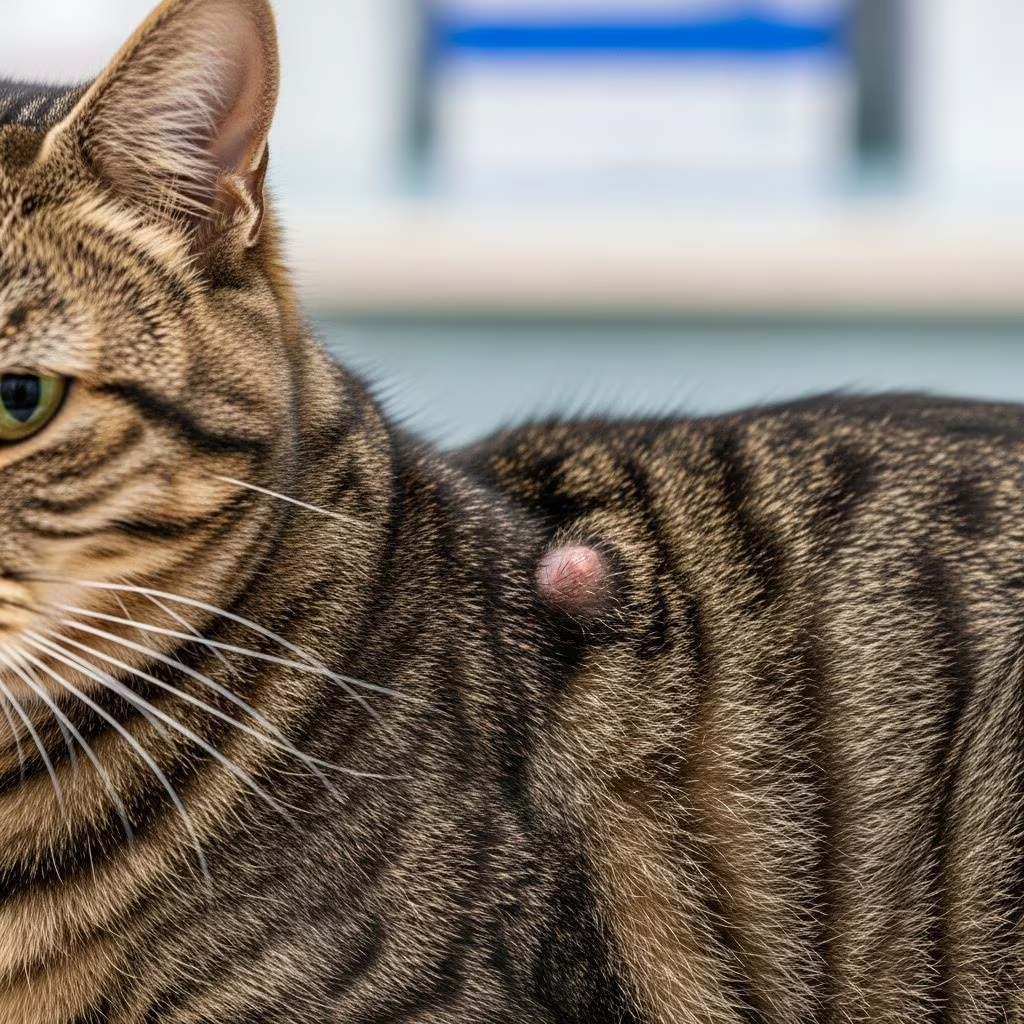
Lumps appearing on a cat’s back near the spine can signal anything from harmless fatty deposits to serious spinal conditions. Prompt veterinary evaluation is essential to distinguish benign issues from those requiring immediate intervention, ensuring your feline companion’s comfort and health.
Recognizing Abnormalities Along the Spine
During routine grooming or petting, cat owners might notice a raised area or irregularity along their pet’s dorsal midline. These can feel firm, soft, movable, or fixed, and may be accompanied by changes in posture, gait, or behavior. A **bump near the spine** often prompts concern because this region houses critical nerves and structures vital for mobility and sensation.
Key indicators include:
- Sensitivity or vocalization when the area is touched
- Reluctance to jump, arch the back, or engage in play
- Visible curvature, such as a hunch or sway in the spine
- Hindlimb weakness, dragging paws, or unsteady walking
- Changes in litter box habits, like straining or accidents
These signs suggest potential pressure on the spinal cord or surrounding tissues, warranting a professional assessment.
Benign Growths Mimicking Spinal Problems
Not all lumps indicate grave illness. **Lipomas**, or fatty tumors, are common in middle-aged to senior cats and can develop subcutaneously near the spine. These are typically soft, round, and freely movable under the skin, growing slowly without invading deeper structures. They pose little threat unless they grow excessively large, potentially impeding movement or blood flow.
Other non-cancerous causes encompass:
- Cysts: Fluid-filled sacs from blocked glands or trauma, often resolving with drainage.
- Abscesses: Pus pockets from bites or scratches, presenting as warm, painful swellings that may rupture.
- Skin tags or warts: Small, harmless protrusions linked to age or irritation.
Diagnosis usually involves fine-needle aspiration or biopsy to confirm cellular makeup, ruling out malignancy.
Spinal Deformities and Bony Protrusions
**Spondylosis deformans** frequently explains bony lumps along the spine in older cats. This degenerative condition involves new bone formation at vertebral edges, creating spur-like projections visible on X-rays. Though often asymptomatic, it can cause stiffness, pain, or nerve compression if spurs encroach on the spinal canal.
Similarly, **hypervitaminosis A** from excessive liver-rich diets leads to exostoses—bony growths—on spinal surfaces, resulting in neck rigidity and forelimb lameness. Diet correction halts progression but doesn’t reverse existing damage.
| Condition | Typical Location | Main Symptoms | Diagnostic Tool |
|---|---|---|---|
| Spondylosis Deformans | Underside of vertebrae | Back stiffness, rare pain | X-ray |
| Hypervitaminosis A | Spinal bone surfaces | Neck pain, lameness | History + X-ray |
| Lipoma | Subcutaneous near spine | Soft movable lump | Fine-needle aspirate |
These conditions highlight why imaging is crucial for differentiation.
Inflammatory and Infectious Culprits
Inflammation or infection can produce lumps via swelling or granulomas. **Diskospondylitis**, though rare in cats, inflames intervertebral disks and adjacent vertebrae, often from wound-related bacterial spread. Affected cats show spinal pain, fever, and possible neurological deficits; X-rays reveal irregularities, with cultures guiding antibiotic therapy for 8+ weeks.
Fungal invasions like **Cryptococcus neoformans** may target the central nervous system, causing spinal pain and paralysis alongside lung or skin involvement. Protozoal **toxoplasmosis** in kittens inflames the cord, while parasitic **Cuterebra larvae** provoke sudden myelitis with asymmetric weakness.
**Arthritis** erodes joint cartilage, leading to painful bony enlargements and reduced flexibility, exacerbated by obesity or prior injuries.
Tumors and Neoplastic Concerns
Malignant growths demand urgency. **Lymphosarcoma** dominates feline spinal tumors, comprising up to 40% of cases, often linked to feline leukemia virus (FeLV). It induces cord compression, hindlimb paresis progressing to paralysis, and pain.
Intervertebral **disk herniation** extrudes material into the spinal canal, causing acute pain, spasms, or leg paralysis, more common in the neck or mid-back. **Syringomyelia** forms fluid-filled cavities within the cord, yielding sensitivity and ataxia; MRI confirms it.
Cancer diagnostics include bloodwork, advanced imaging (MRI/CT), and biopsies. Treatments range from chemotherapy to surgery, with prognosis varying by type and stage.
Trauma and Nutritional Factors
Falls or fights can fracture vertebrae or herniate disks, manifesting as lumps from hematomas or callus formation. **Tetanus** from wounds stiffens muscles, including along the back.
Malnutrition or age-related muscle loss makes the spine prominent without true lumps, while overfeeding liver induces vitamin A toxicity.
Diagnostic Approaches for Back Lumps
Vets start with history and physical exams, palpating for pain or fixation. Essential tools include:
- Radiographs: Detect bony changes, spurs, or disk narrowing.
- MRI/CT: Visualize soft tissues, cord compression, or fluid cavities.
- Fine-needle aspirate/Biopsy: Analyze lump contents.
- Blood/CSF tests: Identify infections or FeLV.
Early detection improves outcomes, especially for reversible issues like abscesses.
Treatment Strategies by Condition
Management tailors to cause:
- Benign lumps: Monitor lipomas; excise if problematic.
- Infections: Prolonged antibiotics for diskospondylitis.
- Degenerative: Pain relief, rest, joint supplements for arthritis/spondylosis.
- Herniations/Tumors: Surgery or chemo; conservative care for mild cases.
- Parasites: Antiparasitics post-diagnosis.
Supportive care—pain meds, mobility aids, weight control—enhances recovery.
Preventive Measures for Spinal Health
Maintain ideal weight to lessen joint/spine stress. Balanced diets avoid vitamin excesses. Regular vet check-ups catch issues early. Minimize fight risks via supervision or neutering. Environmental enrichments preserve muscle tone without overexertion.
When to Rush to the Vet
Seek immediate care for sudden lumps with paralysis, incontinence, or trauma history. Gradual lumps with pain or gait changes merit prompt visits within 24-48 hours.
Frequently Asked Questions
Can a lump on my cat’s back be cancerous?
Yes, tumors like lymphosarcoma can form spinal lumps, but many are benign like lipomas. Biopsy confirms.
Why is my cat’s spine bumpy?
Bumps often stem from spondylosis or lipomas in older cats.
Is surgery always needed for spinal lumps?
No, many respond to meds or rest; surgery suits herniations or large tumors.
How do I tell if it’s serious?
Pain, weakness, or mobility loss signals urgency; consult a vet.
Can diet cause back lumps?
Excess vitamin A from liver can spur bony growths.
References
- Disorders of the Spinal Column and Cord in Cats – Cat Owners — Merck Veterinary Manual. Accessed 2026. https://www.merckvetmanual.com/cat-owners/brain-spinal-cord-and-nerve-disorders-of-cats/disorders-of-the-spinal-column-and-cord-in-cats
- Why Is My Cat’s Spine Sensitive — ASPCA Pet Health Insurance. Accessed 2026. https://www.aspcapetinsurance.com/resources/cat-spine-issues/
- Lipoma In Cats: Symptoms And Treatments — VRA Veterinary. 2022-03-30. https://www.vravet.com/site/blog/2022/03/30/lipoma-in-cats-symptoms-and-treatments
- Lumps on Cats — Feline Fancy. Accessed 2026. https://felinefancy.co.uk/blogs/cat-care-tips/lumps-on-cats
- Cat Skin Lumps, Bumps, and Cysts — PetMD. Accessed 2026. https://www.petmd.com/cat/symptoms/cat-skin-lumps-bumps-and-cysts
- SPINAL CORD DISEASES IN CATS — VetNeuroChesapeake. Accessed 2026. https://www.vetneurochesapeake.com/vnioc-blog/spinal-cord-diseases-in-cats



