

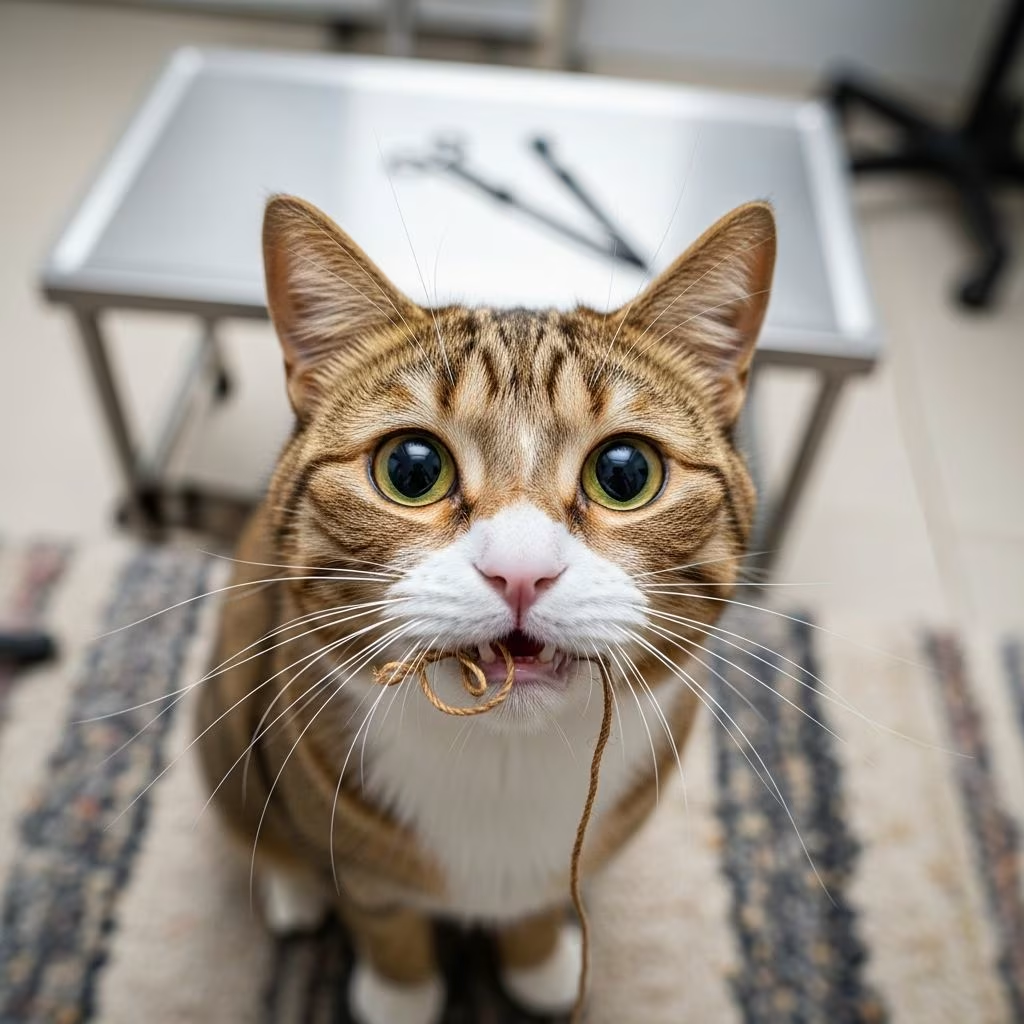
String, yarn, ribbon, and similar linear objects pose severe threats to cats due to their playful hunting instincts. These items can lead to critical gastrointestinal issues requiring immediate veterinary intervention. Understanding the mechanics of this hazard empowers owners to respond effectively and potentially save their pet’s life.
Why Cats Are Drawn to Strings and Threads
Cats view dangling strings as prey, mimicking snakes or rodents that trigger their pouncing reflexes. The barbs on a cat’s tongue, designed for grooming and capturing food, snag threads easily, drawing them into the throat involuntarily. This natural behavior turns household items into hidden dangers, especially during unsupervised play.
Critical Health Risks from Swallowed Strings
Ingestion of string creates a “linear foreign body,” where one end anchors—often at the tongue base or stomach outlet—while the other trails into the intestines. Peristaltic waves, the rhythmic muscle contractions pushing food forward, bunch up the intestines like an accordion, known as plication. This tension can saw through intestinal walls, causing perforations that leak bacteria into the abdomen, leading to peritonitis—a potentially fatal infection.
Another grave complication is intussusception, where one intestinal segment telescopes into another, cutting off blood supply and causing tissue death if untreated. Blockages halt digestion entirely, resulting in vomiting, dehydration, and systemic shock. Cats with repeated exposures risk chronic malnutrition and prolonged surgeries.
Recognizing the Warning Signs
Owners often miss the ingestion event, but clinical symptoms emerge quickly. Monitor for these indicators:
- Vomiting or retching: Frequent attempts to expel contents, sometimes producing foam or bile.
- Appetite loss: Refusal of food despite usual mealtimes.
- Lethargy: Unusual sleepiness or hiding, contrasting normal energy levels.
- Abdominal discomfort: Hunching, sensitivity when touched, or growling during petting.
- Bowel changes: Diarrhea (possibly bloody), straining without output, or constipation.
- Visible clues: String dangling from mouth or rectum, excessive lip licking, or drooling.
These signs indicate partial obstruction; full blockages escalate rapidly to collapse.
Immediate Response Protocol
Never pull protruding string—it may anchor deep internally, and tugging risks tearing tissues or inducing aspiration pneumonia from vomit inhalation. Avoid home remedies like inducing vomiting, which could lodge the object worse. Contact your veterinarian or an emergency clinic immediately, even without symptoms. Provide details: length/type of string, time of ingestion, and current behaviors.
Vets assess via physical exam, X-rays (strings may not show clearly), or ultrasound to detect plication. Bloodwork checks dehydration and infection markers. Early detection allows less invasive options.
Veterinary Interventions Explained
Treatment depends on string location and damage extent:
| Condition Severity | Approach | Potential Outcomes |
|---|---|---|
| Mild/Recent Ingestion | Monitoring with laxatives or endoscopy | Passage without surgery (20-30% cases) |
| Partial Blockage | X-ray guided removal or gastrotomy | Quick recovery if no perforation |
| Full Obstruction/Peforation | Exploratory laparotomy (open surgery) | Extended hospitalization, antibiotics |
Post-op care includes fluids, pain management, and anti-inflammatories. Success rates exceed 90% with prompt action, but delays raise mortality.
Prevention Tactics for Cat-Safe Homes
Proactive measures reduce risks significantly:
- Secure hazards: Stow ribbons, yarn, sewing kits, and drapery cords out of reach.
- Supervised play: Use interactive toys like feather wands; avoid loose strings.
- Environmental checks: Inspect holiday decorations, gift wrap, and laundry baskets routinely.
- Training aids: Deter curiosity with bitter sprays on tempting items.
- Alternatives: Opt for durable, non-ingestible toys certified cat-safe.
Kittens and young cats face higher risks due to exploration; extra vigilance pays off lifelong.
Special Concerns: Needles, Threads, and More
Swallowing needle-thread combos amplifies dangers—sharps puncture en route, while thread acts as a linear body. Watch for gagging or refusal to eat beyond 12 hours. These demand emergency surgery to avert sepsis.
Long-Term Effects and Recovery
Surviving cats often rebound fully within days, resuming normal appetites and activity. Scar tissue from surgeries rarely causes issues, but monitor for adhesions. Nutritional support aids healing; vet-prescribed diets prevent constipation.
Owners report behavioral shifts post-incident, with heightened caution around strings—reinforce this through positive training.
FAQs: Common Questions Answered
Can cats pass string naturally?
Short, soft pieces under 4 inches might, but linear items rarely do without complications. Always seek vet guidance.
How long before symptoms appear?
Hours to 2 days; partial blockages show subtly, full ones dramatically.
Is surgery always needed?
No—endoscopy retrieves many cases minimally invasively.
What if no string is visible?
Symptoms alone warrant evaluation; imaging confirms.
How to cat-proof strings effectively?
Store inaccessible, use short toys, supervise play rigorously.
Key Takeaways for Cat Owners
Swift recognition and professional care turn string ingestion from fatal to fixable. Stay vigilant, act decisively, and prioritize prevention—your cat’s playful spirit depends on it.
References
- My Cat Ate String. Now What? | Apex Vets — Apex Veterinary. Accessed 2026. https://apex.vet/blog/cat-ate-string/
- My Cat Ate String: Dangers, What to Do & Treatments — Hill’s Pet. Accessed 2026. https://www.hillspet.com/cat-care/healthcare/what-to-do-if-cat-eats-string
- What To Do if Your Cat Has Eaten String – PetMD — PetMD. Accessed 2026. https://www.petmd.com/cat/general-heath/what-to-do-if-your-cat-has-eaten-string
- Ingestion of Foreign Bodies in Cats | VCA Animal Hospitals — VCA Hospitals. Accessed 2026. https://vcahospitals.com/know-your-pet/ingestion-of-foreign-bodies-in-cats



