

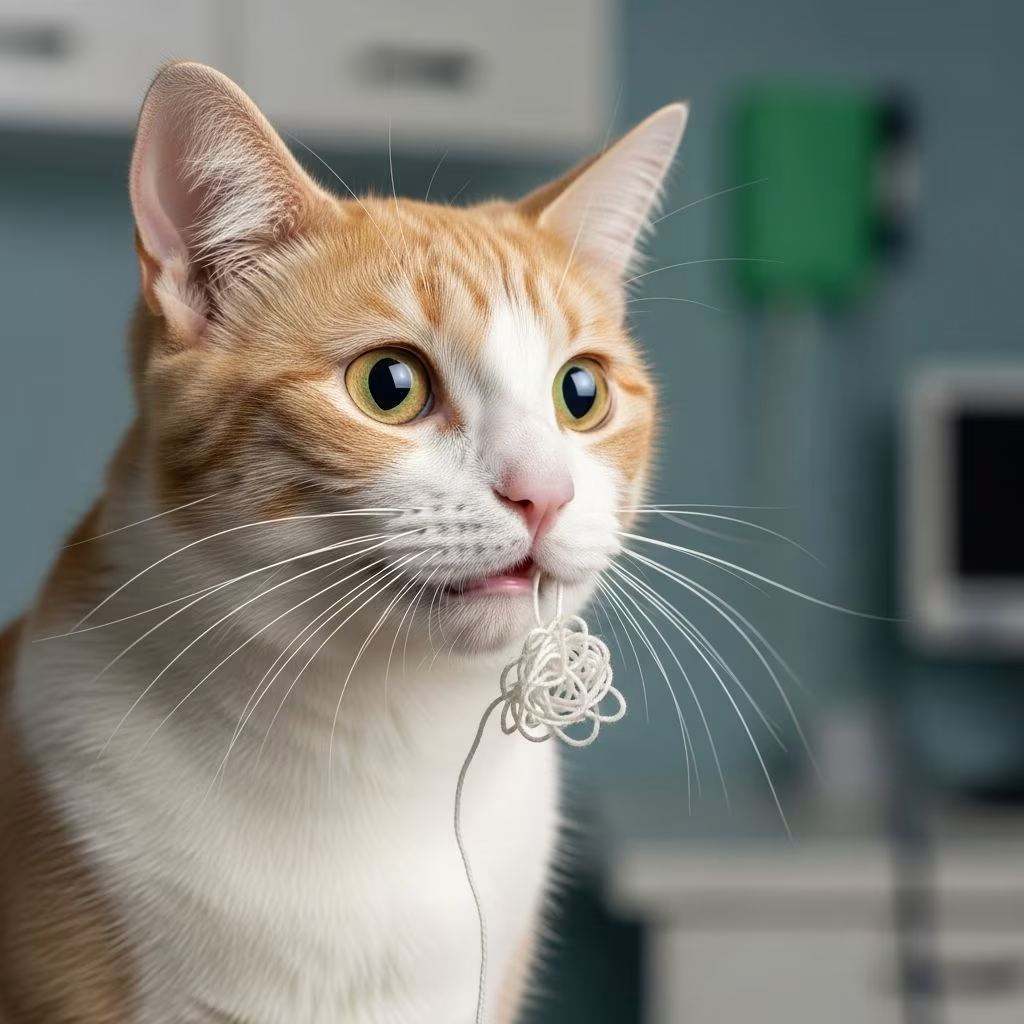
Cats often play with string, yarn, or ribbon, but swallowing these items poses severe health threats due to potential digestive tract complications. Prompt recognition and veterinary intervention are essential to avoid fatal outcomes.
Why Cats Are Drawn to String and the Hidden Perils
Feline curiosity drives cats to chase and chew linear objects like string, which mimic prey. Their rough tongues snag these materials, making expulsion difficult. Once ingested, string can anchor in the mouth or stomach while the trailing end advances through the intestines, leading to dangerous bunching.
This setup creates a linear foreign body, where intestinal muscles contract futilely against the fixed point, causing the gut to accordion-fold. Such plication heightens risks of obstruction, reduced blood flow, and tissue death.
Critical Health Threats from Swallowed String
Ingestion triggers multiple issues, escalating rapidly without treatment.
Gastrointestinal Obstruction
String lodges in the stomach, pylorus, or tongue base, blocking food passage. Peristalsis bunches intestines around it, forming complete or partial blockages that cause pain, swelling, and nutrient malabsorption.
Intestinal Perforation and Infection
Tightening string saws through gut walls, creating perforations. Bacteria leak into the abdomen, sparking peritonitis—a life-threatening inflammation. Untreated cases lead to sepsis.
Intussusception: A Deadly Complication
Vigorous contractions telescope one bowel segment into another, cutting circulation. This results in necrosis and demands surgical correction to avert fatality.
| Complication | Description | Potential Outcome |
|---|---|---|
| Obstruction | Gut bunching around anchored string | Vomiting, dehydration, malnutrition |
| Perforation | String cuts intestinal walls | Peritonitis, sepsis |
| Intussusception | Bowel telescoping | Tissue death, shock |
Spotting the Warning Signs Early
Symptoms emerge hours to days post-ingestion. Vigilance saves lives.
- Vomiting or retching: Frequent, possibly with string fragments.
- Appetite loss: Refusal to eat, leading to weakness.
- Lethargy: Reduced play, hiding behavior.
- Abdominal distress: Hunching, sensitivity to touch, bloating.
- Bowel changes: Diarrhea (bloody/dark), constipation, straining.
- Visible string: From mouth or rectum—emergency hallmark.
Cats mask pain, so subtle shifts like lip-licking or aggression warrant concern.
Immediate Response: What Not to Do and Why
Seeing string dangling tempts pulling, but this worsens damage. Traction saws intestines, risking tears or aspiration if vomiting occurs.
Never induce vomiting—string may lodge in the throat or aspirate into lungs. Skip home remedies like oil or laxatives; they delay care and aggravate blockages.
Call your vet or emergency clinic immediately upon suspicion. Time is critical for diagnostics and intervention.
Veterinary Diagnosis and Treatment Pathways
Professionals use imaging and exams to confirm issues.
Diagnostic Steps
- Physical exam for pain, dehydration.
- X-rays or ultrasound to visualize string and plication.
- Bloodwork for infection, electrolyte imbalance.
Treatment Options
Depends on string location and damage extent.
- Endoscopic removal: For upper tract items, minimally invasive.
- Surgery (enterotomy/exploratory): Cuts gut to extract string, resects dead tissue. Common for advanced cases.
- Supportive care: Fluids, anti-nausea meds, antibiotics post-op.
Chronic cases risk malnutrition; extended surgery heightens complications. Recovery involves monitored feeding, stitch checks.
Preventing String Ingestion in Your Home
Proactive measures curb risks.
- Secure threads, yarn, ribbons during play.
- Supervise toy sessions; discard frayed items.
- Opt for string-free toys or short pieces.
- Cat-proof sewing kits, gift wrap.
- Train ‘leave it’ cues for curious cats.
Kittens and chewers need extra watch.
Real-Life Implications and Recovery Outlook
Early action yields high survival; delays prove fatal. Post-treatment, cats resume normalcy in days to weeks, but scarring may cause future sensitivities. Annual checkups aid monitoring.
Frequently Asked Questions
Can cats pass string naturally?
Short, soft pieces might, but linear items rarely do without harm. Vet assessment is safest.
How long before symptoms show?
Hours to 2-3 days, varying by length and cat.
Is dental floss dangerous too?
Yes, it acts like string, snagging on tongues.
What if no symptoms after 24 hours?
Still consult vet—silent progression occurs.
Recovery time post-surgery?
1-2 weeks for staples out; full vitality in 4-6 weeks.
References
- My Cat Ate String. Now What? | Apex Vets — Apex Veterinary. 2023. https://apex.vet/blog/cat-ate-string/
- My Cat Ate String: Dangers, What to Do & Treatments — Hill’s Pet. 2023. https://www.hillspet.com/cat-care/healthcare/what-to-do-if-cat-eats-string
- What To Do if Your Cat Has Eaten String — PetMD. 2024-01-15. https://www.petmd.com/cat/general-heath/what-to-do-if-your-cat-has-eaten-string
- My Cat Swallowed a String, What Do I Do? — Bottle Tree Animal Hospital. 2023. https://bottletreeanimalhospital.com/blog/cat-swallowed-a-string/
- My Cat Swallowed a Needle and Thread — GSVS. 2023. https://gsvs.org/blog/cat-swallowed-needle-thread-emergency-guide/
- Ingestion of Foreign Bodies in Cats — VCA Animal Hospitals. 2024. https://vcahospitals.com/know-your-pet/ingestion-of-foreign-bodies-in-cats



