

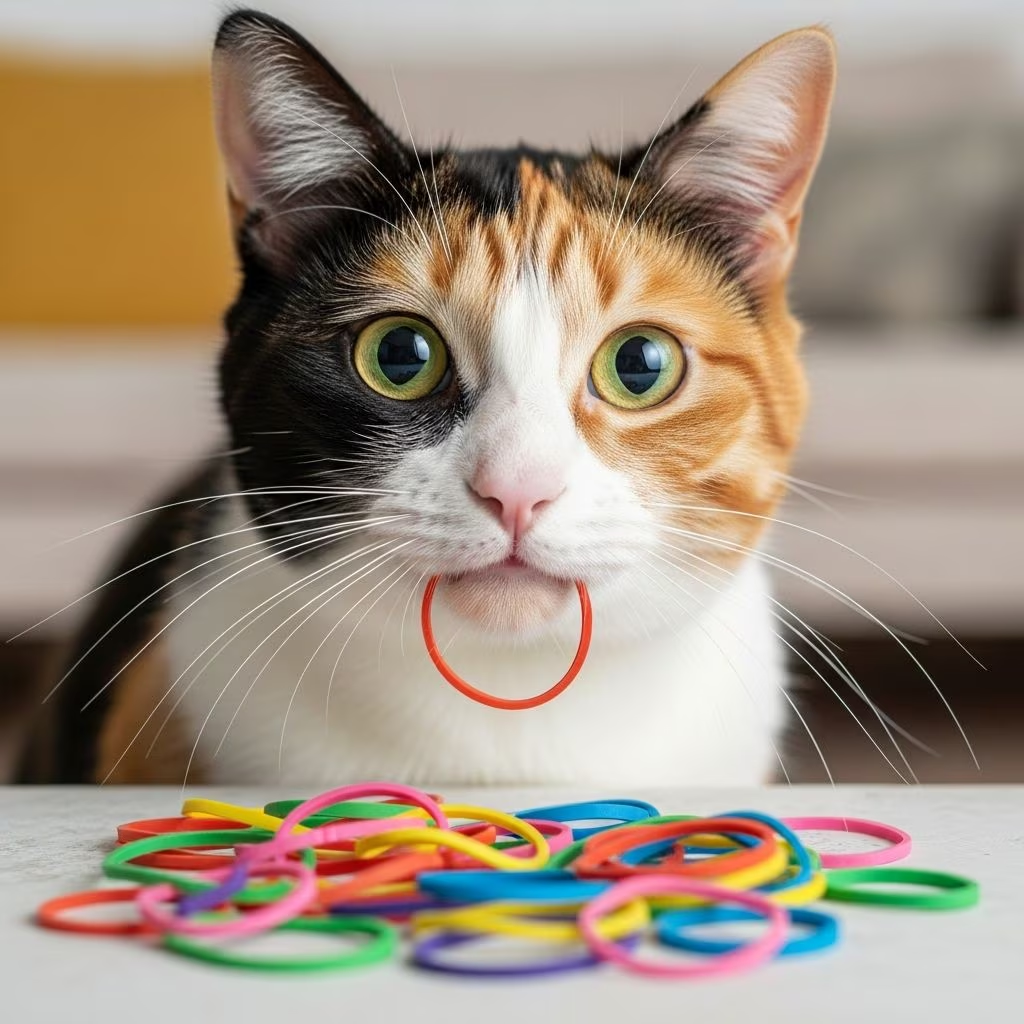
Cats are curious creatures, often drawn to small, stretchy objects like rubber bands. While a rubber band isn’t toxic, it poses serious risks such as choking, tissue damage, or intestinal blockages. This vet-approved guide outlines immediate actions, symptoms to monitor, potential complications, and prevention strategies to keep your feline safe.
Will My Cat Be Okay After Swallowing a Rubber Band?
The outcome depends on the rubber band’s size and your cat’s health. Small bands under 1 inch may pass naturally without issues, especially if no symptoms appear. Larger bands over 1.5 inches increase risks of obstruction, requiring veterinary evaluation even if your cat seems fine initially. Always inform your vet about the ingestion for proper monitoring.
Rubber bands can linger in the digestive tract, taking days or weeks to pass or cause problems. Factors like the cat’s size, age, and prior health influence this. Kittens and small cats face higher choking risks, while adults may develop blockages later.
What Are the Signs That My Cat Is Not Okay After Swallowing a Rubber Band?
Monitor closely for 24-72 hours post-ingestion. Key symptoms of complications include:
- Not wanting to eat or complete anorexia
- Vomiting or retching, especially repeatedly
- Changes in feces: diarrhea, constipation, or small amounts of poop
- Lethargy, excessive sleeping, or reduced playfulness
- Abdominal pain: hunching, sensitivity when touched, growling, or biting
- Changes in drinking: excessive thirst followed by vomiting or refusal
- Straining to defecate or no bowel movements
These signs overlap with other conditions like infections or hairballs, but ingestion history warrants urgent vet attention. Early detection prevents severe issues.
Why Is Swallowing a Rubber Band Dangerous for My Cat?
Rubber bands act as linear foreign bodies, unlike round objects. Dangers include:
- Choking or esophageal blockage: Immediate airway obstruction, especially in kittens.
- Tongue or mouth entanglement: Cutting off circulation or causing trauma.
- Esophageal or gastric damage: Tears in delicate linings from stretching or movement.
- Intestinal obstruction: Band bunches intestines, preventing food passage.
- Intussusception: Intestines telescope inward, a surgical emergency.
- Perforation: Band ‘saws’ through bowel walls, leading to peritonitis.
Untreated blockages cause dehydration, sepsis, and death. VCA Hospitals notes foreign bodies often require diagnostics like X-rays.
Can My Cat Die From Eating a Rubber Band?
Yes, in severe cases. Complete blockages halt nutrient absorption, causing rapid deterioration. Perforations lead to fatal infections. Survival rates improve with prompt intervention—surgery boasts 80-90% success if caught early, per veterinary literature. Symptoms mimic other illnesses, so vet diagnostics (radiographs, ultrasound) are crucial.
I Can See a Rubber Band in My Cat’s Mouth – What Should I Do?
Do not pull or force removal— it may be tangled on teeth, tongue base, or partially swallowed, risking trauma or aspiration. Restrain gently if needed, withhold food/water, and rush to the vet. They use sedation/tools for safe extraction.
What to Do If Your Cat Ate a Rubber Band
Step-by-step response:
- Contact vet immediately: Describe band size, time ingested, cat’s breed/weight/age.
- Monitor at home (if advised): Check stool daily for the band; note symptoms.
- Vet visit protocol: Expect exam, X-rays/ultrasound, bloodwork. Inducing vomit risks esophageal damage—avoid DIY.
- Treatment options:
| Scenario | Action | Prognosis |
|---|---|---|
| Small band, no symptoms | Monitor feces 3-5 days | Excellent, 90% pass naturally |
| Symptoms present | Imaging, fluids, surgery if blocked | Good with early care |
| Visible in mouth | Immediate extraction | Very good |
| Perforation/sepsis | Emergency surgery, antibiotics | Guarded |
Post-care: Bland diet, probiotics, rest. Full recovery takes 1-2 weeks.
How Long Does It Take for a Rubber Band to Pass Through a Cat?
Transit time varies: 12-48 hours in stomach, 1-3 days through intestines. Monitor poop—rubber appears intact or fragmented. If absent after 5 days with symptoms, suspect obstruction.
Why Do Cats Eat Rubber Bands?
Cats chase rubber bands for their erratic bounce, mimicking prey. Textures appeal to hunting instincts; stress chewing provides comfort. Some ingest during play. Prevention: Secure storage.
How to Prevent Your Cat From Eating Rubber Bands
Proactive steps:
- Store bands in closed drawers/boxes.
- Provide cat-safe toys: balls, wand toys.
- Supervise play; use puzzle feeders for mental stimulation.
- Train ‘leave it’ command with treats.
- Regular home audits for small objects.
Enrich environment reduces pica (eating non-food items).
Frequently Asked Questions (FAQs)
What should I do first if my cat ate a rubber band?
Call your vet immediately, provide details on size and timing, and monitor for symptoms like vomiting or lethargy.
Can I make my cat vomit at home?
No—risks aspiration, esophageal tears. Vets use safe methods like apomorphine.
How do I check my cat’s poop for the rubber band?
Inspect daily; wear gloves. If no passage in 3-5 days or symptoms arise, seek vet care.
Is surgery always needed?
No, many pass naturally, but 20-30% require intervention for linear bodies.
What if symptoms start days later?
Urgent vet visit—delayed blockages occur as band moves.
Are rubber bands toxic?
No, but physical dangers dominate.
This comprehensive guide empowers cat owners to respond effectively. Always prioritize professional veterinary advice over home remedies.
References
- Ingestion of Foreign Bodies in Cats — VCA Animal Hospitals. 2023-10-15. https://vcahospitals.com/know-your-pet/ingestion-of-foreign-bodies-in-cats
- My Cat Ate a Rubber Band: What Should I Do? (Vet Answer) — Hepper. 2024-05-20. https://articles.hepper.com/my-cat-ate-a-rubber-band-vet-answer/
- My Cat Ate a Rubber Band: Here’s What to Do (Vet Answer) — Catster. 2024-08-12. https://www.catster.com/ask-the-vet/cat-ate-rubber-band/
- Cat Ate Rubber Band Problems — Dial A Vet. 2023-11-05. https://www.dialavet.com/vet-answers/cat-ate-rubber-band-problems-73655
- Swallowing Foreign Objects in Cats — ASPCA Animal Poison Control (via VCA reference). 2022-07-01. https://vcahospitals.com/know-your-pet/ingestion-of-foreign-bodies-in-cats



