

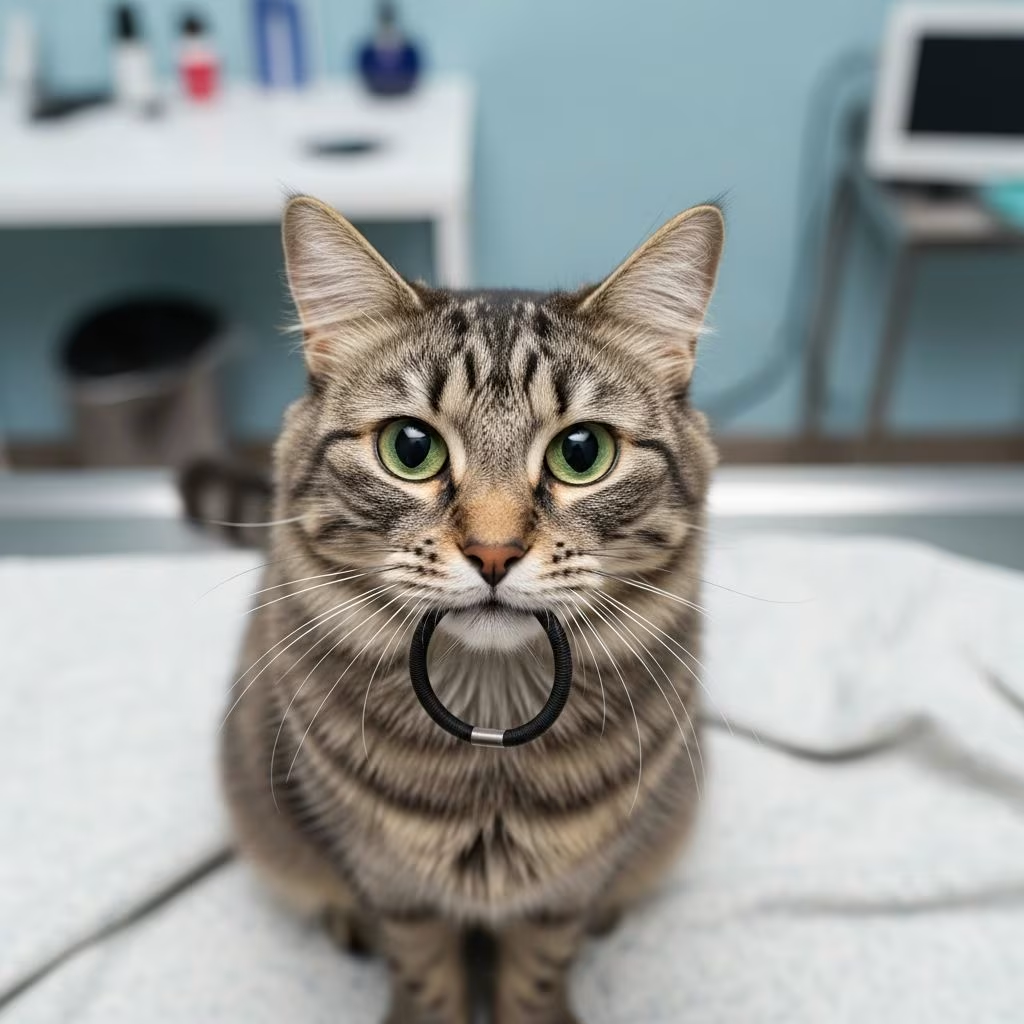
Cats are notorious for their curiosity, often leading them to chew and swallow small objects like hair ties during play. While many cats pass these items without issue, ingestion can cause serious health problems including choking, gastrointestinal blockages, or even life-threatening complications. This comprehensive guide, informed by veterinary expertise, outlines the risks, symptoms, immediate actions, diagnostic and treatment options, prognosis, and prevention strategies to keep your feline safe.
Are Hair Ties Dangerous for Cats?
Hair ties pose significant risks to cats due to their elastic material and small size. As a cat swallows a hair tie, it may snag on teeth, tongue, or throat tissues, leading to **choking**, oral wounds, or esophageal trauma. If fully ingested, it can lodge anywhere from the esophagus to the intestines, causing a **foreign body obstruction** that prevents food passage, results in vomiting, and damages gut walls.
Worse, if the hair tie snaps into a linear elastic strand, it acts like a “cheese-wiring” tool, sawing through intestinal tissue—a condition known as linear foreign body obstruction. This can perforate the gut, allowing bacteria and fecal matter to leak into the abdomen, triggering **peritonitis**, a severe and potentially fatal infection. Symptoms may not appear immediately, so vigilance is crucial even if your cat seems fine post-ingestion.
- Choking risk: Immediate airway blockage during swallowing.
- Obstruction: Blockage in esophagus, stomach, or intestines leading to vomiting and dehydration.
- Perforation: Gut wall damage from snapping elastics, risking sepsis.
- Irritation: Inflammation causing diarrhea or pain without full blockage.
Statistics from veterinary reports indicate that foreign body ingestions, including elastics, account for a notable portion of feline surgical emergencies, with early intervention improving outcomes dramatically.
My Cat Ate a Hair Tie! What Do I Do?
Stay calm but act swiftly if you witness or suspect ingestion. Follow these step-by-step guidelines to assess and respond effectively.
1. Check That Your Cat Is Breathing Properly
Prioritize airway assessment. Look for signs of **choking** such as open-mouth breathing, pawing at the mouth, blue gums, or collapse. If present, this is an **emergency**—rush to a vet or animal ER immediately. Do not induce vomiting at home, as it risks further lodging or aspiration.
2. Assess for Immediate Distress
Observe for retching, drooling excessively, or abdominal pain (hunched posture, vocalizing). Contact an emergency vet if any occur. For witnessed ingestion without distress, proceed to monitoring.
3. Monitor Your Cat for Signs
If stable, watch closely for 24-72 hours. Check litter box for the hair tie in feces—many pass naturally. Normal eating, drinking, and defecation are positive signs. Track stool production; absence beyond 48 hours warrants concern.
4. Contact Your Vet if Signs Appear
Seek professional care for any of these **red flag symptoms**:
| Symptom | Description | Urgency |
|---|---|---|
| Vomiting | Repeated episodes, possibly with hair tie visible | High—within hours |
| Lethargy | Hiding, weakness, reduced activity | High |
| Anorexia | Refusing food for 24+ hours | Moderate to high |
| Diarrhea/Constipation | Straining, bloody stool, or no feces | Moderate |
| Abdominal Pain | Tender belly, sensitivity to touch | High |
Vets recommend prompt exams to palpate the abdomen and decide on imaging.
What Happens if a Cat Eats a Hair Tie?
Veterinary intervention depends on the hair tie’s location and symptoms. A thorough physical exam checks for pain, dehydration, and masses.
- Diagnostics: X-rays reveal hair ties’ distinct radiopaque appearance; ultrasound assesses gut motility; bloodwork rules out dehydration or infection.
- Stomach location: **Endoscopy**—a camera-guided tool under anesthesia retrieves it non-invasively.
- Intestinal location: **Exploratory surgery** (enterotomy or gastrotomy) opens the abdomen to remove the object, inspect for damage, and flush contaminants.
Post-procedure, cats receive fluids, pain meds, and anti-nausea drugs. Hospitalization lasts 1-3 days for monitoring.
Will It Be Okay If My Cat Ate a Hair Tie?
Outcomes vary. Many cats (up to 50-70% in mild cases) pass hair ties uneventfully within 1-3 days, resuming normal health. Detected blockages treated early have excellent prognosis—over 90% recovery with surgery. However, delays increase risks of perforation, peritonitis, or sepsis, with mortality rates climbing to 20-50% in advanced cases.
Can a Cat Die From Eating a Hair Tie?
Yes, tragically possible. Untreated obstructions erode gut walls, leaking contents into the peritoneum, causing fulminant peritonitis. Even with aggressive treatment (surgery, antibiotics, ICU care), survival drops if diagnosis lags beyond 48-72 hours. Prompt vet care is lifesaving.
Recovery timelines:
- Passed naturally: Full recovery in days.
- Endoscopy: Resume eating in 24 hours.
- Surgery: 7-14 days restricted activity, soft diet.
How to Prevent Your Cat From Eating Hair Ties
Proactive steps minimize risks:
- Store hair ties, elastics, and strings in closed drawers or bins.
- Provide **cat-safe toys**: Wand teasers, balls, puzzle feeders redirect hunting instincts.
- Supervise playtime, especially with human accessories.
- Use **environmental enrichment**: Cat trees, shelves, window perches reduce boredom-driven chewing.
- Train with positive reinforcement to drop unsafe items.
Regular vet check-ups catch pica tendencies early—chewing non-foods may signal nutritional gaps or stress.
Frequently Asked Questions (FAQs)
Can a cat pass a hair tie on its own?
Yes, many do within 1-3 days if small and not snapped. Monitor stool and symptoms closely.
Should I make my cat vomit after eating a hair tie?
No—never induce vomiting at home. It risks esophageal tears or choking. See a vet immediately.
How long before symptoms appear if my cat ate a hair tie?
Hours to 72 hours, depending on location. Partial blockages may delay signs.
What if only part of the hair tie was eaten?
Still risky—fragments can bunch or cut tissues. Monitor and consult vet.
Do hair ties show up on X-rays?
Yes, their rubber composition often appears distinctly radiopaque.
Is surgery always needed for hair tie ingestion?
No—endoscopy or natural passage suffices in many cases; surgery for intestinal obstructions.
References
- My Cat Ate a Hair Tie! Here’s What to Do (Vet Answer) — Catster (Ask the Vet). 2023. https://www.catster.com/ask-the-vet/cat-ate-a-hair-tie/
- Hair Tie Ingestion in Cats — PetPlace Veterinary Articles. 2023. https://www.petplace.com/article/cats/pet-health/cat-ate-hair-tie
- My cat just swallowed part of a hair tie during playtime — Dial a Vet. 2023. https://www.dialavet.com/vet-answers/cat-swallowed-hair-tie-playtime-86586
- Ingestion of Foreign Bodies in Cats — VCA Animal Hospitals. 2024. https://vcahospitals.com/know-your-pet/ingestion-of-foreign-bodies-in-cats



