

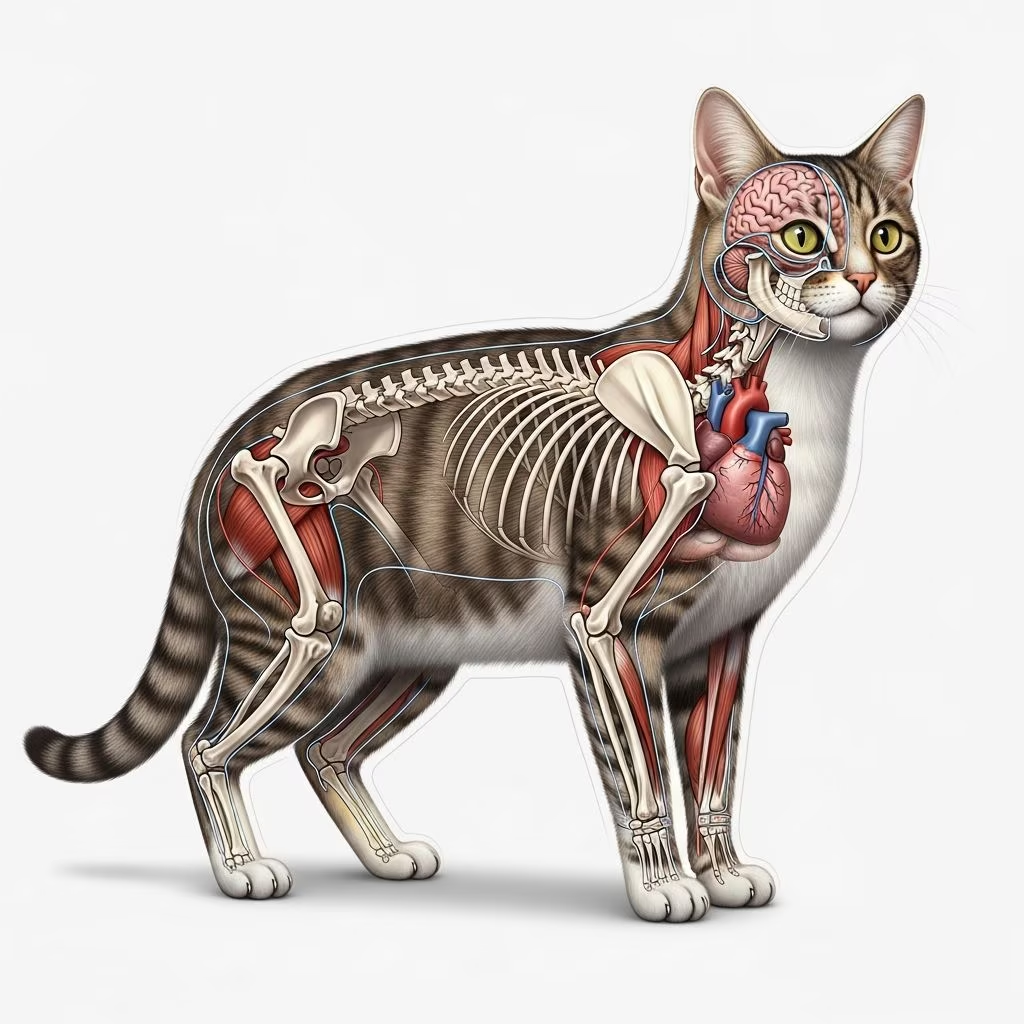
Cats possess a body structure finely tuned for predation, agility, and survival. Their anatomy features a lightweight skeleton, potent musculature, and acute sensory systems that distinguish them from other mammals.
The Framework of Feline Agility: Skeletal System
The cat’s skeleton consists of about 230-250 bones, lighter and more flexible than in many animals, enabling remarkable contortions and leaps. This adaptability allows cats to navigate narrow spaces by fitting through openings as small as their head size.
- Spinal Column: Comprising around 30 vertebrae, the spine offers extensive rotation and elasticity due to specialized cushions between vertebrae, absent ligaments like the nuchal, and muscle support instead of rigid connections.
- Shoulder Girdle: A reduced clavicle floats within shoulder muscles, preventing breakage during jumps and enhancing spring-like propulsion.
- Hind Limbs: Robust femur, tibia, and fibula support powerful thrusts, with the patella stabilizing the stifle joint for precise landings.
This skeletal design underpins cats’ ability to fall from heights unscathed, twisting mid-air via the righting reflex tied to inner ear balance.
Muscular Powerhouse: Key Muscle Groups
Cats boast over 500 muscles, optimized for explosive speed and stealthy pouncing. Integumental muscles like the cutaneous maximus enable skin shaking to dislodge parasites, while core groups drive locomotion.
| Muscle Group | Location & Origin | Function |
|---|---|---|
| Trapezius (Clavotrapezius) | Neck to clavicle | Draws scapula forward and upward for arm extension |
| Deltoids (Acromiodeltoid, Spinodeltoid) | Shoulder region | Rotates and flexes humerus for paw reach |
| Rectus Abdominis | Abdominal wall | Compresses core for jumping stability |
| Gluteofemoralis | Hindquarter | Assists thigh extension in sprints |
These muscles, particularly hind leg powerhouses, propel cats at bursts up to 30 mph, with back muscles straightening the spine for added leap force.
Sensory Mastery: Eyes, Ears, and Beyond
Feline senses are hyper-specialized. Large eye sockets in a short skull provide panoramic vision, with narrow canine spacing suited for rodent prey.
- Vision: Tapetum lucidum reflects light for night acuity; vertical pupils control light intake.
- Hearing: Mobile ears detect ultrasonic prey sounds; complete bony orbits protect eyes.
- Whiskers (Vibrissae): Rooted in sensitive follicles, gauge air currents for spatial awareness in darkness.
The vomeronasal organ pairs smell and taste, with tongue papillae sampling scents during flehmen response.
Oral Arsenal: Teeth and Tongue
Adult cats have 30 teeth: 12 incisors for nibbling, 4 canines for killing, 10 premolars, and 4 molars forming carnassial shears to slice meat. Deciduous teeth shed by 5-7 months.
The tongue’s dorsal spines—filiform, fungiform, and others—act as a rasping groomer and aid lapping liquids, backed by mucous membrane and intrinsic muscles for dexterity.
Digestive Efficiency: From Mouth to Elimination
As obligate carnivores, cats have short guts: esophagus to a glandular stomach with rugae folds for expansion, then small intestine thrice body length for rapid protein absorption.
- Stomach: Fundus, body, pylorus secrete acids; handles large meals from irregular hunts.
- Intestines: Efficient nutrient uptake suits high-protein diet.
- Paws & Claws: Thick pads cushion impacts; retractile claws (protractile ligaments) stay sharp for gripping.
Circulatory and Respiratory Adaptations
A compact heart and atrophied internal carotid favor agile necks; ascending pharyngeal artery supplies the brain. Lungs support anaerobic bursts, with flexible ribs expanding for oxygen during pursuits.
Skin and Coat: Protective Layers
Platysma and cutaneous maximus muscles ripple skin; dense fur insulates and camouflages, with scent glands marking territory.
FAQs
Why can cats jump so high?
Their flexible spine, powerful hind muscles, and floating clavicle enable leaps up to six times body length.
How many bones does a cat have?
Approximately 230-250, varying by breed, emphasizing flexibility over rigidity.
What makes a cat’s tongue unique?
Sharp papillae spines for grooming and drinking, plus vomeronasal integration for scent-tasting.
Do cats have collarbones?
Yes, but tiny and embedded in muscles for shoulder freedom.
How does cat digestion differ from humans?
Shorter tract for meat, fully glandular stomach for protein breakdown.
References
- Cat anatomy – Wikipedia — Wikipedia. 2024. https://en.wikipedia.org/wiki/Cat_anatomy
- 2024 Ultimate Guide to Cat Anatomy – VetCheck — VetCheck. 2024. https://vetcheck.it/cat_anatomy/
- Understanding Your Cat’s Anatomy | Dine — Dine. N/A. https://www.dine.com.au/blog/cat-care/understanding-your-cats-anatomy
- Feline – Anatomy, Behavior, Hunting | Britannica — Britannica. 2024. https://www.britannica.com/animal/feline/Form-and-function
- Dissection Lab Guide for Dog and Cat Anatomy — University of Minnesota Pressbooks (.edu). N/A. https://pressbooks.umn.edu/dogcatanatomylabguide/back-matter/appendix/
- Anatomy: Small Animal – Faculty of Veterinary Medicine (UCVM) — University of Calgary (.edu). N/A. https://vet.ucalgary.ca/summercamps/anatomy/monday/small-animal
- Physical Description of Cats – Cat Owners – Merck Veterinary Manual — Merck Veterinary Manual. 2024. https://www.merckvetmanual.com/cat-owners/introduction-to-cats/physical-description-of-cats



