

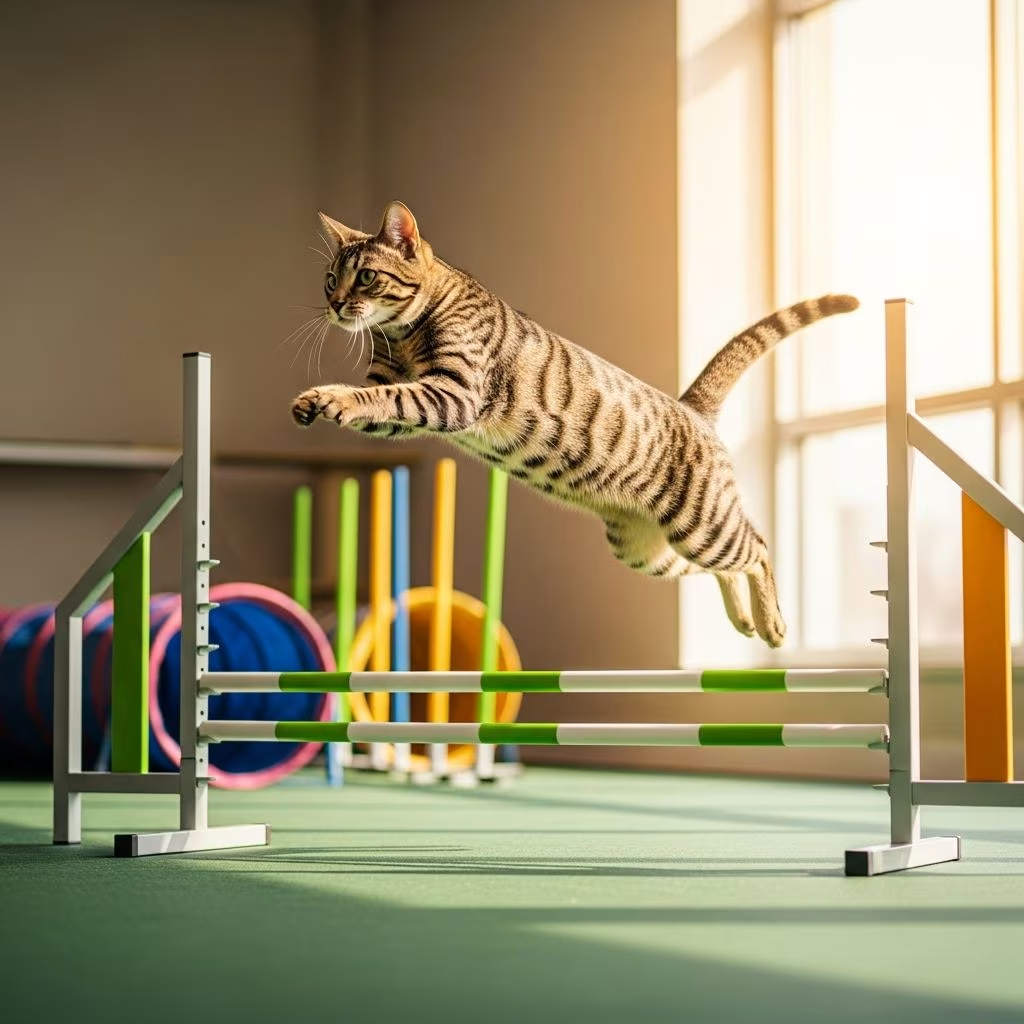
Understanding Feline Agility as a Training Discipline
Agility training represents a structured approach to feline enrichment that extends far beyond simple play sessions. Unlike traditional cat exercise, this training methodology leverages a cat’s innate physical capabilities and cognitive strengths to create purposeful movement patterns through a series of obstacles. The practice has gained considerable traction among cat owners and behavioral specialists as an effective means of addressing both physical and psychological needs in domestic cats.
Cats possess several natural attributes that make them exceptional candidates for agility work. Their superior jumping ability, combined with natural sprinting capabilities and quick directional changes, provides the physical foundation necessary for navigating complex obstacle courses. Beyond physical traits, cats demonstrate remarkable learning capacity and possess what researchers identify as extended short-term environmental memory, allowing them to retain spatial information and adapt to new situations more readily than many might expect.
The Physical and Mental Benefits of Structured Training
One of the primary advantages of introducing agility training to your cat’s routine is the comprehensive health improvement it facilitates. Regular participation in obstacle navigation burns calories effectively, helping combat obesity—a widespread concern in indoor cat populations. The muscular engagement required to jump, sprint, and navigate various obstacles strengthens core muscles and improves overall cardiovascular fitness.
Beyond the visible physical improvements, agility training stimulates cognitive development in ways that standard play cannot replicate. The environmental memory component of agility work strengthens your cat’s ability to process spatial relationships and adapt problem-solving strategies. This mental engagement translates to improved confidence when encountering new environments or situations, reducing anxiety-related behaviors.
The training process also strengthens the bond between cat and owner by creating structured interaction periods with clear communication and positive reinforcement. This connection-building aspect should not be underestimated, as it contributes to overall behavioral improvement and reduced stress levels for both parties.
Establishing the Foundation: Motivation and Training Approaches
Successful agility training begins with identifying appropriate motivators for your specific feline. While treats remain the most effective incentive for most cats during the learning phase, understanding your cat’s individual preferences is essential. Some cats respond more enthusiastically to particular food rewards, while others may show greater interest in toy-based motivation.
If you plan to progress toward competitive agility participation, transitioning from food-based to toy-based rewards becomes necessary, as competitive standards require this adjustment. Planning this transition early in your training program prevents dependency on treats while maintaining consistent motivation throughout the learning process.
Clicker training represents the gold standard methodology for feline agility instruction. This positive reinforcement technique uses a distinctive clicking sound to mark the exact moment your cat performs the desired behavior, immediately followed by the reward. The click serves as a bridge between action and reinforcement, creating clear communication about which behaviors earn rewards.
When implementing clicker training, maintain realistic expectations about training duration. Cats naturally exhibit shorter bursts of energy and attention compared to dogs, so brief, frequent training sessions (5-10 minutes) yield better results than extended sessions. Recognizing signs of waning interest—such as difficulty maintaining focus or reduced enthusiasm—and pausing training until later prevents negative associations with the training environment.
Building Obstacle Navigation Skills Sequentially
Rather than attempting to teach your cat an entire course simultaneously, breaking instruction into individual obstacle mastery creates manageable learning stages. Beginning with obstacles that naturally appeal to your cat’s instincts—such as jumping, which aligns with hunting behaviors—establishes early success and builds confidence before progressing to less intuitive obstacles.
Jump Training Methodology
Jumping represents one of the most accessible obstacles to introduce, as it leverages natural feline behavior patterns. The progression begins with ground-level introductions, gradually increasing height as your cat demonstrates consistent execution of lower jumps.
- Present a treat near a hoop or bar positioned at ground level to establish initial interest
- Reward approach and stepping through with immediate praise and treats
- Introduce a verbal cue such as “jump” while tapping on the opposite side
- Gradually increase height incrementally only after the cat demonstrates fluid execution at lower levels
- Continue cueing with voice or finger taps rather than constant treat luring
Tunnel Navigation Training
Tunnel work introduces your cat to movement through enclosed spaces, requiring trust in the obstacle and understanding of the path-finding concept. The enclosed nature of tunnels initially creates hesitation in some cats, making the step-by-step progression particularly valuable.
- Attract your cat to the tunnel entrance using a visible treat or toy
- Mark the midpoint with a treat, reinforcing continuation through the tunnel
- Place rewards at the exit to encourage complete passage
- Once comfortable with traversal, introduce the “tunnel” verbal cue
- Maintain patience as some cats require extended exposure before tunnel confidence develops
Weaving Pattern Mastery
Weaving teaches your cat to navigate a series of poles in an alternating pattern, developing agility and directional awareness. This obstacle requires more complex spatial reasoning than jumping or tunneling, making it ideal for introduction after success with simpler obstacles.
- Begin with two poles spaced 24-36 inches apart in a straight line
- Use a treat to lure your cat in a serpentine pattern through the poles
- Reward successful navigation of individual poles
- Introduce the “weave” verbal cue once pattern recognition is evident
- Progressively add two poles at a time until completing a full six-pole weaving course
Progressing from Individual Obstacles to Complete Courses
Once your cat demonstrates mastery of individual obstacles, the next phase involves sequencing obstacles in combination. This progression prevents overwhelming your cat while building course completion stamina.
Begin by asking your cat to complete two consecutive obstacles before providing reinforcement. After several successful executions of this two-obstacle sequence, progress to three obstacles, then four, and finally a complete five-obstacle course. This graduated approach allows your cat to understand that the reinforcement schedule is changing without creating confusion or frustration.
During this progression phase, provide encouragement after each individual obstacle completion, but reserve more substantial rewards for completing the full sequence. This reinforcement pattern teaches your cat to sustain effort across multiple obstacles rather than stopping after initial actions.
Advanced Training: Weaning from Constant Rewards
As your cat becomes proficient with complete courses, gradually transition from rewarding every obstacle to intermittent reinforcement. This approach maintains motivation while reducing treat dependency and building intrinsic interest in the activity itself.
The weaning process follows a logical progression: first require two consecutive obstacles before providing a reward, then three obstacles, then four, and finally the complete course. This gradual schedule adjustment prevents sudden confusion about changed expectations while teaching your cat to extend effort across longer sequences.
Some cats may demonstrate independent problem-solving during this phase, discovering more efficient routes through obstacles or creating their own solutions to obstacle navigation. Rather than insisting on single prescribed methods, allowing this innovation—provided the cat navigates obstacles correctly—leverages their natural intelligence and maintains engagement with the training process.
Creating Functional Home Agility Setups
Establishing an agility training environment does not require expensive commercial equipment or dedicated space. Most cat owners can create effective obstacle courses using household items, making agility training accessible regardless of living situation or budget.
| Obstacle Type | Household Alternative | Setup Instructions |
|---|---|---|
| Jump | Chair seats, stacked cushions | Arrange furniture to create jump heights; cats naturally enjoy elevated spaces |
| Tunnel | Paper bags, laundry baskets | Cut ends from paper bags or stack baskets to create enclosed passages |
| Hoop/Ring | Hula hoop, wire ring | Secure at appropriate height; low-cost hula hoops serve effectively |
| Weave Poles | Bottles, PVC pipes | Space evenly and secure in straight lines for serpentine navigation |
| Platform | Low tables, sturdy boxes | Create elevated spaces with multiple access points |
Rotating obstacle arrangements within your training space prevents boredom and maintains your cat’s engagement with the activity. Even simple rearrangement of existing obstacles presents fresh challenges that sustain interest in the training process.
Tailoring Training to Your Cat’s Individual Characteristics
Cat agility success depends partly on acknowledging that individual cats demonstrate varying energy levels, temperaments, and learning paces. High-energy breeds such as Bengals and Abyssinians may progress through training more rapidly than typically less active cats, yet even cats with naturally lower activity levels benefit from structured agility work.
Awareness of your specific cat’s behavioral patterns—including sensitivities to sudden noises, preferences for certain obstacle types, or reactions to unfamiliar situations—allows you to structure training in ways that build confidence rather than creating anxiety. Beginning with preferred obstacles and progressing toward more challenging or anxiety-provoking obstacles respects individual preferences while building competence gradually.
Age represents another factor worth consideration. While kittens typically progress through training more quickly due to natural curiosity and adaptability, older cats can develop strong agility skills and benefit substantially from the physical and mental stimulation training provides. Adult cats may demonstrate greater persistence and problem-solving ability than younger cats, sometimes compensating for slightly reduced athletic capability with strategic navigation approaches.
Understanding Your Cat’s Learning Mechanisms
Cats employ multiple learning strategies that trainers can leverage to accelerate skill development. Habituation—the process of becoming comfortable with repeated exposure to stimuli—occurs naturally as your cat spends time in the training environment and with agility obstacles. Initial hesitation around novel obstacles typically decreases with exposure and positive associations.
Observational learning also plays a role in feline training success. Cats learn by watching other cats navigate obstacles or observing human behaviors they attempt to replicate. Demonstrating desired movements or allowing your cat to observe others completing obstacles can accelerate learning.
Conditioning through rewards forms the primary learning mechanism in structured agility training. The click-treat pairing creates neural associations between specific actions and positive outcomes, strengthening the likelihood of behavior repetition.
Competitive Agility as an Extension of Home Training
For owners interested in pursuing competitive agility, formal courses follow standardized obstacle arrangements and timing protocols. Competitive courses typically feature 10 obstacles arranged in specific sequences, with cats navigating counterclockwise through 20-by-20-foot courses within set time limits. The progression from home training to competitive participation requires familiarity with official obstacle specifications and competition regulations.
The shift from home training to competitive participation demands adaptation to new environments, unfamiliar handlers or judges, and modified reward systems. Extensive habituation to novel environments and preparation for distractions becomes essential before introducing competitive stress.
Frequently Asked Questions About Cat Agility Training
Is agility training suitable for all cats?
Most cats can participate in some form of agility training, though individual variation in enthusiasm and capability exists. Cats with mobility issues, significant health conditions, or extreme anxiety may require modified approaches or consultation with veterinary professionals before beginning training.
How long does it typically take to teach a cat agility obstacles?
Timeline varies considerably based on individual cat learning capacity and training frequency. Simple obstacles such as jumps may require 1-2 weeks of consistent daily practice, while complex courses may take several months to master fully.
Can indoor cats participate in agility training?
Indoor cats represent ideal agility training candidates, as training requires minimal space and can occur entirely within the home environment.
What if my cat loses interest during training?
Waning interest indicates the session has reached appropriate length. Pausing training and resuming later with renewed enthusiasm prevents negative associations with training activities.
Conclusion: Building Confidence Through Structured Movement
Cat agility training represents a multifaceted approach to feline wellness that addresses physical fitness, cognitive engagement, and human-animal bonding simultaneously. By leveraging cats’ natural athletic abilities and problem-solving capacities through structured obstacle work, owners create opportunities for meaningful enrichment that extends far beyond traditional play. The progression from individual obstacle mastery to complete course navigation builds confidence and demonstrates to your cat that new challenges are achievable through persistence and effort. Whether pursued as a casual home activity or as a path toward competitive participation, agility training transforms the relationship between cat and owner while creating lasting improvements in feline health and behavioral wellness.
References
- Looking for a Fun Way to Enrich the Life of Your Cat? Give Agility a Try — Pet Professional Guild. https://www.petprofessionalguild.com/pet-owners/pets-and-their-people/pets-and-their-people-blog/looking-for-a-fun-way-to-enrich-the-life-of-your-cat-give-agility-a-try/
- Zoom, Zoom! Agility Training Gets Cats Off The Couch — Fear Free Happy Homes. https://www.fearfreehappyhomes.com/zoom-zoom-agility-training-gets-cats-off-the-couch/
- Why Cats Are Great at Agility — ICAT Cat Agility. https://www.catagility.com/why-cats-are-great-at-agility
- Why We Think Your Cat Will Like Agility Training — AARP. https://www.aarp.org/family-relationships/cat-and-agility-training/
- Cat Agility – How to Bring More Fun and Exercise to Your Cat — Zooplus Magazine. https://www.zooplus.co.uk/magazine/cat/cat-sport-and-game/agility



