

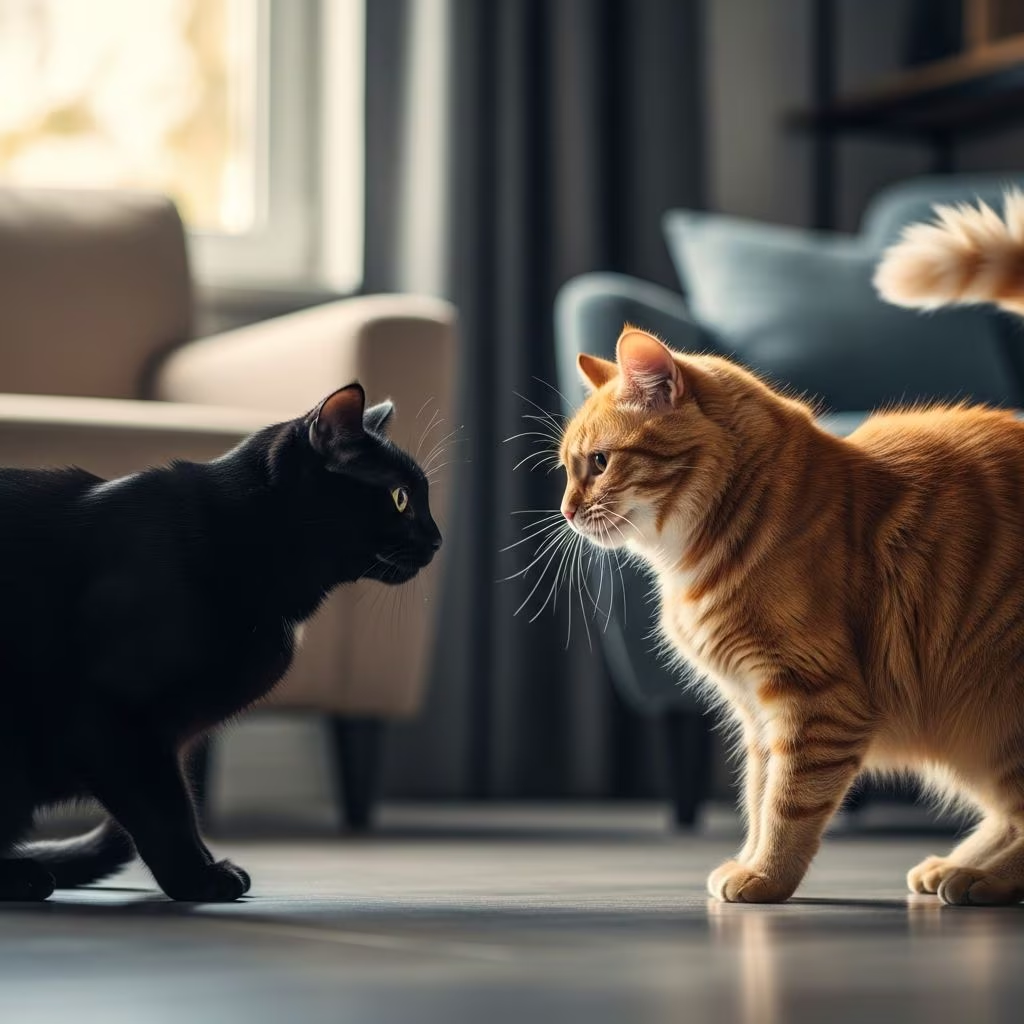
Cat Aggression Between Household Cats: Understanding Causes and Finding Solutions
Cat aggression is a complex behavioral issue that can significantly impact the harmony of a multi-cat household. When cats living together exhibit aggressive behaviors toward one another, it creates stress for both the animals and their owners. Understanding the underlying causes of inter-cat aggression is essential for developing effective intervention strategies and restoring peaceful coexistence. The leading causes of aggressive behavior between household cats are territorial aggression, fear-based aggression, redirected aggression, and incompatible personalities, often occurring simultaneously in different combinations.
Identifying the Main Causes of Inter-Cat Aggression
Before addressing aggressive behavior between cats, it’s crucial to have your veterinarian examine both cats thoroughly. Underlying medical conditions can significantly contribute to fear and aggression, and ruling out health issues should be the first step in any behavior modification plan. Once medical concerns are eliminated, you can work with a veterinary behaviorist to determine the specific cause or combination of causes driving the aggression.
Territorial Aggression in Cats
Cats are naturally territorial animals, and this instinct often forms the foundation of aggression between household members. Territorial aggression occurs when a cat perceives another cat as an intruder in its space. The presence of a new animal, person, or significant changes in the home environment can spark defensive behaviors. This type of aggression typically emerges when cats view resources—such as litter boxes, food bowls, water dishes, and resting areas—as valuable territory that must be defended.
Territorial aggression can also be influenced by physical size and activity levels. Larger cats often intimidate smaller or less active cats, establishing dominance through mere presence. Additionally, a lack of pleasant social experiences with other cats can intensify territorial responses, as can accidental learned associations between the other cat and something unpleasant, such as fireworks or thunder.
Fear-Based Aggression Between Household Cats
Fear-based aggression is another primary driver of inter-cat conflict. When a cat feels threatened or frightened, especially when cornered with no way to escape, it may lash out defensively. Cats naturally use aggression as a protective mechanism when they perceive danger and cannot retreat to safety. This type of aggression often develops in cats with limited early socialization or those with naturally anxious temperaments.
The escalation of fear-based aggression between cats follows a predictable pattern. Cats naturally chase things that move away from them. When a fearful cat flees from an aggressor, the other cat becomes aroused and may pursue, becoming aggressive in the process. This dynamic increases the recipient’s fear while simultaneously reinforcing the chaser’s aggressive response, creating a dangerous cycle that intensifies over time.
Redirected Aggression
Redirected aggression occurs when a cat is aroused by one stimulus but cannot reach or address it directly, so the aggression is instead directed at another cat or person in the household. For example, if a cat becomes excited or agitated by seeing a stray cat through a window, it may redirect that arousal by attacking a household cat nearby. Common triggers for redirected aggression include:
- Watching another cat through a door or window
- Watching or stalking birds, squirrels, or other prey animals
- Smelling another cat’s odor on a family member, visitor, or clothing
- Coming indoors after spending time outside (for primarily indoor cats)
- Hearing high-pitched or unusual noises
- Being frightened or harassed by a dog
- Intervention during a fight between household cats
- Being in stressful environments with multiple unfamiliar cats
After a cat has been aroused by a trigger, it may remain in a highly activated state for an extended period, ranging from hours to days. This prolonged arousal state increases the likelihood of aggressive outbursts toward other household members.
Incompatible Personalities
Sometimes aggression between household cats simply results from incompatible personalities or a personality clash. Not all cats are suited to live together, regardless of the circumstances. Some cats are naturally more social and accommodating, while others are solitary by nature and prefer to live alone. Previous negative interactions, learned associations, and individual temperament differences can all contribute to persistent conflict between cats.
Why Does Territorial Aggression Escalate?
Understanding the escalation of territorial aggression requires examining both the aggressor’s personality and the recipient cat’s response. Each cat’s temperament plays a crucial role in determining whether territorial conflicts remain mild or escalate to serious physical confrontations.
When the recipient of aggression is naturally calm, social, and capable of recognizing subtle threat signals, territorial disputes often remain peaceful. These cats respond to challenges by walking quietly away from the aggressor, allowing the territorial cat to maintain its space without physical conflict. The aggressor can establish dominance through intimidation and body language alone, never requiring actual combat.
Conversely, when the recipient cat responds to threats with fear and runs away, the aggressor becomes excited and may pursue, escalating the situation with a chase that can result in serious injury. Additionally, some cats that exhibit territorial aggression do not rely on subtle posturing. These individuals behave impulsively when approached and immediately lunge at or chase any cat entering their space, leaving no opportunity for peaceful resolution. Such cats never give other animals a chance to understand or respond to warnings, making conflicts almost inevitable.
Why Does Fear-Based Aggression Escalate?
Fear-based aggression creates a particular escalation pattern due to natural feline hunting instincts. Cats are hardwired to chase moving prey, and a fleeing cat triggers this chase response. When a cat that was initially friendly or neutral encounters a fearful cat that flees, the chasing cat becomes aroused and often aggressive during pursuit. This chase dynamic significantly increases the recipient’s fear, creating a harmful feedback loop where the aggressor learns that chasing produces increasingly reactive responses, reinforcing the aggressive behavior.
The victim’s fear intensifies with each chase encounter, making them more likely to flee in future interactions, which perpetuates the cycle. Over time, this pattern becomes deeply established, and even if the aggressor’s initial motivation changes, the learned behavior persists. The two cats develop an increasingly adversarial relationship with each other.
Medical Considerations in Inter-Cat Aggression
Before implementing any behavioral intervention, medical evaluation is absolutely essential. A number of medical conditions can cause or contribute to aggressive behavior in cats. These conditions include toxoplasmosis, hyperthyroidism, epilepsy, dental disease, arthritis, urinary tract infections, and various abscesses or infections. Pain or discomfort can cause a cat to become unexpectedly aggressive, especially if touched in sensitive areas.
Sudden changes in a cat’s behavior, particularly if previously calm cats suddenly begin fighting, warrant immediate veterinary attention. Regular veterinary examinations help rule out medical issues as a cause of aggression and ensure both cats receive appropriate treatment for any underlying conditions. Only after medical causes have been eliminated should behavioral modification strategies be pursued.
Environmental and Developmental Factors
Several environmental and developmental factors contribute to the development of inter-cat aggression. Lack of early socialization during critical developmental periods—particularly between 3 and 9 weeks of age—significantly increases the likelihood of aggressive behavior toward other cats. Kittens not properly exposed to other cats during this window may struggle to interact calmly with feline companions throughout their lives.
Environmental stressors also trigger and intensify aggression between household cats. Moving to a new home, introducing new pets, loud household disruptions, and other significant environmental changes can spark aggressive responses. Conversely, providing enrichment activities and creating a stable, predictable home environment can help reduce stress-related aggression.
Practical Management and Prevention Strategies
Managing inter-cat aggression requires a multifaceted approach tailored to the specific cause or combination of causes. Key strategies include:
- Environmental Management: Provide multiple resources (litter boxes, food bowls, water dishes, resting areas) in separate locations to reduce resource competition and territorial disputes
- Spatial Separation: Temporarily separate aggressive cats to prevent injuries and allow stress levels to decrease
- Gradual Reintroduction: Implement slow, controlled reintroductions through barriers, allowing cats to acclimate to each other’s presence without direct contact
- Trigger Avoidance: Identify and eliminate or manage specific triggers that provoke aggressive episodes
- Enrichment and Exercise: Provide adequate mental and physical stimulation to reduce frustration-based aggression
- Professional Consultation: Work with a veterinary behaviorist to develop a comprehensive treatment plan
When to Seek Professional Help
If you are concerned that your cats are exhibiting signs of fear or aggression when together, consulting with a veterinary behaviorist is highly recommended. These specialists can observe your cats’ interactions, identify the underlying causes of aggression, and develop targeted treatment plans. In some cases, medication may be recommended to reduce anxiety or aggression while behavioral modification strategies are implemented.
Frequently Asked Questions About Inter-Cat Aggression
Q: Can cats living together ever learn to coexist peacefully after fighting?
A: Yes, in many cases cats can learn to coexist peacefully, especially if the underlying cause is addressed. However, the success depends on the type and duration of aggression, the cats’ temperaments, and the consistency of intervention efforts. Some cases require long-term management and may never result in close companionship, but peaceful coexistence is often achievable.
Q: How long does it take to resolve inter-cat aggression?
A: The timeline varies significantly based on the cause and severity of aggression. Some cases may improve within weeks, while others require months of consistent management and behavioral modification. Patience and consistency are essential for successful outcomes.
Q: Should I separate cats that are aggressive toward each other?
A: Temporary separation is often recommended to prevent injuries and allow stress levels to decrease. However, complete permanent separation should be a last resort. Gradual reintroduction with management strategies is preferable when possible.
Q: Can medication help with inter-cat aggression?
A: In some cases, anti-anxiety or anti-aggression medications may be recommended by a veterinary behaviorist to help reduce aggression while behavioral modification strategies are implemented. Medication works best when combined with environmental management and behavioral intervention.
Q: Is inter-cat aggression more common in male or female cats?
A: Inter-cat aggression can occur in both males and females. However, inter-cat aggression in males often increases around social maturity, typically between 2 and 4 years of age, when they attempt to establish social hierarchy.
Q: Can introducing a new cat cause aggression in established household cats?
A: Yes, introducing a new cat is a common trigger for territorial and fear-based aggression. Proper introductions involving slow, gradual exposure and careful management are essential for minimizing conflict when adding a new cat to the household.
Conclusion
Inter-cat aggression is a multifaceted behavioral problem requiring careful assessment and targeted intervention. The leading causes—territorial aggression, fear-based aggression, redirected aggression, and incompatible personalities—often overlap and require individualized treatment approaches. By working with your veterinarian and a veterinary behaviorist, understanding your cats’ specific triggers and personalities, and implementing appropriate environmental modifications and management strategies, you can significantly improve the likelihood of peaceful coexistence. Remember that each cat is an individual, and what works for one household may not work for another. Patience, consistency, and professional guidance are key to successfully resolving inter-cat aggression.
References
- Cat Behavior Problems: Aggression Towards Other Household Cats — VCA Animal Hospitals. Accessed November 28, 2025. https://vcahospitals.com/know-your-pet/cat-behavior-problems–aggression-in-cats-fear-and-territorial-to-other-household-cats
- Aggression in Cats — ASPCA. Accessed November 28, 2025. https://www.aspca.org/pet-care/cat-care/common-cat-behavior-issues/aggression-cats
- Behavior Problems in Cats – Cat Owners — Merck Veterinary Manual. Accessed November 28, 2025. https://www.merckvetmanual.com/cat-owners/behavior-of-cats/behavior-problems-in-cats
- Common feline problem behaviours: Owner-directed aggression — National Center for Biotechnology Information. 2024. https://pmc.ncbi.nlm.nih.gov/articles/PMC11373754/
- Cat Aggression Toward People: Causes and Prevention — Best Friends Animal Society. Accessed November 28, 2025. https://bestfriends.org/pet-care-resources/cat-aggression-toward-people-causes-and-prevention



