

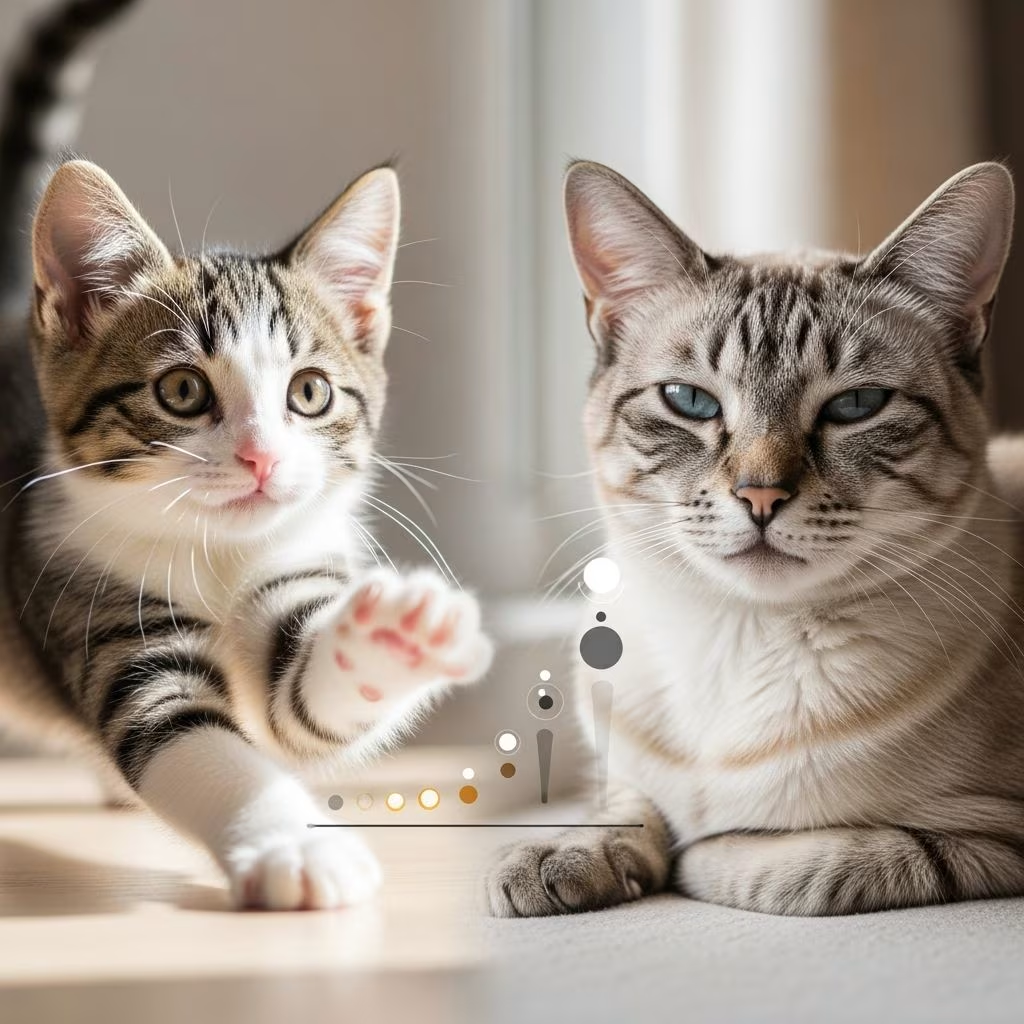
Understanding Your Cat’s Age in Human Years
Many pet owners wonder how old their beloved feline companion actually is when converted to human years. Understanding your cat’s age isn’t simply a matter of multiplying their years by seven—a common misconception borrowed from dog age calculations. Instead, cats follow a unique aging pattern that reflects their rapid early development followed by a more gradual maturation process. By learning how to accurately calculate your cat’s human age, you can better understand their developmental stage, anticipate their health needs, and provide appropriate care tailored to their life phase.
How Many Cat Years Are in a Human Year?
The relationship between cat years and human years follows a specific formula that accounts for the dramatic physical and behavioral changes cats experience during their lifetime. Unlike different dog breeds that may grow and mature at varying rates, domestic cats age remarkably similarly across all breeds, making a universal calculation possible.
The first year of a cat’s life is equivalent to approximately 15 human years. This rapid aging reflects the intense physical development and behavioral maturation that occurs during this period. By their first birthday, a kitten has grown from a helpless newborn to a fully developed adolescent, comparable to a 13- to 15-year-old human in terms of both physical capabilities and behavioral characteristics.
By the second year, cats reach approximately 24 human years. This additional nine human years represents the continued physical maturation and refinement of behavioral patterns. By age two, most cats have reached their full adult size and have developed their distinctive personality traits.
After the second year, each additional cat year equals approximately 4 to 6 human years. This more gradual aging process continues throughout the cat’s remaining lifespan. For practical calculations, most veterinary organizations use the four-human-year equivalent as the standard formula for cats aged two and older.
Cat Age Chart: Quick Reference Guide
Use this comprehensive chart to quickly determine your cat’s approximate age in human years. This table provides an easy reference for cats ranging from one to sixteen years old:
| Cat Age | Human Age |
|---|---|
| 1 year old | 15 |
| 2 years old | 24 |
| 3 years old | 28 |
| 4 years old | 32 |
| 5 years old | 36 |
| 6 years old | 42 |
| 7 years old | 47 |
| 8 years old | 51 |
| 9 years old | 56 |
| 10 years old | 60 |
| 11 years old | 65 |
| 12 years old | 69 |
| 13 years old | 74 |
| 14 years old | 78 |
| 15 years old | 83 |
| 16 years old | 87 |
The Formula for Calculating Cat Years
For cats two years and older, you can use this straightforward mathematical formula to determine your cat’s human age equivalent:
Human Age = (Cat’s Age – 2) × 4 + 24
Let’s work through an example: If your cat is six years old, you would subtract two (6 – 2 = 4), multiply by four (4 × 4 = 16), and add 24 (16 + 24 = 40). Therefore, a six-year-old cat is approximately 40 years old in human years. Using the chart above, you’ll see the calculation aligns with the 42-year-old equivalent listed, accounting for slight variations in aging rates.
Cat Life Stages and Development
Understanding your cat’s life stage is crucial for providing appropriate nutrition, exercise, and healthcare. Cats progress through distinct developmental phases, each with unique physical and behavioral characteristics.
Kitten Stage (Birth to 6 Months)
During the kitten stage, your cat experiences exceptional growth both mentally and physically. Kittens develop rapidly during this period, acquiring motor skills, learning social behaviors, and establishing their personality traits. This stage is characterized by extreme playfulness, high energy levels, and rapid learning capacity. Kittens require frequent meals, appropriate toys for mental stimulation, and early socialization experiences.
Adolescent Stage (6 Months to 2 Years)
By the time your kitten reaches one year old, they become fully grown and develop into mischievous bundles of energy and instinct. They’ll maintain this energetic, playful demeanor well into their second year. Mentally and behaviorally, they continue to mature and develop a deeper bond with their human companions. This stage is ideal for training and establishing good behavioral habits. Cats in this stage still require high-quality food to support their active lifestyle and continued physical development.
Adult Stage (2 to 6 Years)
At approximately two years old, most cats have reached their full adult size and physical maturity, comparable to a young adult human in their twenties. They’ve transitioned from the hyperactive kitten stage to more measured, purposeful behaviors. Adult cats still maintain good energy levels but develop more predictable routines and preferences. This stage is when cats settle into their established personalities and often become more affectionate and bonded with their owners.
Mature Adult Stage (7 to 10 Years)
The mature stage is akin to middle age in humans. During this period, the aging process begins to accelerate more noticeably. As cats settle into their later adulthood, they develop more relaxed and established routines. They’re equivalent to a 47- to 60-year-old human during this time, comfortable in their own fur and enjoying their established lifestyle. Many cats become more selective about their activities and may prefer quiet environments.
Senior Stage (11 to 14 Years)
Senior cats are equivalent to humans in their 60s and 70s. During this stage, cats may experience age-related health changes, including decreased mobility, vision or hearing changes, and dental issues. Senior cats require more frequent veterinary check-ups, specialized nutrition formulated for senior cats, and comfortable resting areas. They may become less active but often become even more affectionate with their human companions.
Super-Senior Stage (15+ Years)
Cats reaching 15 years and beyond are super-seniors, equivalent to humans in their 80s and beyond. At this advanced age, cats require specialized geriatric care, more frequent health monitoring, and accommodations for any mobility or sensory limitations. Many super-senior cats still maintain good quality of life with appropriate care and attention to their specific health needs.
Factors Affecting Cat Aging
While the standard aging formula applies to most domestic cats regardless of breed, several factors can influence how a cat ages and their overall lifespan.
Indoor Versus Outdoor Environment
Cats living exclusively indoors typically live longer than outdoor cats, often reaching 12 to 18 years on average. Some indoor cats can live into their 20s or even longer. The indoor environment protects cats from various hazards including traffic, predators, extreme weather, and disease exposure. Conversely, outdoor cats face more environmental stressors that can shorten their lifespan.
Breed Considerations
Although domestic cats age similarly across breeds, some breed characteristics may influence longevity. Certain breeds may be predisposed to specific health conditions that affect aging rates. Purebred cats sometimes have higher incidences of genetic health issues compared to mixed-breed cats. Discussing your specific cat’s breed with your veterinarian can provide insights into potential health concerns related to their genetic background.
Nutrition and Healthcare
Proper nutrition and preventive veterinary care significantly impact aging and lifespan. Cats receiving high-quality balanced nutrition, regular veterinary check-ups, dental care, and appropriate medical interventions for health issues tend to age more gracefully and live longer. Obesity in cats can accelerate certain age-related health problems and reduce overall lifespan.
Lifestyle and Enrichment
Cats with enriching environments, mental stimulation, and regular play tend to maintain better physical and cognitive health throughout their lives. Environmental enrichment, social interaction, and physical activity contribute to better overall aging outcomes.
Average Cat Lifespan
The average lifespan of a domestic cat is 12 to 18 years, though many cats live well beyond these ranges. Some cats reach 20 to 25 years of age, equivalent to reaching their 90s or 100s in human years. The record-holder for the oldest cat ever lived to be 38 years and 3 days old, which would be approximately 168 years old in human years. This remarkable longevity demonstrates that with optimal care, some cats can live exceptionally long lives.
How Veterinarians Determine Cat Age
Veterinarians base cat aging guidelines on the physical and behavioral changes that occur as cats mature. These observable stages are then matched to corresponding stages of the human life cycle. For example, a one-year-old cat is physiologically similar to a 15-year-old teenager, displaying comparable physical capabilities and behavioral characteristics. By two years old, cats reach physical maturity similar to young adults, having developed their full size and adult behavioral patterns.
When a cat’s exact birthday is unknown, veterinarians can use various health indicators to estimate age. These indicators include tooth condition, eye clarity, coat quality, muscle mass, and overall physical condition. Senior cats may show specific age-related changes such as dental wear, decreased muscle tone, or changes in vision and hearing that help estimate their approximate age.
Frequently Asked Questions
Q: How do you calculate a cat’s age in human years?
A: The first year of a cat’s life equals 15 human years, and the second year adds 9 more human years (totaling 24). After that, add 4 human years for each additional cat year. Alternatively, use the formula: Human Age = (Cat’s Age – 2) × 4 + 24 for cats two years and older.
Q: Are cats the same age across all breeds?
A: Yes, cats age at a relatively similar rate regardless of breed. Unlike dogs, where different breeds mature at different rates, domestic cats follow a consistent aging pattern across breeds.
Q: How old is a 10-year-old cat in human years?
A: Using the formula, (10 – 2) × 4 + 24 = 56. A 10-year-old cat is approximately 60 years old in human years, according to the standard age chart.
Q: At what age do cats become seniors?
A: Cats are typically considered senior at 11 years old, which is equivalent to approximately 65 human years. However, the exact age can vary based on individual health and genetics.
Q: How many human years is a 20-year-old cat?
A: A 20-year-old cat would be approximately 96 human years old using the standard calculation formula.
Q: Can cats live past 20 years?
A: Yes, some cats can live well into their 20s and even 30s with proper care, excellent health, and genetic factors favoring longevity. These cats would be equivalent to humans in their 90s and beyond.
Q: How do indoor and outdoor cats’ ages differ?
A: While the aging formula is the same, indoor cats typically live longer—12 to 18 years on average—compared to outdoor cats. The indoor environment protects cats from hazards that can reduce lifespan.
Q: What should I feed my senior cat?
A: Senior cats benefit from specialized senior cat formulas that account for their changing nutritional needs, often featuring adjusted protein levels, easier digestibility, and joint-supporting supplements.
References
- Cat Age Chart: Calculating Cat Years to Human Years — Chewy. 2025. https://www.chewy.com/education/cat/general/cat-age-chart-in-human-years
- How Old Is My Cat In Human Years? — Pumpkin Pet Insurance. 2025. https://www.pumpkin.care/post/how-old-is-my-cat-in-human-years
- Cat Age Chart: How Old Is My Cat in Human Years? — PetMD. 2025. https://www.petmd.com/cat/general-health/how-old-is-my-cat-in-human-years
- Cat Years Calculator: How Old is my Cat in Human Years? — Purina UK. 2025. https://www.purina.co.uk/articles/cats/senior/care/cats-age-in-human-years
- Cat care by life stage — International Cat Care. 2025. https://icatcare.org/cat-advice/cat-life-stages



