

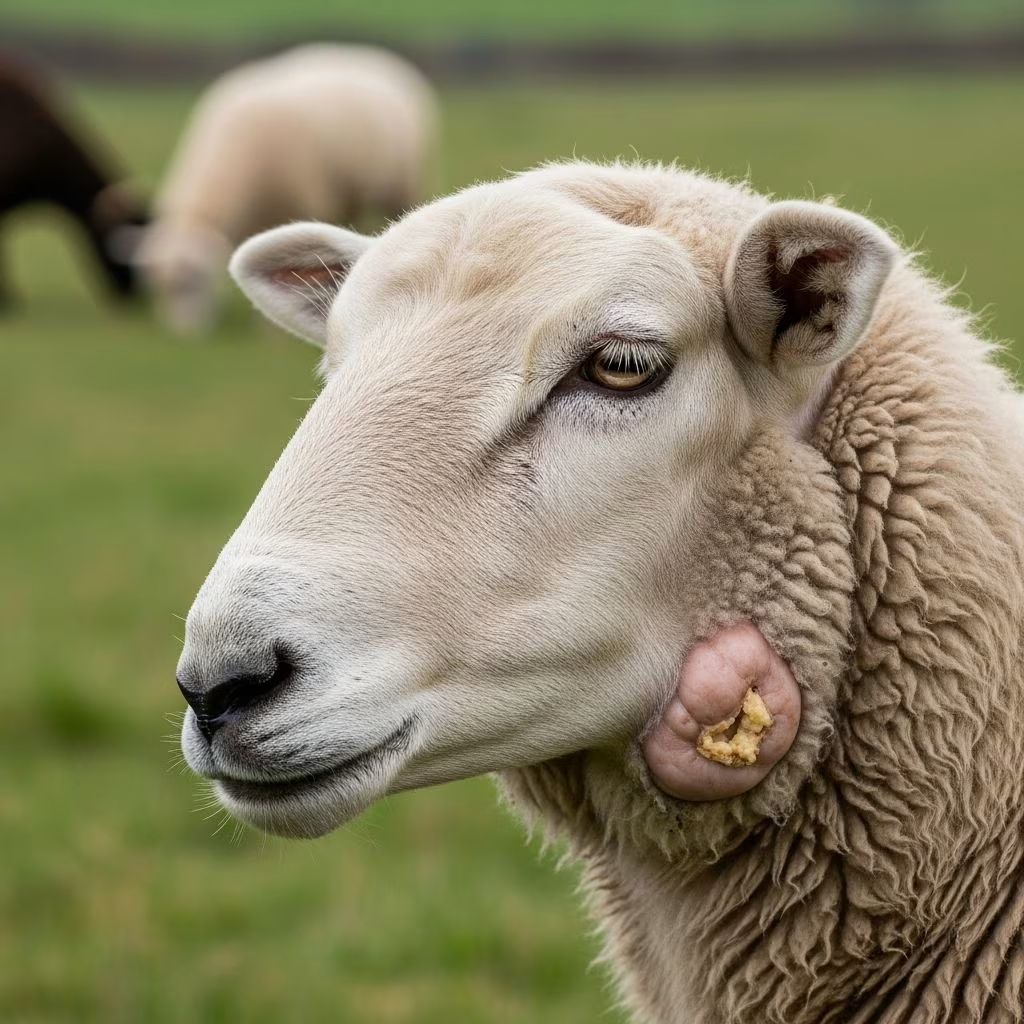
Caseous lymphadenitis (CL), also known as pseudotuberculosis, represents a significant bacterial infection primarily impacting sheep and goats. Caused by Corynebacterium pseudotuberculosis, this chronic condition leads to the formation of abscesses in lymph nodes and internal organs, resulting in substantial economic losses through reduced productivity, carcass condemnations, and herd management challenges.
The Bacterial Culprit Behind CL
The pathogen Corynebacterium pseudotuberculosis is a gram-positive, facultative intracellular bacterium that thrives in the lymphatic system of small ruminants. It enters the body through skin abrasions, mucous membranes, or inhalation, then multiplies and spreads via the bloodstream to lymph nodes and viscera. In sheep, abscesses often develop a thick, laminated, cheese-like pus with calcified cores, while goats more frequently exhibit superficial lymph node involvement.
This bacterium’s resilience stems from its ability to survive within host cells and form protective capsules around abscesses, evading immune responses and antibiotics. Environmental persistence is another key factor; the organism can remain viable in pus, soil, or fomites for months, facilitating transmission during shearing, handling, or shared feeders.
Recognizing Clinical Manifestations
CL manifests in two primary forms: external and internal. External abscesses are the most visible, appearing as firm, painless swellings in peripheral lymph nodes such as submandibular (under the jaw), prescapular (front legs), prefemoral (rear legs), and parotid regions. These lumps, often 2-10 cm in diameter, contain viscous, greenish pus that may rupture, releasing infectious material.
Internal abscesses pose greater diagnostic challenges, affecting lungs, liver, kidneys, udder, or spinal cord. Affected animals display weight loss, chronic coughing, reduced milk yield, mastitis, infertility, or neurological signs like ataxia. Incubation periods range from 2-6 months, with some carriers remaining subclinical yet infectious for life.
- **Common External Sites:** Jawline, neck, shoulders, flanks, udder/scrotum attachment.
- **Internal Impacts:** Respiratory distress, emaciation, poor thrift in lambs/kids.
- **Species Differences:** Goats favor external nodes; sheep internal organs.
Diagnostic Approaches for Accurate Identification
Early detection relies on vigilant observation during routine health checks, especially in woolly or long-haired breeds where abscesses may hide. Palpation of lymph nodes is crucial; suspect CL if nodes are enlarged, firm, and non-painful.
Definitive diagnosis requires laboratory confirmation. Aspirate abscess contents for bacterial culture, which identifies C. pseudotuberculosis via its characteristic morphology. Serological tests like ELISA detect antibodies, indicating exposure, though false negatives occur in debilitated animals. Necropsy reveals internal lesions with pathognomonic cheesy necrosis.
| Method | Advantages | Limitations |
|---|---|---|
| Bacterial Culture | Gold standard; species-specific | Slow (weeks); contamination risk |
| Serology (ELISA) | Detects carriers; herd screening | Doesn’t distinguish active vs. past infection |
| Cytology | Quick pus exam | Less specific |
Treatment Limitations and Best Practices
No curative treatment exists for CL, as the bacterium’s intracellular location and abscess encapsulation render antibiotics largely ineffective. Long-term therapy promotes resistance without resolution, and standard drugs like penicillin or tulathromycin show mixed results in trials.
A randomized study compared three regimens: open drainage/flushing, closed-system lavage with intralesional tulathromycin, and subcutaneous tulathromycin. Closed methods reduced environmental contamination and achieved comparable lesion resolution at 1-month follow-up, but all required meat/milk withdrawal periods due to extralabel use.
Management focuses on containment:
- Isolate affected animals immediately.
- Lance and flush abscesses in a clean environment, disposing pus via autoclaving or bleach (10% solution).
- Surgically excise intact abscesses under anesthesia for valuable breeding stock.
- Cull chronic shedders to protect the herd.
Avoid lancing without isolation, as rupture spreads bacteria via aerosols or fomites.
Vaccination Strategies and Their Role
Vaccines offer partial protection by reducing abscess severity and incidence, though none eradicate infection. In sheep, toxoid-based vaccines (e.g., containing phospholipase D) are administered to lambs at weaning, with boosters 4-6 weeks later and annually. Efficacy varies by biovar (ovis for sheep, equi for goats), with sheep vaccines unlicensed for goats.
No fully licensed goat vaccine exists, but off-label use in high-risk herds shows promise. Vaccination timing matters: pre-exposure in young stock yields best results. Combine with biosecurity for optimal control.
Prevention Through Biosecurity Protocols
Prevention hinges on interrupting transmission chains. Key measures include:
- Quarantine new arrivals for 30-60 days, palpating nodes and serotesting.
- Disinfect housing, feeders, and equipment; C. pseudotuberculosis survives months in dry pus.
- Minimize wounds during shearing (youngest to oldest), castration, or dehorning; use clean tools.
- Separate age groups and heat-treat colostrum from positives to block kid transmission.
In endemic herds, test-and-cull or test-and-segregate programs eradicate CL over years. Monitor via quarterly exams and annual serology.
Economic and Production Impacts
CL inflicts heavy tolls: up to 25% carcass condemnation, 10-20% milk loss, and culling of breeders. In meat operations, abscesses downgrade value; dairy goats suffer mastitis and yield drops. Global prevalence exceeds 20% in some flocks, amplifying costs via labor and diagnostics.
Proactive management yields ROI: vaccinated herds cut incidence by 50-70%, per field studies.
Emerging Research and Future Directions
Ongoing trials explore novel antimicrobials, phage therapy, and multivalent vaccines targeting both biovars. Genomic sequencing aids strain tracking for targeted interventions. Producer education on closed drainage systems shows promise in reducing spread without culling.
Frequently Asked Questions (FAQs)
Is CL curable in sheep or goats?
No, infected animals are lifelong carriers, but management limits spread and severity.
Can humans contract CL?
Rarely; it’s zoonotic only via direct pus contact in immunocompromised individuals. Practice hygiene.
How do I test my entire herd?
Use ELISA serology for screening, followed by culture on suspects. Consult a vet.
Does vaccination guarantee protection?
No, but it significantly reduces clinical disease; boosters are essential.
What’s the best way to dispose of abscess pus?
Autoclave, incinerate, or soak in 10% bleach for 24 hours before burial.
References
- Comparison of three treatment regimens for sheep and goats with caseous lymphadenitis — Journal of the American Veterinary Medical Association (PubMed). 2009-05-01. https://pubmed.ncbi.nlm.nih.gov/19405888/
- Caseous Lymphadenitis (CL) in Sheep and Goats — Ohio State University Extension. 2019-01-15. https://u.osu.edu/sheep/2019/01/15/caseous-lymphadenitis-cl-in-sheep-and-goats/
- Caseous Lymphadenitis (CLA) — NADIS (National Animal Disease Information Service). Accessed 2026. https://www.nadis.org.uk/disease-a-z/sheep/caseous-lymphadenitis-cla/
- Caseous Lymphadenitis in Sheep and Goats — Kansas State University Veterinary Health Center. Accessed 2026. https://www.vet.k-state.edu/docs/vhc/farm/ag-practice-updates/Caseous_Lymph.pdf
- Preventing and controlling Caseous Lymphadenitis (CL) — Ontario Goat. Accessed 2026. https://ontariogoat.ca/cl/
- Caseous Lymphadenitis — The Veterinary Medicine Foundation. Accessed 2026. https://www.tvmf.org/articles/caseous-lymphadenitis/



