

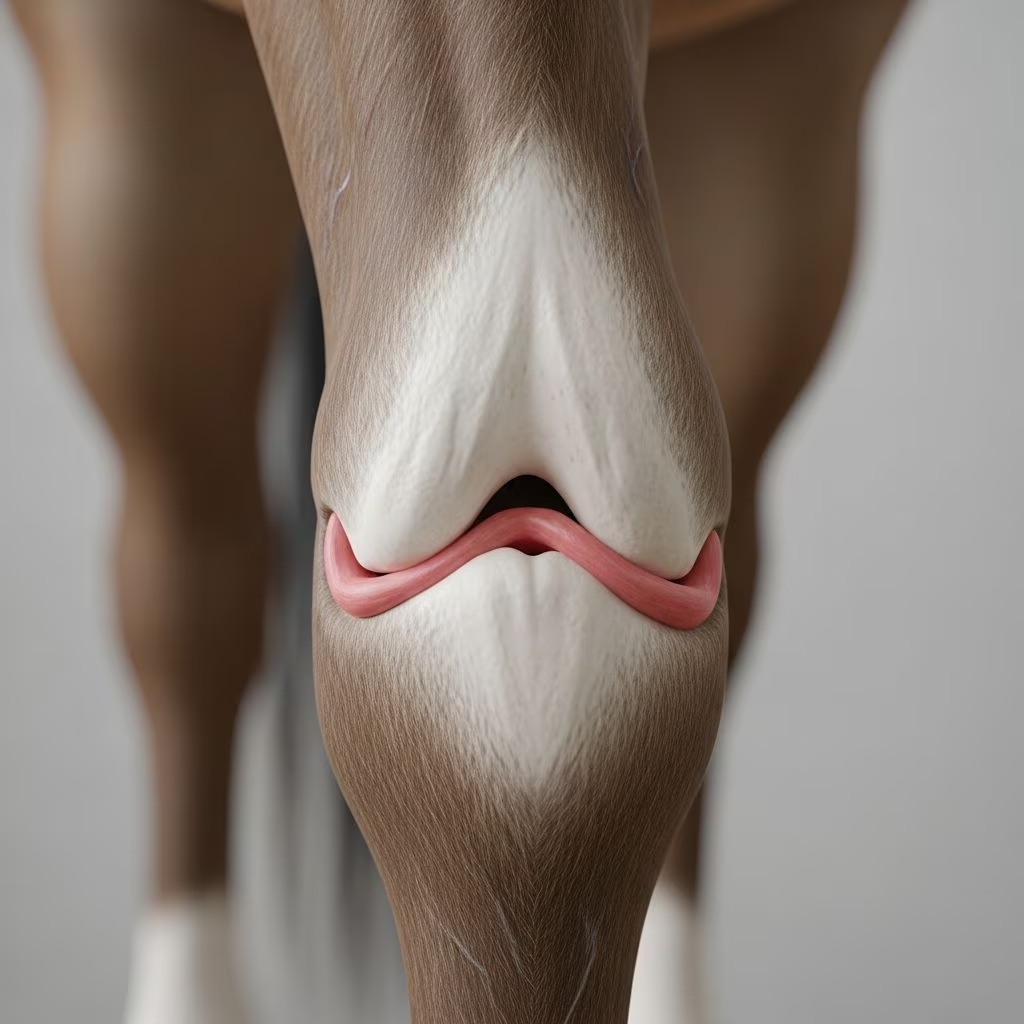
The carpus, often called the knee in horses, plays a critical role in supporting weight and enabling fluid movement during locomotion. Disorders affecting this joint can lead to significant lameness, compromising an equine’s athletic potential and overall quality of life. This article delves into the various conditions impacting the carpal region, drawing from veterinary research and clinical practices to provide horse owners, trainers, and veterinarians with actionable knowledge.
Understanding the Equine Carpus Anatomy
The carpus consists of multiple bones, including the radiocarpal, intercarpal, and carpometacarpal joints, along with ligaments and tendons that stabilize the structure. This complex setup allows for flexion and extension but makes it susceptible to high-impact injuries, especially in performance horses like racehorses, jumpers, and barrel racers. Repetitive stress from galloping or turning can erode cartilage, inflame synovial tissues, or dislodge bone fragments, initiating a cascade of pathological changes.
Key components include the distal radius, carpal bones (such as the radial, intermediate, ulnar, and accessory carpal bones), and the fused second and third carpal bones. Ligaments like the palmar carpal ligament and collateral ligaments provide lateral stability. Disruptions here often manifest as subtle gait abnormalities that progress if unaddressed.
Common Signs of Carpal Dysfunction
Early detection hinges on recognizing behavioral and physical cues. Horses may exhibit:
- Intermittent or consistent lameness, worsening after exercise.
- Swelling or heat around the knee joint.
- Reluctance to fully flex or extend the limb.
- Abnormal stance, such as pointing the toe or shifting weight.
- Pain on palpation, especially over bony prominences.
These symptoms vary by condition but often intensify with flexion tests, where the limb is held in a bent position to provoke discomfort. Owners should monitor for changes post-training or after slips on uneven terrain.
Major Carpal Conditions Explained
Chip Fractures and Osteochondral Fragments
One of the most prevalent issues, chip fractures involve small bone fragments detaching from carpal bones or the distal radius due to trauma or repetitive concussion. These fragments irritate the joint lining, sparking synovitis and eventual osteoarthritis. Young Thoroughbreds in training are particularly prone, with radiographs revealing most cases, though MRI or scintigraphy detects occult lesions.
Symptoms include acute lameness post-injury, joint effusion, and response to intra-articular anesthesia. Arthroscopic removal is the gold standard, with 85-90% of horses returning to full work after recovery periods involving rest and controlled exercise.
Degenerative Joint Disease (Osteoarthritis)
Chronic wear leads to cartilage thinning, bone remodeling, and synovial inflammation. This is the leading diagnosed carpal pathology, often secondary to unresolved chips or conformational flaws. Radiographs show joint space narrowing, osteophytes, and subchondral sclerosis.
Management emphasizes prolonged rest (several months), avoiding corticosteroids to prevent further cartilage degradation, and incorporating hyaluronic acid injections alongside swimming for joint lubrication and conditioning. Anti-inflammatories like phenylbutazone offer symptomatic relief.
Carpitis: Acute Joint Inflammation
Carpitis arises from direct trauma, sepsis, or overuse, causing synovial distension, pain, and heat. Mild cases resolve with 7-10 days of stall rest, NSAIDs, and cryotherapy, while severe instances risk fractures or chronic arthritis.
Advanced therapies include shockwave, laser, or polysulfated glycosaminoglycans. Prompt intervention preserves range of motion and prevents effusion recurrence.
Carpal Hygromas
These chronic seromas develop from repeated kneeling on hard surfaces, forming fluid-filled swellings over the dorsal carpus. Early intervention with aspiration, corticosteroids, and compressive bandaging suffices, but infected hygromas demand surgical debridement.
Prevention involves padded stalls and monitoring turnout behavior in recumbent horses.
Carpal Spavin and Specialized Syndromes
Carpal spavin denotes osteoarthritis at the medial splint bone and second carpal bone junction, common in Quarter Horses and Arabians. It presents with profound lameness, joint effusion, and radiographic bone proliferation. Arthrodesis via drilling promotes fusion, yielding soundness in most cases after 3-6 months of restricted exercise.
Arabian carpometacarpal syndrome features carpal instability with bony proliferations, managed supportively with NSAIDs and trimming until retirement, or arthrodesis if radiocarpal involvement is absent.
Carpometacarpal instability mimics sprains, progressing to exostosis and non-weight-bearing lameness.
Diagnostic Approaches for Accurate Identification
Localization starts with gait analysis and flexion tests, confirmed by intra-articular blocks abolishing lameness. Imaging progresses from radiographs for fractures and degeneration to ultrasound for soft tissues, scintigraphy for active bone changes, and MRI for subtle pathologies.
| Method | Purpose | Advantages |
|---|---|---|
| Radiography | Fractures, OA | Cost-effective, widely available |
| Scintigraphy | Early stress reactions | Detects metabolic activity |
| MRI | Soft tissue, small chips | High resolution, non-invasive |
| Arthroscopy | Direct visualization | Diagnostic and therapeutic |
Synovial fluid analysis rules out sepsis, guiding antibiotic choices if needed.
Treatment Strategies: From Conservative to Surgical
Tailored protocols balance rest, pharmacologics, and rehab:
- Rest and Confinement: 2-3 months initial stall rest with hand-walking, escalating to trotting.
- Medications: NSAIDs, hyaluronans, but cautious steroid use.
- Regenerative: Stem cells or PRP for ligaments.
- Surgical: Arthroscopy for debridement, arthrodesis for end-stage disease.
Post-op rehab includes controlled exercise to stimulate healing without overload.
Rehabilitation and Return to Performance
Graduated programs rebuild strength: swimming preserves fitness sans impact, underwater treadmills enhance proprioception, and shockwave aids fracture healing. Monitoring via serial exams ensures safe progression, with 85%+ success in chip cases.
Prevention Tactics for Long-Term Joint Health
- Proper footing in arenas to minimize torque.
- Conformational assessments pre-training.
- Balanced nutrition with omega-3s and antioxidants.
- Routine farriery to correct imbalances.
- Scheduled veterinary checks for early intervention.
Frequently Asked Questions (FAQs)
What causes most carpal lameness in horses?
Chip fractures and degenerative joint disease top the list, often from high-speed work on firm ground.
Can horses fully recover from carpal fractures?
Yes, with arthroscopic removal and rehab, 85-90% resume athletics.
Is surgery always needed for hygromas?
No, early cases respond to conservative care; surgery for infections.
How long does osteoarthritis treatment take?
Several months of rest and therapy, with variable outcomes.
What breeds are prone to carpal spavin?
Quarter Horses and Arabians, due to conformation.
Conclusion
Proactive management of carpal disorders safeguards equine welfare and extends careers. Collaborate with veterinarians for personalized plans, prioritizing early diagnostics and evidence-based therapies.
References
- Causes of Carpal Lameness in Horses — The Horse Magazine. 2015-11. https://www.horsemagazine.com/thm/2015/11/causes-of-carpal-lameness-in-horses/
- Diseases of the carpus — PubMed (J Am Vet Med Assoc). 1980-10-01. https://pubmed.ncbi.nlm.nih.gov/7414917/
- Diseases of the carpus — Mad Barn Research Bank. N/A. https://madbarn.com/research/diseases-of-the-carpus/
- Carpal joint problems — University of Minnesota Large Animal Surgery. N/A. https://open.lib.umn.edu/largeanimalsurgery/chapter/carpal-joint-problems/
- Carpitis in horses — Vetster. N/A. https://vetster.com/en/conditions/horse/carpitis
- Equine Carpal Spavin Treatment — The Horse. 2009. https://thehorse.com/154218/equine-carpal-spavin-treatment/
- Carpal Hygroma in Horses — MSD Veterinary Manual. 2026. https://www.msdvetmanual.com/musculoskeletal-system/disorders-of-the-carpus-in-horses/carpal-hygroma-in-horses



