

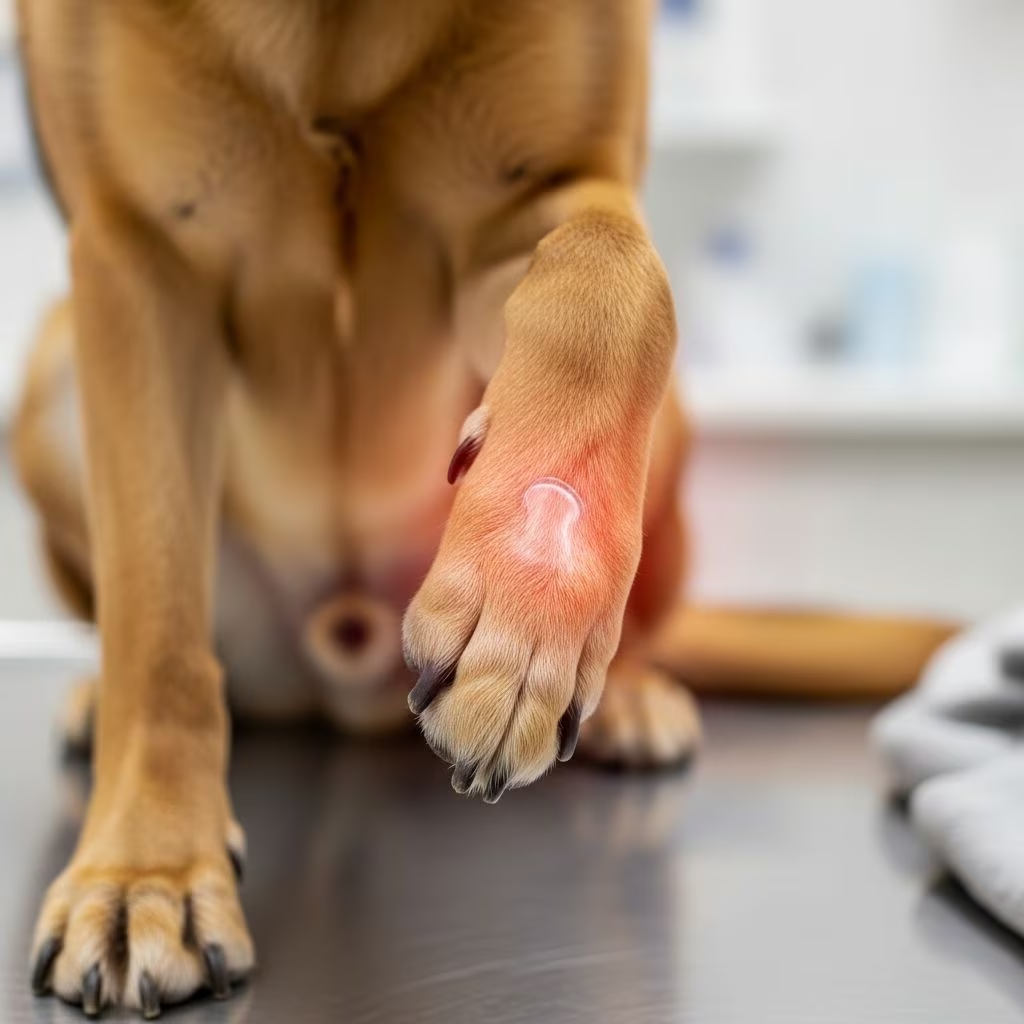
Understanding Carpal Hyperextension in Dogs
Carpal hyperextension is a condition affecting the wrist joint (carpus) in dogs where the joint bends excessively downward, causing the paw to drop unnaturally toward the ground. This condition occurs when the ligaments on the palm side of the wrist become damaged or torn, reducing the joint’s ability to maintain its normal angle. The carpus normally maintains an angle of 140 to 180 degrees in dogs, but with carpal hyperextension, this angle can decrease significantly, sometimes dropping to as low as 90 degrees in severe cases. Understanding this condition is essential for dog owners, as early recognition and appropriate treatment can significantly improve outcomes and quality of life for affected dogs.
Causes of Carpal Hyperextension
Carpal hyperextension can develop through two primary mechanisms: traumatic injury and developmental issues.
Traumatic Causes
Traumatic carpal hyperextension typically results from acute injuries such as falls, jumping from heights, or direct trauma to the wrist area. Large, active dogs are particularly susceptible to this type of injury, though smaller breeds can also sustain similar damage. The injury typically involves tearing of the ligaments on the palm side of the wrist, which are crucial for maintaining joint stability. When these ligaments tear, the joint loses its structural support and begins to hyperextend, causing the characteristic dropped wrist appearance.
Developmental Causes
In some cases, particularly in puppies and young dogs, carpal hyperextension develops gradually without a specific traumatic event. This developmental hyperextension may be related to nutritional imbalances, particularly deficiencies in calcium, phosphorus, or vitamin D. Puppies with developmental hyperextension often improve naturally with proper nutrition and appropriate exercise as they mature.
Clinical Signs and Symptoms
Recognizing the signs of carpal hyperextension is crucial for early intervention. Dog owners should be aware of the following clinical manifestations:
- Visible lameness or limping affecting the front legs, which typically worsens with activity
- Dropped or “sagging” wrist creating an abnormal bend at the carpus
- Abnormal gait with the paw positioned lower than normal, creating a flattened appearance
- Swelling around the wrist joint
- Pain or discomfort when bearing weight on the affected limb
- Reluctance to engage in physical activity or play
- Gradual deterioration of the joint angle over time
While traumatic injuries typically affect only one limb, bilateral involvement (affecting both front legs) can occur if the dog experiences a severe fall or accident affecting both sides simultaneously. In developmental cases, both limbs may eventually become affected.
Diagnosis of Carpal Hyperextension
Proper diagnosis of carpal hyperextension requires a comprehensive approach combining physical examination and advanced imaging techniques.
Physical Examination
The diagnostic process begins with a thorough orthopedic examination performed by a veterinary specialist. During this examination, the veterinarian will observe how your dog stands and moves, assess weight-bearing capacity on each limb, and gently palpate the wrist to evaluate for pain, abnormal movement, and joint instability. The specialist will measure the carpus angle and compare it to normal values to determine the severity of the hyperextension.
Radiographic Imaging
To obtain a detailed view of the internal structures of the joint, dogs typically undergo radiographs (X-rays) under sedation or general anesthesia. Sedation is necessary to keep the dog relaxed and still, allowing for high-quality images while ensuring patient comfort. These X-rays reveal the exact angle of the carpus, identify any fractures or bone abnormalities, and help the veterinarian assess the degree of joint damage.
Advanced Diagnostic Imaging
In some cases, additional diagnostic imaging such as CT (computed tomography) or MRI (magnetic resonance imaging) may be recommended to provide a more comprehensive evaluation of soft tissue damage, ligament integrity, and any associated injuries. These advanced imaging techniques are particularly valuable when planning surgical intervention or when the extent of damage is not fully apparent on standard radiographs.
Treatment Options for Carpal Hyperextension
The appropriate treatment for carpal hyperextension depends on multiple factors including the underlying cause, severity of the condition, age and size of the dog, and overall health status. Treatment approaches range from conservative management to surgical intervention.
Medical Management and Conservative Treatment
Conservative management, while not typically successful for traumatic injuries in larger dogs, may be effective in specific situations. This approach is most appropriate for puppies with developmental hyperextension, dogs weighing less than 20 pounds, and animals with low-grade sprain injuries.
Immobilization and Support
Conservative treatment typically involves immobilizing the carpal joint using casts, splints, bandages, or braces to provide stability while the ligaments attempt to heal. Recently, customized carpal supports have been developed that provide improved comfort and allow for daily use with easier application and removal compared to traditional splinting methods. These devices can be worn without causing pressure sores, making them more practical for long-term management. Professional measurement and fitting by a chartered physiotherapist ensures optimal support and comfort for your dog.
Medications
Dogs with carpal hyperextension may benefit from oral non-steroidal anti-inflammatory drugs (NSAIDs) such as carprofen, which help reduce pain and inflammation. These medications may be prescribed for short or long-term use depending on the dog’s pain level and response to treatment. If NSAIDs are insufficient or contraindicated due to other health conditions, alternative pain medications such as gabapentin or tramadol may be recommended.
Physical Therapy and Rehabilitation
Physical therapy and rehabilitation play vital roles in managing carpal hyperextension, particularly following surgical intervention or as part of conservative management. Techniques include physiotherapy, hydrotherapy (water-based therapy), and other modalities that help improve joint function and overall strength. Hydrotherapy is particularly beneficial as it allows dogs to exercise in a supportive environment while reducing stress on the damaged joint.
Additional Therapeutic Modalities
Supplementary treatments such as acupuncture and laser therapy may help reduce pain and inflammation in dogs with carpal hyperextension. These modalities can be used alongside conventional treatments to optimize outcomes.
Surgical Treatment
Surgery is often the most appropriate treatment for traumatic carpal hyperextension injuries, particularly in larger dogs and cases where conservative management has failed or is unlikely to succeed.
Carpal Arthrodesis
The standard surgical procedure for carpal hyperextension is carpal arthrodesis, which involves fusing the carpal joint so it can no longer hyperextend. During this procedure, the articular cartilage is removed from the joint surfaces of the carpus, and specialized plates and screws are placed across the joint. These implants hold the joint in a stable position, allowing the wrist bones to fuse together over an 8 to 12-week period. Surgical costs typically range from $1,000 to $5,000 depending on the complexity and geographic location.
Partial vs. Pancarpal Arthrodesis
The extent of fusion depends on the severity and location of the damage. Some dogs may only require partial carpal arthrodesis, where only two of the carpal joints are fused. More severe cases necessitate pancarpal arthrodesis, where all the carpal joints are fused to provide complete stability. The choice between these approaches is determined during surgical planning based on diagnostic imaging and clinical assessment.
Post-Surgical Management
Following surgical intervention, the veterinarian will monitor the dog’s recovery through periodic X-ray evaluations to assess the progression of bone fusion. Once radiographic evidence confirms successful fusion of the carpal joint, support devices can be gradually removed and the dog can gradually return to normal activity levels. Post-operative care typically includes pain management, restricted activity during the healing period, and physical therapy to optimize joint function and strength once healing is progressing appropriately.
Recovery and Prognosis
The prognosis for dogs with carpal hyperextension varies based on the treatment approach and underlying cause. Dogs treated surgically with appropriate post-operative care generally have good outcomes, though they may develop some arthritis in the affected joint over time. Dogs managed conservatively with splints and braces will likely develop chronic joint instability and progressive arthritis, but may maintain acceptable quality of life with appropriate pain management and activity modification.
Following surgical treatment, most dogs return to normal or near-normal function within several months. Weight management and controlled exercise during recovery are essential for optimal outcomes. Dogs should maintain a healthy weight to minimize stress on healing joints and prevent complications.
Prevention and Management Considerations
While traumatic injuries cannot always be prevented, certain measures may reduce risk. Limiting high-impact activities, preventing falls from heights, and providing appropriate nutrition during the growth phase in puppies can help minimize carpal problems. Senior dogs with developing arthritis should have activity levels adjusted to their capabilities to prevent falls and injuries.
Dogs with developmental hyperextension benefit from excellent nutrition with appropriate calcium and phosphorus ratios, as well as adequate vitamin D intake. Growing puppies should be fed high-quality, age-appropriate diets formulated for their size to support proper skeletal development.
Frequently Asked Questions
Q: Is carpal hyperextension painful for dogs?
A: Yes, carpal hyperextension can cause significant pain and discomfort, particularly with weight-bearing and activity. Pain levels vary depending on the severity of the condition and whether inflammation is present. Managing pain is an important component of treatment whether conservative or surgical approaches are used.
Q: Can carpal hyperextension resolve on its own in puppies?
A: Developmental hyperextension in puppies often resolves naturally with proper nutrition and age-appropriate exercise as the dog matures. However, traumatic injuries typically do not resolve without intervention and often progressively worsen if left untreated.
Q: What is the success rate of carpal arthrodesis surgery?
A: Carpal arthrodesis has a high success rate when performed by an experienced veterinary orthopedic surgeon. Most dogs recover well and return to normal or near-normal function within several months following successful bone fusion.
Q: Can both front legs be affected by carpal hyperextension?
A: Yes, bilateral carpal hyperextension can occur, particularly with severe traumatic injuries or in some developmental cases. Bilateral involvement may require surgical intervention on both limbs or conservative management of both sides simultaneously.
Q: How long does it take for the carpal joint to fuse after surgery?
A: The carpal joint typically takes 8 to 12 weeks to achieve solid fusion following arthrodesis surgery. During this period, dogs require restricted activity and careful monitoring to ensure proper healing occurs.
Q: Are there alternatives to surgery for carpal hyperextension?
A: Conservative management with splints, braces, medications, and physical therapy can be effective for mild cases, developmental hyperextension in puppies, and small dogs. However, traumatic injuries in larger dogs often require surgical intervention for optimal long-term outcomes.
Q: Will my dog develop arthritis after carpal hyperextension treatment?
A: Dogs managed conservatively with braces will likely develop chronic joint instability and arthritis over time. Dogs treated surgically may develop some arthritis in the fused joint, but typically have better long-term function than those managed conservatively.
References
- Carpal Hyperextension in Dogs: Causes, Symptoms, Treatment — Toe Grips. 2024. https://toegrips.com/carpal-hyperextension-in-dogs/
- Carpal Hyperextension Injury and Current Treatments in Canines — Dog Leggs. 2024. https://www.dogleggs.com/blog/carpal-hyperextension-injury-and-current-treatments-in-canines/
- Carpal Hyperextension — Fitzpatrick Referrals. 2024. https://www.fitzpatrickreferrals.co.uk/orthopaedics/carpal-hyperextension/
- Carpal Hyperextension in Dogs: Causes, Signs & Treatment — WIMBA Veterinary. 2024. https://wimba.vet/carpal-hyperextension/
- Dog Wrist Injuries: Sprains, Carpal Hyperextension Treatment Guide — Ortho Dog. 2024. https://orthodog.com/blogs/sit-stay-heal/how-to-identify-and-treat-sprains-canine-carpal-hyperextension-and-other-common-wrist-injuries-in-dogs
- Carpal Hyperextension — Manchester Veterinary Specialists. 2024. https://www.mvsvets.co.uk/pet-owners/carpal-hyperextension/
- Carpal Hyperextension Injury — Animal Surgical Center of Michigan. 2024. https://www.animalsurgicalcenter.com/carpal-hyperextension-injury



