

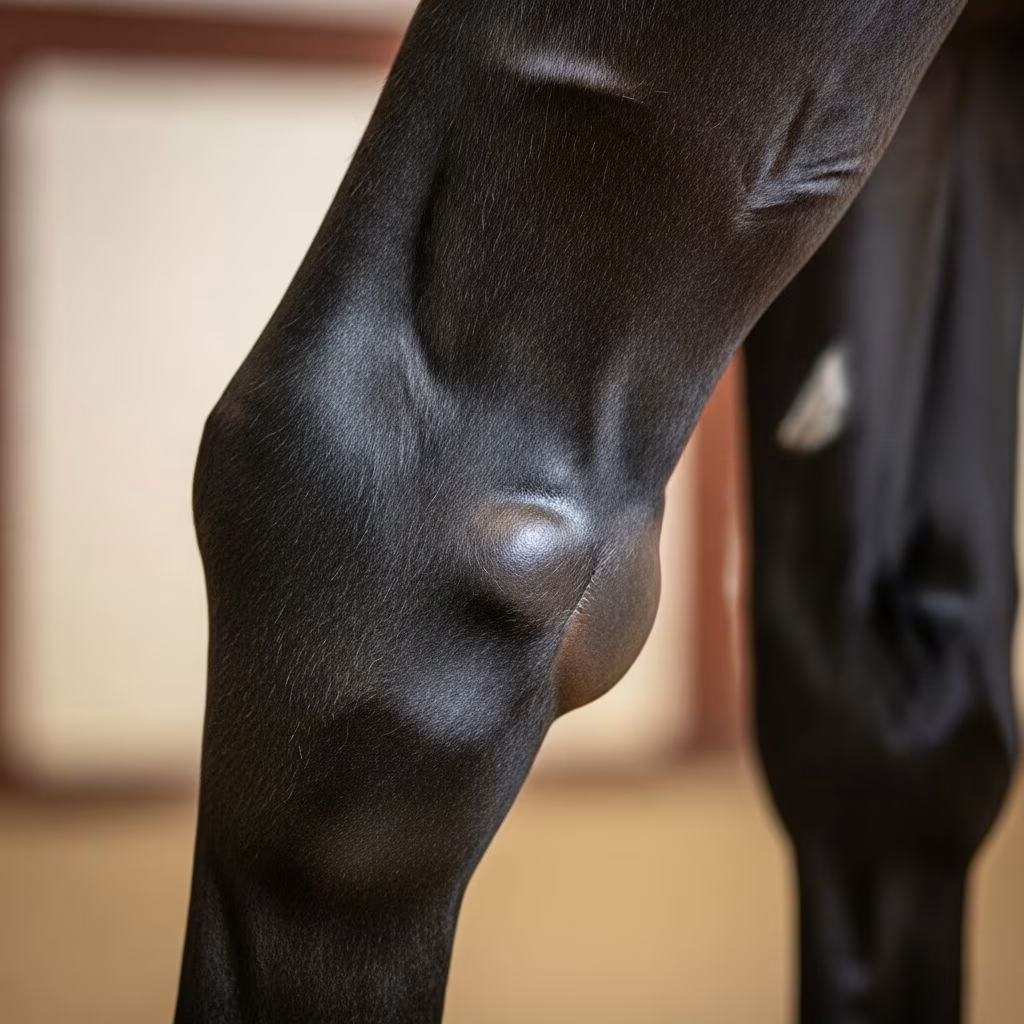
Carpal hygroma represents a frequent soft tissue issue in horses, manifesting as a fluid-filled sac on the front of the knee joint, often due to repeated blunt force. This condition arises primarily from mechanical pressure and impacts during daily activities or stalling, leading to bursal distension without initial lameness in most cases. Early recognition and intervention are crucial to prevent complications like infection or fibrosis that could impair joint function.
The Anatomy of the Equine Carpus and Hygroma Formation
The carpus, or knee, in horses consists of multiple rows of small bones facilitating flexion and extension during movement. Positioned dorsally over this joint is a natural bursa that can hypertrophy into a hygroma when subjected to chronic trauma. Such trauma commonly occurs when horses lie down and rise repeatedly on hard surfaces, causing repeated impacts to the thin skin overlaying the carpus. Over time, this leads to hematoma formation, followed by synovial fluid accumulation within an adventitious bursa, creating a fluctuant, painless swelling.
Understanding this pathology begins with recognizing that hygromas are not true cysts but rather chronic seromas or bursae. They typically develop unilaterally but can affect both forelimbs in severe cases. Factors exacerbating formation include poor bedding quality, obesity increasing recumbency pressure, and conformational issues that alter weight distribution.
Recognizing Early Signs and Symptoms
Horses with carpal hygromas often show no overt lameness, allowing the condition to progress unnoticed. Key indicators include a soft, fluctuant mass on the dorsal carpus surface, which may grow to golf ball size or larger over weeks to months. The skin over the swelling remains intact initially, though it can thicken and hairless with chronicity. Palpation reveals a non-painful, ballotable fluid pocket, distinguishable from solid masses or joint effusions.
Secondary signs emerge if untreated: skin ulceration from pressure necrosis, serous discharge, or acute lameness signaling infection. In performance horses, subtle gait asymmetries might appear during high-speed work, though rare. Owners should monitor stall habits, noting frequent lying down or reluctance to rise as precursors.
- Primary symptom: Dorsal carpal swelling, uniform and fluctuant.
- Progression markers: Skin thickening, hair loss, or discharge.
- Rare indicators: Mild lameness or joint stiffness if fibrosis develops.
Diagnostic Approaches for Accurate Assessment
Veterinary diagnosis hinges on physical examination, imaging, and exclusion of differentials like synovial hernias or abscesses. Ultrasonography delineates the fluid-filled structure, confirming bursal nature and checking for joint communication via contrast studies. Radiography rules out fractures or osteoarthritis, essential as up to 10% of hygromas may connect to the carpal joint, altering treatment.
Aspiration yields clear, viscous synovial fluid, analyzed for infection via cytology and culture. Regional nerve blocks help differentiate from intra-articular pain. In ambiguous cases, MRI provides detailed soft tissue resolution, though less common due to cost.
| Diagnostic Tool | Purpose | Key Findings |
|---|---|---|
| Physical Exam | Initial detection | Painless fluctuant swelling |
| Radiography | Bone/joint integrity | No osseous changes; rules out fractures |
| Ultrasonography | Soft tissue detail | Fluid pocket, wall thickness |
| Contrast Study | Joint communication | Tract visualization |
Conservative Management Strategies
For small, non-infected hygromas, non-surgical options prioritize fluid reduction and pressure relief. Aspiration followed by corticosteroid injection, such as triamcinolone, collapses the bursa temporarily, combined with compressive bandaging using padded stacks and splints for 4-6 weeks. NSAIDs like phenylbutazone control inflammation, while environmental modifications—soft bedding, rubber mats—prevent recurrence.
Success rates hover around 50-70% for early lesions, dropping with chronicity due to endothelial lining persistence. Owners must monitor daily for bandage sores, a common pitfall requiring prompt adjustment. Hydrotherapy and controlled exercise post-bandaging aid fibrosis resolution without stiffness.
Surgical Interventions for Persistent Cases
When conservative measures fail or infection supervenes, surgery becomes necessary. Options range from curettage—scraping the lining post-drainage—to en bloc resection, excising the entire sac. Penrose drains manage postoperative fluid, maintained under casts or splints for 4 weeks minimum. Antibiotics cover 10-14 days, targeting potential contaminants.
A documented case involved a young Quarter Horse undergoing extirpation; initial recovery was smooth, marred by a bandage sore treated additionally, allowing return to training at 6 months. Recurrence risks, linked to incomplete lining removal, necessitate vigilant follow-up. Arthroscopic exploration addresses joint communications discovered intraoperatively.
- Pre-op prep: Imaging confirmation, sterile aspiration.
- Intra-op: Lining curettage or excision, drain placement.
- Post-op: Immobilization (tube cast 4 weeks), gradual weaning to exercise.
Potential Complications and Risk Mitigation
Infection post-drainage plagues 20-30% of cases, manifesting as heat, pus, and lameness, demanding aggressive debridement. Fibrosis restricts carpal flexion, impairing gait; early mobilization counters this. Recurrence, up to 40% surgically, stems from residual endothelium—thorough curettage mitigates.
Bandage complications like sores arise from pressure points; weekly checks and custom fitting avert them. Long-term, cosmetic concerns persist, though rarely career-ending in non-racing equids.
Prevention Tactics for Horse Owners
Proactive stall management trumps treatment costs. Provide thick bedding (8-12 inches straw or shavings), especially for heavy breeds prone to recumbency. Weight control reduces impact forces; regular farriery ensures balanced conformation. For at-risk horses post-injury, prophylactic padding shields the carpus during recovery.
Educate on early detection: weekly limb inspections catch swellings pre-enlargement. In herds, separate aggressive stall mates to curb trauma.
Prognosis and Long-Term Outlook
Prognosis excels for uncomplicated cases: 80-90% resolve with appropriate care, minimally impacting athletic careers. Racing prospects face higher scrutiny due to aesthetics, but most return to full function. Chronic or infected hygromas carry guarded outlooks, with fibrosis potentially limiting extension. Regular veterinary check-ups sustain joint health.
Frequently Asked Questions (FAQs)
What causes a carpal hygroma in my horse?
Repetitive trauma from lying down on hard surfaces primarily causes it, leading to bursa fluid buildup.
Will a hygroma make my horse lame?
Rarely, unless infected or fibrosed; most remain sound.
How long does recovery take after surgery?
Typically 4-6 weeks immobilization, full return to work in 4-6 months.
Can hygromas be prevented?
Yes, with ample soft bedding and weight management.
Is surgery always needed?
No, many respond to drainage, steroids, and bandaging.
References
- Equine Medicine Surgery Case Study 201209 Hygroma — Colorado State University Veterinary Teaching Hospital. 2012. https://www.scribd.com/document/465109786/equine-medicine-surgery-case-study-201209-hygroma
- Disorders of the Carpus and Metacarpus in Horses – Horse Owners — MSD Veterinary Manual. Accessed 2026. https://www.msdvetmanual.com/horse-owners/bone-joint-and-muscle-disorders-in-horses/disorders-of-the-carpus-and-metacarpus-in-horses
- Carpus: hygroma in Horses (Equis) — Vetlexicon Equis. Accessed 2026. https://www.vetlexicon.com/equis/musculoskeletal/articles/carpus-hygroma/



