
Cardiac Issues In Pet Birds: 5 Key Disorders And Signs
Explore the unique heart structure of pet birds and key disorders affecting their cardiovascular health for better care and early detection.
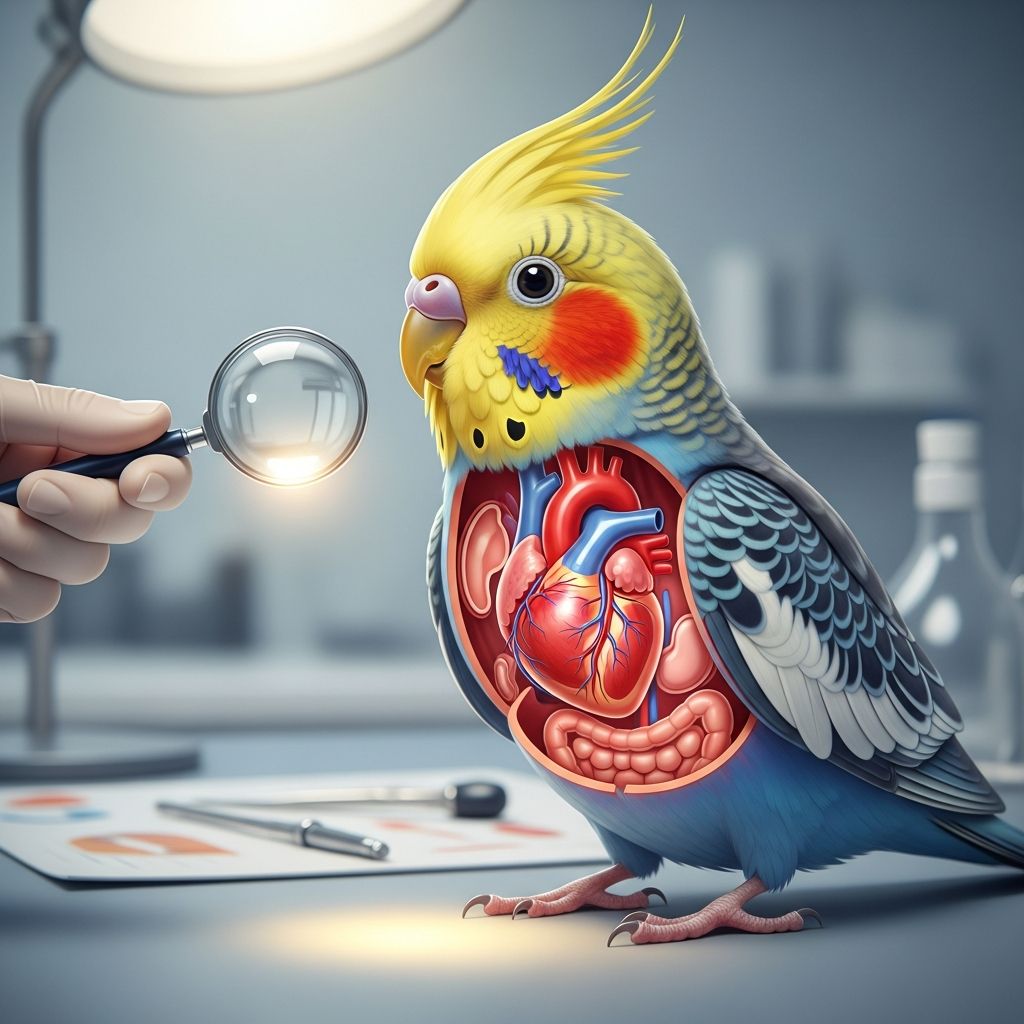
The cardiovascular system in pet birds is a marvel of evolutionary design, tailored for high-energy activities like flight. Unlike mammals, birds possess a four-chambered heart with distinct adaptations that support efficient oxygen delivery, but these same features make them prone to specific disorders when health falters. Understanding these issues is crucial for bird owners to provide timely care and extend their pets’ lives.
Unique Anatomy of the Bird Heart
Birds have a fully divided four-chambered heart consisting of two atria and two ventricles, enabling complete separation of oxygenated and deoxygenated blood. The right atrium is typically larger than the left, and the left ventricle boasts walls two to three times thicker than the right, generating systolic pressures four to five times higher to pump blood through the body against greater resistance.
The heart’s cone shape, with the left ventricle extending to the apex and the right forming a crescent, optimizes mechanical efficiency. Atrioventricular valves differ from mammals: the right AV valve is a single muscular spiral flap, while the left is tricuspid. These connect to the Purkinje system for electrical activation, ensuring precise closure during systole. Coronary arteries, often two to four in number, form anastomotic networks around the coronary groove, supporting high perfusion demands, especially during flight when hypoxia triggers vasodilation.
| Feature | Bird Heart | Mammal Heart (Comparison) |
|---|---|---|
| Chambers | Four, fully separated | Four, fully separated |
| Left Ventricle Wall | 2-3x thicker than right | Thicker, but less disparity |
| Right AV Valve | Muscular spiral flap | Tricuspid leaflets |
| Heart-to-Body Ratio | Higher, inversely scales with size | Proportional to body mass |
| Resting Heart Rate | 115-130 bpm (up to 1200 in small birds) | Lower relative to size |
This table highlights key structural differences that influence disease susceptibility in pet birds.
Common Signs of Heart Trouble in Companion Birds
Pet birds mask illness well, but cardiovascular problems manifest through subtle cues. Look for lethargy, reduced appetite, weight loss, or difficulty breathing, often with tail bobbing. Sudden weakness, especially after exertion, or reluctance to perch high signals poor circulation. Cyanosis—bluish tinges on skin or mucous membranes—indicates oxygen deprivation.
- Respiratory distress: Open-mouth breathing or wheezing due to pulmonary congestion.
- Exercise intolerance: Inability to fly or flap wings vigorously.
- Swelling: Fluid accumulation in abdomen (ascites) or legs (edema).
- Behavioral shifts: Increased sleeping, fluffed feathers, or aggression.
- Arrhythmias: Irregular heartbeats causing fainting or head bobbing.
These symptoms overlap with other conditions like respiratory infections, underscoring the need for veterinary evaluation.
Primary Cardiovascular Disorders Affecting Pet Birds
Ascites Syndrome and Right Heart Strain
Ascites, or abdominal fluid buildup, often stems from right-sided heart failure. In rapidly growing birds like psittacines, increased metabolic demands overwhelm the thinner right ventricle, leading to venous congestion. Causes include nutritional imbalances, high altitudes, or toxins. Fluid pressure impairs liver and kidney function, creating a vicious cycle.
Congestive Heart Failure Dynamics
Left-sided failure causes pulmonary edema, while biventricular issues lead to systemic edema. High cardiac output requirements in birds exacerbate damage from hypertension or valve defects. Dilated cardiomyopathy, where heart chambers enlarge and weaken, is common in older cockatiels and amazons.
Valvular and Myocardial Diseases
Endocarditis, bacterial infection of heart valves, arises from bacteremia. Thickened valves impair flow, causing murmurs audible via stethoscope. Myocardial fibrosis from chronic stress or vitamin deficiencies stiffens heart muscle, reducing contractility.
Aneurysms and Vascular Weakness
Aortic rupture, rare but fatal, occurs in species like budgerigars under stress. Atherosclerosis, plaque buildup in arteries, mirrors human disease but is linked to high-fat diets in pets.
Congenital Anomalies
Septal defects—holes between chambers—allow blood shunting, straining the heart over time. Persistent truncus arteriosus, failure of outflow separation, is seen in poultry but occasionally in pets.
Diagnostic Approaches for Avian Cardiology
Veterinarians use a multi-modal strategy. Auscultation reveals murmurs or arrhythmias; ECG captures depolarization patterns unique to birds, with negative QRS in lead II. Radiographs assess heart size—enlargement suggests failure—while echocardiography visualizes chamber dimensions, valve function, and ejection fraction. Bloodwork checks for anemia, infection, or electrolyte imbalances.
- Echocardiography: Gold standard for wall thickness and contractility.
- ECG: Monitors rates up to 670 bpm at rest, higher during activity.
- Biomarkers: Emerging tests like NT-proBNP gauge heart stress.
Management and Therapeutic Strategies
Treatment targets underlying causes and symptoms. Diuretics like furosemide reduce fluid overload, while pimobendan boosts contractility. ACE inhibitors manage hypertension. Nutritional support with taurine-rich diets prevents deficiencies.
Supportive care includes oxygen therapy, low-stress environments, and weight monitoring. Surgical interventions, like valve repair, are rare due to avian size constraints.
Preventive Measures for Optimal Heart Health
Proactive care minimizes risks. Provide balanced diets low in fats, high in antioxidants. Maintain ideal weight to avoid obesity strain. Regular exercise via flight space prevents sedentary deconditioning. Annual vet checkups with cardiac screening catch issues early.
- Monitor for stress—limit handling during molt.
- Avoid toxins like heavy metals in cages.
- Ensure humidity and ventilation to prevent respiratory-heart links.
Species-Specific Vulnerabilities
Small birds like budgies face higher rates from rapid metabolism; large parrots develop age-related fibrosis. Flightless pets risk atrophy from inactivity.
FAQs on Pet Bird Heart Health
Can pet birds recover from heart failure?
With early intervention, many stabilize, though full recovery depends on cause and severity. Lifestyle changes extend quality life.
How do I know if my bird has a heart murmur?
Vets detect via stethoscope; owners note exercise intolerance prompting checkups.
Is diet crucial for avian cardiac health?
Yes—excess seeds cause obesity; pellets with omega-3s support vessels.
What role does stress play in bird heart disease?
Chronic stress elevates cortisol, straining the heart; enrich environments reduce risks.
Are heart meds safe for small birds?
Dosed precisely by avian specialists, they improve outcomes safely.
References
- Anatomy Of The Avian Heart – Pet Birds by Lafeber Co. — Lafeber Co. Accessed 2026. https://lafeber.com/pet-birds/anatomy-of-the-avian-heart/
- The Cardiovascular System in Animals – Merck Veterinary Manual — Merck & Co. Accessed 2026. https://www.merckvetmanual.com/circulatory-system/cardiovascular-system-introduction/the-cardiovascular-system-in-animals
- Inside The Mighty Avian Heart – Northern Parrots — Northern Parrots. Accessed 2026. https://www.northernparrots.com/blog/inside-the-mighty-avian-heart/
- THE AVIAN CARDIOVASCULAR SYSTEM — American Association of Avian Pathologists. Accessed 2026. https://aaap.memberclicks.net/assets/Slides/cardiovascular.pdf
- Evaluating and Treating the Cardiovascular System — Harrison’s Bird Foods. 2024-02-12. https://www.harrisonsbirdfoods.com/wp-content/uploads/2024/02/12_cardiology.pdf
- Cardiovascular physiology and diseases of pet birds — PubMed/NCBI. 2009. https://pubmed.ncbi.nlm.nih.gov/19131032/
Similar Articles








Read full bio of medha deb


