
Cardiac Failure in Young Turkeys: Understanding Round Heart Disease
Comprehensive guide to spontaneous cardiomyopathy in turkey flocks and prevention strategies
Introduction to Turkey Cardiac Disorders
The poultry industry faces significant challenges in maintaining flock health and productivity, particularly when dealing with cardiovascular conditions. Among these, a specific cardiac affliction has historically represented a substantial economic burden for turkey producers. This condition, commonly referred to as round heart disease or spontaneous dilated cardiomyopathy, remains a concern despite improvements over recent decades. Understanding the mechanisms, recognition, and management of this disease is essential for anyone involved in turkey production, whether operating large commercial facilities or smaller backyard operations.
Unlike many poultry diseases transmitted through infectious agents, this particular cardiac disturbance develops spontaneously without a viral, bacterial, or parasitic trigger. The condition is distinct from other cardiomyopathies observed in poultry species and presents unique diagnostic and management challenges. Modern breeding practices and improved management protocols have significantly reduced the prevalence of this disease compared to its occurrence in earlier decades, yet it remains relevant to contemporary turkey farming operations.
Historical Context and Current Disease Incidence
Spontaneous cardiac dilation in turkeys emerged as a recognized disease problem during the mid-twentieth century. The condition gained prominence as turkey breeding focused increasingly on rapid growth rates and larger body size. Beginning in the 1960s, veterinarians and researchers documented cases of unexplained cardiac enlargement and sudden mortality in turkey flocks, particularly during the early growth phases.
The prevalence of this disease has declined substantially since the 1980s. Industry surveys of turkey veterinarians indicate that the condition is now observed only occasionally, with infection rates within affected flocks typically remaining below 0.5%. This dramatic reduction is largely attributed to genetic selection practices implemented at the primary breeder level, suggesting that susceptibility to the condition has a hereditary component. However, the disease has not been entirely eliminated, and understanding its etiology and manifestations remains important for maintaining flock health.
Biochemical Mechanisms and Pathophysiology
The exact cause of spontaneous cardiac dilation in turkeys remains elusive, primarily due to limited research funding directed toward this specific condition. However, investigative studies have provided insights into the biochemical alterations that occur within affected myocardial tissue. Research employing furazolidone administration, which induces dilated cardiac changes in turkeys, has revealed significant disturbances in cellular metabolism and ion transport mechanisms.
Affected cardiac muscle tissue demonstrates reduced activity of creatine kinase, the enzyme essential for cellular energy metabolism. Glycolytic pathways show decreased function, while glycogen concentrations drop below normal levels. The enzymatic activities involved in the Krebs cycle, the fundamental energy production pathway in mitochondria, are diminished. Additionally, the oxidation of fatty acids—a critical energy source for cardiac muscle—is impaired. These metabolic disruptions suggest that cardiac tissue becomes energy-starved, unable to generate sufficient ATP to maintain normal function.
A particularly significant finding involves alterations in calcium transport mechanisms. The sarcoplasmic reticulum, the specialized calcium storage organelle within muscle cells, shows increased calcium-transport ATPase activity. This abnormality disrupts normal calcium cycling, which is fundamental to muscle contraction and relaxation. The constellation of these biochemical changes points toward myocardial ischemia—inadequate blood supply to heart tissue—as a central mechanism in disease pathogenesis.
Environmental Factors Contributing to Disease Development
Environmental conditions play a significant role in the manifestation of spontaneous cardiac dilation in turkeys. Multiple disease outbreaks have been associated with hypoxic environments characterized by reduced oxygen availability and elevated carbon dioxide concentrations. These atmospheric abnormalities can occur at various critical periods in turkey production.
During the incubation phase, inadequate ventilation of incubators or improper management of incubation conditions can create an oxygen-depleted environment. Similarly, the transportation phase from hatchery to brooding facilities frequently coincides with disease outbreak reports, particularly when transport occurs during cold weather conditions when vehicle ventilation is compromised. Field observations suggest that poults positioned on lower tiers within transport vehicles experience greater environmental stress due to accumulation of carbon dioxide and depletion of oxygen in these areas.
At the brooding facility, poor ventilation systems or improperly functioning ventilation fans create stratified air layers, especially during cold weather months. Such conditions result in oxygen-depleted zones, particularly in areas where air circulation is minimal. The combination of high stocking density, inadequate ventilation, and cold ambient temperatures creates an environment conducive to hypoxemia in developing poults.
Nutritional and Mineral Factors
Trace mineral balance, particularly copper concentration, has been implicated in disease occurrence. Turkey industry veterinarians have occasionally observed increased incidence of cardiac dilation in flocks receiving feed or water with elevated copper levels. While the exact mechanism remains undefined, excessive copper may interfere with cardiac myocyte function or contribute to oxidative stress within myocardial tissue.
Conversely, adequate dietary copper is necessary for normal cardiac function. Deficiency of this essential mineral can impair the synthesis of structural proteins and enzymes critical for cardiac health. Maintaining proper copper balance represents an important component of preventive management strategies.
Clinical Manifestations and Disease Progression
Timing and Mortality Patterns
The temporal pattern of mortality associated with spontaneous cardiac dilation follows a distinctive progression. The vast majority of deaths occur during the initial four weeks of life, with peak mortality typically observed between two and three weeks of age. This timing coincides with periods of rapid physiological development and increasing metabolic demands. After the third week of life, mortality becomes sporadic and unpredictable, occurring sporadically rather than in clusters.
Affected poults frequently die suddenly without premonitory signs, discovered already deceased during routine coop checks. The sudden nature of death reflects the acute decompensation of cardiac function, likely due to arrhythmias or acute pump failure.
Observable Clinical Signs
Some affected poults display visible signs before death, though sudden mortality predominates. Clinical observations in symptomatic birds include ruffled feathers indicating systemic malaise, drooping wings suggesting muscular weakness and fatigue, and a generally unthrifty appearance characterized by poor feathering and reduced activity. Dyspnea, or labored breathing, may be observed as pulmonary congestion develops secondary to cardiac insufficiency.
Survivors of the acute phase demonstrate persistent growth impairment. The cardiac insufficiency reduces systemic circulation and oxygen delivery to growing tissues, resulting in decreased growth rates. This growth deficit manifests as reduced feed efficiency and lower body weights at market age, with affected birds averaging approximately 3 pounds (1.4 kilograms) lighter than healthy cohorts. The disparity in body weight and growth rate frequently results in social stress, as healthy, larger birds attack the stunted survivors.
Necropsy Findings
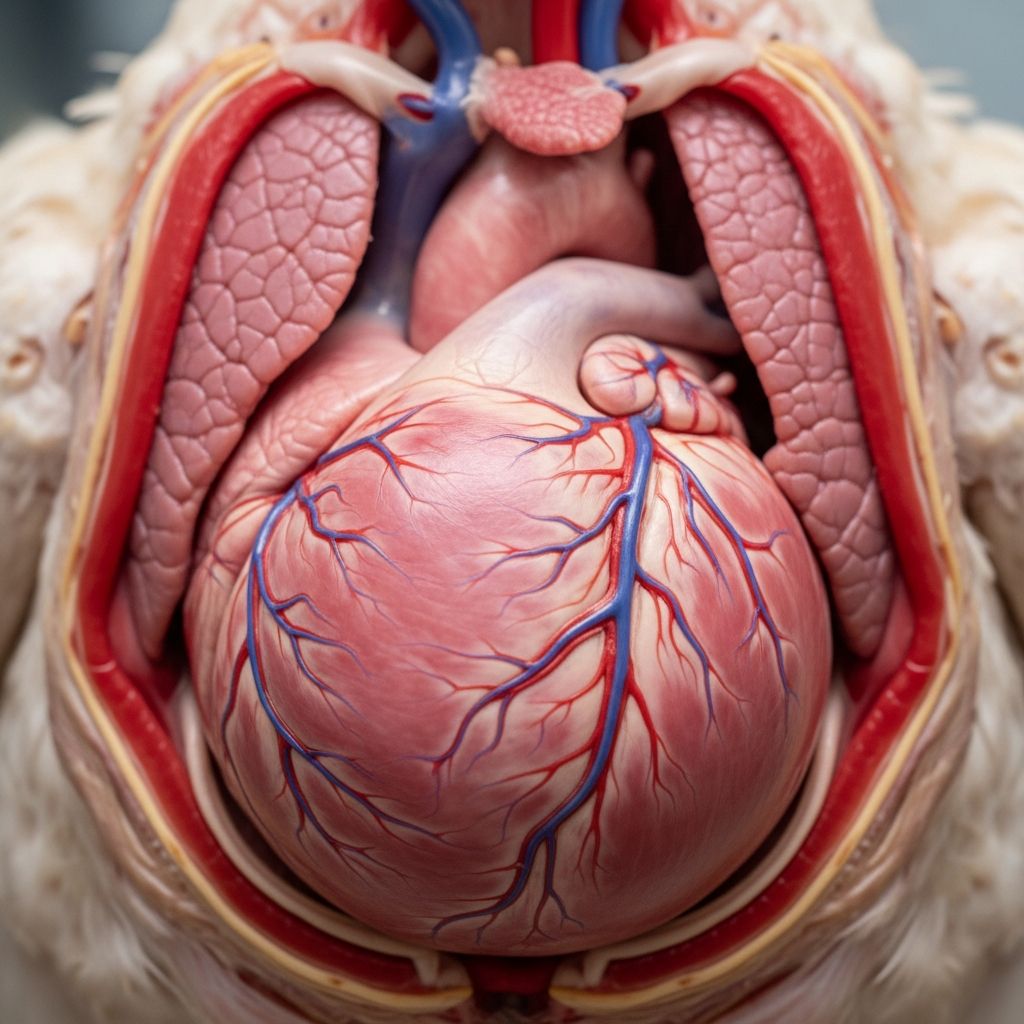
Gross pathological examination reveals characteristic lesions in affected turkeys. The most striking finding is marked cardiac enlargement, primarily due to ventricular dilation in young birds and combined dilation with ventricular wall hypertrophy in older affected birds. The enlarged heart may occupy an abnormally large portion of the thoracic cavity.
Secondary to cardiac dysfunction, pulmonary congestion and edema develop as blood backs up into the lungs. The liver becomes enlarged and congested, developing a dark discoloration due to blood engorgement. Ascites, the accumulation of fluid within the abdominal cavity, frequently develops. Hydropericardium, the accumulation of fluid within the pericardial sac surrounding the heart, may be present.
Microscopic examination of cardiac tissue reveals nonspecific changes including vascular congestion, myofibril disruption and damage within individual cardiac myocytes, and focal infiltration by lymphocytes. These histological findings confirm myocardial injury but do not identify the initiating cause.
Comparative Disease Presentation Table
| Disease Feature | Young Poults (Weeks 1-4) | Older Birds (Weeks 5+) |
|---|---|---|
| Cardiac Pathology | Primarily ventricular dilation | Dilation with ventricular hypertrophy |
| Mortality Rate | Peak at 2-3 weeks; highly variable | Sporadic, much lower |
| Growth Impact | Severe growth reduction if surviving | 3 lb (1.4 kg) weight deficit at market |
| Associated Lesions | Pulmonary edema, ascites, hepatomegaly | Similar but less pronounced |
Diagnostic Approach and Confirmation
Diagnosis of spontaneous cardiac dilation depends on a combination of flock history, clinical signs, and necropsy findings. When sudden mortality occurs in young turkeys with no apparent infectious disease triggers, investigation should include examination of deceased birds for characteristic cardiac lesions. The distinctive gross findings—markedly enlarged heart, pulmonary congestion, hepatomegaly, and ascites—in the absence of infectious agents support the diagnosis.
Complete flock history is essential for diagnosis. Information regarding incubation conditions, transportation methods and timing, brooding facility ventilation systems, feed composition, and water mineral content helps identify potential contributing factors. The temporal pattern of mortality, with peak occurrence between two and three weeks of age followed by sporadic cases, is characteristic of this condition.
Differential diagnosis should exclude other causes of sudden mortality in young turkeys, including nutritional deficiencies, infectious diseases, and toxicosis. The absence of clinical or laboratory evidence of infectious agents and the characteristic cardiac lesions distinguish spontaneous cardiomyopathy from other mortality causes.
Management and Prevention Strategies
Treatment Limitations
Unfortunately, no effective treatment exists for spontaneous cardiac dilation once clinical signs develop. The irreversible nature of myocardial damage makes therapeutic intervention ineffective. Management efforts must therefore focus entirely on prevention through environmental and management optimization.
Hypoxia Prevention During Critical Periods
Prevention centers on maintaining adequate oxygen availability throughout critical periods of turkey development. During egg incubation, incubators must be properly maintained with functional ventilation systems ensuring adequate air exchange. Monitoring of incubator oxygen and carbon dioxide levels, when feasible, helps ensure optimal atmospheric conditions.
Transportation from hatchery to brooding facility requires particular attention. Vehicles must have adequate ventilation during transport, with special consideration to temperature management. During cold weather, the tendency to reduce ventilation to maintain warmth must be balanced against the need for adequate oxygen availability. Loading density should be managed to prevent overcrowding, and transport duration should be minimized.
At brooding facilities, ventilation infrastructure must be properly designed, installed, and maintained. Ventilation fans must function reliably, and air circulation patterns should be monitored to prevent stratification and localized hypoxic zones. During cold weather, when producers may restrict ventilation to reduce heating costs, careful management ensures adequate fresh air supply without excessive temperature fluctuations.
Optimal Brooding Environment
Comprehensive brooding management encompasses temperature, humidity, air quality, and stocking density optimization. Temperature must be appropriate for the poult age, gradually reduced as birds develop. Humidity should be maintained within appropriate ranges to support respiratory health. Stocking density must allow for normal behavior and movement without excessive crowding that compromises air quality.
Heat stress has been postulated to increase the incidence of spontaneous cardiac dilation, suggesting that overheating during brooding should be avoided. Achieving balance between adequate warmth and avoiding excessive heat represents an important management objective.
Nutritional Management
Feed formulation should meet established nutritional requirements for young turkeys while avoiding mineral imbalances. Copper levels must be adequate for normal cardiac function without exceeding safe limits. Water quality should be monitored, with particular attention to mineral content. Hard water with excessive mineral content should be addressed through appropriate water treatment if necessary.
Frequently Asked Questions
Q: Is spontaneous cardiac dilation contagious?
No, this condition is noninfectious and cannot be transmitted between birds. It develops spontaneously in susceptible individuals exposed to predisposing environmental or genetic factors.
Q: Can affected turkeys be treated successfully?
Unfortunately, no effective treatment exists. Once clinical signs develop, myocardial damage is irreversible. Prevention through proper management is the only viable approach.
Q: Why does the disease primarily affect young poults?
Peak mortality during weeks 2-3 coincides with rapid growth and increasing metabolic demands. Young poults with developing cardiovascular systems may be particularly vulnerable to inadequate oxygen supply during this critical developmental period.
Q: How can I prevent this disease in my flock?
Focus on maintaining adequate oxygen availability during incubation, transport, and brooding. Ensure proper ventilation, avoid overcrowding, maintain appropriate brooding temperatures, and provide nutritionally balanced feed with correct mineral levels.
Q: What should I do if I suspect this disease in my flock?
Contact a poultry veterinarian for proper diagnosis. Conduct necropsy examinations on deceased birds to confirm characteristic cardiac lesions. Review management practices to identify and correct potential environmental stressors.
Industry Implications and Future Considerations
The continued genetic selection for rapid growth in turkey production creates ongoing challenges for cardiovascular health. As breeding programs emphasize larger body size and faster growth rates, the metabolic demands on developing cardiac systems increase. The reduction in disease incidence since the 1980s demonstrates that genetic selection can minimize susceptibility, yet the condition has not been entirely eliminated.
Modern producers must balance economic pressures to maximize growth rates with attention to maintaining sufficient cardiovascular function in developing birds. Management practices that maintain optimal environmental conditions during critical developmental periods remain essential despite genetic improvements.
Future research addressing the genetic factors predisposing some birds to spontaneous cardiac dilation could further reduce disease incidence. Understanding the specific genetic markers associated with increased susceptibility would enable more targeted breeding decisions at the primary breeder level.
Conclusion
Spontaneous cardiac dilation in turkeys represents a noninfectious cardiovascular condition with significant historical importance in commercial turkey production. While disease incidence has declined substantially since the 1980s, the condition remains relevant to contemporary turkey farming. The pathophysiology involves myocardial ischemia resulting from altered metabolic function and ion transport disturbances, often precipitated by hypoxic environmental conditions during critical developmental periods.
Successful management of this condition requires comprehensive attention to environmental factors, particularly oxygen availability during incubation, transportation, and brooding. No treatment exists for affected birds, making prevention through optimal management practices the essential strategy. Continued attention to brooding facility design and operation, combined with modern genetic selection practices, helps minimize economic losses while maintaining flock health and productivity in commercial turkey operations.
References
- Spontaneous Cardiomyopathy of Turkeys — Merck Veterinary Manual. 2024. https://www.merckvetmanual.com/poultry/spontaneous-cardiomyopathy-of-turkeys/spontaneous-cardiomyopathy-of-turkeys
- Causes and Control of Spontaneous Cardiomyopathy or Round Heart in Turkeys — Utah State University Extension. 1999. https://digitalcommons.usu.edu/extension_histall/1025
- Round Heart in Turkeys (Dilated Cardiomyopathy) — The Poultry Site. 2024. https://www.thepoultrysite.com/publications/diseases-of-poultry/228
- Hemorrhagic Vasculopathy in Turkeys — MSD Veterinary Manual. 2024. https://www.msdvetmanual.com/poultry/hemorrhagic-vasculopathy-in-turkeys
- Effect of Hypoxia and Diet on Spontaneous Turkey Cardiomyopathy — PubMed/MEDLINE. Published 1983. https://pubmed.ncbi.nlm.nih.gov/1485855/
Similar Articles








Read full bio of Sneha Tete


