

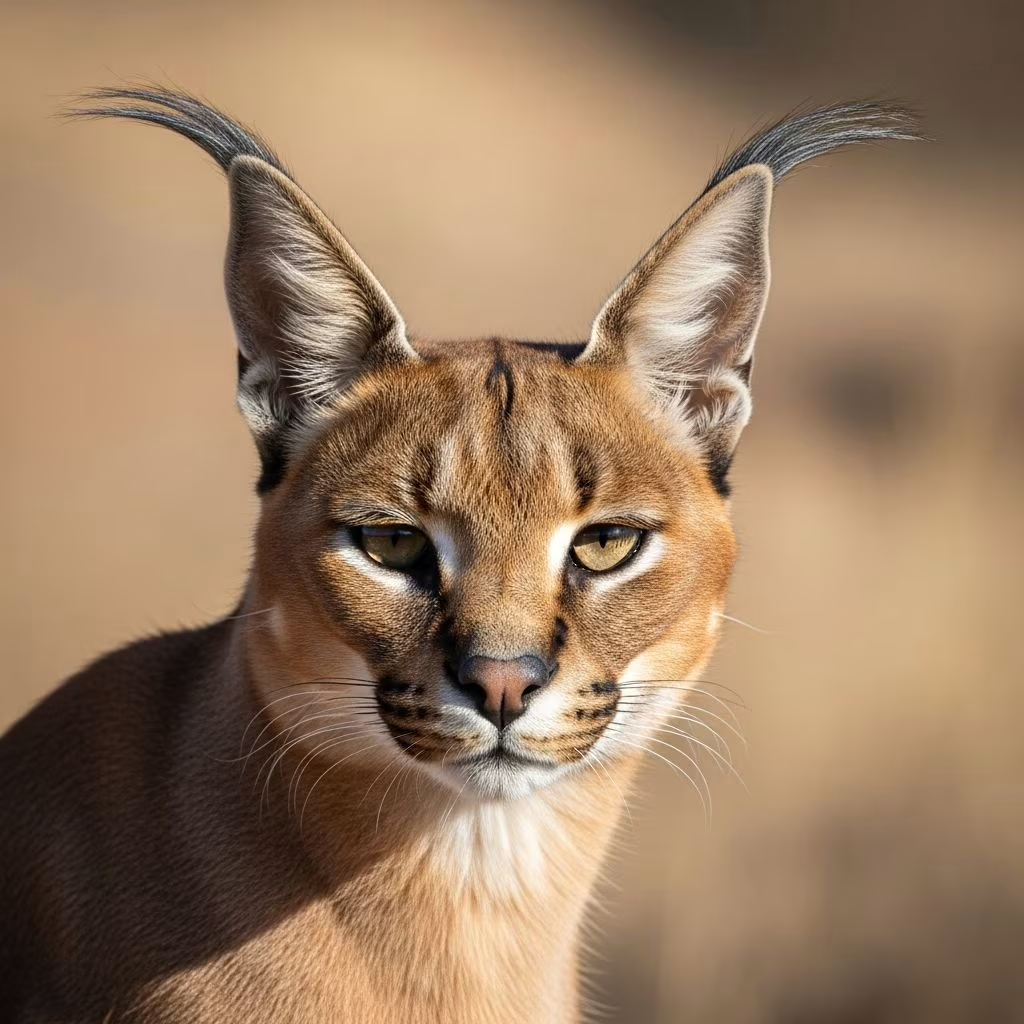
Caracals, with their striking tufted ears and sleek coats, captivate exotic pet enthusiasts, but their suitability as companions remains highly questionable due to legal restrictions, behavioral challenges, and intensive care requirements.They are wild felids ill-suited for domestic life.
Understanding the Caracal: A Wild Felid Profile
Native to Africa’s savannas, deserts, and parts of Asia, caracals (Caracal caracal) are medium-sized cats weighing 18-40 pounds, measuring up to 3.5 feet in length. Their name derives from Turkish for ‘black ears,’ highlighting the long tufts that enhance hearing for hunting small prey like birds and rodents. Unlike domestic cats, caracals retain powerful builds for leaping up to 10 feet to catch airborne prey, showcasing athletic prowess unmatched in house pets.
These solitary hunters thrive in arid environments, covering vast territories. In captivity, replicating such spaces proves daunting, as they demand room to sprint and climb. Their lifespan reaches 12-17 years in the wild but can extend to 20 in controlled settings with proper husbandry.
Navigating U.S. Legal Landscape for Caracal Ownership
Exotic pet regulations fragment across states, with caracals classified as wild felids under varying bans or permit systems. No uniform federal law governs private ownership, leaving it to states and localities.
States like Alabama, Nevada, North Carolina, South Carolina, and Wisconsin permit ownership without explicit bans, though local ordinances may apply. Others, including Arizona, Arkansas, Delaware, Florida, Idaho, Indiana, Maine, Mississippi, Missouri, Montana, North Dakota, Oklahoma, Pennsylvania, Rhode Island, South Dakota, Texas, Virginia, and Wyoming, require permits often involving inspections, fees, insurance, and experience proof.
| State Category | Examples | Requirements |
|---|---|---|
| Legal (No Ban) | Alabama, Nevada, NC, SC, WI | Local rules may apply; vet access needed |
| Permit Required | AZ, FL, TX, PA, others (18+ states) | Fees ($100-$300/yr), insurance ($100k+), caging specs, background checks |
| Illegal | AK, CA, CO, CT, GA, WA, others | Total private ban; zoos/sanctuaries only |
Permits demand enclosures meeting standards like 1-acre minimums in some areas for similar cats, liability insurance up to $250,000, microchipping, and annual renewals. Violations risk confiscation. Internationally, the UK mandates licenses proving welfare compliance.
Essential Housing and Enclosure Demands
Caracals reject confinement in standard cat setups. Experts recommend secure, expansive outdoor enclosures with climbing structures, dust baths, and hiding spots mimicking savannas—minimum 20×40 feet for one adult, scaled for pairs.
- Secure Fencing: 12-foot chain-link with inward-curving tops to deter escapes; caracals scale effortlessly.
- Indoor Options: Rare; need reinforced rooms with claw-proofing, as they shred furniture.
- Environmental Enrichment: Platforms, logs, water features; without stimulation, stress leads to pacing or aggression.
Home modifications cost thousands, and escapes pose public safety risks given their speed and strength.
Dietary and Nutritional Challenges
Whole-prey diets dominate: rabbits, quail, rodents—2-3% of body weight daily, equating to 1-2 pounds for adults. Commercial raw diets supplement, but balance calcium-phosphorus ratios meticulously to avoid deficiencies.
Specialized vets craft plans; domestic kibble fails due to taurine needs and dental health from gnawing bones. Feeding live prey raises ethical/safety issues, while improper nutrition triggers obesity or metabolic bone disease.
Health Management and Veterinary Hurdles
Finding exotic-savvy vets proves critical, as caracals face unique issues: hypertrophic cardiomyopathy, dental wear from hard prey, and rabies vaccine absence (illegal in some states without USDA-approved shots).
Annual exams, vaccinations (where possible), deworming, and diagnostics run $500-$2000 yearly. Insurance is scarce; owners budget for emergencies like injuries from jumps.
Behavioral Traits: Taming the Untamable
Caracals bond selectively but retain wild independence, spraying urine to mark territory, vocalizing with growls over purrs, and exhibiting high prey drive—chasing pets or children.
Litter training succeeds inconsistently; scratching destroys interiors. Socialization from youth aids, but puberty (6-12 months) unleashes aggression. They demand 4-6 hours daily interaction or exercise, incompatible with standard schedules.
- Pros: Loyal to owners; playful acrobatics.
- Cons: Destructive; poor with strangers/other animals; nocturnal activity disrupts sleep.
Financial Commitment: Beyond the Purchase Price
Initial costs: $5,000-$20,000 per kitten from breeders. Ongoing: $5,000-$10,000/year for food, enclosures ($10k+ build), vets, permits ($300+).
| Expense Category | Estimated Annual Cost |
|---|---|
| Food (Raw Prey) | $2,000-$4,000 |
| Veterinary Care | $1,000-$3,000 |
| Enclosure Maintenance/Permits | $1,000-$2,500 |
| Insurance/Supplies | $500-$1,500 |
| Total | $5,000-$11,000 |
Breeding adds complexities; most owners underestimate long-term burdens.
Sourcing Responsibly: Breeder and Adoption Insights
Seek USDA-licensed breeders with health-tested lineages; avoid mills. Sanctuaries like Big Cat Rescue discourage private sales, urging support for conservation. Adoptions rare; rescues prioritize wildlife rehab over pets.
Ethical and Conservation Perspectives
Private ownership fuels demand, pressuring wild populations (Vulnerable per IUCN). Captive breeding aids genetics but hybrids muddy conservation. Sanctuaries advocate against pets, citing welfare failures.
Releasing pets harms ecosystems; euthanasia or lifetime sanctuary commitment often results from relinquishments.
Alternatives to Caracal Ownership
- High-Energy Domestic Breeds: Bengals or Savannahs (F3+ legal everywhere) mimic looks with manageable traits.
- Volunteering: At rescues for big cat interaction without ownership.
- Zoos/Safaris: Ethical viewing preserves wild dignity.
Frequently Asked Questions (FAQs)
Are caracals legal in my state?
Check local laws; legal in ~10 states without bans, permits elsewhere, illegal in 20+.
How much does a caracal cost?
$5k-$20k purchase; $5k+/year upkeep.
Can caracals be house-trained?
Partially; expect accidents and destruction.
Do caracals get along with dogs?
Rarely; high predation risk.
What enclosure size is needed?
Minimum 800 sq ft outdoor, secure.
In summary, while alluring, caracals demand extraordinary resources most cannot provide. Opt for domesticated alternatives for mutual thriving.
References
- State Laws Exotic Cats — Big Cat Rescue. 2023. https://bigcatrescue.org/conservation-news/state-laws-exotic-cats
- Do Caracals Make Good Pets? A Tough Cat to Tame — A-Z Animals. 2024. https://a-z-animals.com/animals/caracal/caracal-facts/do-caracals-make-good-pets/
- Do Caracals Make Good Pets? Vet-Verified Ethics, Legality & Facts — Catster. 2024. https://www.catster.com/lifestyle/do-caracals-make-good-pets/
- Pet Caracal Legal States 2026 — World Population Review. 2026-01-01. https://worldpopulationreview.com/state-rankings/pet-caracal-legal-states
- Caracal Cat Price — Oreate AI Blog. 2024. https://www.oreateai.com/blog/caracal-cat-price/
- Caracals as Pets: Understanding Behavior, Diet, and Risks — PetPlace. 2024. https://www.petplace.com/article/cats/pet-care/caracals-as-pets
- Do Caracals Make Good Pets? — Cats.com. 2024. https://cats.com/do-caracals-make-good-pets



