

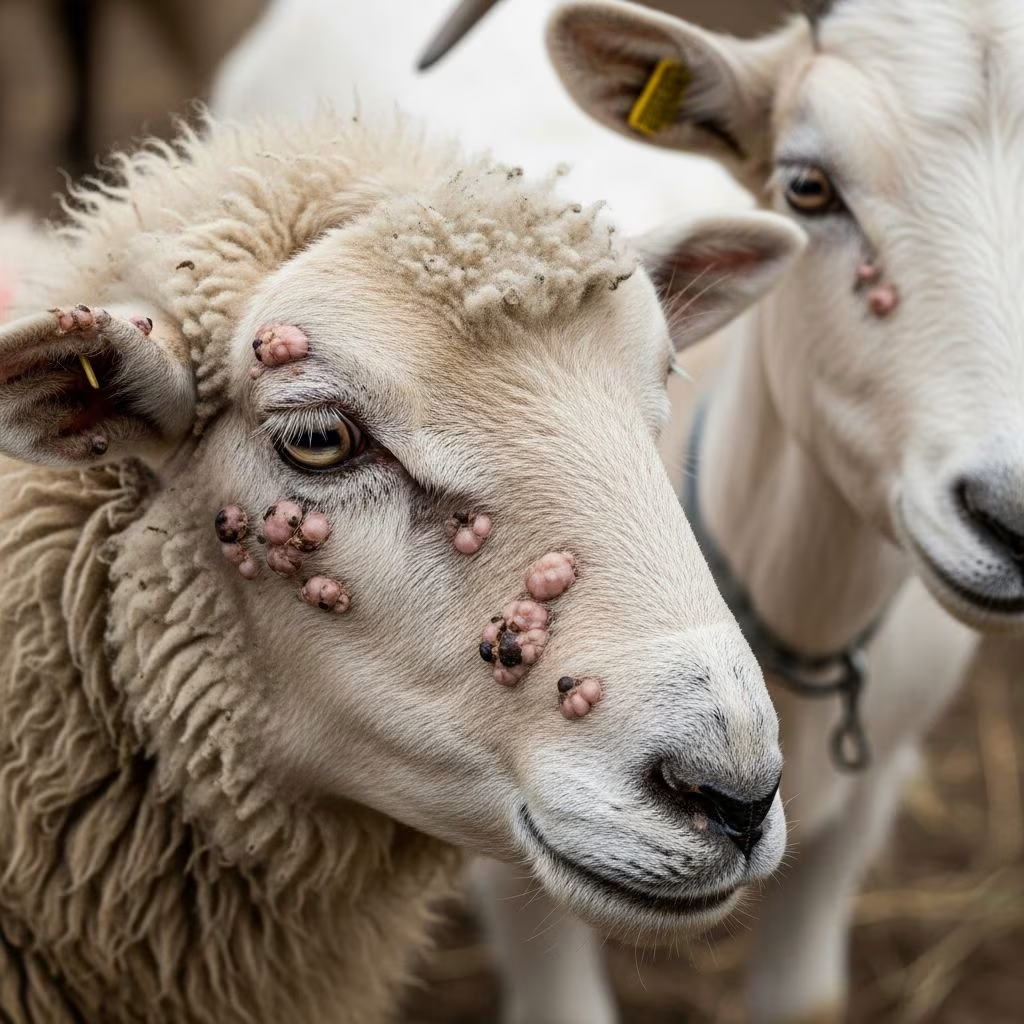
Introduction to Capripoxviral Diseases
Sheeppox and goatpox represent significant threats to livestock production systems across multiple continents, causing substantial economic losses and threatening food security in affected regions. These are serious, often fatal diseases characterized by widespread eruptions across the skin and involvement of internal organs. Both conditions fall within the genus Capripoxvirus, a group of viruses belonging to the family Poxviridae. Understanding these diseases is essential for farmers, veterinarians, and animal health officials working to prevent outbreaks and protect livestock populations.
Viral Classification and Related Diseases
The capripoxviruses are closely related viruses that share significant similarities in their antigenic composition and physical characteristics. Within this genus, sheeppox virus (SPPV) and goatpox virus (GTPV) are the primary causative agents, though a third member of the group—lumpy skin disease virus (LSDV)—affects cattle populations and shares evolutionary lineage with the sheep and goat viruses. While most viral strains demonstrate host preference, with certain isolates causing more severe disease in one species over another, some exceptions exist where strains can infect both sheep and goats with comparable severity.
Geographic Distribution and Recent Outbreak Patterns
Historically confined to Africa, Asia, the Middle East, and India, capripoxviral diseases have expanded their geographic reach in recent years. Traditional endemic regions continue to experience disease pressure, but recent outbreaks have emerged in previously disease-free areas of Europe, representing a significant departure from historical patterns. Specifically, Spain reported sheeppox cases in 2022, followed by confirmed outbreaks in Greece and Bulgaria in 2023, demonstrating the virus’s ability to establish itself in new populations when appropriate transmission conditions exist. European authorities have successfully contained these outbreaks through rapid implementation of stamping-out policies and rigorous movement restrictions, preventing further geographic expansion within the continent.
Mechanisms of Viral Transmission
The capripoxviruses demonstrate multiple pathways for transmission between animals and within populations. The virus concentrates in multiple body fluids and materials, creating numerous transmission opportunities:
- Saliva and respiratory secretions from infected animals
- Ocular and nasal discharge
- Milk from infected females
- Urine and fecal material
- Scabs and crusts from skin lesions, which remain infectious in the environment
Animals acquire infection through both direct and indirect contact mechanisms. Direct transmission occurs when susceptible animals contact infected individuals, while indirect transmission involves contaminated objects known as fomites, including clothing, footwear, and equipment used around infected herds. Respiratory aerosols play a significant role in transmission, particularly during close contact situations where animals share confined spaces. Additionally, arthropod vectors including various insect species facilitate viral spread, particularly in regions with high insect populations.
Disease Incubation and Development Timeline
The disease timeline differs slightly between the two capripoxviruses, with important implications for quarantine and surveillance protocols. Sheeppox typically manifests clinical signs within 4 to 8 days following initial viral exposure, while goatpox demonstrates a longer and more variable incubation period ranging from 5 to 14 days. This variation reflects differences in viral replication kinetics and host immune responses between species. The extended incubation period in goats necessitates longer quarantine periods to ensure reliable detection of infected animals before they shed virus into susceptible populations.
Clinical Manifestations and Disease Progression
The clinical presentation of capripoxviral infection follows a characteristic progression, though severity varies based on animal breed, age, prior exposure, and viral strain factors. Infected animals typically experience generalized fever, often reaching temperatures of 40 to 42 degrees Celsius, accompanied by variable degrees of systemic illness.
External visible signs include:
- Swollen eyelids with mucopurulent discharge crusting the nostrils
- Red spots progressing to blisters on exposed areas including the muzzle, eyelids, and ears
- In severe cases, widespread lesion distribution across the entire body surface
- Extreme salivation and oral lesions
- Necrotic and ulcerative changes in mucous membranes
Skin lesions typically advance through distinct pathological stages. Initially appearing as raised papules, lesions progress to nodules, then vesicles and pustules, ultimately developing into scab formations. Most affected animals become weak and lose appetite, with visible lesions appearing on hairless or sparsely haired areas of the body including the tail, face, and ears, though in severe infections the entire body becomes affected.
Systemic complications arise when lesions develop internally. The presence of blisters within the respiratory tract and lungs causes breathing difficulties and respiratory distress. Internal nodules within the intestinal tract lead to diarrhea and gastrointestinal dysfunction. Although goatpox generally presents less severe clinical disease compared to sheeppox, both conditions can prove fatal, with mortality rates in endemic areas typically ranging from 5 to 10 percent, escalating dramatically to nearly 100 percent in susceptible introduced animals.
Pathological Changes in Infected Animals
Examination of infected animals reveals extensive tissue damage across multiple organ systems. During necropsy, pox lesions are distributed throughout the lungs, kidneys, heart, and throughout the digestive and respiratory tracts. Popular lesions accumulate over hairless areas, with characteristic involvement of the tail, face, ears, lips, nose, muzzle, eyelids, flanks, abdomen, external genitalia, udders, and all limbs.
Microscopic examination reveals characteristic changes in affected skin layers, including hyperkeratosis, acanthosis, and hyperkeratinization of the epidermis and dermis. Edema and degenerative changes affect sebaceous glands and hair follicles in the involved tissue regions. Pulmonary involvement manifests as proliferative alveolitis with infrequent cytoplasmic inclusions present in alveolar cells and macrophages.
Host Susceptibility and Breed Differences
All domestic breeds and populations of sheep and goats are susceptible to capripoxviral infection, including wild species of these animals. However, significant variation exists in disease severity and outcome based on breed origin and prior environmental exposure. Indigenous breeds native to endemic regions typically develop milder clinical disease and experience lower mortality rates compared to introduced breeds originating from Europe or Australia. This difference reflects gradual adaptation of native populations through repeated exposure and selection pressure favoring survival genes. Young animals suffer more severe disease than adults, with affected lambs and young kids sometimes dying without displaying obvious clinical signs that would alert farmers to infection. In endemic areas, morbidity rates reach 70 to 90 percent, while mortality typically remains 5 to 10 percent in native populations but approaches 100 percent in recently imported susceptible stock.
Seasonal Patterns and Environmental Factors
Capripoxviral disease demonstrates distinct seasonality, with outbreaks occurring year-round in endemic regions but showing concentration during specific periods. Most outbreaks occur between November and May, with peak incidence during March. Cold seasons expose sheep to low ambient temperatures, creating physiological stress that suppresses immune function and increases vulnerability to infection. The virus’s ability to survive extended periods in wet and cold weather contributes to seasonal disease patterns. Additionally, timing coincides with the lambing season when newborn animals are immunologically naive, and flocks experience poor physiological condition following autumn production stress.
Economic Impact and Production Losses
Capripoxviral diseases cause substantial economic disruption in affected regions through multiple mechanisms. Direct losses include mortality of valuable animals and prolonged morbidity reducing feed intake and weight gain. Indirect losses stem from trade restrictions imposed on countries and regions with confirmed disease, limiting access to regional and international markets. The diseases significantly disrupt rural livelihoods and agricultural productivity in many African countries, including Ethiopia, where smallholder farmers depend on livestock production for income and food security. The economically devastating nature of these diseases underscores the importance of prevention and rapid response protocols.
Prevention and Control Strategies
Both live attenuated and inactivated vaccines have been successfully employed for capripoxviral disease control in sheep and goat populations. Vaccination programs, combined with early detection and rapid implementation of quarantine measures, form the foundation of disease management. Movement restrictions on potentially infected animals prevent viral spread to previously unaffected herds and regions. Biosecurity measures including disinfection of contaminated equipment and protective clothing for farm personnel are essential components of comprehensive control programs. An important public health consideration is that capripox infections do not naturally transmit to humans, eliminating zoonotic disease concerns.
Diagnostic Approaches
Accurate diagnosis relies on recognition of characteristic clinical signs combined with laboratory confirmation. The distinctive progression of skin lesions from papules through pustules to scabs, coupled with fever and respiratory involvement, supports clinical suspicion. Laboratory identification of the causative virus through techniques such as electron microscopy, viral isolation, or molecular testing definitively confirms capripoxviral infection and distinguishes between sheeppox and goatpox strains. Histopathological examination of affected tissues provides additional diagnostic support.
Conclusion
Sheeppox and goatpox remain serious threats to global livestock production, particularly in regions with endemic disease and in previously disease-free areas lacking herd immunity. Understanding viral transmission mechanisms, recognizing clinical manifestations, and implementing evidence-based control strategies are essential for protecting animal health and maintaining sustainable agricultural production. Continued surveillance, vaccination programs, and international cooperation remain vital for managing these economically significant diseases.
References
- Sheep and goat pox virus — The Pirbright Institute. Accessed February 2026. https://www.pirbright.ac.uk/our-science/viruses/sheep-and-goat-pox-virus
- Review of sheep and goat pox disease: current updates on epidemiology, diagnosis, and control — PMC/NCBI. 2022. https://pmc.ncbi.nlm.nih.gov/articles/PMC8591591/
- Sheeppox and Goatpox – Integumentary System — Merck Veterinary Manual. Accessed February 2026. https://www.merckvetmanual.com/integumentary-system/pox-diseases/sheeppox-and-goatpox
- Sheep pox and goat pox — World Organisation for Animal Health (WOAH). Accessed February 2026. https://www.woah.org/en/disease/sheep-pox-and-goat-pox/
- A Review on Sheeppox and Goatpox: Insight of Epidemiology, Diagnosis, and Control — Journal of Infectious Diseases and Epidemiology. 2019. https://clinmedjournals.org/articles/jide/journal-of-infectious-diseases-and-epidemiology-jide-4-057.php
- Sheep and Goat Pox — Center for Food Security and Public Health, Iowa State University. 2005. https://www.cfsph.iastate.edu/Factsheets/pdfs/sheep_and_goat_pox.pdf



