

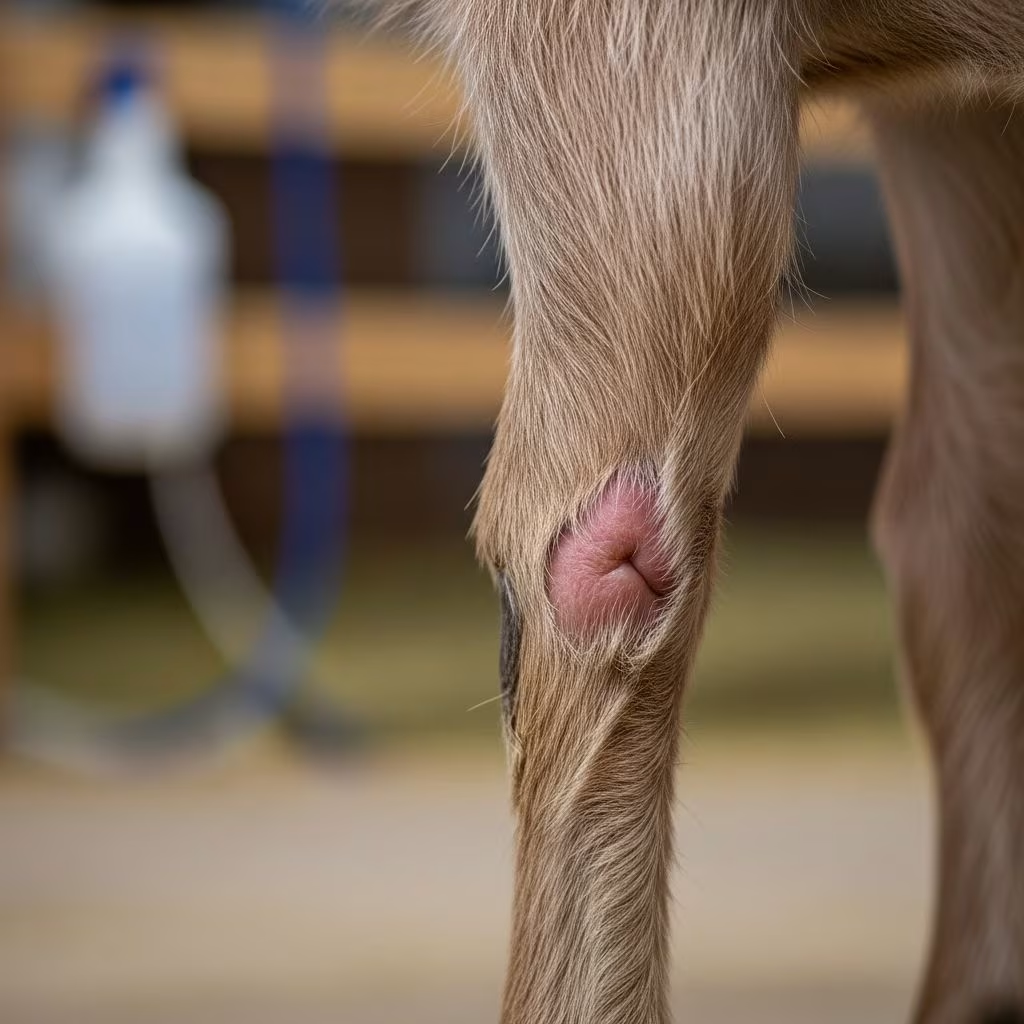
Caprine arthritis encephalitis (CAE) represents a significant challenge for goat owners worldwide, stemming from a persistent lentiviral infection that targets multiple systems in goats. This disease, caused by the caprine arthritis encephalitis virus (CAEV), leads to chronic inflammation in joints, the brain, lungs, and mammary glands, ultimately reducing productivity and herd viability. While many infections remain subclinical, clinical cases can devastate individual animals and entire operations, particularly in dairy settings where milk yield and longevity are critical.
The Nature of the CAE Virus
CAEV belongs to the retrovirus family, closely related to the maedi-visna virus in sheep, and establishes lifelong infections in goats after initial exposure. Transmission primarily occurs vertically from dam to offspring via colostrum and milk, with kids ingesting the virus during nursing. Horizontal spread through saliva, nasal secretions, or contaminated environments is possible but less efficient, especially among adults. Once infected, goats shed the virus intermittently in bodily fluids, making eradication difficult without rigorous intervention.
The virus infiltrates macrophages and other immune cells, evading clearance and triggering gradual inflammatory responses. Genetic factors in both host breeds and viral strains influence disease severity, with some lines showing higher susceptibility. In subclinical carriers, which form the majority, the virus silently impairs immune function and productivity over time.
Recognizing Clinical Manifestations by Age Group
CAE’s presentation varies markedly with the goat’s age, reflecting the virus’s tropism for different tissues. In adults, musculoskeletal issues dominate, while kids face neurological threats.
Musculoskeletal Disorders in Mature Goats
The hallmark of CAE in adults is **polysynovitis-arthritis**, affecting up to 35% of infected goats during their lifetime. This begins with swelling in the carpal (knee) joints, progressing to stiffness, lameness, and reluctance to move. Affected animals often walk on their knees, exhibit weight loss despite normal appetite, and develop rough coats. The inflammation is chronic and progressive, involving synovial hyperplasia, edema, and mononuclear cell infiltration visible on histopathology.
- Joint enlargement, especially carpi and tarsi
- Progressive lameness impacting mobility
- Weight loss and muscle wasting
- Poor body condition and coat quality
Neurological Impacts in Young Goats
In kids aged 2-6 months, **leukoencephalomyelitis** emerges as the primary concern, causing hindlimb weakness, ataxia, and proprioceptive deficits. Symptoms escalate to paraparesis, paralysis, hypertonia, head tilt, and seizures, often proving fatal despite care. Kids remain alert initially, retaining appetite amid deteriorating coordination.
- Stilted gait evolving to paralysis
- Hyperreflexia and muscle rigidity
- Depression, circling, or paddling
- High mortality in untreated cases
Other Systemic Forms
CAE also manifests as interstitial pneumonia with firm, non-collapsing lungs and enlarged bronchial nodes; indurative mastitis (hard udder) slashing milk production; and chronic wasting independent of other signs. Respiratory signs include chronic coughing and dyspnea, while mastitis yields palpably firm glands with reduced output. These forms compound economic losses in commercial herds.
Diagnostic Approaches for Accurate Identification
Diagnosis combines clinical observation, serology, and histopathology, as no pathognomonic sign exists alone. Serologic tests like ELISA detect antibodies, confirming herd exposure, though positives do not predict clinical disease. Presumptive cases rely on progressive lameness, swollen joints, or kid paresis excluding differentials.
Synovial fluid analysis reveals inflammation, while PCR identifies viral genetic material in tissues. Necropsy confirms pathology: villous hypertrophy in joints, periventricular demyelination in brains, and lymphocytic interstitial pneumonia.
| Diagnostic Method | Purpose | Advantages | Limitations |
|---|---|---|---|
| Serology (ELISA/AGID) | Detect antibodies | Herd screening; high sensitivity | Doesn’t indicate clinical status |
| PCR | Viral RNA/DNA | Confirms infection | Requires tissue samples |
| Clinical exam + History | Symptom correlation | Non-invasive; immediate | Overlaps with other diseases |
| Histopathology | Tissue lesions | Definitive postmortem | Invasive; postmortem only |
Differential Diagnoses to Rule Out
Arthritis mimics include mycoplasma infections, traumatic joint damage, and caseous lymphadenitis. Neurological signs in kids overlap with enzootic ataxia, spinal abscesses, nematodiasis, trauma, polioencephalomalacia, listeriosis, or rabies. Pulmonary forms resemble bacterial pneumonias or CLA. Thorough exclusion via culture, imaging, and CSF analysis is essential.
Supportive Management and Care Strategies
No curative treatment or vaccine exists for CAE; management focuses on palliation and complication prevention. For arthritis, NSAIDs like meloxicam (0.5 mg/kg PO q24h), flunixin meglumine, or aspirin reduce pain and inflammation. Regular hoof trimming, deep bedding, and joint support improve comfort.
Encephalitic kids benefit from sling support, physiotherapy, and nursing for weeks, though prognosis is poor. Antibiotics treat secondary infections in pneumonia or mastitis cases. High-plane nutrition delays wasting, but advanced cases warrant humane euthanasia to prevent suffering.
Prevention and Control in Goat Herds
Herd-level control hinges on breaking the colostrum-milk transmission cycle. Key protocols include:
- Raising kids in isolation from birth, without dam contact
- Feeding heat-treated colostrum (45°C/113°F for 60 min) and pasteurized milk (63°C/145°F for 30 min)
- Semi-annual serologic testing with segregation of positives/negatives (minimum 6 ft separation; disinfect shared equipment with phenolics)
- Culling seropositives over time to eradicate
Pasteurization inactivates CAEV without fully destroying antibodies, balancing immunity and safety. Seronegative replacements from accredited herds minimize introduction risks. Biosecurity curbs adult spread via clean housing and fomites.
Economic Implications for Goat Producers
CAE slashes lifetime productivity: reduced milk yields from mastitis, culling of arthritics, and kid losses inflate costs. Export barriers persist due to its North American prevalence. Control programs yield ROI via healthier, longer-producing does, though initial testing/culling strains budgets. Genetic selection for resistance shows promise.
Frequently Asked Questions (FAQs)
What is the most common sign of CAE in adult goats?
Polysynovitis-arthritis, featuring carpal joint swelling and lameness.
Can CAE be cured?
No, it’s a lifelong infection; only supportive care is available.
How do you prevent CAE in kids?
Isolate at birth and provide heat-treated colostrum/pasteurized milk.
Is CAE zoonotic?
No evidence of transmission to humans; safe for consumption if pasteurized.
How often should herds be tested?
Semi-annually for effective monitoring and segregation.
References
- Caprine Arthritis and Encephalitis — Merck Veterinary Manual. 2023. https://www.merckvetmanual.com/generalized-conditions/caprine-arthritis-and-encephalitis/caprine-arthritis-and-encephalitis
- Caprine arthritis encephalitis — Business Queensland. 2023. https://www.business.qld.gov.au/industries/farms-fishing-forestry/agriculture/biosecurity/animals/diseases/guide/caprine-arthritis-encephalitis
- Caprine Arthritis Encephalitis Virus (CAE) — Goats Extension. 2023. https://goats.extension.org/caprine-arthritis-encephalitis-virus-cae/
- Caprine arthritis/encephalitis — World Organisation for Animal Health (WOAH). 2023. https://www.woah.org/en/disease/caprine-arthritis-encephalitis/
- Caprine arthritic encephalitis virus in goats — Michigan State University Extension. 2023. https://www.canr.msu.edu/news/caprine-arthritic-encephalitis-virus-in-goats
- Caprine arthritis and encephalitis virus infection in goats — PMC/NCBI. 2023-12-01. https://pmc.ncbi.nlm.nih.gov/articles/PMC10750757/



