

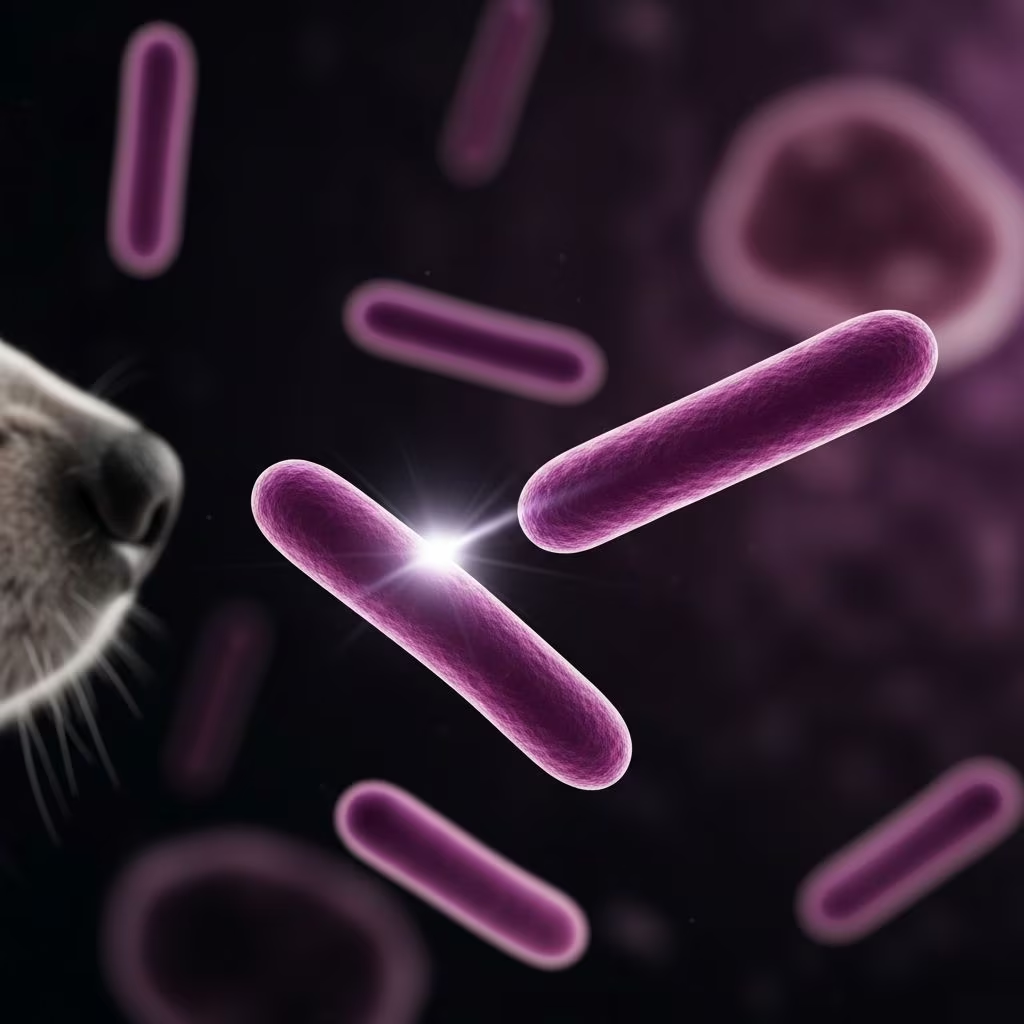
Among the many microorganisms that inhabit the mouths of our beloved pets, one bacterium deserves particular attention: Capnocytophaga. While millions of people interact with dogs and cats daily without incident, understanding this pathogen and its potential consequences is crucial for pet owners and healthcare professionals alike. This comprehensive guide explores what Capnocytophaga is, how it spreads, who faces the greatest risk, and what preventive measures can significantly reduce your chances of infection.
What Is Capnocytophaga and Where Does It Come From?
Capnocytophaga represents a group of gram-negative bacteria commonly found as part of the normal oral flora in dogs and cats. Rather than being a foreign invader, this microorganism naturally resides in the mouths of healthy pets without causing them any harm. Several species exist, including C. canimorsus, C. cynodegmi, C. canis, C. stomatis, and C. felis, though C. canimorsus is notably more pathogenic and responsible for more severe human infections.
The bacterium was first documented as a human pathogen in 1976, and since then, medical professionals have recognized an expanding array of clinical presentations. What makes this organism particularly concerning is its unusual ability to evade the human immune system under certain circumstances, potentially transforming from an innocuous microbe into a life-threatening pathogen.
Unlike many bacterial infections that announce themselves immediately, Capnocytophaga infections typically present a delayed onset. Symptoms usually emerge between 3 to 5 days following initial exposure, though the window can extend up to 14 days. This delay can sometimes lead to a diagnostic challenge, as patients may not immediately associate their illness with a previous pet encounter.
Routes of Transmission: How Does Infection Occur?
Understanding how Capnocytophaga spreads from animals to humans is essential for implementing effective prevention strategies. While many people assume that only bites pose a risk, the transmission pathways are actually more diverse than commonly recognized.
Direct Bite and Scratch Wounds
The most well-documented transmission route involves animal bites and scratches. When a dog or cat’s teeth or claws penetrate human skin, the bacteria present in the animal’s mouth can directly inoculate the wound. This represents the primary infection vector, particularly in cases where the animal has caused significant tissue damage.
Saliva Contact with Existing Wounds
Perhaps less commonly recognized but equally important is transmission through saliva exposure to open wounds or compromised skin barriers. A dog licking an existing cut, abrasion, or skin condition can introduce Capnocytophaga into the body without a bite or scratch occurring. This pathway highlights why good hygiene practices become particularly important when handling animals, especially around areas where the skin is already damaged.
Mucous Membrane Exposure
The bacteria can also gain entry through contact with mucous membranes, including those in the mouth, eyes, and nose. This transmission route explains why pet owners who allow their animals to lick their face face a potential infection risk, particularly if they have small cuts or sores in the oral cavity.
Clinical Presentation: Recognizing the Symptoms
Capnocytophaga infections present with a spectrum of symptoms that can range from localized and mild to systemic and severe. Early recognition of these warning signs enables prompt medical intervention, which significantly improves patient outcomes.
Early Localized Symptoms
Initial manifestations typically occur at or near the site of contact with the animal:
- Blister formation around the bite or scratch area
- Redness and swelling at the wound site
- Drainage of pus or purulent material
- Localized pain or tenderness
Systemic Symptoms
As the infection progresses, broader systemic manifestations may develop:
- Fever, often emerging 3 to 5 days after initial exposure
- Headache and cognitive changes, including confusion
- Gastrointestinal disturbances including diarrhea and abdominal pain
- Nausea and vomiting
- Generalized weakness and fatigue
- Muscle or joint pain
High-Risk Populations: Who Faces the Greatest Danger?
While Capnocytophaga can theoretically infect anyone exposed to infected animal saliva, certain populations face substantially elevated risks of developing serious complications. Understanding these risk factors allows for enhanced vigilance among vulnerable individuals.
Immunocompromised Individuals
People with weakened immune systems represent the highest-risk group. This category includes patients with:
- HIV/AIDS with low CD4 counts
- Active cancer undergoing chemotherapy
- Organ transplant recipients taking immunosuppressive medications
- Chronic corticosteroid users
- Autoimmune disease patients on immunosuppressive therapy
Asplenic Patients
Individuals who have had their spleens removed represent a particularly vulnerable population. The spleen plays a crucial role in fighting encapsulated organisms and mounting immune responses to certain bacterial pathogens. Without this organ, patients become susceptible to overwhelming infections that can progress with alarming rapidity.
Chronic Alcohol Use
Patients with chronic alcohol consumption face increased susceptibility to severe Capnocytophaga infections, as alcohol impairs immune function and increases vulnerability to bacteremia and sepsis.
Age and Comorbidities
While Capnocytophaga can affect individuals at any age, older adults with multiple underlying medical conditions face increased risk of severe outcomes. Similarly, patients with chronic conditions such as diabetes, liver disease, or renal dysfunction may experience more aggressive infections.
Severe Complications: Understanding the Worst-Case Scenarios
While many Capnocytophaga infections resolve with appropriate treatment, the potential for life-threatening complications underscores the importance of this pathogen. In severe cases, the infection can progress to septic shock and multiorgan failure.
Cardiovascular Complications
Among the most serious complications documented are cardiac events, with heart attacks reported in infected patients. These catastrophic events can occur rapidly and without warning in the course of severe infection.
Tissue Necrosis and Amputation
In particularly aggressive cases, Capnocytophaga infection can cause gangrene of extremities, necessitating amputation. This devastating complication typically occurs in the setting of severe systemic infection with compromised peripheral perfusion.
Renal and Hepatic Failure
The infection can attack multiple organ systems simultaneously, including acute kidney injury and liver failure. These complications indicate progression to severe sepsis and require intensive medical support.
Mortality Risk
Perhaps most sobering is the mortality rate: approximately 3 in 10 people infected with Capnocytophaga die from the infection. This figure emphasizes that despite being a rare infection, when it does occur, the stakes are extraordinarily high.
Diagnostic Approaches and Medical Evaluation
Accurate diagnosis of Capnocytophaga infection requires a combination of clinical suspicion and laboratory confirmation. Given the nonspecific nature of early symptoms, healthcare providers must maintain a high index of suspicion when evaluating patients with appropriate exposure history.
Blood cultures represent the gold standard for diagnosis, with the causative organism typically identified through standard culture techniques. More rapid identification can be achieved through mass spectrometry, which allows for faster pathogen identification and treatment adjustment.
The key to diagnosis lies in the clinical history. Patients presenting with fever, systemic symptoms, and a history of dog or cat bite or saliva exposure within the preceding two weeks should be evaluated for Capnocytophaga infection. Delayed presentation—up to 14 days after exposure—means that patients may not initially recall or mention the animal contact unless specifically prompted.
Treatment Protocols and Antibiotic Therapy
Capnocytophaga infections respond to antibiotic therapy, but early initiation of appropriate broad-spectrum coverage is essential, particularly given the potential for rapid clinical deterioration.
Empiric Therapy
When Capnocytophaga infection is suspected, healthcare providers typically initiate broad-spectrum antibiotics before culture results return. This empiric approach has proven beneficial in improving patient outcomes, as it ensures coverage while definitive identification occurs.
Tailored Treatment Regimens
Treatment regimens may include multiple antimicrobial agents targeting different aspects of the infection. Typical courses may involve combinations including fluoroquinolones, aminoglycosides, and other broad-spectrum agents, with duration typically extending 7 to 8 days or longer depending on clinical response.
Prevention Strategies: Reducing Your Risk
While Capnocytophaga infection remains rare, several practical strategies can significantly reduce your risk of transmission.
Wound Care and Hygiene
- Immediately wash any animal bite or scratch with soap and water
- Apply appropriate wound dressing and monitor for signs of infection
- Avoid allowing pets to lick open wounds or areas of compromised skin
- Practice hand hygiene after petting or handling animals
Behavioral Precautions
- Discourage dogs from licking the face, particularly around the mouth
- Teach children appropriate animal handling techniques
- Supervise interactions between young children and pets
- Avoid rough play that might result in bites or scratches
Medical Consultation
Any person bitten or scratched by a dog or cat should contact a healthcare provider immediately, particularly if they fall into high-risk categories. Prompt medical evaluation allows for early intervention if infection begins to develop.
Special Considerations for At-Risk Populations
Individuals with compromised immune systems or those who have undergone splenectomy should exercise particular caution with animal contact. This does not mean avoiding pet ownership entirely, but rather implementing enhanced protective measures and maintaining heightened awareness of any symptoms that might suggest infection.
Key Takeaways and Action Items
Capnocytophaga represents a rare but serious zoonotic infection with the potential for life-threatening complications. While most dog and cat interactions occur without incident, understanding the transmission pathways, recognizing early symptoms, and seeking prompt medical attention when appropriate can prevent severe outcomes. Pet owners should maintain good hygiene practices, avoid allowing animals to lick open wounds or the face, and seek immediate medical evaluation for any bite or scratch, particularly if symptoms develop within two weeks of exposure.
Frequently Asked Questions
How common is Capnocytophaga infection?
Capnocytophaga infection is rare, occurring in a small fraction of people bitten or exposed to dog or cat saliva. However, when it does occur, particularly in high-risk individuals, it can be severe.
Can you get Capnocytophaga from a cat?
Yes, while dog bites represent the primary source, cat bites and scratches can also transmit Capnocytophaga species. However, disease following cat contact occurs less frequently than after dog contact.
Is my dog dangerous if it carries Capnocytophaga?
No. The presence of Capnocytophaga in a dog’s mouth is completely normal and causes no harm to the animal. The risk to humans is present only if specific conditions are met—exposure through bite, scratch, or saliva contact with compromised skin.
What should I do if I’m bitten by a dog?
Immediately wash the wound with soap and water, apply antibiotic ointment, and bandage it appropriately. Contact your healthcare provider, particularly if you have a weakened immune system or if any symptoms develop within 14 days.
How long does treatment take?
Antibiotic therapy typically continues for 7 to 8 days or longer, depending on the severity of infection and clinical response.
References
- Capnocytophaga canimorsus from Dog Saliva Exposure Causing Septic Shock — American Journal of Case Reports. 2025. https://amjcaserep.com/abstract/full/idArt/946691
- Overwhelming Capnocytophaga canimorsus Infection in a Patient with Asplenia — PubMed Central. 2014. https://pmc.ncbi.nlm.nih.gov/articles/PMC4009846/
- Capnocytophaga: What You Should Know About the Dog Bacteria — American Kennel Club. https://www.akc.org/expert-advice/health/capnocytophaga-dog-bacteria/
- Clinical Overview of Capnocytophaga — Centers for Disease Control and Prevention. https://www.cdc.gov/capnocytophaga/hcp/clinical-overview/index.html
- Guideline for Capnocytophaga canimorsus Infection — ABCD Cats and Vets. https://www.abcdcatsvets.org/guideline-for-capnocytophaga-canimorsus-infection/
- About Capnocytophaga — Centers for Disease Control and Prevention. https://www.cdc.gov/capnocytophaga/about/index.html
- Capnocytophaga spp. in Johns Hopkins ABX Guide — Johns Hopkins Medicine. https://www.hopkinsguides.com/hopkins/view/Johns_Hopkins_ABX_Guide/540078/all/Capnocytophaga_spp_



