

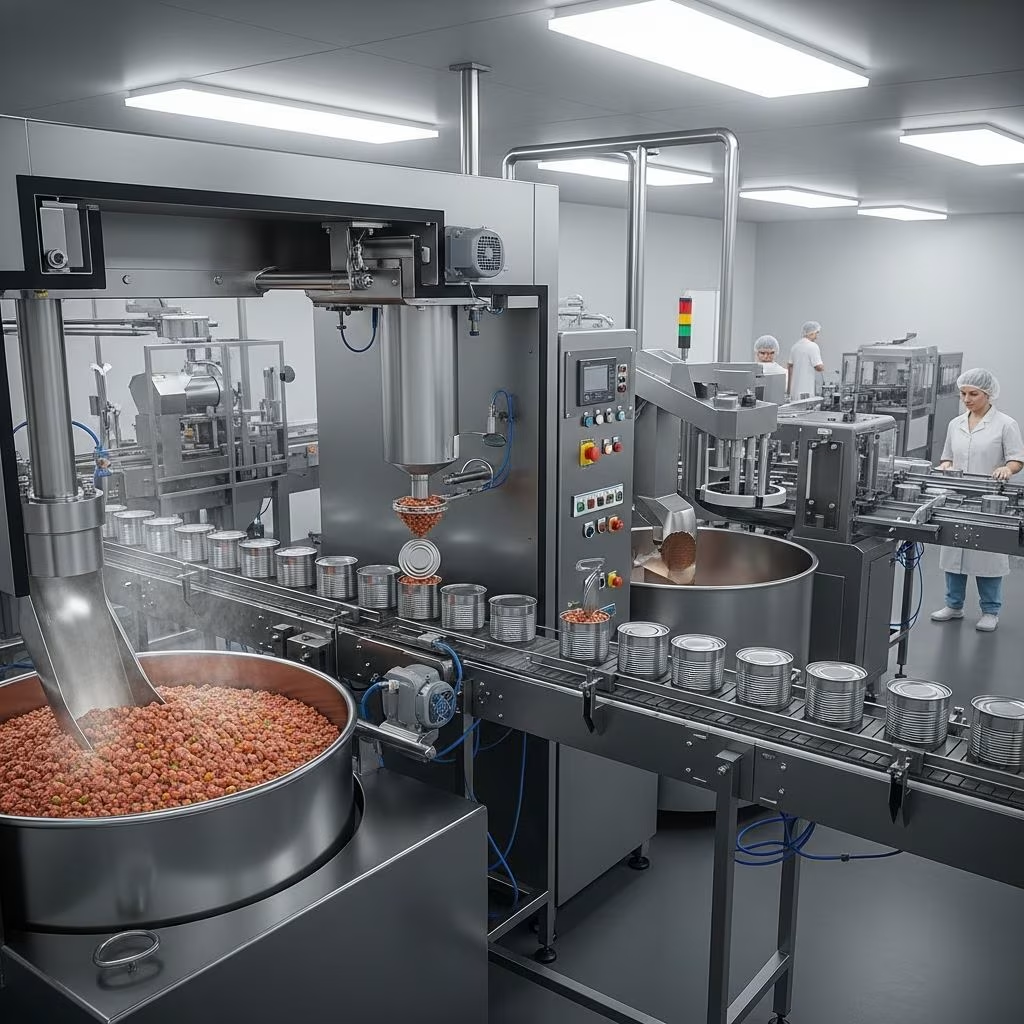
Canned dog food undergoes a meticulous manufacturing process designed to transform raw ingredients into safe, nutritious, and shelf-stable products for canine companions. This involves precise steps from sourcing to final packaging, prioritizing food safety and nutritional integrity.
Sourcing and Initial Preparation of Ingredients
The foundation of quality canned dog food lies in carefully selected raw materials, primarily high-grade meats, vegetables, grains, and supplements. Manufacturers source these from approved suppliers adhering to strict veterinary and safety regulations. Meats arrive frozen to preserve freshness and are stored in deep freezers at temperatures between 5F and 10F.
Preparation begins a day in advance with controlled thawing in refrigerated areas around 40F. This gradual process prevents bacterial growth while maintaining texture and nutrient quality. Once thawed, meats are unpackaged and processed through grinders combined with initial steam treatment, shredding them into a roasted, loosely packed form suitable for further blending.
- Key benefits of thawing: Ensures even cooking and reduces contamination risks.
- Common ingredients: Poultry, beef, fish, carrots, peas, rice, and vitamin-mineral premixes.
Water or broth is added early, collected during grinding to form the base for the upcoming stew-like mixture. This step aligns with guidelines from organizations like the Pet Food Institute, emphasizing hygiene throughout.
Blending and Cooking the Mixture
In large industrial kettles holding up to 6,500 pounds, the ground meat, broth, vegetables, grains, and additives are combined. Heated to approximately 180F, rotating blades ensure uniform integration into a thick gravy consistency. This cooking phase eliminates pathogens and enhances digestibility of starches and proteins.
Quality samples are drawn here for lab analysis, verifying pH, moisture, and nutrient levels. The mixture passes through metal detectors to remove any contaminants, a critical safeguard before filling.
| Stage | Temperature | Purpose |
|---|---|---|
| Initial Grind/Steam | ~100-140F | Break down meat, start sterilization |
| Kettle Cooking | 180F | Blend ingredients, form gravy |
| Pre-Fill | Above 100F | Maintain heat for safety |
Such controlled heating, as described by industry standards from FEDIAF, optimizes flavor while preserving essential amino acids and vitamins.
Filling Cans with Precision
Cans arrive via conveyor, pre-washed in boiling water, inverted to drain, and queued for filling. Pumps transfer the hot mixture (40-50C or 104-122F) through pipes directly into cans, ensuring precise portions via automated systems. Operators monitor computer panels for errors like under- or over-filling.
Immediately after, lids are seamed on under partial vacuum, creating an airtight seal. Check-weighers divert imperfect cans, while technicians verify internal temperatures remain above 100F and vacuum pressure is optimal using probe devices on sample cans.
- Automation advantages: Minimizes human error, speeds production.
- Safety checks: Visual seal inspections on empty cans beforehand.
This hot-fill method, supported by Pet Food Institute practices, reduces initial microbial load before final sterilization.
The Retort Process: Final Sterilization
Stamped with batch codes and “best by” dates, cans enter the retort room. Organized into divided baskets, they load into high-pressure steam chambers. Computers regulate time, temperature (up to 275F), and pressure to sterilize contents fully, cooking vegetables/fruits for better nutrient absorption and activating gelling agents in loaf-style foods.
Post-retort, cans cool rapidly in water baths to lock in freshness and prevent quality degradation. This double-heat process94once in kettles, again in retorts94ensures sterility without preservatives, allowing multi-year shelf life.
According to FEDIAF, retort parameters are legislated to balance safety, taste, and nutrition retention.
Post-Processing Quality Assurance
Cooled cans undergo rigorous inspections: visual checks for dents/swells, seal integrity tests, and random sampling for microbial analysis. Passing cans are labeled with nutrition facts, feeding guides, and origins, then cased, palletized, and shrink-wrapped for distribution.
Factories maintain HACCP plans, with steam-cleaned equipment between batches to prevent cross-contamination. Traceability via batch codes allows quick recalls if needed.
Nutritional Considerations in Canned Production
High-heat processing impacts nutrients: proteins denature for digestibility, but heat-sensitive vitamins (e.g., thiamine) are fortified post-cooking. The moist format (75-85% moisture) aids hydration and palatability, ideal for picky eaters or seniors.
| Nutrient | Effect of Processing | Mitigation |
|---|---|---|
| Vitamins A, C, E | Partial loss | Over-formulation, encapsulation |
| Proteins/Fats | Enhanced bioavailability | Natural sourcing |
| Minerals | Stable | Premixes added |
Reputable brands meet AAFCO standards, balancing for complete diets.
Comparing Canned to Other Dog Food Types
| Type | Processing | Moisture | Pros | Cons |
|---|---|---|---|---|
| Canned (Wet) | Retort sterilization | 75-85% | High palatability, hydration | Higher cost, heavier packaging |
| Dry (Kibble) | Extrusion | 10% | Convenient, dental benefits | Lower moisture, processing heat |
| Semi-Moist | Baking/Extrusion | 25-35% | Portable | Often higher carbs |
Canned excels in meat content and minimal carbs, per industry analyses.
Choosing High-Quality Canned Dog Food
Opt for transparent brands listing ingredients by weight, avoiding vague “meat by-products.” Check for human-grade sourcing, no artificial colors, and third-party testing. Shelf-stable due to retorting, store in cool, dry places; discard if bulging or off-odor.
- Recognize premium signs: Named meats first, superfoods, BPA-free cans.
- Avoid: Excessive fillers, history of recalls.
FAQs on Canned Dog Food Manufacturing
Is canned dog food cooked twice?
Yes, initially in kettles for blending, then in retorts for sterilization, ensuring safety.
How does retorting affect nutrition?
It improves protein digestibility but requires vitamin fortification to offset heat losses.
Are canned foods sterile?
Absolutely; the process eliminates bacteria, mold, and viruses for long shelf life.
Why is thawing done slowly?
To prevent bacterial proliferation while preserving ingredient quality.
Can I see metal detectors in action?
Yes, they scan pre-fill mixture, discarding any contaminated batches automatically.
Environmental and Innovation Trends
Modern plants reduce water use via recycling and adopt sustainable sourcing. Innovations include recyclable packaging and novel proteins like insect meal. Automation boosts efficiency, cutting waste by 20-30% in leading facilities.
Consumer demand drives cleaner labels, with some brands minimizing processing temperatures via advanced tech.
References
- How wet pet food is made 94 FEDIAF (European Pet Food Industry Federation). 2023. https://europeanpetfood.org/pet-food-facts/fact-sheets/quality-and-safety/how-wet-pet-food-is-made/
- How Pet Food Is Made 94 Pet Food Institute. 2024. https://www.petfoodinstitute.org/how-pet-food-is-made/
- How pet food is made 94 GAPFA (Global Alliance for Pet Food Associations). 2022. https://www.gapfa.org/files/download/9_GAPFA_Factsheet_How_pet_food_is_made.pdf
- An Inside Look at How Canned Dog Food is Made 94 Whole Dog Journal. 2023. https://www.whole-dog-journal.com/food/an-inside-look-at-how-canned-dog-food-is-made/
- How is wet dog and cat food produced? 94 Purina UK. 2024. https://www.purina.co.uk/contact-us/faq/wet-pet-food-production



