

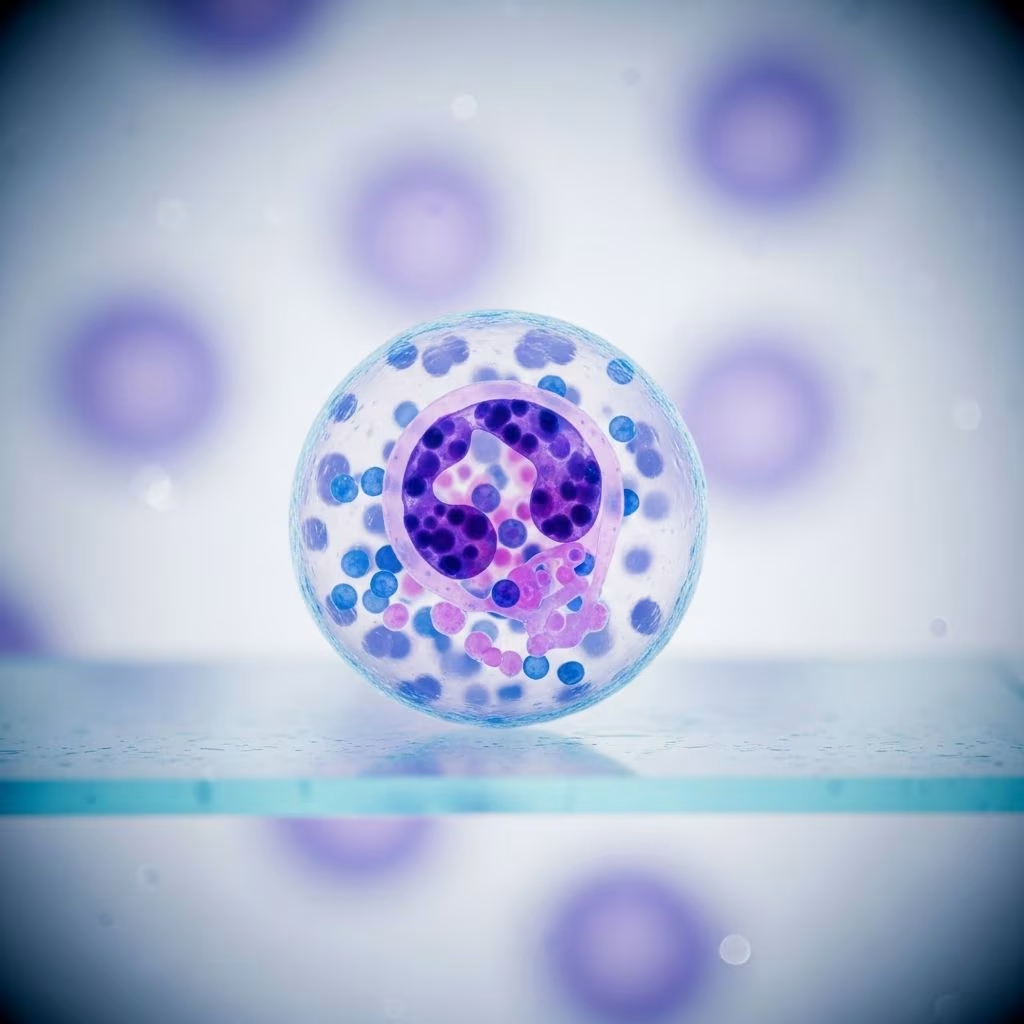
White blood cells, or leukocytes, form the cornerstone of a dog’s immune defense system, actively combating infections, inflammation, and foreign invaders. Understanding their roles, normal ranges, and potential abnormalities empowers dog owners to better interpret veterinary blood work and recognize health issues early.
The Foundation of Canine Immunity: What Are White Blood Cells?
In dogs, white blood cells are specialized components of the blood that circulate to detect and neutralize threats like bacteria, viruses, parasites, and allergens. Unlike red blood cells focused on oxygen transport, leukocytes prioritize protection and repair. They originate primarily in the bone marrow, with some types maturing in lymph nodes or the spleen.
These cells move dynamically between the bloodstream, tissues, and lymphatic system. In a healthy dog, total white blood cell counts range from 6,000 to 17,000 per microliter of blood, though this varies by age, breed, and stress levels. A complete blood count (CBC) is the standard test to assess them, revealing both total numbers and differential counts of specific types.
Key Types of White Blood Cells in Dogs
Dogs have five primary leukocytes, each with distinct shapes, production sites, and missions. Here’s a breakdown:
- Neutrophils: The most abundant, numbering 3,000–11,500 per microliter. These are first responders to bacterial infections, migrating to sites of injury to engulf pathogens via phagocytosis—a process involving chemotaxis, attachment, ingestion, and digestion.
- Lymphocytes: Typically 1,000–5,000 per microliter, split into B-cells (antibody producers) and T-cells (cellular immunity coordinators). They reside in lymph nodes, spleen, and blood, enabling adaptive responses to viruses and cancer.
- Monocytes: Ranging 150–1,350 per microliter, these circulate until needed, then transform into macrophages in inflamed tissues to devour debris and present antigens to lymphocytes.
- Eosinophils: Low normal counts of 100–750 per microliter rise with allergies, parasites, or inflammation. They release enzymes to target worms and modulate hypersensitivity reactions.
- Basophils: Rare in blood (often absent), they mirror eosinophils in allergic responses, releasing histamine from granules.
| Type | Normal Range (per microliter) | Primary Role |
|---|---|---|
| Neutrophils | 3,000–11,500 | Bacterial defense, phagocytosis |
| Lymphocytes | 1,000–5,000 | Antibody production, adaptive immunity |
| Monocytes | 150–1,350 | Tissue cleanup, macrophage formation |
| Eosinophils | 100–750 | Parasites, allergies |
| Basophils | 0–100 (rare) | Hypersensitivity reactions |
This table summarizes typical values; actual ranges depend on lab standards and individual factors.
How White Blood Cells Are Produced and Circulate
Leukocyte production, or leukopoiesis, occurs in bone marrow compartments: proliferation, maturation, and storage. Neutrophils, for instance, spend time in a ‘marginal pool’ adhering to vessel walls before entering full circulation. Hormones like colony-stimulating factors regulate output, ramping up during stress or infection.
Once released, they navigate two blood pools—circulating and marginal—equilibrating with tissues. Inflammation shifts balances, drawing cells to affected areas. The innate system (phagocytes like neutrophils) acts fast and broadly, while adaptive (lymphocytes) builds memory for future threats.
Interpreting Blood Test Results: Normal vs. Abnormal
A CBC provides total WBC count and percentages. Normal total: 6,000–17,000/μL. Deviations signal issues:
- Leukocytosis (high count): Often infection-driven, with neutrophilia (high neutrophils) indicating bacteria. Lymphocytosis suggests viral or chronic issues; eosinophilia points to parasites.
- Leukopenia (low count): May stem from overwhelming infection, bone marrow suppression, or drugs, risking vulnerability.
Differentiate immature forms (bands, metamyelocytes) suggest active marrow response. Always consult vets for context, as excitement or steroids can skew results.
Common Disorders Linked to White Blood Cell Changes
Infections and Inflammatory Responses
Bacterial invasions trigger neutrophilia as neutrophils swarm sites, forming pus. Viral infections elevate lymphocytes; parasites boost eosinophils. Fungal issues mimic bacterial patterns.
Cancer and Bone Marrow Issues
Leukemia floods blood with abnormal cells, often lymphocytes or blasts. Myeloproliferative disorders overproduce lines from marrow glitches.
Allergic and Parasitic Conditions
Eosinophilia marks heartworm, fleas, or food allergies. Basophilia, though rare, accompanies hypersensitivity.
Immune-Mediated and Suppressive Diseases
Autoimmune disorders or Parvo virus cause neutropenia by destroying precursors. Chemotherapy mimics this.
Diagnostic Tools Beyond Basic CBC
Vets pair CBC with chemistry panels checking liver enzymes (ALT, AST) indirectly linked to immunity. Bone marrow aspirates confirm production failures; flow cytometry types lymphocytes precisely.
Monitor trends: serial CBCs track recovery from infection or treatment efficacy.
Supporting Healthy White Blood Cell Function in Dogs
Nutrition aids marrow health—omega-3s reduce inflammation, antioxidants bolster defenses. Vaccinations prime lymphocytes without overload. Parasite preventives curb eosinophil spikes. Routine wellness exams catch shifts early.
Avoid toxins like garlic or NSAIDs overused, which suppress counts. Breeds like Greyhounds naturally have higher baselines; know your dog’s norms.
When to Worry: Signs Prompting Vet Visits
- Lethargy, fever, or appetite loss with abnormal CBC.
- Recurrent infections despite treatment.
- Swollen lymph nodes or unexplained bruising.
- GI upset, coughing hinting at parasites.
Early intervention via blood work prevents escalation.
Frequently Asked Questions (FAQs)
What causes high white blood cell count in dogs?
Infections, stress, inflammation, or leukemia commonly elevate counts, with specific types indicating causes.
Is low white blood cell count dangerous for dogs?
Yes, it increases infection risk; causes include viruses like Parvo or marrow disease. Prompt vet care is essential.
How do vets test dog white blood cells?
Via CBC from a blood sample, analyzing total and differential counts.
Can diet affect my dog’s white blood cells?
Nutrient deficiencies impair production; balanced diets with vitamins support immunity.
Do puppies have different WBC ranges?
Yes, neonates have higher neutrophils, shifting to adult patterns by 6 months.
Advanced Insights: Phagocytosis and Adaptive Immunity
Phagocytes like neutrophils execute a five-step attack: chemotaxis to sites, binding targets, engulfing, lysosomal fusion for killing, and digestion. Monocytes bridge to adaptive immunity by antigen presentation.
Lymphocytes shine in specificity—T-cells deploy lymphokines activating others; B-cells secrete antibodies. Organs like spleen (T in sheaths, B in pulp) and nodes (B follicles, T paracortex) orchestrate this.
In dogs, species quirks include robust neutrophil responses and eosinophil surges against metazoans. Marginal pools hold many, explaining lab variances.
Word count: 1678 (excluding metadata and references).
References
- The ABCs of Dog Blood Work: What Those Results Really Mean — American Animal Hospital Association (AAHA). 2023-01-15. https://www.aaha.org/resources/the-abcs-of-dog-blood-work-what-those-results-really-mean/
- Structure and Function of the Blood in Dogs — PetPlace.com. 2024-05-20. https://www.petplace.com/article/dogs/pet-health/structure-and-function-of-the-blood-in-dogs
- Physiology of Leukocytes in Animals — Merck Veterinary Manual. 2025-02-01. https://www.merckvetmanual.com/circulatory-system/leukocyte-disorders/physiology-of-leukocytes-in-animals
- White Blood Cells in Animals — MSD Veterinary Manual. 2025-01-10. https://www.msdvetmanual.com/circulatory-system/hematopoietic-system-introduction/white-blood-cells-in-animals
- Haematology 101: Why a manual white blood cell count matters — Veterinary Internal Medicine Nursing. 2023-11-12. https://www.veterinaryinternalmedicinenursing.com/blog/white-blood-cells
- Low White Blood Cell Count in Dogs — PetMD. 2024-08-05. https://www.petmd.com/dog/conditions/cardiovascular/low-white-blood-cell-count-dogs



