

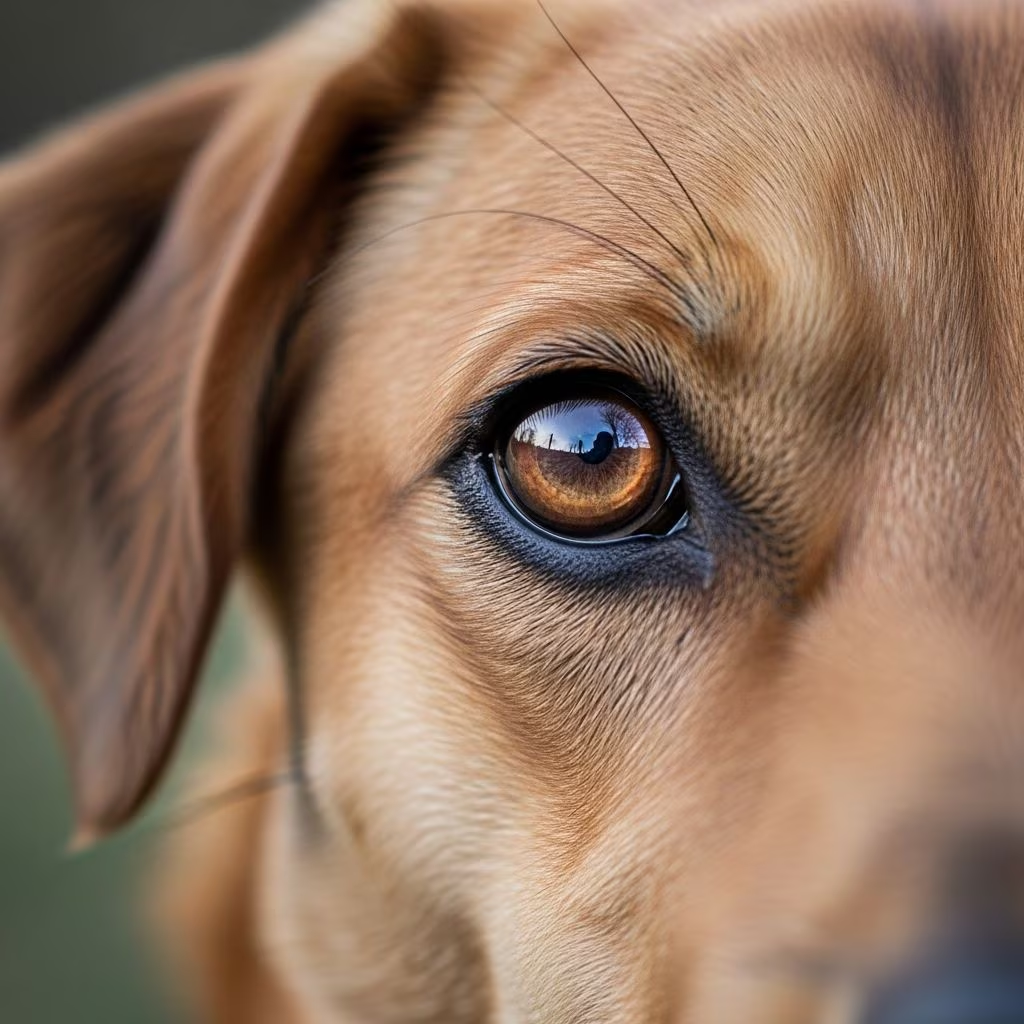
Dogs perceive the world through eyes engineered for survival in low-light conditions and quick motion detection, differing significantly from human vision. This article breaks down the intricate anatomy of dog eyes, explains their visual strengths and limitations, highlights prevalent health concerns, and offers practical maintenance advice.
Fundamental Components of Dog Eyes
The canine eye resides within the orbit, a bony socket safeguarding muscles, nerves, blood vessels, and glands alongside the eyeball itself. This protective enclosure ensures stability during rapid head movements common in dogs.
Encasing the eye are three primary layers: the outer sclera, forming a durable white shell continuous with the transparent cornea; the middle uveal tract, comprising the iris, ciliary body, and choroid for nourishment and light regulation; and the inner retina, the light-sensitive neurosensory layer.
- Sclera: Tough outer layer, often visible as the eye’s white, providing structural integrity.
- Cornea: Clear front dome that refracts light and shields internal structures; composed of epithelium, stroma (90% thickness with collagen fibrils), and Descemet’s membrane.
- Uveal tract: Vascular middle layer; iris controls pupil size for light entry.
Behind the iris lies the pupil, a dynamic aperture that dilates in dim light and constricts in brightness, flanked by the lens which adjusts shape via ciliary muscles to focus images on the retina—though dogs have limited accommodation compared to humans.
Unique Features Enhancing Canine Sight
Dogs boast adaptations absent in humans, optimizing their vision for predatory and pack lifestyles. The tapetum lucidum, a reflective layer behind the retina, bounces light back through photoreceptors, amplifying vision in dusk or dawn—explaining the glow in their eyes at night.
Additionally, the nictitating membrane, or third eyelid, sweeps across the eye from the inner corner, offering extra protection, distributing tears, and clearing debris without full closure.
| Feature | Human Equivalent | Dog Advantage |
|---|---|---|
| Tapetum Lucidum | None | Boosts low-light sensitivity |
| Third Eyelid | None | Protection and moisture without blinking |
| Larger Cornea/Lens | Smaller | Captures more light |
| Area Centralis | Fovea | Sharp motion detection |
Tear production involves lacrimal glands (watery base), meibomian glands (oily layer), and goblet cells (mucus), forming a stable film drained via nasolacrimal ducts to prevent overflow.
How Dogs Process Visual Information
Light enters the cornea, passes through the pupil, and is focused by the lens onto the retina’s rods and cones. Rods excel in dim light and motion, dominating dog retinas for superior night vision and shape recognition, while fewer cones limit color discernment to blues, yellows, and grays.
Dogs detect motion effectively up to 33-50 cm but struggle with near-focus, relying on smell for close inspection. Their visual acuity suits detecting prey from afar rather than fine details.
The optic nerve bundles retinal signals to the brain, with the vitreous humor maintaining globe shape and cushioning the lens and retina.
Common Vision Challenges in Dogs
Despite robust design, dog eyes face issues like corneal ulcers (stroma loss revealing Descemet’s as a dark spot), conjunctivitis (pink eye from inflammation), and dry eye (keratoconjunctivitis sicca) from inadequate tear production.
- Cataracts: Lens clouding, impairing focus; hereditary in breeds like Poodles.
- Glaucoma: Pressure buildup from fluid imbalance, painful and vision-threatening.
- Cherry Eye: Prolapsed third eyelid gland, common in Bulldogs.
- Progressive Retinal Atrophy (PRA): Degenerates photoreceptors, leading to blindness.
Breeds with prominent eyes (e.g., Pugs) risk ulcers; brachycephalics suffer exposure-related dryness.
Spotting Trouble: Symptoms to Monitor
Owners should watch for squinting, pawing, redness, cloudiness, discharge, unequal pupil sizes, or third eyelid prominence—often post-anesthesia or irritation.
Behavioral shifts like bumping objects or hesitation in dim light signal decline. Routine checks reveal tapetum irregularities via ophthalmoscope.
Preventive Care for Lifelong Clarity
Maintain eye health through diet rich in omega-3s and antioxidants, preventing scratches by trimming fur around eyes, and avoiding irritants like smoke.
Clean gently with vet-approved saline; schedule annual exams, especially for seniors or predisposed breeds. Prompt treatment averts complications.
Understanding Breed-Specific Vulnerabilities
Short-nosed breeds face chronic exposure; herding dogs endure field injuries; toys risk trauma from play. Tailor care accordingly.
FAQs
Why do dogs’ eyes glow green at night?
The tapetum lucidum reflects light, enhancing night vision and causing the glow.
Do dogs see color?
Limited to dichromatic vision: blues/yellows, not reds/greens.
What is the third eyelid?
A protective inner membrane that moistens and shields the eye.
How often should I check my dog’s eyes?
Weekly at home; vet annually or biannually for at-risk dogs.
Can dogs go blind suddenly?
Yes, from glaucoma or retinal detachment; seek immediate vet care for acute signs.
Advanced Insights for Dedicated Owners
Vision peaks in the area centralis, packed with rods for acuity. Accommodation limits (about 33-50 cm focus) mean dogs prioritize olfaction nearby.
Aqueous humor between cornea/lens maintains pressure; disruptions cause glaucoma. Posterior iris epithelium aids light control in some species, though less nodular in dogs.
For breeding, screen for genetic issues like PRA via electroretinography. Nutritional support with lutein/zeaxanthin bolsters retinal health.
References
- Understanding the anatomy of the eye (cats and dogs) — Dechra UK. Accessed 2026. https://www.dechra.co.uk/companion-animal/ophthalmology/anatomy-of-the-eye
- Eye Structure and Function in Dogs — MSD Veterinary Manual. Accessed 2026. https://www.msdvetmanual.com/dog-owners/eye-disorders-of-dogs/eye-structure-and-function-in-dogs
- Dog Vision and Eye Anatomy: How Dogs See — PetMD. Accessed 2026. https://www.petmd.com/dog/general-health/how-do-dogs-see-world
- Dogs Eye Anatomy: Everything You Need To Know About Them — Zigzag.dog. Accessed 2026. https://zigzag.dog/en-us/blog/puppy-health/new-puppy-health/dog-eye-anatomy/
- The Eye — PMC (NCBI). 2020-05-26. https://pmc.ncbi.nlm.nih.gov/articles/PMC7271175/
- Structure of the Canine Eye — Whole Dog Journal. Accessed 2026. https://www.whole-dog-journal.com/health/structure-of-the-canine-eye/
- Structure and Function of the Eye — Veterian Key. Accessed 2026. https://veteriankey.com/structure-and-function-of-the-eye/



