

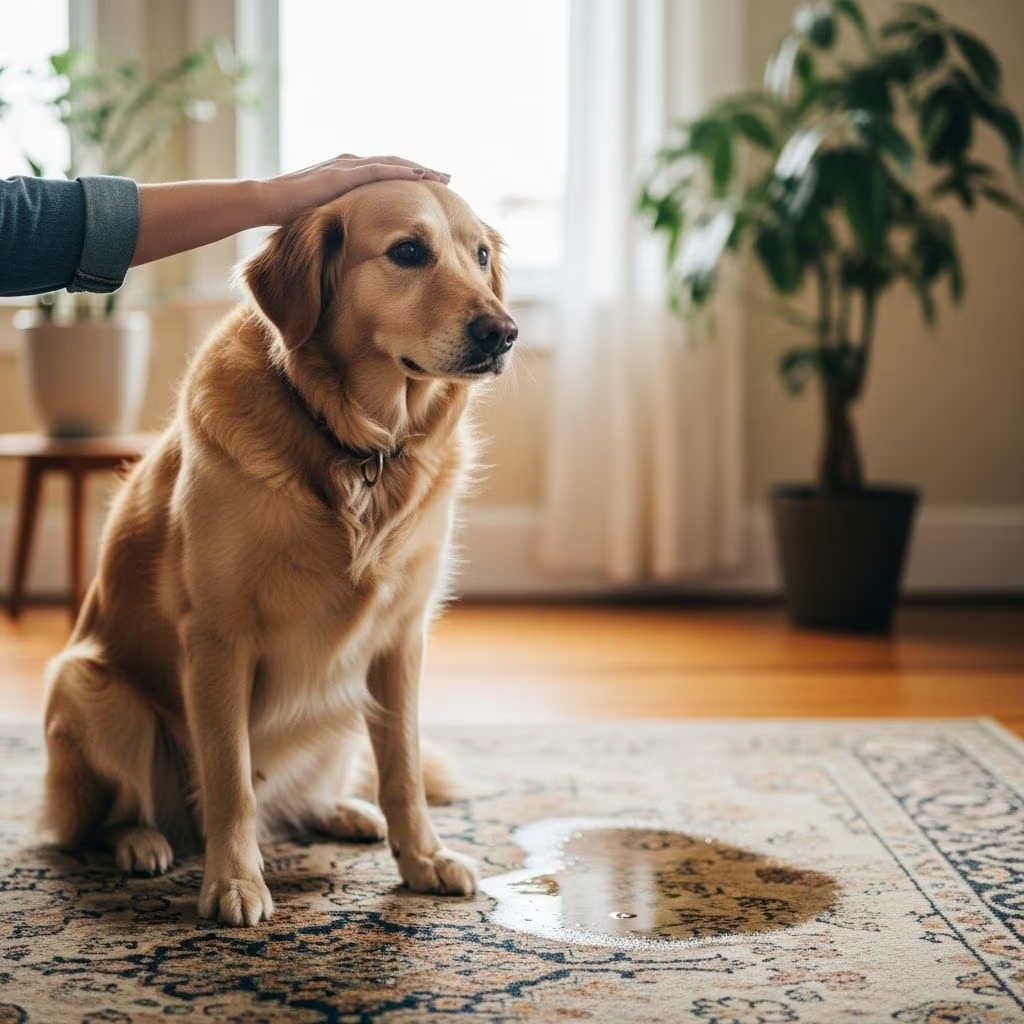
Inappropriate urination in dogs presents one of the most common behavioral challenges facing pet owners. While many assume this problem stems solely from inadequate housetraining, the reality is far more nuanced. Two distinct categories of involuntary urination—submissive urination and excitement urination—account for a significant portion of these incidents. Both conditions involve the dog’s loss of bladder control during specific emotional states, and understanding the distinction between them is crucial for implementing appropriate interventions.
Distinguishing Between Fear-Based and Excitement-Based Urination
The emotional state triggering the urination event determines which category the behavior falls into. Submissive urination originates from fear and anxiety, occurring when a dog perceives a threat or feels intimidated. Conversely, excitement urination arises from an overabundance of positive emotional stimulation, particularly during greetings or playtime. Though these conditions share the symptom of involuntary urination, their root causes demand vastly different treatment approaches.
Puppies and young female dogs experience these conditions most frequently. The age factor suggests that neurological maturation and bladder development play significant roles in resolution. Many dogs naturally outgrow these behaviors as they mature, though proactive intervention can substantially accelerate the process.
The Nature of Submissive Urination
Submissive urination functions as a canine appeasement behavior—a communication mechanism evolved to signal deference and reduce perceived threat. The underlying cause of submissive urination is fear. When a dog engages in this behavior, they are not being defiant or demonstrating lack of housetraining; rather, they are displaying an instinctive response to an anxiety-inducing situation.
Identifying Submissive Urination Triggers
Submissive urination typically occurs during predictable circumstances that create anxiety or perceived confrontation. Common triggers include:
- Approaching by a person whom the dog perceives as threatening
- Scolding, punishment, or raising one’s voice
- Direct eye contact from humans
- Sudden loud noises
- Being reached for or touched unexpectedly
- Rapid, unpredictable movements
Dogs experiencing submissive urination simultaneously display corresponding body language signals. Signs of submissive behavior to look for are flattening of the ears, avoiding eye contact, lowering of head and neck, sitting or cowering, tucking the tail, or rolling onto back and exposing the belly. These physical manifestations accompany the urination episode, making the emotional state behind the behavior unmistakable to an observant owner.
Root Causes of Submissive Urination
Multiple factors contribute to the development of submissive urination. Dogs with traumatic early experiences often display heightened anxiety during interactions. A sheltered puppyhood, where the young dog had limited exposure to normal human interaction, can similarly predispose them to fearfulness. Additionally, inconsistent or punitive training histories create lasting insecurity.
Some dogs inherit a genetic predisposition toward anxiety, making them naturally more sensitive to environmental stressors. Environmental factors also play a role—dogs living in unpredictable, chaotic households may develop chronic anxiety that manifests as submissive urination.
Accidental reinforcement represents another significant contributing factor. When owners react with excessive attention, scolding, or sudden movements following an accident, they may inadvertently reinforce the anxious behavior pattern.
The Nature of Excitement Urination
Excitement urination differs fundamentally from submissive urination in both cause and presentation. This behavior occurs when a dog becomes overstimulated by positive experiences, losing bladder control during moments of heightened arousal. Your dog is being stimulated to urinate by actions such as greeting with high-energy eye, verbal, or physical contact.
Dogs displaying excitement urination are not fearful; they are not displaying submissive postures or body language. Instead, they demonstrate signs of genuine enthusiasm—tail wagging, forward-leaning body position, and engaged facial expressions. The urination occurs because the parasympathetic nervous system becomes overwhelmed during extreme emotional arousal, temporarily reducing bladder control capacity.
Common Excitement Urination Scenarios
Excitement urination typically manifests in specific high-energy situations:
- Owner arrivals after absence
- Greeting visitors or new people
- Anticipation of walks or outings
- Playtime initiation
- Feeding time rituals
- Engagement in high-energy games
Unlike submissive urination, which represents a communication attempt, excitement urination is purely physiological—the dog is not attempting to send a message but simply cannot physically contain themselves during moments of extreme positive emotion.
Medical Considerations and Ruling Out Organic Causes
Before implementing behavioral interventions, medical causes must be systematically excluded. Several medical conditions produce symptoms resembling inappropriate urination but require veterinary treatment rather than behavioral modification.
Medical Conditions to Consider
Urinary tract infections (UTIs) cause frequent, involuntary urination as bacteria inflame the urinary system. Urinary incontinence stems from weakened bladder sphincters or neurological dysfunction, resulting in uncontrolled urine leakage unrelated to emotional state. Changes in diet or increased water consumption alter normal elimination patterns. Some dogs simply lack adequate bladder capacity due to anatomical or developmental factors.
If your dog is having trouble with inappropriate urination, talk to your vet to see if testing or treatment may be needed to rule out underlying medical causes. A veterinary examination should precede any behavioral training program, establishing a baseline understanding of your dog’s physical health status.
Behavioral Factors Beyond Submissive and Excitement Urination
Some cases of inappropriate urination involve factors distinct from both submissive and excitement urination. Incomplete housetraining leaves dogs without sufficient understanding of appropriate elimination locations. Territory marking, common in unneutered males, represents intentional rather than involuntary urination. Separation anxiety triggers urination during or anticipating owner departure, reflecting emotional distress rather than submission or excitement. Accurately identifying which category applies to your dog’s situation is essential for selecting appropriate interventions.
Training Strategies for Submissive Urination
Addressing submissive urination requires fundamentally altering the dog’s perception of interactions as threatening. The objective is building confidence and creating positive associations with previously anxiety-inducing situations.
Environmental and Interaction Modifications
For submissive and fearful urination, it is important that the owner and all visitors interact with the pet in a less assertive or threatening manner. This means consciously modifying body language and interaction style during all human-dog interactions.
When greeting your dog, get down to their level rather than hovering above them. Approaching from above creates an intimidating posture that may trigger anxiety. Avoid direct eye contact, as dogs may interpret this as confrontational. Move slowly and deliberately, allowing your dog time to process your approach. Eliminate sudden movements, loud voices, and unexpected physical contact.
Instruct all visitors on appropriate interaction protocols. Many incidents occur when well-meaning guests enthusiastically greet the dog in ways that trigger fear responses. A brief explanation about the dog’s anxiety and the importance of calm, low-key interactions often prevents accidental reinforcement of the problem.
Positive Reinforcement-Based Training
All training should be reward based and physical restraint or physical punishment must entirely be avoided. Punishment-based methods will exacerbate anxiety and worsen submissive urination.
Teach basic commands using exclusively positive reinforcement methods. Reward confident postures such as sitting or standing with treats and praise. Create training scenarios where your dog practices calm behavior during low-stress interactions, gradually increasing difficulty as confidence builds. For example, teach your dog to sit as you approach, rewarding successful completion with treats and calm praise.
Building Confidence Through Controlled Exposure
Systematic desensitization involves gradually exposing your dog to previously anxiety-inducing situations in controlled, manageable doses. Start with low-intensity versions of triggering scenarios, ensuring positive outcomes. Slowly increase intensity as your dog demonstrates growing confidence.
Maintain consistent routines and environments, reducing unpredictability. Inconsistent rule enforcement or chaotic household dynamics reinforce insecurity. Create predictable daily schedules for feeding, walking, playtime, and training, allowing your dog to anticipate events and feel more secure.
Gradually introduce your dog to new people and situations, ensuring experiences remain positive and happy. Avoid forcing interactions—allow your dog to approach at their own pace. Reward calm, curious behavior during introductions.
Training Strategies for Excitement Urination
Managing excitement urination requires reducing overall arousal levels during high-excitement situations. The goal is training your dog to remain calm during moments that typically trigger involuntary urination.
Desensitizing High-Excitement Triggers
Teach your dog to perform calm, focused behaviors during triggering situations. For arrivals home, practice arriving and departing repeatedly without providing high-energy greetings initially. Only after your dog remains calm should you offer affection and attention. This retrains their nervous system response to your departure and return.
Teach a “sit” or “settle” command and require your dog to maintain this posture during greetings from visitors. Reward successful calm behavior with treats and praise. Over time, your dog learns that remaining composed during greetings produces positive outcomes, while excited behavior does not.
Managing the Environment
The best strategy is just to ignore the dog at first. Act calmly, don’t talk or move in an excited manner, don’t pet the dog, and if necessary don’t make eye contact. This approach prevents accidental reinforcement of excited urination through attention.
When you arrive home, greet your dog only after achieving calm behavior. Deliberately move slowly, speak quietly, and avoid direct eye contact or physical contact initially. Once your dog settles, then provide interaction. This teaches your dog that excitement produces isolation, while calmness produces connection.
Practical Management During the Training Process
Implementing these behavioral strategies requires ongoing commitment and environmental management. Eliminate odors wherever your dog submissively urinates, especially if they aren’t completely house-trained. Using enzymatic cleaners removes scent markers that may attract repeated urination in the same locations. Dogs naturally tend to eliminate where they smell previous urine.
Document incidents carefully, noting circumstances, emotional state, and body language. This record helps identify patterns and track progress over time. Maintain realistic expectations—behavioral change requires weeks to months of consistent effort.
Don’t punish or scold them for submissive urination. This will only make the problem worse. Punishment increases anxiety and reinforces the association between human presence and threat.
When to Seek Professional Support
Management of submissive urination and excited peeing in dogs requires patience and time. If the inappropriate urination continues, consider seeking help from a qualified behavior professional. A certified dog behaviorist can provide personalized assessment and develop a customized treatment plan.
In refractory cases, veterinarians may recommend medication to support behavioral therapy. For refractory cases, the use of drugs to increase bladder sphincter tone might also be considered as an adjunct to behavior therapy. In some cases of fearful and submissive urination the synthetic canine pheromone (Adaptil™) may be helpful. These pharmaceutical interventions work best when combined with behavioral modification rather than used alone.
Expected Timeline and Resolution
Most puppies and young dogs naturally outgrow inappropriate urination as they mature. Sexual maturity often brings improved bladder control and reduced emotional reactivity. Dogs with supportive owners implementing consistent behavioral interventions typically show significant improvement within four to eight weeks, with complete resolution often occurring within three to six months.
Factors affecting timeline include the dog’s age, severity of the underlying anxiety or excitability, training consistency, and whether medical factors complicate the picture. Older dogs with established behavioral patterns may require longer intervention periods than puppies.
Frequently Asked Questions
Is my dog exhibiting submissive urination or excitement urination?
Observe your dog’s body language during urination incidents. Submissive urination accompanies fearful postures—flattened ears, lowered head, tucked tail, and often rolled-over belly presentation. Excitement urination occurs alongside enthusiastic body language—raised tail, forward-leaning stance, and engaged facial expressions. The context also provides clues; submissive urination typically follows confrontation or scolding, while excitement urination occurs during positive interactions.
Will my dog outgrow this behavior without intervention?
Many dogs do naturally improve with age and maturation. However, intervention can substantially accelerate the process and may prevent behavioral patterns from becoming deeply ingrained. Older dogs with chronic anxiety may require ongoing management even after some improvement occurs.
Should I punish my dog for these accidents?
No. Punishment worsens both submissive and excitement urination by increasing anxiety. Your dog is not being defiant or demonstrating inadequate housetraining; they are experiencing involuntary urination due to emotional state. Punishment only increases the emotional state driving the behavior.
Can medication alone solve this problem?
Medications can support but not replace behavioral intervention. Pharmaceutical options improve bladder function or reduce anxiety, creating a more receptive state for behavioral training. However, behavioral modification remains essential for lasting resolution.
References
- Training to Stop Submissive Urination in Dogs — WebMD Pets. 2024. https://www.webmd.com/pets/dogs/submissive-urination
- Submissive and Excitement Urination in Dogs — UC Davis School of Veterinary Medicine. https://www.vetmed.ucdavis.edu/sites/g/files/dgvnsk491/files/inline-files/Submissive_and_Excitement_Urination_in_Dogs.pdf
- Submissive, Excitement, and Conflict Urination — VCA Animal Hospitals. https://vcahospitals.com/know-your-pet/dog-behavior-problems–submissive-excitement-and-conflict-urination
- Submissive Urination — SPCA of Wake County. https://spcawake.org/services/pet-behavior/submissive-urination/
- How to Stop Dog Submissive Urination and Excited Peeing — Best Friends Animal Society. 2024. https://bestfriends.org/pet-care-resources/how-stop-dog-submissive-urination-and-excited-peeing
- Submissive and Excitement Urination — San Francisco SPCA. https://www.sfspca.org/resource/submissive-and-excitement-urination/



