

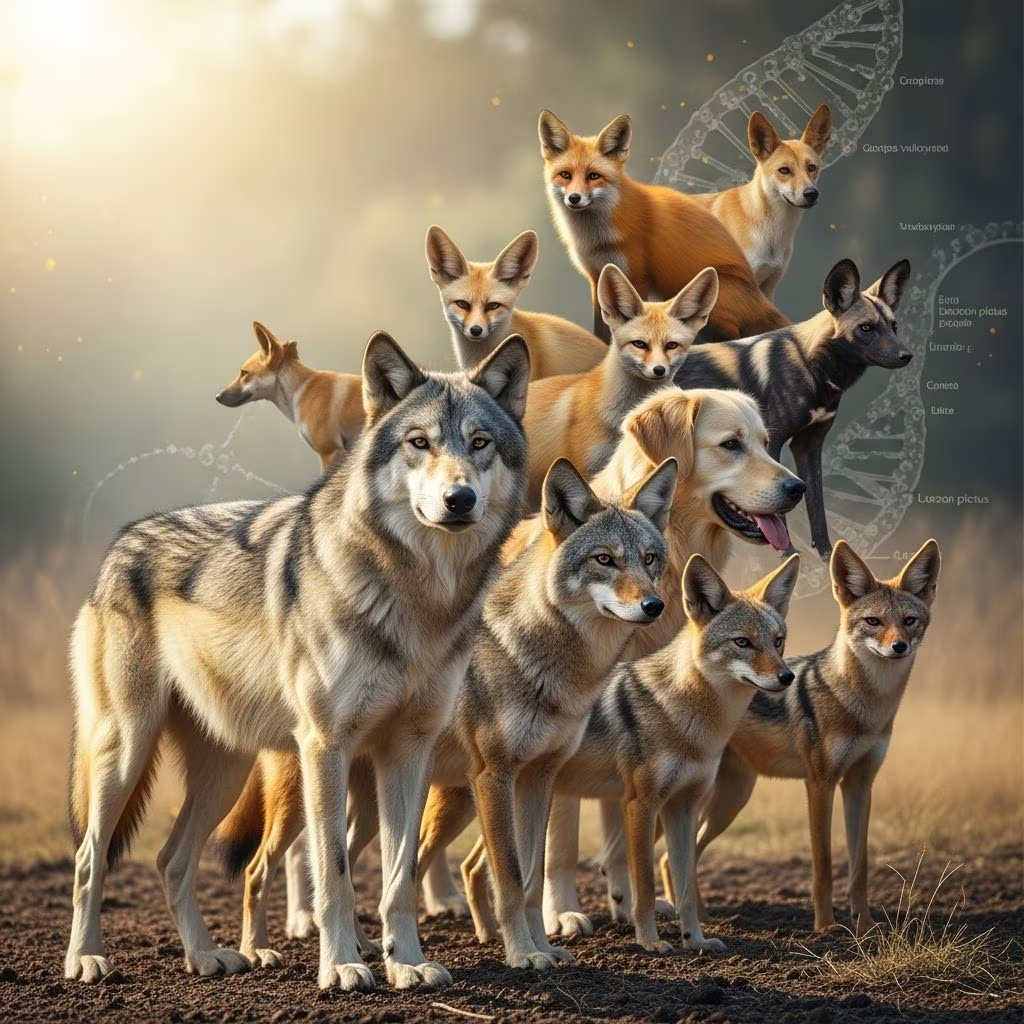
When we refer to our pets simply as “dogs,” we’re using the common name that people worldwide understand instantly. However, behind this simple word lies a sophisticated system of scientific classification that reveals the evolutionary history, biological characteristics, and genetic relationships of canines. Understanding the taxonomy of domestic dogs provides insight into how they fit within the broader animal kingdom and explains their unique position as one of humanity’s most successful domesticated species.
The Scientific Name of Dogs Explained
The primary scientific name for domestic dogs is Canis lupus familiaris. This three-part designation follows a system called binomial nomenclature, where the first word represents the genus and the second represents the species. The third component, “familiaris,” indicates the subspecific classification that distinguishes domestic dogs from their wild relatives. Alternatively, domestic dogs may be classified as Canis familiaris, a naming convention used for practical purposes in certain scientific contexts.
Scientists arrived at this naming convention because domestic dogs are technically considered a subspecies of the gray wolf rather than a completely separate species. This taxonomic decision reflects the genetic similarity between dogs and wolves and acknowledges the domestication process that separated them into distinct populations. The scientific community recognizes several synonymous names for domestic dogs, including Canis lupus borealis and Canis domesticus, though these are less commonly used in modern scientific literature.
Complete Taxonomic Classification System
The full taxonomic classification of domestic dogs extends beyond their simple scientific name and includes eight hierarchical levels that place them within the broader animal kingdom. Each level becomes progressively more specific, moving from the widest categories to the most refined classifications.
| Taxonomic Rank | Classification | Description |
|---|---|---|
| Domain | Eukarya | Organisms with membrane-bound cell nuclei |
| Kingdom | Animalia | All animals, distinguishing from plants and fungi |
| Phylum | Chordata | Animals with a notochord or backbone |
| Class | Mammalia | Warm-blooded vertebrates with hair or fur |
| Order | Carnivora | Carnivorous mammals with specialized teeth for eating meat |
| Family | Canidae | Dogs, wolves, coyotes, and related species |
| Genus | Canis | Wolves, dogs, coyotes, and jackals |
| Species/Subspecies | lupus familiaris | Domestic dog as a subspecies of gray wolf |
At each level of classification, organisms share increasingly specific characteristics with one another. While all dogs share the kingdom Animalia with billions of other organisms including plants, insects, and distant relatives, they share the family Canidae only with wolves, foxes, coyotes, and jackals. This hierarchical system reflects both evolutionary relationships and shared biological features that become more pronounced at lower taxonomic levels.
The Canidae Family and Its Members
Domestic dogs belong to the family Canidae, a diverse group comprising approximately 37 species ranging dramatically in size and appearance. The Canidae family represents a successful evolutionary lineage that has adapted to various environments across the globe. Members of this family include the gray wolf, coyote, various fox species, jackals, and the dingo, among others.
All canids share certain fundamental anatomical features despite their varied appearances. Canids are digitigrade animals, meaning they walk on their toes rather than on flat feet like humans. They possess specialized teeth adapted for their carnivorous diet, including prominent canine teeth from which both the family name and the common term “canine” derive. Additionally, all canids have naked nose tips and cushioned pads on their feet, enabling them to move quietly when hunting.
The diversity within Canidae reflects millions of years of evolutionary specialization. Modern canids inhabit forests, tundras, savannas, and deserts across tropical and temperate regions worldwide. Some species have evolved to hunt large prey cooperatively, while others have specialized in consuming smaller animals or omnivorous diets. This adaptability partly explains why dogs have proven such successful companions to humans across virtually every environment where humans live.
Evolutionary Origins: From Wolf to Dog
The relationship between domestic dogs and gray wolves represents one of the most significant animal domestication events in human history. Dogs descend directly from the gray wolf, scientifically designated as Canis lupus. This evolutionary transition began thousands of years ago when certain wolf populations began living in closer association with human settlements, likely attracted to food scraps and waste.
The genetic evidence overwhelmingly demonstrates that dogs are not a separate species but rather a subspecies of the gray wolf that underwent domestication and subsequent selective breeding. Over generations of domestication and human-guided selection, dogs developed distinctive behavioral, morphological, and physiological traits that set them apart from their wolf ancestors. These changes included alterations in coat color, ear shape, tail carriage, and temperament, while maintaining the fundamental canine body plan.
Scientists classify this relationship using the subspecific designation “familiaris,” which literally means “domesticated” or “pertaining to the home.” This nomenclature preserves the recognition that while dogs are genetically wolf-derived, they represent a distinct population capable of interbreeding with wolves yet separated by behavioral, geographic, and reproductive isolation. The domestic dog encompasses approximately 400 distinct breeds, all descendants of the ancestral wolf population.
Understanding Subspecies Classification
The concept of subspecies exists between the traditional species classification and individual populations within a species. Subspecies represent populations of organisms that can potentially interbreed and produce viable offspring with each other but remain distinct due to geographic isolation, behavioral differences, or other reproductive factors. The domestic dog exemplifies this perfectly, as it represents a subspecies population that has evolved distinctive characteristics while remaining genetically compatible with gray wolves.
Subspecies classifications prove particularly valuable in biological and conservation contexts. They allow scientists to recognize meaningful biological diversity without necessarily invoking full species status. In the case of domestic dogs, the subspecific designation acknowledges the significant genetic and behavioral distance between domesticated populations and wild wolf populations while recognizing the relatively recent origin of this divergence and the continued possibility of genetic exchange.
Why Scientific Names Matter
Scientific nomenclature serves several critical functions beyond simple classification. The binomial system, where organisms receive a genus and species name following standardized rules, provides a universal language for scientists across linguistic and geographic boundaries. When a researcher in Japan and a researcher in Brazil refer to an organism using its scientific name, they communicate with absolute precision about which organism they mean, eliminating confusion that might arise from common names that vary by region or language.
For dogs, the scientific name Canis lupus familiaris immediately conveys several pieces of information to any biologist. The genus Canis indicates the organism belongs to the true canines—wolves, dogs, and jackals. The species designation lupus connects dogs to their wolf ancestry. The subspecies designation familiaris indicates domestication and human association. This entire evolutionary and behavioral history compresses into a single scientific name.
Scientific nomenclature also facilitates the study of dogs as biological and medical models. Dogs share many illnesses, medical conditions, and physiological responses with humans, making them valuable for understanding aging and disease. Their well-documented genome and the ability to study them in their natural environment as household pets provide unique research opportunities. The scientific classification system allows researchers to properly contextualize dogs within broader biological frameworks and communicate findings precisely across scientific disciplines.
Historical Context of Canine Naming
The scientific naming of dogs reflects the development of biological taxonomy itself. The Swedish naturalist Carl Linnaeus, who created the binomial nomenclature system in the 18th century, designated the scientific name Canis familiaris for domestic dogs. Later refinements to the taxonomic system resulted in the inclusion of the wolf species designation, leading to the more complete Canis lupus familiaris nomenclature used today.
Various synonymous names have appeared in scientific literature throughout history, including Canis borealis and Canis domesticus. These alternative names emerged as different researchers proposed different classification schemes before consensus developed around the currently accepted designation. Modern biological databases recognize these historical names as synonyms, noting their historical significance while standardizing usage around the most accurate and currently accepted terminology.
The Genome and Modern Classification
Contemporary taxonomic classification increasingly incorporates genetic and molecular evidence rather than relying solely on morphological characteristics and observed behaviors. Historically, scientists classified organisms primarily based on physical features, but DNA technology has revolutionized the field, allowing more precise determination of evolutionary relationships and phylogenies. Genetic analysis confirms that domestic dogs represent a subspecies of the gray wolf, validating the classification system that scientists had developed through other means.
The domestic dog possesses a well-annotated genome that has been extensively studied and compared to wolf and other canine genomes. This genetic research has revealed the specific mutations and behavioral changes associated with domestication, identified health predispositions in different breeds, and traced the genetic basis for the remarkable diversity in size, shape, and temperament visible in modern dog breeds.
Practical Applications of Canine Taxonomy
Understanding canine taxonomy extends beyond academic interest into practical veterinary and conservation contexts. Veterinarians use taxonomic classifications to understand disease susceptibility, treatment responses, and genetic health concerns. Knowledge of the taxonomic hierarchy helps explain why dogs respond to certain medications similarly to humans and why they share numerous genetic diseases with human populations.
Conservation biology utilizes proper taxonomic classification to understand and protect wild canid populations. The gray wolf, from which dogs descend, remains subject to conservation efforts in various regions. Recognizing the taxonomic relationship between domestic and wild canids helps inform wildlife management decisions and conservation strategies. Additionally, understanding the canine family’s diversity motivates efforts to protect endangered wild species that provide important ecological roles.
Key Takeaways About Canine Classification
- Domestic dogs are scientifically designated as Canis lupus familiaris, indicating their status as a domesticated subspecies of the gray wolf
- The complete taxonomic classification places dogs within eight hierarchical levels from domain through subspecies
- Dogs belong to the family Canidae, which includes approximately 37 species of wolves, foxes, coyotes, and jackals
- The subspecies designation “familiaris” recognizes domestication as a defining characteristic separating dogs from their wild wolf ancestors
- Modern taxonomy increasingly incorporates genetic evidence, confirming that dogs represent a relatively recent divergence from gray wolf populations
- Scientific nomenclature provides precise communication about canine biology across linguistic and geographic boundaries
- Understanding canine taxonomy supports veterinary medicine, conservation efforts, and genetic research
Frequently Asked Questions About Dog Classification
Are dogs a different species from wolves?
Technically, dogs are classified as a subspecies of the gray wolf rather than a completely separate species. While domestication has created distinctive populations with unique characteristics, genetic compatibility and relatively recent divergence prevent full species classification. The subspecific designation acknowledges this intermediate status.
Why do different sources use different scientific names for dogs?
Taxonomic classification evolves as scientists gain new information and refine their understanding. Canis familiaris and Canis lupus familiaris represent different classification philosophies, with the latter being more commonly used in contemporary science. Various synonymous names reflect historical naming conventions and different researchers’ proposals.
How many dog breeds exist within the species?
Domestic dogs comprise approximately 400 recognized breeds, all descended from ancestral wolf populations and representing the single subspecies Canis lupus familiaris. Despite dramatic physical and behavioral differences between breeds, they maintain sufficient genetic compatibility to produce viable offspring across breed lines.
What do the different parts of the scientific name mean?
In Canis lupus familiaris, “Canis” is the genus name referring to true canines, “lupus” is the species name referring to wolves, and “familiaris” is the subspecies designation indicating domestication and association with human homes.
References
- Domestic dog (Canis familiaris) longevity, ageing, and life history — Genomics of Senescence Information. Accessed February 2026. https://genomics.senescence.info/species/entry.php?species=canis_familiaris
- Canis lupus familiaris (dog) – Taxonomy — PubChem, National Center for Biotechnology Information. Last updated July 23, 2025. https://pubchem.ncbi.nlm.nih.gov/taxonomy/9615
- Taxonomy — Lumen Learning, Biology for Majors II. https://courses.lumenlearning.com/wm-biology2/chapter/taxonomy-2/
- Canidae — Wikipedia. https://en.wikipedia.org/wiki/Canidae
- Dog Family: Facts About Canines & Their Cousins — Live Science. https://www.livescience.com/50471-dog-family-facts-about-canines-their-cousins.html
- Canis lupus familiaris (Dog) | Taxonomy — UniProt, Swiss Institute of Bioinformatics. https://www.uniprot.org/taxonomy/9615



