

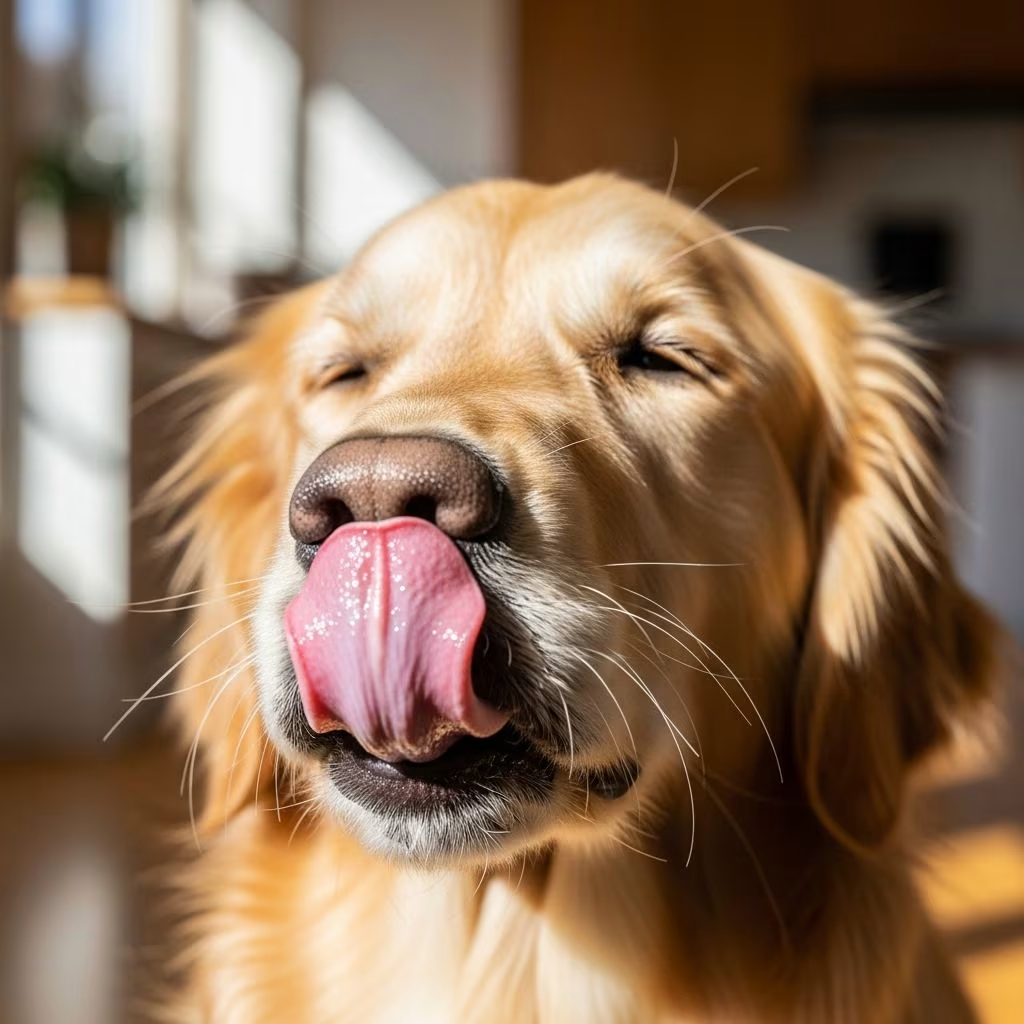
Dogs possess a sense of taste, but it is far less developed than in humans, featuring roughly 1,700 taste buds compared to humans’ approximately 9,000. This reduced number means dogs experience flavors with less intensity, heavily relying on their superior sense of smell to evaluate food.
The Anatomy of a Dog’s Tongue and Taste Receptors
The canine tongue is equipped with taste buds clustered in papillae, similar to humans, but in much smaller quantities. These buds detect four primary tastes shared with people: sweet, sour, salty, and bitter. Unlike humans, dogs have specialized receptors at the tongue’s tip sensitive to water, particularly after consuming dehydrating foods like salty or sugary items, aiding hydration in wild ancestors.
Sweet receptors exist on the front of the tongue but are fewer and less sensitive, explaining dogs’ muted response to sugary foods. Salty detection is also diminished. Sour and bitter buds, crucial for avoiding spoiled or toxic substances, are more prominent, reflecting evolutionary needs as carnivores.
- Sweet: Limited buds; low affinity for sweets.
- Sour: Detects acidity; safety mechanism.
- Salty: Fewer receptors; basic electrolyte sense.
- Bitter: Strong response; toxin avoidance.
- Water-specific: Unique to dogs and some carnivores; post-meal sensitivity.
How Smell Shapes Dogs’ Eating Experience
Olfaction dominates canine food assessment, with dogs boasting around 220 million olfactory receptors versus humans’ 5 million. Flavor in dogs emerges from the synergy of smell and taste; blocking smell drastically reduces food discrimination.
Research using a modified two-bowl test showed dogs consistently chose and consumed preferred foods first, likely via initial scent cues. When odors were isolated in an olfactometer, preferences were weak except for food scent over none, underscoring smell’s primacy but complexity in isolated preference testing.
| Aspect | Dogs | Humans |
|---|---|---|
| Taste Buds | ~1,700 | ~9,000 |
| Olfactory Receptors | ~220 million | ~5 million |
| Key Tastes | Sweet, Sour, Salty, Bitter, Water | Sweet, Sour, Salty, Bitter, Umami |
| Flavor Driver | Smell dominant | Taste balanced with smell |
Scientific Studies on Canine Food Preferences
A pilot study developed tools to assess pet dogs’ food and odor choices with minimal training. The two-bowl method revealed clear intake preferences, with first choices predicting consumption 89% of the time, hinting at scent or visual initial judgments.
Odor tests via olfactometer showed no strong differentiation between food smells, only preference for any food odor over neutral air. This suggests scent drives selection but may require stronger differentials or different methods for nuanced preferences. Dogs like Bo and Chaco showed weaker correlations, varying by individual.
Early experiments blocking smell (anosmia) eliminated food preferences, confirming olfaction’s critical role over pure taste.
Comparing Canine and Human Taste Profiles
While both species share core tastes, dogs’ profile suits a meat-based diet. Humans emphasize umami and nuanced sweets; dogs prioritize meaty, fatty scents. Dogs’ weaker sweet response means sugar provides energy, not pleasure.
Breed, age, health, and experience influence variations. Puppies may explore more broadly, while seniors lose sensitivity.
Debunking Myths About Dogs and Flavors
Myth 1: Dogs can’t taste at all. False; they have functional buds for basic tastes, enhanced by smell.
Myth 2: Dogs adore sweets like humans. Incorrect; limited sweet buds and preference driven by aroma, not taste.
Myth 3: All dogs love the same foods. Preferences are individual, as shown in variability across test subjects.
Practical Implications for Dog Owners
Understanding taste aids nutrition. Enhance kibble appeal with safe toppers carrying strong scents like meat broths. Avoid forcing sweets; opt for protein-rich options. Monitor for pickiness signaling health issues like dental problems or illness reducing smell/taste.
Transition foods gradually, using scent familiarity. Hydration buds encourage fresh water post-meals.
Factors Affecting Taste Sensitivity
- Age: Declines in older dogs.
- Health: Infections or medications impair senses.
- Diet History: Novelty influences acceptance.
- Breed: Some like hounds have heightened smell.
Enhancing Your Dog’s Meals
Incorporate warming food to release aromas. Vary textures for tongue stimulation. Consult vets for supplements boosting appetite in finicky eaters.
FAQs
Do dogs have fewer taste buds than humans?
Yes, dogs have about 1,700 taste buds, while humans have around 9,000, making canine taste less nuanced.
Can dogs taste sweet flavors?
Dogs detect sweet but with far fewer, less sensitive receptors, showing little preference for sugary foods.
Why do dogs sniff food before eating?
Smell provides primary flavor info; taste confirms. Studies show anosmia disrupts preferences.
Do all dogs taste the same?
No, individual, breed, and experiential differences create varied preferences.
Is water taste unique to dogs?
Dogs and some carnivores have tip-of-tongue buds sensitive to water, especially post-dehydrating foods.
Conclusion
Dogs’ taste is functional yet secondary to smell, shaping practical feeding strategies. Owners leveraging this knowledge improve diets and bonds.
References
- Food and Food-Odor Preferences in Dogs: A Pilot Study — PMC – NIH. 2018-03-23. https://pmc.ncbi.nlm.nih.gov/articles/PMC5863557/
- The Science Behind Dogs’ Taste Buds — WoofCrate. N/A. https://woofcrate.ca/blogs/woofpost-blog/the-science-behind-dogs-taste-buds
- Can Dogs Taste? — American Kennel Club. N/A. https://www.akc.org/expert-advice/lifestyle/can-dogs-taste/
- How Good Is Your Dog’s Sense of Taste? — Psychology Today. 2011-04-01. https://www.psychologytoday.com/us/blog/canine-corner/201104/how-good-is-your-dogs-sense-of-taste
- Dog Taste Buds: Basic Numbers and Role of Smell — Farm Hounds. N/A. https://farmhounds.com/blogs/blog/dog-taste-buds-basic-numbers-and-role-of-smell
- Taste — Positively.com. N/A. https://positively.com/dog-training/article/dog-science-taste
- How Dogs View Food: Exploring Taste and Nutrition — Pawco Foods. N/A. https://www.mypawco.com/blogs/blog/how-dogs-view-food-exploring-taste-and-nutrition



