

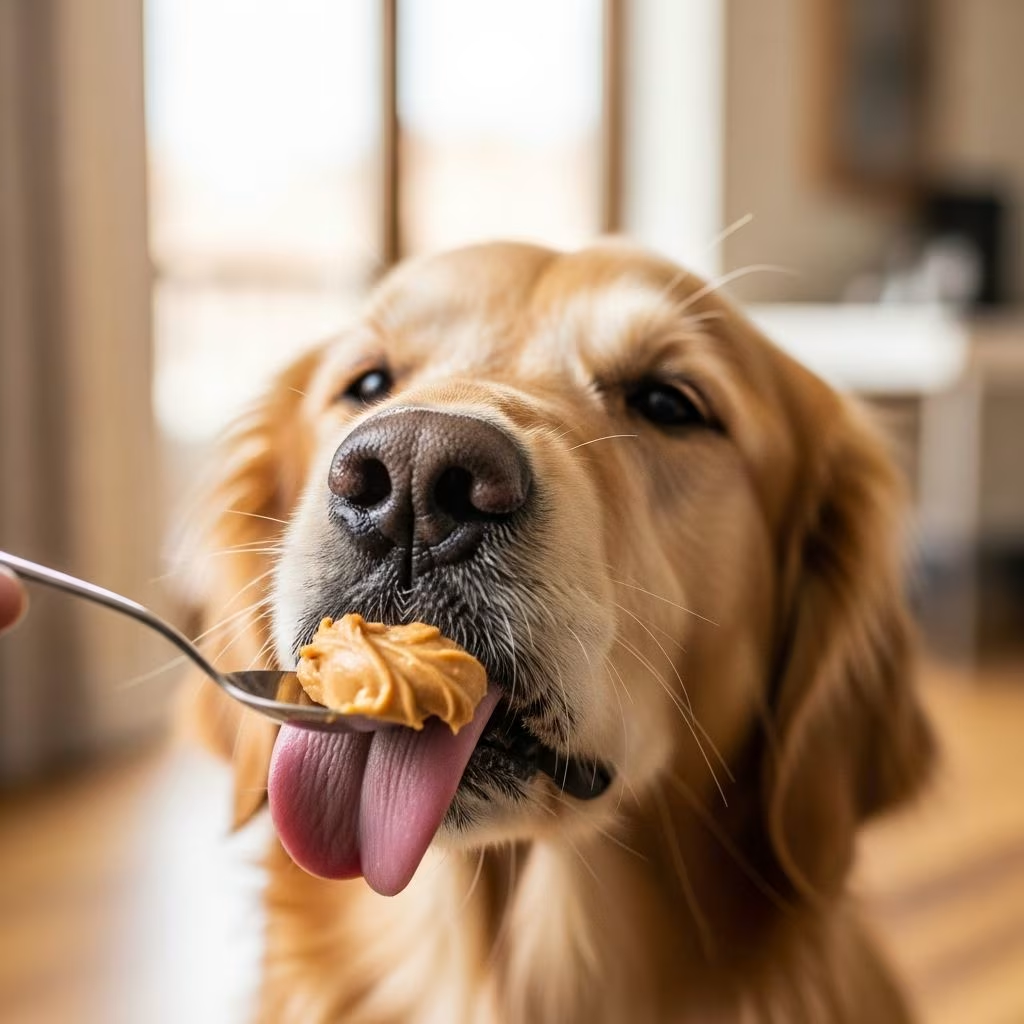
When your dog devours their food with enthusiasm or turns their nose up at a particular treat, you might wonder what they’re actually experiencing. Unlike humans who rely heavily on taste to guide their food choices, dogs perceive flavor through a more complex interplay of multiple senses. Understanding how your canine companion tastes and processes food can help you make better nutritional decisions and appreciate the unique way dogs interact with their meals.
The Basics of Canine Taste Bud Structure
Dogs do indeed possess taste buds, though they have considerably fewer than humans. The average dog has approximately 1,700 taste buds, compared to the 9,000 found in humans. Despite this significant difference in quantity, these taste buds are functional organs that allow dogs to detect and respond to different flavors in their food.
The taste buds in dogs are located in small bumps called papillae, which cover the surface of the tongue, the roof of the mouth (palate), and the throat. Each papilla contains multiple taste buds, and within each taste bud are approximately 50 taste-receptor cells. These receptor cells are equipped with proteins that detect specific chemical compounds, allowing dogs to distinguish between different taste categories.
The actual sensing mechanism occurs within a microscopic opening called the taste pore, which is approximately the width of a human hair. For a substance to be tasted, it must first dissolve in saliva and pass through this tiny opening to make contact with the receptor proteins.
Mapping Taste Sensitivity Across the Tongue
Dog taste buds are not uniformly distributed across the mouth, and different regions of the tongue show varying sensitivity to specific flavors. This anatomical organization influences how dogs experience different types of food.
| Taste Type | Location on Tongue | Sensitivity Notes |
|---|---|---|
| Sweet | Front of tongue | Similar to human distribution; dogs have fewer sweet taste buds than humans |
| Salt | Front to mid-tongue | Less sensitive in dogs compared to humans |
| Bitter | Back of tongue | Protective function; helps dogs avoid potentially harmful substances |
| Sour | Back of tongue | Works alongside bitter detection for safety |
| Meat/Fat | Various locations | Specialized receptors reflecting ancestral carnivorous diet |
The strategic placement of these taste receptors serves important biological functions. Sweet taste buds concentrated at the front of the tongue help dogs identify calorie-rich foods quickly. Bitter and sour taste buds positioned toward the back of the tongue act as a protective mechanism, discouraging dogs from consuming potentially toxic substances. This arrangement has evolved to match dogs’ dietary needs and survival instincts.
The Critical Role of Smell in Flavor Perception
While taste buds are important, the true story of how dogs experience flavor cannot be told without discussing their remarkable olfactory system. Dogs possess approximately 30 to 50 million olfactory receptor cells distributed throughout their nasal passages in complex structures called turbinates. These receptors are organized into 500 to 1,000 distinct sequences that allow the canine brain to decode and categorize sensory input.
The relationship between smell and taste creates what we understand as flavor. Dogs actually experience food flavor through two distinct olfactory pathways that work simultaneously. The first, the ortho-nasal pathway, operates when a dog smells food before eating it, providing crucial information about what they’re about to consume. The second, the retro-nasal pathway, functions while the dog is eating and swallowing, as odors travel from the back of the throat and integrate with taste signals to create the complete flavor experience.
Dogs can taste without smelling, but the experience is significantly diminished compared to the combined effect of both senses. This is why a dog with a stuffy nose or cold often seems uninterested in food—they’re primarily relying on taste buds alone, which provide far less sensory information than their powerful nose usually delivers.
How Canine Brains Process Flavor Information
The processing of taste and smell in a dog’s brain reveals sophisticated sensory integration. When olfactory receptor cells detect odor molecules, they send signals through nerve fibers to the olfactory bulb, which serves as the brain’s primary relay station for smell information. The pattern of activation across different groups of cells in the olfactory bulb tells the brain what substance is being smelled—similar to how pressing a specific pattern of keys on a piano creates a distinct chord.
Interestingly, when dogs smell an object, activity simultaneously occurs in both the olfactory cortex and the visual cortex of their brain. This unique neural connection means that dogs literally create visual images associated with odors in a way that is fundamentally different from human sensory processing. This multisensory integration contributes to dogs’ remarkable ability to identify and remember specific scents.
Taste Categories Dogs Can Detect
Despite having fewer taste buds than humans, dogs can detect all the basic taste categories: sweet, salty, sour, and bitter. Additionally, dogs have specialized taste receptors for savory flavors and umami taste. However, the intensity with which dogs experience these flavors differs from human perception.
- Sweet: Dogs can taste sweet flavors, though their reduced number of sweet taste buds means they likely experience sweetness less intensely than humans. This may partially explain why many dogs show less enthusiasm for sugary foods than might be expected.
- Salty: With fewer salt receptors than humans and reduced sensitivity overall, dogs do not have the same salt preferences as people. Some dogs may even ignore salty foods that humans find appealing.
- Bitter: Dogs possess well-developed bitter taste detection, which serves a protective function by helping them avoid spoiled or poisonous foods.
- Sour: Working in conjunction with bitter receptors, sour taste detection contributes to a dog’s ability to avoid potentially dangerous food items.
- Savory/Umami: This category, associated with meaty and protein-rich foods, appears to be particularly important in canine taste preferences, reflecting their evolutionary history as carnivores.
It’s worth noting that each taste bud, regardless of its primary sensitivity, can technically detect all taste types if the flavor is concentrated enough. However, the primary specialization of taste buds in different regions means that concentration thresholds vary significantly.
Comparative Analysis: Dogs Versus Humans
The differences between canine and human taste perception extend beyond simple numbers. While humans have approximately 9,000 taste buds to a dog’s 1,700, this quantitative difference translates into qualitative differences in how each species experiences food.
Humans derive pleasure and nutritional guidance primarily from taste, spending considerable time eating and savoring flavors. Dogs, by contrast, evolved to consume meals quickly, relying more on smell to assess food safety and quality rather than on extended tasting. This fundamental difference in eating behavior reflects each species’ evolutionary pressures and survival strategies.
Dogs compensate for their taste bud deficit through their superior olfactory system. While a human might evaluate a meal through taste, a dog learns about the same food through smell, often making decisions about whether to eat it before taste comes into play at all. This makes their sense of smell far more important to overall flavor perception than taste alone.
The Microscopic World of Taste Buds
Examining taste buds at the cellular level reveals their sophisticated structure. Canine taste buds contain five types of cells, each serving distinct functions. Type I cells provide structural support and secrete protective mucous substances. Type II cells maintain broad contact with nerve fibers and contain large organelles called Golgi apparatus. Type III cells function as the actual gustatory or taste-sensing cells, forming synaptic connections with nerves and containing vesicles that release neurotransmitters to signal taste sensations. Type IV cells serve as basal cells, and peripheral cells form the outer layer.
Blood capillaries at the base of taste buds are specially fenestrated, meaning they have small openings that allow for efficient nutrient delivery and potentially permit signaling molecules to enter the bloodstream. This anatomical feature suggests that taste bud signals may influence not just local brain function but also broader physiological responses throughout the body.
How Individual Variation Affects Taste Experience
While dogs of the same species share similar taste bud anatomy, individual variation in taste preference is common. Breed, personal history, and nutritional background all influence which foods a particular dog finds appealing. Some dogs eagerly consume foods that other dogs reject completely, demonstrating that taste perception is not entirely uniform across the species.
Additionally, a dog’s overall health status, age, and nutritional history can influence their taste preferences and sensitivities. Older dogs sometimes develop different taste preferences than younger dogs, and dogs recovering from illness may show altered food preferences as they heal.
Practical Implications for Dog Nutrition
Understanding canine taste perception helps explain food-related behaviors and can guide better nutrition decisions. Since dogs rely heavily on smell to assess food quality and safety, presenting food with appealing aromas can increase interest in meals. For dogs with reduced appetite or selective eating habits, warming food slightly can enhance volatile aroma compounds, making meals more enticing.
The concentration of bitter taste buds toward the back of the tongue explains why many dogs will swallow pills or medications quickly without fully tasting them if they are placed far back in the mouth. Conversely, placing medications or supplements in front of the mouth may result in spitting out if the substance activates sweet or salt receptors in an unpleasant way.
The reduced sensitivity to salt in dogs makes it unnecessary to add salt to commercial dog foods for palatability, and excessive salt can be harmful. Sweet taste perception, though present, is less relevant to dogs’ nutritional needs than to humans, so removing added sugars from dog diets doesn’t result in loss of palatability in the same way it would for humans.
The Somatosensory Component of Eating
Beyond taste bud function, dogs possess the trigeminal pathway—a somatosensory system that detects pain, temperature, and irritation throughout the oral and nasal cavities. This system registers the heat from hot peppers, the cooling sensation of mint, and the sharpness of spicy foods, contributing an entirely different dimension to flavor experience beyond what taste buds detect. This explains why dogs may react strongly to certain foods not because of taste, but because of tactile sensations in the mouth.
Frequently Asked Questions About Canine Taste
Do dogs taste food as well as humans?
No, dogs have fewer taste buds than humans and experience flavors less intensely. However, dogs rely more heavily on smell for flavor perception, making their overall food assessment quite sophisticated despite inferior taste bud density.
Can dogs taste spicy foods?
Dogs can sense spiciness through their trigeminal pathway—the somatosensory system that detects irritation—rather than through taste buds. This means they feel the physical sensation of spice but may not taste flavors the same way humans do.
Why does my dog lose interest in food when sick?
Illness often congests the nasal passages, reducing olfactory function. Since dogs rely primarily on smell rather than taste for flavor perception, this congestion makes food seem unappetizing even though nothing has changed about the food itself.
Are all dogs’ taste preferences the same?
No, individual variation in taste preference is common among dogs, influenced by breed, age, past experiences, and overall health status. Personal preferences mean that foods appealing to one dog may be rejected by another.
References
- Understanding flavor through a pet’s eyes, nose and mouth — Pet Food Processing. Accessed January 2026. https://www.petfoodprocessing.net/articles/16767-understanding-flavor-through-a-pets-eyes-nose-and-mouth
- How Do Dogs Taste Food? — Health Extension. https://www.healthextension.com/blogs/blog/how-do-dogs-taste-food
- Do Dogs Have Taste Buds? — Whole Dog Journal. https://www.whole-dog-journal.com/food/do-dogs-have-taste-buds/
- The Science Behind Dogs’ Taste Buds — WoofCrate. https://woofcrate.ca/blogs/woofpost-blog/the-science-behind-dogs-taste-buds
- Dog Mouth Anatomy: Structure & Function of the Tongue, Teeth, and Mouth in Dogs — PetPlace. https://www.petplace.com/article/dogs/pet-health/structure-and-function-of-the-tongue-teeth-and-mouth-in-dogs
- Fine structure of the canine taste bud with special reference to gustatory cell function — PubMed Central, National Center for Biotechnology Information. 1994. https://pubmed.ncbi.nlm.nih.gov/8129987/
- Accounting for Taste: What Do Dogs Find Most Delicious? — American Kennel Club Expert Advice. https://www.akc.org/expert-advice/nutrition/accounting-taste-probing-mysteries-dogs-find-delicious/



