

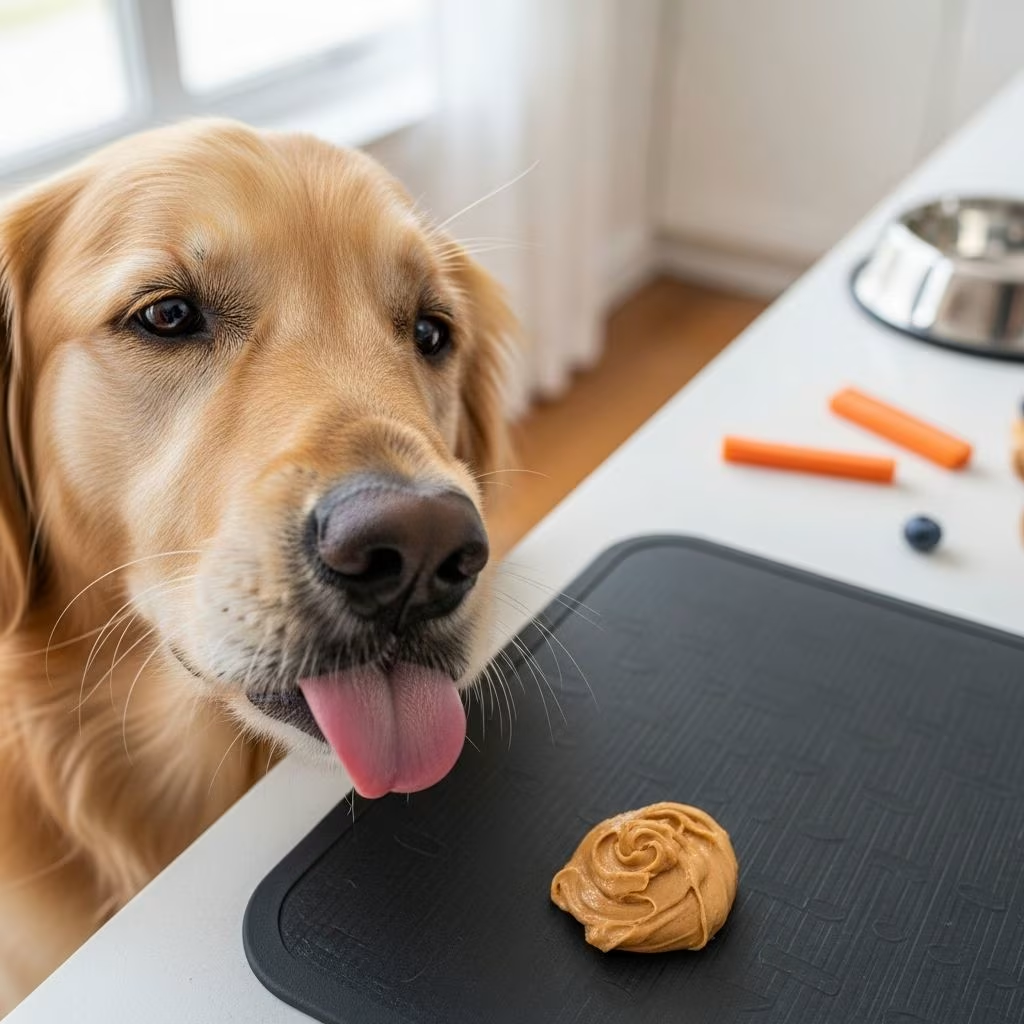
Dogs possess a sense of taste mediated by approximately 1,700 taste buds, far fewer than the 9,000 in humans, yet sufficient to detect essential flavors for survival.
The Anatomy of a Dog’s Tasting System
The dog’s tongue, a muscular organ on the mouth floor attached to the basihyoid bone, features papillae—small projections housing taste buds that aid tasting, food manipulation, chewing, and swallowing. These taste buds cluster on the tongue, soft palate, and epiglottis, containing receptors for sweet, sour, bitter, umami, and limited salty flavors.
Salivary glands surround the tongue, releasing moisture to facilitate digestion and flavor dissolution. Blood vessels abound, making injuries prone to heavy bleeding. Unlike humans, dogs have specialized water-detecting receptors at the tongue tip, making water flavorful rather than neutral.
- Tongue regions: Front detects sweet and salty; back senses sour and bitter.
- Additional sites: Soft palate and throat contribute to post-swallow tasting, allowing flavor assessment even when gulping food.
- Papillae role: Each houses clusters of 50 receptor cells per bud.
Types of Flavors Dogs Can Detect
Dogs perceive five primary tastes, evolved for identifying nutritious or hazardous foods. Sweet signals calories; bitter warns of toxins; sour indicates spoilage; umami denotes proteins; faint salt detection supports electrolyte balance.
| Flavor | Tongue Location | Primary Function | Dog Sensitivity vs. Humans |
|---|---|---|---|
| Sweet | Front | Energy detection | Lower number of buds |
| Sour | Back | Spoilage alert | Moderate, variable |
| Bitter | Back | Toxin avoidance | Strong survival cue |
| Umami | Various | Protein rich foods | Well-developed |
| Salty | Front | Mineral needs | Fewer receptors |
| Water | Tip | Hydration cue | Unique to dogs |
Each bud senses all flavors if intense enough, but regional specialization enhances efficiency. Dogs lack capsaicin receptors (TRPV1 mutation absent), rendering spicy foods tasteless and harmless.
From Taste Buds to Brain: Neural Pathways
Taste signals travel via cranial nerves: facial (front tongue), glossopharyngeal (back tongue/palate), and vagus (throat/epiglottis). These relay to the brainstem, thalamus, then gustatory cortex for conscious processing.
Transmission electron microscopy reveals canine taste bud cells: Type I (supportive, mucous-secreting), Type II (nerve-contacting, Golgi-rich), Type III (gustatory, synaptic vesicles for transmitter release), Type IV (basal), and peripheral immature cells. Fenestrated capillaries near bases suggest paracrine/endocrine signaling.
Why Smell Trumps Taste in Dogs
With 220-300 million olfactory receptors versus humans’ 5 million, plus the vomeronasal (Jacobson’s) organ, dogs prioritize aroma. Scent precedes taste, carrying chemical flavor data that amplifies tongue sensations.
Taste alone suffices but poorly without smell; dogs taste independently yet less vividly. This duo creates perceived flavor, explaining pickiness when congested.
Evolutionary Reasons for Canine Taste Profile
Taste evolved as a gatekeeper: sweet/umami attract energy/protein; bitter/sour deter poisons/rot. Fewer buds suit carnivorous ancestry, where smell locates prey. Water buds ensure hydration; low salt sensitivity matches meat-based diets.
Age and Breed Variations in Tasting Ability
Puppies start with immature buds, refining post-weaning. Seniors lose buds, dulling taste and risking appetite loss. Breeds vary: brachycephalics (e.g., Bulldogs) have compact tongues with potentially fewer buds; longer-nosed breeds maximize surface area.
- Health impacts: Dental disease erodes papillae, impairing taste.
- Regeneration: Buds renew every 10-14 days, but chronic issues hinder.
Practical Tips for Enhancing Your Dog’s Meals
Leverage tastes and smell for nutrition. Rotate proteins for umami; add safe broths for savory depth. Avoid excess sugar/salt due to low affinity.
- Smell boost: Warm food releases aromas.
- Texture variety: Mimics natural foraging.
- Freshness first: Sour/bitter detection prevents spoilage intake.
- Hydration hack: Flavored water bowls encourage drinking.
For picky eaters, vet-check illnesses dulling senses. Transition foods gradually to exploit familiarity.
Common Myths About Dog Taste Debunked
- Myth: Dogs taste like humans. Fewer buds and smell dominance differ fundamentally.
- Myth: Dogs love sweets. Detect but rarely prefer due to low receptors.
- Myth: Spicy hurts dogs. No capsaicin sensation.
- Myth: No chewing means no taste. Throat buds sample gulped food.
FAQs on Canine Taste Perception
Do dogs have fewer taste buds than humans?
Yes, about 1,700 versus 9,000, making taste secondary to smell.
Can dogs taste water?
Yes, via tip-of-tongue receptors unique to canines.
Why do dogs gulp food?
Rear/epiglottis buds allow tasting without chewing; evolution favors quick calorie intake.
Does age affect dog taste?
Seniors experience decline, impacting appetite.
How to make food appealing if taste is weak?
Enhance with smells, warmth, and novel proteins.
Health Implications of Taste Deficits
Impaired taste signals issues: infections, medications, or diseases like kidney failure alter preferences. Monitor for refusal of favorites, suggesting medical needs. Nutritional balance relies on appealing meals exploiting intact senses.
References
- How Dogs Taste: Brain-Gut Connection & Behavior Explained — One Smart Cookie K9 Training. 2023. https://www.onesmartcookiek9training.com/blog/how-dogs-taste
- How Do Dogs Taste Food? — Health Extension. 2023. https://www.healthextension.com/blogs/blog/how-do-dogs-taste-food
- The Science Behind Dogs’ Taste Buds — WoofCrate. 2023. https://woofcrate.ca/blogs/woofpost-blog/the-science-behind-dogs-taste-buds
- Structure and Function of the Tongue, Teeth, and Mouth in Dogs — PetPlace. 2023. https://www.petplace.com/article/dogs/pet-health/structure-and-function-of-the-tongue-teeth-and-mouth-in-dogs
- Fine structure of the canine taste bud with special reference to gustatory cell function — PubMed (Peer-reviewed). 1994-01-01. https://pubmed.ncbi.nlm.nih.gov/8129987/
- Accounting for Taste: What Do Dogs Find Most Delicious? — American Kennel Club. 2023. https://www.akc.org/expert-advice/nutrition/accounting-taste-probing-mysteries-dogs-find-delicious/



