

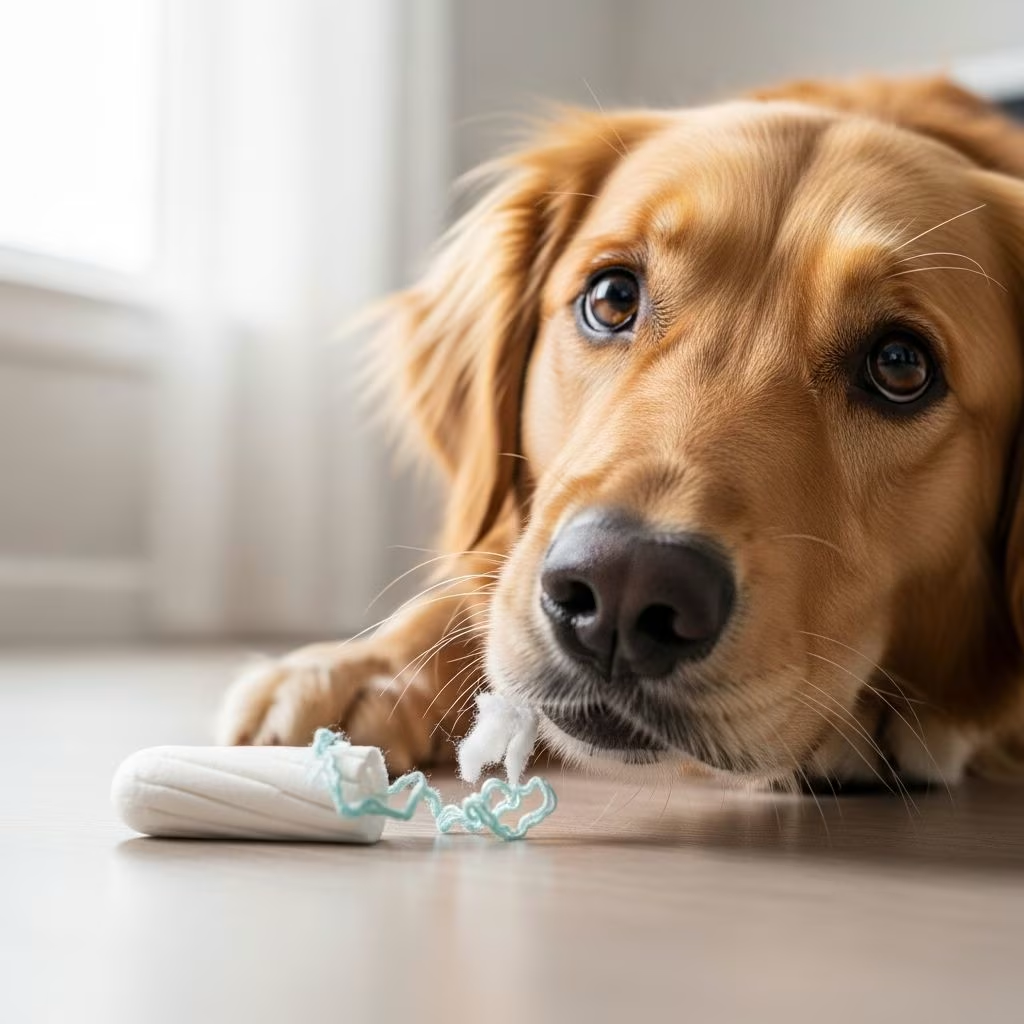
When a pet owner discovers their dog has consumed a tampon, panic often sets in—and with good reason. What may seem like a minor incident can escalate into a serious medical emergency requiring surgical intervention. Understanding why dogs are attracted to tampons, recognizing the warning signs, and implementing preventive measures can mean the difference between a quick recovery and a life-threatening situation.
The Biological Drivers Behind Tampon Consumption
Dogs approach the world through their senses, and their remarkable olfactory abilities make them particularly vulnerable to seeking out items that trigger their curiosity. Tampons present a uniquely compelling target for canine consumption due to multiple sensory and behavioral factors working in concert.
Olfactory Attraction and Scent-Driven Behavior
A dog’s sense of smell operates at an entirely different level than human olfaction. While humans can detect thousands of scents, dogs can distinguish between trillions of different odor combinations. Used tampons emit biological signals—hormonal compounds and bodily fluids—that trigger a dog’s natural scavenging instincts. These olfactory cues essentially serve as an advertisement to your dog’s brain, signaling that something potentially edible or worthy of investigation exists within reach.
The scent profile of a menstrual product differs significantly from household items a dog would normally encounter. This novelty, combined with the familiarity of their owner’s personal scent embedded in the product, creates a powerful attractant that overrides typical dietary preferences.
Evolutionary Scavenging Instincts
Domesticated dogs retain many behavioral traits inherited from their wild ancestors. Scavenging—the practice of opportunistically consuming available food-like substances—remains a fundamental drive, particularly when the item in question contains traces of biological material. Blood, discharge, and other bodily fluids trigger ancient predatory and scavenging responses that bypass rational decision-making processes in the canine brain.
Behavioral Conditions and Psychological Factors
Beyond sensory attraction, certain behavioral and nutritional conditions increase the likelihood of tampon consumption. A condition known as pica—the compulsive ingestion of non-food items—can manifest in dogs experiencing boredom, anxiety, or nutritional deficiencies. Bored dogs may consume inappropriate items as a form of self-stimulation or entertainment, while anxious animals may engage in pica as a stress-coping mechanism.
Additionally, puppies and younger dogs are more prone to exploratory eating behaviors. The soft texture and novel shape of a tampon can appeal to dogs with strong chewing drives, particularly during teething phases when oral exploration intensifies.
Distinguishing Risk Profiles: Used Versus Unused Tampons
While both categories of tampons pose health risks to dogs, the specific dangers differ based on whether the product has been used or remains in its original state.
| Tampon Type | Primary Risks | Mechanism of Harm |
|---|---|---|
| Unused Tampons | Intestinal blockage, expansion within digestive tract, internal tissue damage | Absorbent materials expand significantly when exposed to digestive fluids, creating blockage risk |
| Used Tampons | Bacterial infection, toxicity, gastrointestinal upset, secondary complications | Biological fluids introduce pathogens and contaminants that trigger inflammatory responses |
New tampons absorb digestive juices, saliva, and stomach acids, swelling substantially within the gastrointestinal tract. This expansion can create localized blockages or migrate further into the intestinal system, causing potentially severe obstructions. Used tampons, while less likely to cause mechanical blockage, introduce bacterial contamination and bloodborne pathogens that can trigger infections, gastrointestinal inflammation, and systemic toxicity.
Immediate and Long-Term Health Complications
Gastrointestinal Obstruction and Blockage
The most common and serious consequence of tampon ingestion is gastrointestinal obstruction. The absorbent fibers in tampons are specifically engineered to expand and retain moisture. When a dog swallows a tampon, these materials absorb gastric juices and expand within the stomach or intestines, potentially becoming lodged and preventing the normal passage of food, fluids, and waste through the digestive system.
Small breeds face disproportionate risk. Dogs weighing under 10 pounds, including toy poodles, Chihuahuas, and Yorkshire terriers, have narrower intestinal passages that provide less margin for error. What might pass through a large dog’s system could create a complete blockage in a small breed, necessitating emergency surgical intervention.
Chemical Toxicity and Adverse Reactions
Modern tampons contain various chemical additives, including processing agents and fragrance compounds designed to appeal to human consumers. Some of these substances—such as dioxins from the bleaching process—can trigger toxic reactions in dogs. These chemicals may cause gastrointestinal upset, allergic responses, or systemic toxicity depending on the dog’s individual sensitivity and the quantity ingested.
Choking and Airway Obstruction
If a dog attempts to swallow a tampon whole without proper chewing, the product can lodge in the esophagus or throat, creating an acute choking emergency. Small dogs are at considerably higher risk for this complication due to the size differential between the tampon and the dog’s airway diameter. While less common than intestinal obstruction, choking from tampon ingestion represents a time-sensitive threat requiring immediate veterinary attention.
Internal Tissue Damage and Perforation
As a tampon expands within the digestive tract, it exerts pressure on intestinal walls. This pressure can cause abrasions, small tears, or even perforations in the delicate mucosal lining. Perforation represents one of the most severe complications, potentially allowing intestinal contents to leak into the abdominal cavity and cause peritonitis—a life-threatening infection.
Tampons enclosed in plastic applicators or wrappers present an additional danger. The rigid plastic material itself can lacerate internal tissues as the dog’s digestive system attempts to process the foreign object.
Recognizing the Warning Signs of Tampon Ingestion
Early detection significantly improves treatment outcomes and reduces the likelihood of surgical intervention. Pet owners should remain vigilant for the following symptoms, particularly if tampon access is suspected:
- Vomiting or retching, which may be persistent and contain undigested material
- Diarrhea or changes in stool consistency and color
- Abdominal discomfort, manifesting as whining, reluctance to move, or protective posturing over the belly
- Loss of appetite or complete refusal to eat for more than a few hours
- Lethargy or unusual weakness and reduced activity levels
- Constipation or straining to defecate without producing stool
- Shivering or trembling, which can indicate pain or internal distress
- Bad breath or halitosis, which may suggest digestive system disruption
- Restlessness and inability to find a comfortable position
- Abdominal swelling or a firm, distended belly
Progressive or worsening symptoms—particularly persistent vomiting combined with inability to defecate—warrant immediate emergency veterinary evaluation regardless of whether tampon ingestion is certain.
Veterinary Evaluation and Treatment Protocols
If you witness your dog consuming a tampon or observe suspicious symptoms, contact your veterinarian immediately with specific details about timing, tampon type (used or unused), and any visible symptoms.
Diagnostic Procedures
Veterinarians typically employ multiple diagnostic approaches to confirm tampon ingestion and assess obstruction severity. Radiographic imaging (X-rays) can often visualize foreign objects, though tampons may not always appear clearly on standard imaging. Ultrasound provides superior soft-tissue visualization and can reveal secondary signs of obstruction such as fluid accumulation or bowel distension. In some cases, advanced imaging like CT scans may be necessary to definitively diagnose and localize the problem.
Available Treatment Options
Induced Vomiting: If ingestion occurred within the previous 2-4 hours and the dog is otherwise stable, veterinarians may attempt to induce vomiting using medications like apomorphine or hydrogen peroxide. This approach only works when the tampon remains in the stomach and has not yet migrated into the intestines.
Endoscopic Retrieval: For recently ingested tampons visible in the stomach via endoscopy, minimally invasive retrieval using an endoscope may be possible. This procedure avoids surgical intervention but requires specialized equipment and expertise.
Surgical Intervention: When tampons have migrated into the small intestine, caused complete obstruction, or are inaccessible by other methods, surgical removal becomes necessary. While surgery sounds alarming to pet owners, modern surgical techniques and anesthesia have high success rates, particularly when performed before complications like perforation occur.
Evidence-Based Prevention Strategies
Environmental Management
The most effective prevention approach involves eliminating tampon access entirely. Implement these practical measures:
- Dispose of used tampons in secure, sealed trash receptacles rather than open wastebaskets
- Consider using dog-proof garbage cans with locking mechanisms, particularly in bathrooms
- Close bathroom doors to restrict unsupervised access to trash containers
- Store unopened tampon boxes in cabinets or drawers rather than on countertops
- Empty bathroom trash frequently to minimize temptation
Behavioral Modification and Training
Dogs that demonstrate a strong attraction to inappropriate items benefit from targeted training and environmental enrichment. Increasing physical exercise, providing engaging toys, and establishing clear boundaries around trash and bathroom spaces can reduce the likelihood of exploratory eating behaviors. For dogs with diagnosed pica, consultation with a veterinary behaviorist may reveal underlying anxiety or nutritional deficiencies requiring targeted intervention.
Nutritional Considerations
Ensure your dog receives a complete, balanced diet appropriate to their age, size, and activity level. Some cases of pica correlate with nutritional deficiencies or malabsorption issues. Working with your veterinarian to assess dietary adequacy or adjust feeding protocols can help eliminate one potential contributor to inappropriate eating behavior.
Frequently Asked Questions
Q: Can a dog safely pass a tampon through their digestive system?
A: Large dogs occasionally pass tampons without incident, but this is never a guaranteed outcome. Small breeds rarely pass tampons successfully due to narrower intestinal passages. Waiting passively rather than seeking veterinary evaluation carries significant risk of serious complications.
Q: How quickly should I seek veterinary care if I suspect tampon ingestion?
A: Immediate evaluation is warranted. If witnessed ingestion occurred within the past 4 hours, vomiting induction may still be possible. Delaying care reduces treatment options and increases complication risk.
Q: Is surgery always necessary for tampon ingestion?
A: Not always, but many dogs—particularly small breeds—ultimately require surgical removal. The necessity depends on tampon location, timing of ingestion, and whether obstruction has occurred.
Q: Can I induce vomiting at home if my dog ate a tampon?
A: Do not attempt home vomiting induction. Improper technique can cause additional harm. Always contact your veterinarian immediately for guidance.
Conclusion
Tampon ingestion in dogs represents a genuine medical emergency with potential for serious complications ranging from simple gastrointestinal upset to life-threatening obstruction and peritonitis. Understanding the behavioral drivers behind this behavior, recognizing early warning signs, and implementing comprehensive prevention strategies allows pet owners to protect their companions effectively. Should ingestion occur, rapid veterinary intervention maximizes treatment options and significantly improves outcomes. By combining environmental management with appropriate training and supervision, responsible pet owners can virtually eliminate this preventable health risk.
References
- Understanding Why Dogs Eat Tampons and How to Help Them — Bored Panda. Accessed January 2026. https://www.boredpanda.com/why-do-dogs-eat-tampons/
- Dog Ate A Tampon: What To Do? — Cuddly Tails. Accessed January 2026. https://www.cuddlytails.com/blogs/dog-ate-a-tampon-what-to-do/
- Help! My Dog Ate a Tampon – What You Should Do Next — Dial A Vet. Accessed January 2026. https://www.dialavet.com/blog/help-my-dog-ate-a-tampon—what-you-should-do-next
- Dog Ate a Tampon? Symptoms, Risks, and What to Do — PetPlace.com. Accessed January 2026. https://www.petplace.com/article/dogs/vet-qa-parent/vet-qa/what-are-the-symptoms-of-a-dog-that-ate-a-tampon
- Dog Ate A Tampon? What To Do & When To Worry — Pawp. Accessed January 2026. https://pawp.com/dog-ate-a-tampon-what-to-do-and-when-to-worry/



