

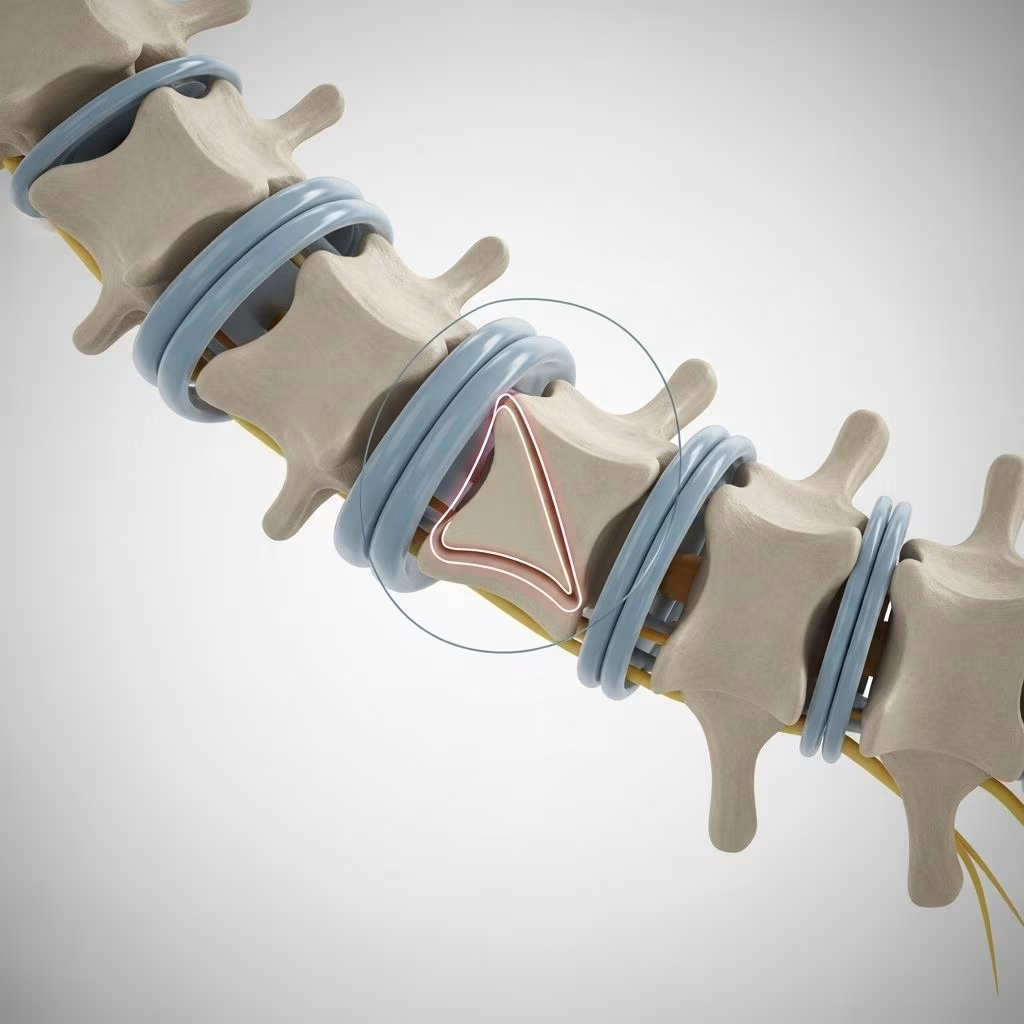
Hemivertebrae represent one of the more complex congenital spinal conditions affecting dogs of various breeds, though some breeds face significantly higher risk than others. This developmental abnormality occurs when the vertebral structures fail to form symmetrically during fetal development, resulting in wedge-shaped bones instead of the typical cylindrical vertebrae. Understanding this condition is essential for dog owners, particularly those with breeds predisposed to spinal anomalies, as early recognition and appropriate management can significantly impact a dog’s quality of life.
The Structural Foundation: How Vertebrae Normally Develop
To comprehend how hemivertebrae develop, it is helpful to first understand normal vertebral anatomy. The spine consists of interconnected bones called vertebrae that stack upon one another to form the backbone. Each vertebra comprises several key components working in concert to support the body and protect the delicate neural tissues within. The vertebral body—the solid, block-like portion—serves as the primary weight-bearing element, while the neural arch surrounds and shields the spinal cord from external trauma.
During normal fetal development, vertebral bodies form through a precise biological process. Each vertebra develops from two separate ossification centers that gradually fuse together as the embryo matures. This fusion process is tightly regulated by genetic instructions, ensuring that the completed vertebra achieves its characteristic spool or cylinder shape. Proper alignment between adjacent vertebrae allows the spine to maintain its structural integrity while permitting appropriate flexibility and movement.
Defining Hemivertebrae: When Development Goes Awry
Hemivertebrae emerge when this carefully orchestrated developmental process encounters disruption. The term “hemivertebra” literally means “half vertebra,” describing a situation where only one side of the vertebral body fully develops while the other side remains underdeveloped or fails to form altogether. This asymmetrical development results in a wedge-shaped or triangular vertebra rather than the normal cylindrical structure.
The wedge-shaped configuration creates immediate mechanical problems for the spine. Instead of vertebrae stacking neatly atop one another in a straight column, the misaligned wedge-shaped bones cause the spine to bend or twist abnormally. This deformity, technically termed kyphosis or scoliosis depending on the direction of curvature, can lead to progressive spinal instability. Over time, the accumulated stress from this misalignment may compress the delicate spinal cord running through the vertebral canal, potentially causing significant neurological damage.
Genetic Origins and Breed Predisposition
Hemivertebrae are congenital conditions, meaning affected dogs are born with this abnormality. The underlying cause relates to genetic factors that disrupt normal vertebral development during fetal growth. While the precise genetic mechanisms remain incompletely understood, researchers have identified strong associations between specific breed characteristics and hemivertebrae incidence.
Brachycephalic breeds—dogs with distinctively shortened facial structures—show markedly elevated rates of hemivertebrae. These include Pugs, French Bulldogs, English Bulldogs, and Boston Terriers. The connection stems from intentional selective breeding practices that produced the distinctive “screw tail” or kinked tail appearance characteristic of these breeds. The genes responsible for tail deformities simultaneously increase the likelihood of vertebral malformations throughout the spinal column, not just in the tail region. Dogs carrying the genetic predisposition for kinked tails typically have higher probabilities of developing hemivertebrae in the thoracic spine—the region encompassing the rib cage area.
Although brachycephalic breeds experience the highest incidence rates, hemivertebrae can potentially occur in any dog breed, regardless of physical characteristics or pedigree.
Clinical Manifestations: Recognizing Symptoms
The clinical presentation of hemivertebrae varies considerably among affected dogs, ranging from asymptomatic cases discovered incidentally on imaging to severe, progressively debilitating conditions. This variation depends primarily on two factors: the precise location of the malformed vertebrae and the degree of spinal cord compression occurring.
Common clinical signs include:
- Weakness or partial paralysis affecting the hind limbs
- Incoordination or wobbly gait, particularly in the rear legs
- Difficulty rising from a lying position or climbing stairs
- Abnormal posture or visible spinal curvature
- Loss of bladder or bowel control
- Muscle wasting or atrophy in affected limbs
- Back or neck pain and sensitivity
- Reluctance to move or exercise
- Constipation or difficulty defecating
In many cases, symptoms manifest during puppyhood or early adulthood as the dog grows and the spine experiences increasing biomechanical stress. However, some dogs with mild hemivertebrae remain entirely asymptomatic throughout their lives, never showing any clinical signs of the underlying deformity. Conversely, severe cases may show rapid progression of neurological deficits, with dogs experiencing increasingly severe mobility problems and eventually developing complete hind limb paralysis.
An important clinical consideration is that dogs do not always vocalize pain in obvious ways. Chronic pain conditions analogous to human sciatica may exist without obvious crying or yelping, meaning subtle behavioral changes—such as reluctance to play, decreased activity levels, or difficulty with previously routine movements—may signal underlying discomfort.
Diagnostic Approaches: Establishing a Definitive Diagnosis
Veterinary diagnosis of hemivertebrae involves a systematic approach combining physical examination, imaging studies, and neurological assessment. This multifaceted diagnostic strategy ensures accurate identification of the condition and determines the extent of spinal cord involvement.
Physical Examination: The initial evaluation includes careful assessment of the dog’s gait, posture, and spinal alignment. The veterinarian observes how the dog walks and stands, looking for asymmetries, weakness, or abnormal curvature. Palpation—gentle manual examination of the spine—may reveal irregularities in vertebral alignment or localized pain responses.
Radiographic Imaging: Standard radiographs (X-rays) typically provide the first definitive evidence of hemivertebrae. The characteristic wedge-shaped appearance on radiographs readily distinguishes hemivertebrae from normal vertebrae. X-rays also reveal the location and number of affected vertebrae and help assess overall spinal alignment. In some cases, these images suffice for diagnosis when clinical signs are absent or minimal.
Advanced Imaging: When clinical signs suggest spinal cord compression, computed tomography (CT) or magnetic resonance imaging (MRI) provides superior visualization of soft tissue structures, including the spinal cord itself. These advanced techniques precisely demonstrate the degree of cord compression and identify secondary changes such as spinal cord swelling or irreversible damage. Myelography—an older technique involving injection of contrast dye into the spinal canal—may be used in some cases to visualize cord compression patterns, though it has largely been superseded by MRI in modern practice.
Neurological Testing: Comprehensive neurological examinations assess reflexes, muscle tone, proprioception (position sense), and pain perception. These tests establish the functional status of the spinal cord and detect any neurological deficits. The results help prognosticate recovery potential and guide treatment decisions.
Genetic Testing: In certain cases, genetic testing may be recommended, particularly when breeding decisions are relevant or when multiple affected animals exist within a family line. Genetic analysis can confirm suspected inherited components of the condition.
Classification Systems: Categorizing Vertebral Abnormalities
Veterinary specialists recognize various classification schemes to standardize the description and comparison of vertebral malformations. The Nasca classification system distinguishes several subtypes of hemivertebrae based on their structural characteristics and location within the spine.
Type 1 hemivertebrae consist of a complete or nearly complete extra half-vertebral body. Type 2 includes wedge-shaped vertebrae with varying degrees of asymmetrical development. Type 3 involves multiple round or oval-shaped vertebral bodies. Type 4 describes vertebrae fused on one side. Types 5 and beyond encompass increasingly complex combinations and patterns. Understanding these classifications assists veterinarians in predicting progression patterns and potential complications specific to each configuration.
The thoracic region (mid-back) represents the most commonly affected area in dogs, particularly in predisposed breeds like Pugs. However, hemivertebrae can occur anywhere along the spinal column, including the cervical (neck), lumbar (lower back), or sacral regions, each carrying different clinical implications.
Management Strategies: Conservative and Surgical Approaches
Treatment decisions for hemivertebrae depend on the severity of clinical signs and the degree of spinal cord compromise. Many dogs with incidental findings on imaging or minimal clinical signs require no active treatment beyond careful monitoring for symptom development.
Conservative Management: Dogs without significant neurological deficits typically benefit from a conservative approach emphasizing activity modification, weight management, and pain control when necessary. Limiting high-impact activities, avoiding jumping or climbing stairs, and maintaining appropriate body weight reduce stress on the compromised spine. Regular veterinary examinations help track any subtle changes in neurological function. In some cases, anti-inflammatory medications or pain management strategies support comfort, though these address symptoms rather than underlying structural problems.
Surgical Intervention: Dogs experiencing progressive neurological deterioration or severe spinal cord compression may benefit from surgical stabilization. Spinal fusion procedures involve placing bone grafts or implants to stabilize the affected vertebral segments, reducing motion-related compression and pain. Success depends on multiple factors including the dog’s overall health, the duration and severity of spinal cord damage, and whether neurological changes are still reversible. Dogs showing irreversible paralysis or having endured extended compression periods have poorer surgical prognosis.
The decision to pursue surgery requires careful discussion with the veterinarian, weighing potential benefits against surgical risks and recovery complications.
Long-Term Outlook and Quality of Life Considerations
Many dogs with hemivertebrae maintain excellent quality of life, particularly those with mild disease or incidental findings. These animals often show no clinical progression and live normal lifespans without mobility restrictions. Regular monitoring allows early detection of any emerging problems.
For dogs experiencing progressive symptoms, ongoing management becomes essential. Adaptive strategies such as providing easy access to favorite resting areas, using harnesses for support during walks, and potentially utilizing wheeled carts or slings for severely affected dogs help maintain mobility and quality of life. Physical therapy and rehabilitation exercises, when appropriate, may preserve remaining function and prevent muscle atrophy.
Each dog responds differently to hemivertebrae; individualizing care plans based on specific clinical circumstances optimizes outcomes.
Frequently Asked Questions
Can hemivertebrae be prevented?
Since hemivertebrae are congenital conditions present from birth, they cannot be prevented once an affected dog exists. However, responsible breeding practices that select against genetic predisposition may reduce incidence in future generations within susceptible breeds.
Is hemivertebra painful?
Yes, hemivertebrae can cause pain, particularly when vertebral misalignment creates spinal cord compression or nerve root irritation. However, not all affected dogs experience pain; some remain entirely asymptomatic despite the structural abnormality.
Does hemivertebra always progress?
Progression is not inevitable. Many dogs with hemivertebrae remain stable throughout their lives, showing no worsening of symptoms. Others experience gradual progression, while some show rapid deterioration. Individual variability is substantial.
Can a dog with hemivertebra still be active?
Dogs with mild hemivertebrae often maintain normal activity levels. Those with more significant disease may require activity modification but can still enjoy quality lives with appropriate restrictions and management strategies.
What breeds are most at risk?
Brachycephalic breeds with screw or kinked tails face the highest risk, including Pugs, French Bulldogs, English Bulldogs, and Boston Terriers. However, the condition can occur in any breed.
References
- Hemivertebra in Dogs: Symptoms, Diagnoses, and Treatment — Dog Pain Relief. 2024. https://dogpainrelief.com/hemivertebra-in-dogs/
- Pug – Hemivertebrae — Universities Federation for Animal Welfare (UFAW). 2024. https://www.ufaw.org.uk/dogs/pug-hemivertebrae
- Nasca classification of hemivertebra in five dogs — National Center for Biotechnology Information (NCBI/PMC). 2011. https://pmc.ncbi.nlm.nih.gov/articles/PMC3113915/
- Congenital Vertebral Malformations in Dogs — Cave Veterinary Specialists. 2024. https://www.cave-vet-specialists.co.uk/veterinary-professionals/tips-from-our-experts/congenital-vertebral-malformations-in-dogs
- Hemivertebra and Kinked Tails in Dogs — Dog News. 2024. https://www.dognews.com/Veterinarian-Merry-Fitzgerald-discusses-spinal-anomalies-from-hemivertebra-to-kinked-tails-in-dogs
- Hemivertebrae in Dogs: Vet-Approved 2025 Guide to Spinal Deformities — Ask a Vet. 2025. https://askavet.com/blogs/news/hemivertebrae-in-dogs-vet-approved-2025-guide-to-spinal-deformities-care
- Hemivertebra in Dogs – Symptoms, Causes, Diagnosis, Treatment — Wag Walking. 2024. https://wagwalking.com/condition/hemivertebra-



