

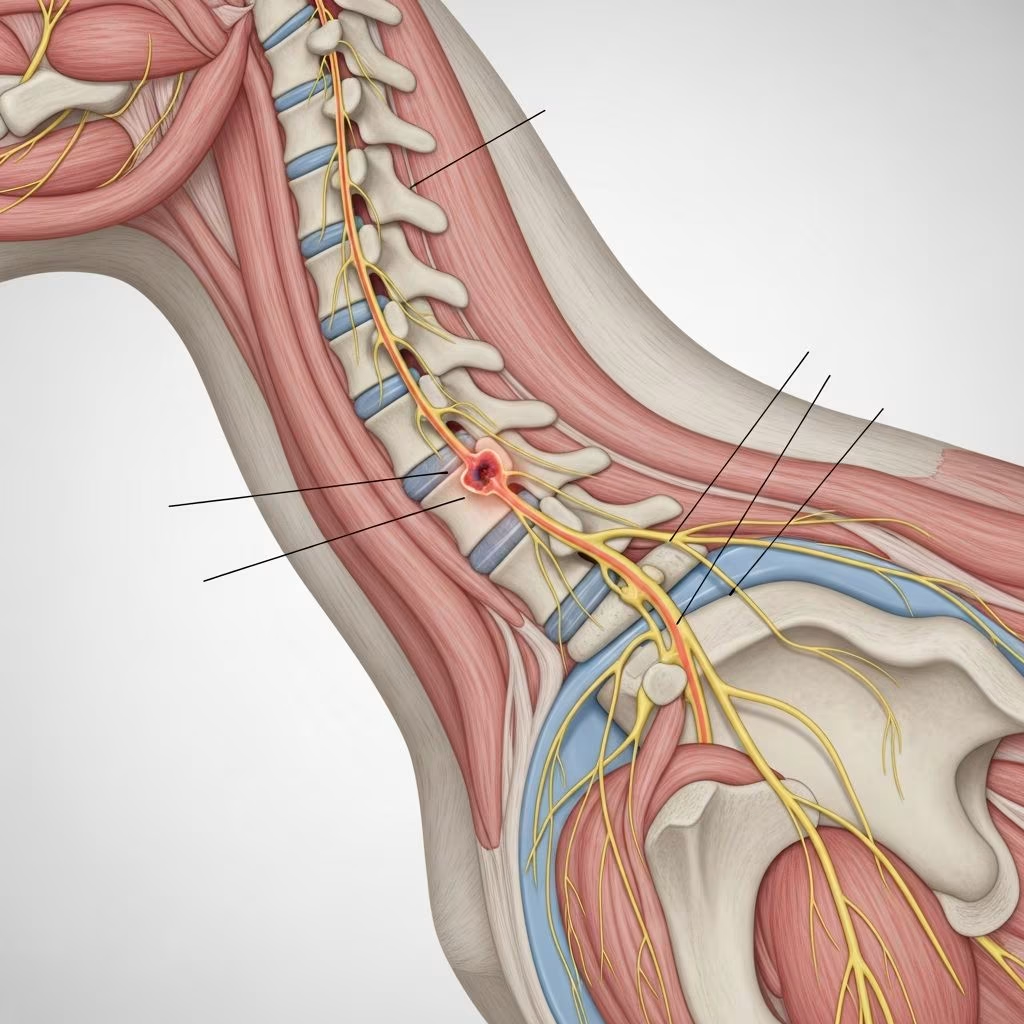
Spinal cord and column problems represent some of the most distressing conditions affecting dogs, often leading to pain, mobility loss, and reduced quality of life. These disorders encompass a range of issues from sudden injuries to progressive degenerative changes, impacting breeds differently based on genetics and lifestyle. Early detection through observant pet ownership can dramatically improve outcomes, as timely intervention frequently halts progression or restores function.
Understanding the Canine Spine
The dog’s spinal column consists of vertebrae protecting the spinal cord, a bundle of nerves transmitting signals between the brain and body. Intervertebral discs act as shock absorbers, while surrounding muscles and ligaments provide stability. Disruption in this system—via trauma, degeneration, or infection—can compress nerves, causing pain or paralysis. Certain breeds like Dachshunds and German Shepherds face heightened risks due to genetic predispositions.
Common Symptoms to Watch For
Recognizing signs early is crucial. Owners should note:
- Pain indicators: Arched back, reluctance to jump, yelping on touch, or shivering.
- Mobility changes: Wobbling gait, dragging paws, knuckling over toes, or hind limb weakness.
- Severe progression: Inability to stand, loss of bladder control, or complete paralysis.
These symptoms often appear suddenly in acute cases like disc extrusion but develop gradually in degenerative conditions.
Intervertebral Disc Disease (IVDD)
IVDD tops the list of spinal afflictions, especially in chondrodystrophic breeds where discs calcify and herniate, squeezing the cord. Hansen Type I involves explosive disc material release, common in young Dachshunds, while Type II is slower, seen in larger breeds.
Symptoms range from neck or back pain to tetraparesis (all-limb weakness). Diagnosis relies on MRI or CT scans after initial X-rays. Conservative management—strict crate rest (4-6 weeks), NSAIDs, and muscle relaxants—succeeds in mild cases (30-40% recurrence risk). Surgery decompresses the cord via hemilaminectomy, boasting 80-95% success if pain sensation persists. Post-op rehab accelerates recovery.
Degenerative Myelopathy (DM)
DM is a late-onset neurodegenerative disease mimicking ALS in humans, primarily striking German Shepherds post-8 years. White matter degeneration in the thoracolumbar cord causes progressive ataxia without pain.
Initial signs include knuckling, swaying hindquarters, and scraping toenails, evolving to paraplegia within 6-12 months. Genetic testing (SOD1 mutation) confirms susceptibility. No cure exists; management emphasizes physical therapy—hydrotherapy, slings, massages—to preserve muscle and delay wheelchair use. Euthanasia often follows front limb involvement.
DM Progression Stages Table
| Stage | Symptoms | Management |
|---|---|---|
| Early | Knuckling, ataxia on turns | Daily walks, balance exercises |
| Moderate | Hind limb paresis, falls | Support harness, underwater treadmill |
| Advanced | Paraplegia, incontinence | Wheelchair, pain relief if needed |
Traumatic Spinal Injuries
Car accidents, falls, or fights cause fractures, luxations, or cord contusions. Acute pain, flaccid paralysis, and sensory loss signal emergencies. Immediate steroids (within hours) reduce swelling, followed by cage rest or stabilization surgery for fractures. Prognosis hinges on pain perception; absence beyond 24 hours predicts poor recovery.
Infectious and Inflammatory Causes
Diskospondylitis (vertebral infection) presents with fever, back pain, and gait issues. X-rays reveal bone lysis; antibiotics target identified bacteria (e.g., Staphylococcus) for 8+ weeks.
Rickettsial infections like Ehrlichiosis swell the cord; blood tests confirm, with doxycycline yielding good outcomes if prompt. Fungal invasions (Blastomycosis) demand prolonged antifungals like fluconazole, though prognosis varies.
Cervical Spondylomyelopathy (Wobbler Syndrome)
Common in Dobermans and Great Danes, Wobbler involves vertebral instability or stenosis compressing the cervical cord. Signs: ataxia, short-strided gait, tetraparesis. MRI diagnoses; medical (rest, steroids) aids mild cases, but fusion surgery stabilizes 80% of severe ones.
Neoplasia and Other Tumors
Meningiomas or hemangiosarcomas compress the cord, causing focal pain and deficits. MRI differentiates; surgery, radiation, or chemo offers palliation, but cures are rare.
Diagnostic Approaches
Beyond history and neuro exam (reflexes, proprioception), imaging is key:
- X-rays: Fractures, spondylosis, diskospondylitis.
- MRI/CT: Soft tissue detail for discs, tumors, stenosis.
- CSF tap: Inflammation, infection.
Electromyography aids DM confirmation.
Treatment Strategies
Tailored to etiology:
- Medical: Rest, analgesics, anti-inflammatories.
- Surgical: Decompression, stabilization.
- Rehab: Laser therapy, acupuncture, hydrotherapy extend mobility.
A multimodal approach optimizes results.
Prevention and Home Care
Minimize risks: Control weight, avoid high jumps (especially chondrodystrophics), vaccinate against distemper/rickettsia carriers. Home: Non-slip floors, ramps, supportive slings. Monitor for recurrence.
Prognosis Overview
| Condition | Good Prognosis Factors | Poor Prognosis Factors |
|---|---|---|
| IVDD | Intact pain sensation, early surgery | Chronic, deep pain loss |
| DM | Early PT | Advanced paraplegia |
| Trauma | Swift intervention | Delayed treatment >24h |
| Infections | Targeted antibiotics | Fungal, disseminated |
Frequently Asked Questions (FAQs)
Can my dog recover from paralysis?
Yes, if pain sensation remains and treatment is prompt, especially in IVDD (80-95% walk post-surgery). DM offers supportive care only.
Is surgery always needed for back pain?
No, mild cases respond to rest/meds, but progression warrants imaging and possible surgery.
How to prevent IVDD in at-risk breeds?
Keep lean, no stairs/jumping, regular vet checks.
What’s the cost of spinal MRI for dogs?
Varies; expect $1,500-$3,000 including consult.
Does physical therapy help DM dogs?
Absolutely—prolongs ambulation by months via muscle maintenance.
This guide empowers owners to act swiftly, consulting vets or neurologists at onset. Advances in rehab and genetics promise better futures for affected pups.
References
- Dog Herniated Disc: Signs and What to Do — SEV Neurology. 2023. https://sevneurology.com/blog/dog-herniated-disc
- Disorders of the Spinal Column and Cord in Dogs — Merck Veterinary Manual. 2025-02-01. https://www.merckvetmanual.com/dog-owners/brain-spinal-cord-and-nerve-disorders-of-dogs/disorders-of-the-spinal-column-and-cord-in-dogs
- Spinal Cord Disease in Dogs and Cats — Remedy Veterinary Specialists. 2024. https://www.remedyvets.com/spinal-cord-disease
- Degenerative Myelopathy in Dogs — PetMD. 2024-06-15. https://www.petmd.com/dog/conditions/musculoskeletal/degenerative-myelopathy-dogs
- Degenerative Myelopathy in Dogs: Signs, Stages, Treatment — Best Friends Animal Society. 2023. https://bestfriends.org/pet-care-resources/degenerative-myelopathy-dogs-signs-stages-treatment
- Understanding Myelopathy in Pets: Causes, Diagnosis, and Treatment — Mission Veterinary Specialists. 2024. https://www.missionveterinaryspecialists.com/blog/understanding-myelopathy-in-pets-causes-diagnosis-and-treatment
- Degenerative Myelopathy in Dogs — VCA Animal Hospitals. 2024. https://vcahospitals.com/know-your-pet/degenerative-myelopathy-in-dogs



