

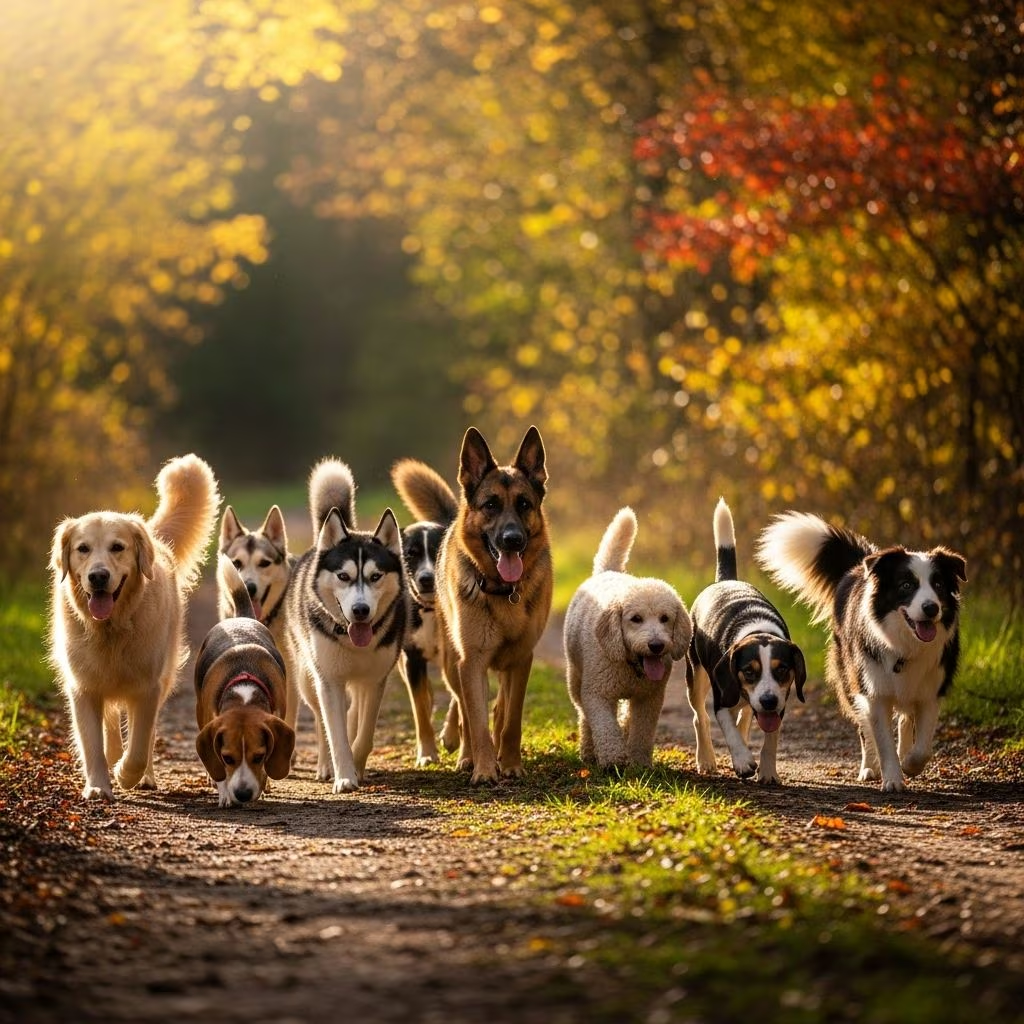
The question of whether dogs are inherently social animals has a straightforward answer: yes. Dogs are gregarious creatures with highly adaptable social structures that allow them to thrive in group environments, whether among other dogs or within human families. This fundamental aspect of canine behavior reflects millions of years of evolutionary development and thousands of years of domestication alongside humans.
The Foundation of Canine Sociability
Dogs possess an innate drive toward social connection that distinguishes them from their wolf ancestors. Research comparing wolves and dogs reveals striking differences in their social orientations. In controlled studies where both species were given opportunities to help pack members through prosocial behaviors, wolves demonstrated significantly higher levels of prosocial action than dogs raised in similar pack conditions. This counterintuitive finding suggests that domestication fundamentally altered how dogs express social cooperation, shifting their focus toward human relationships rather than pack-based cooperation.
The genetic basis for canine sociability has been identified by researchers studying the molecular foundations of dog behavior. Scientists discovered that genetic disruptions in specific genes, particularly GTF21, correlate with hypersociability in dogs. These genetic variations enable dogs to display higher levels of social engagement compared to their wolf relatives, who carry fewer of these genetic modifications. This molecular evidence supports the theory that selective breeding during domestication deliberately amplified social traits in canines.
How Dogs Form and Maintain Social Groups
Unlike the popular misconception of rigid pack hierarchies with dominant and submissive members, dog social structures are flexible and context-dependent. Free-roaming dogs can function as solitary animals or in small groups ranging from two to six individuals. The size and composition of these groups depend on environmental factors, resource availability, and individual personality differences.
Within their social groups, dogs maintain relationships through extensive communication and play behavior. Resource-based conflicts are remarkably uncommon among dogs within established social groups, indicating a natural cooperative tendency. Access to valued resources is not determined by a fixed hierarchy but rather by immediate context, individual motivation, perceived obstacles, and previous learning experiences. This adaptive approach to social dynamics allows dogs to navigate complex social situations flexibly.
Communication as a Social Tool
Dogs have evolved sophisticated communication mechanisms specifically designed for social interaction. One of the most powerful examples is the development of specialized eye muscles that enable dogs to produce expressions—colloquially known as “puppy dog eyes”—that trigger emotional responses in humans through increased oxytocin production. This biological adaptation demonstrates how deeply integrated canine social behavior is with human interaction.
These communication abilities extend beyond visual signals to encompass body language, vocalizations, and chemical signaling through scent marking. The combination of these communication channels allows dogs to convey complex social information to both other dogs and humans, facilitating the formation and maintenance of social bonds across species boundaries.
The Human-Dog Bond: A Unique Relationship
Perhaps the most distinctive feature of dog sociability is their preference for human companionship. When given choices about social partners, dogs demonstrate a clear preference for relationships with humans over other dogs or other species. This preference has shaped the entire trajectory of dog-human coevolution, creating a relationship unlike any other between species.
Modern research on human-dog relationships reveals that these bonds provide emotional and psychological benefits comparable to human relationships. Dogs offer the emotional closeness of a child, the ease of a best friend, and the predictability of a relationship shaped by human control. For many dog owners, their pets represent some of their most meaningful social connections, with studies showing that pet owners frequently rate their dog relationships more highly than their human connections.
Attachment and Social Evaluation
The strength of a dog’s attachment bond to its owner influences how the dog evaluates and interacts with unfamiliar humans. Research demonstrates that dogs with stronger attachment bonds to their owners are more likely to prefer people who help their owners. This capacity for social evaluation—judging potential social partners based on their actions toward known individuals—mirrors human social cognition and suggests that attachment relationships drive dogs’ assessments of new social contacts.
This finding has important implications for understanding individual differences in dog behavior. Two dogs in similar environments may respond differently to unfamiliar people based on the strength and nature of their attachment bonds to their owners. Dogs with secure, strong attachments show preference for prosocial individuals, while dogs with weaker attachments may show more neutral responses.
The Evolution of Domestication and Sociability
The domestication of dogs began tens of thousands of years ago, fundamentally transforming their social nature from that of wolves. Traditional theories suggested that wolves self-domesticated by scavenging near human settlements, with humans then selectively breeding the tamest individuals. However, contemporary research challenges this narrative with new evidence about the mechanisms driving domestication.
Current scientific thinking emphasizes that domestication was facilitated by the evolution of social tolerance and attentiveness toward both other dogs and humans. Rather than humans simply selecting for tameness, dogs may have evolved increased capacity for social engagement with other species. This shift enabled them to exploit human social systems and caregiving behaviors, creating a mutually beneficial relationship.
Selective Breeding and Social Traits
Certain dog breeds demonstrate the effects of selective breeding for social traits more prominently than others. Breeds such as Golden Retrievers and Labrador Retrievers were deliberately developed for their gentle temperament and exceptional sociability. These breeds excel in roles requiring human interaction, such as therapy dogs and service animals, showcasing how intentional selective breeding has further amplified the natural social capacities dogs inherited from their wolf ancestors.
The variation in sociability across dog breeds reflects centuries of human influence on canine genetics. Breeds developed for hunting or guarding may show different social patterns than those bred as companions, demonstrating that human preferences have shaped not only the physical characteristics but also the behavioral and social traits of modern dogs.
Social Preferences and Mixed-Species Living
One of the most remarkable aspects of canine sociability is their ability to thrive in mixed-species social groups, particularly in human family structures. Unlike many animals that struggle with cohabitation across species boundaries, dogs integrate seamlessly into human households and social hierarchies. They understand and respond to human social cues, follow human-established rules, and form deep emotional bonds with human family members.
This adaptability suggests that dogs possess an unusual degree of social flexibility. They can shift between interactions with other dogs, humans of various ages, and other pet species, adjusting their behavior appropriately for each context. This cognitive and behavioral flexibility may represent one of the key advantages that enabled dogs to become so successful as human companions.
Practical Implications of Canine Sociability
Understanding dogs as fundamentally social animals has important practical implications for their care and well-being. Social isolation or prolonged separation from their social group can trigger stress responses in dogs. Recognizing that dogs have natural social needs helps owners provide appropriate enrichment, including regular interaction with humans and, for many dogs, positive interactions with other dogs.
The social nature of dogs also explains many common behavioral issues. Excessive barking, destructive behavior, and anxiety often stem from unmet social needs rather than dominance or aggression. Addressing these issues requires understanding dogs as creatures that evolved to function within social groups and that suffer when separated from social contact for extended periods.
Key Considerations for Social Well-being
- Regular interaction with owners strengthens attachment bonds and promotes emotional security
- Socialization during puppyhood determines how comfortably dogs interact with other dogs and unfamiliar humans
- Environmental enrichment should include social activities, not just physical exercise
- Dogs show individual differences in social preferences based on genetics, early experiences, and attachment history
- The quality of human-dog relationships directly influences a dog’s social evaluation of unfamiliar individuals
Comparing Canine Social Capacity to Other Species
Dogs occupy a unique position in the animal kingdom regarding their capacity for cross-species social bonding. While many animals form social groups within their species, dogs have evolved an extraordinary ability to integrate into human social structures and form attachments to human caregivers. This capacity suggests that dogs have undergone distinctive evolutionary pressures that selected specifically for the ability to read, understand, and bond with humans.
The contrast between wolves and domesticated dogs illustrates this point vividly. Despite sharing recent common ancestry, wolves and dogs have diverged significantly in their social orientations and capabilities. Dogs have become hypersocial creatures oriented toward human relationships, while wolves maintain pack structures focused on cooperation among members of their own species.
Frequently Asked Questions About Canine Sociability
Are all dogs equally social?
No. Individual dogs display varying levels of sociability based on genetics, breed characteristics, early socialization experiences, and the strength of their attachment bonds to owners. Some dogs are naturally outgoing and seek extensive human and canine interaction, while others are more reserved despite having normal social capacities.
Can a dog be happy without interacting with other dogs?
Yes. Dogs primarily seek social interaction with humans, not necessarily with other dogs. Many dogs are content as only pets in a household. However, early socialization with other dogs helps them develop appropriate canine communication skills and prevents fear or aggression toward unfamiliar dogs.
How does a dog’s attachment to its owner affect its behavior toward strangers?
Dogs with strong attachment bonds to their owners show preference for people who demonstrate kindness to their owners. They use their owner’s social evaluation and interaction style as a template for assessing unfamiliar humans, favoring those who treat their owner well.
What role did sociability play in dog domestication?
Sociability was likely crucial to domestication. Dogs that possessed greater capacity for social tolerance and attentiveness to both humans and other dogs had advantages in human settlements. Humans may have deliberately selected for these traits, further amplifying sociability in subsequent generations.
Conclusion: Embracing the Social Nature of Dogs
Dogs are undeniably social animals, shaped by millions of years of evolution and thousands of years of domestication to function within group environments. Their exceptional ability to form bonds with humans, combined with their natural sociability toward other dogs and mixed-species groups, makes them uniquely suited to human companionship. Understanding and respecting this fundamental aspect of canine nature allows owners to provide environments and experiences that support their dogs’ well-being and foster the deep bonds that make dogs such valued members of human families.
References
- Impact of the Dog–Human Bond on Canine Social Evaluation — National Center for Biotechnology Information (NCBI), PubMed Central. 2023. https://pmc.ncbi.nlm.nih.gov/articles/PMC10417759/
- Wolves, but not dogs, are prosocial in a touch screen task — PLOS ONE. 2019. https://doi.org/10.1371/journal.pone.0215444
- Dogs: Genetic link to super-outgoing people — Science Magazine. 2022. https://www.science.org/content/article/what-makes-dogs-so-friendly-study-finds-genetic-link-super-outgoing-people
- Why Dogs Are Better Than People, According to Science — Psychiatric Times. 2024. https://www.psychiatrist.com/news/why-dogs-are-better-than-people/
- Fascinating Facts About Canine Evolution and Why Dogs Are Drawn to Humans — A Peaceful Pack. 2024. https://www.apeacefulpack.com/post/fascinating-facts-about-canine-evolution-and-why-dogs-are-drawn-to-humans
- Social Behavior of Dogs — Merck Veterinary Manual. Cornell University College of Veterinary Medicine. 2024. https://www.merckvetmanual.com/behavior/behavior-of-dogs/social-behavior-of-dogs



