

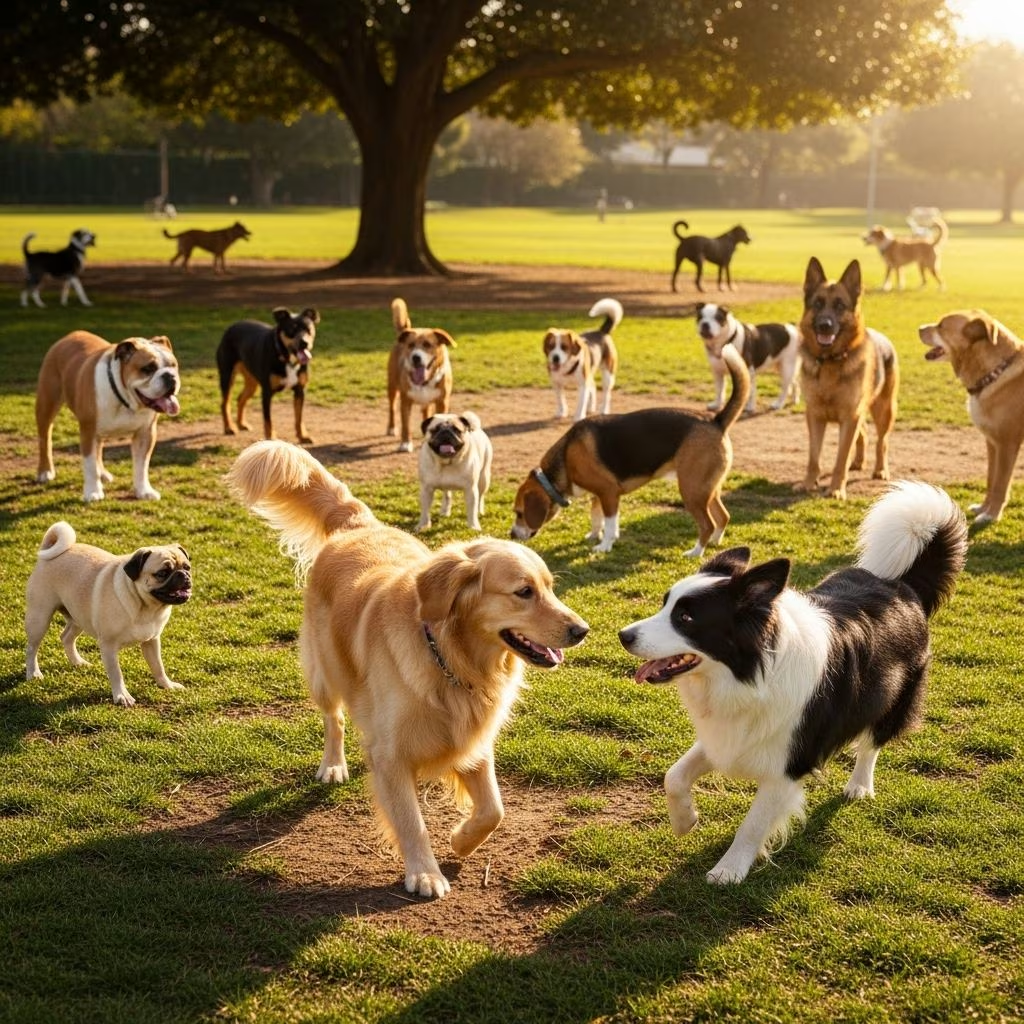
Dogs exhibit remarkably adaptable social behaviors that allow them to integrate seamlessly into human households and interact with fellow canines. Unlike their wolf ancestors, which maintain rigid family-based packs, domestic dogs form flexible alliances based on context and opportunity, prioritizing bonds with people over other dogs.
The Flexible Nature of Dog Groups
Domestic dogs do not adhere to a strict hierarchical system often misattributed to them from wolf studies. Instead, their social arrangements are fluid, with group sizes typically ranging from solitary individuals to small clusters of two to six unrelated animals in free-roaming populations. Access to resources like food or resting spots depends on immediate circumstances, such as a dog’s motivation, experience, and environmental factors, rather than a fixed dominance order.
In home settings, dogs readily form attachments with unrelated companions introduced at any age, sustained through play and mutual signaling. This adaptability underscores why dogs excel in mixed-species groups, often showing a clear preference for human companionship.
Mastering Canine Communication Channels
Dogs employ a multifaceted system of signals to convey intentions and emotions, ensuring smooth interactions. Visual cues dominate, including body orientations, ear and tail positions, facial muscle movements, and raised hackles, which signal arousal levels.
- Body Posture: A lowered front end with raised rear (play bow) invites engagement, while stiffening or avoidance indicates discomfort.
- Tail and Ears: Loose wagging tails paired with forward ears suggest friendliness; tucked tails and flattened ears signal fear or submission.
- Facial Expressions: Relaxed open mouths mimic smiles during positive exchanges, contrasting with lip curls in warnings.
Vocalizations range from barks and growls to whines, each carrying context-specific meanings. Scent plays a pivotal role too; dogs deposit pheromones via urine or glands to mark territories and share status updates, detected through their specialized vomeronasal organ. Touch, such as nuzzling or paw placement, further reinforces bonds during greetings or play.
Critical Windows for Social Development
Puppyhood divides into key phases where social exposure shapes lifelong behaviors. The primary socialization period, from three to twelve weeks, is crucial; insufficient variety in experiences here heightens adult fear responses toward novel stimuli.
During the juvenile phase, from around twelve weeks to sexual maturity, puppies ramp up environmental exploration but grow warier of strangers. This “use it or lose it” stage demands continued diverse exposures to solidify prior socialization gains, minimizing future anxiety. Owners should leverage positive reinforcement from early on, avoiding aversive methods that erode trust.
| Developmental Stage | Key Behaviors | Socialization Tips |
|---|---|---|
| 3-12 Weeks (Primary) | High curiosity, rapid learning of social cues | Expose to people, dogs, sounds, surfaces daily |
| 12 Weeks-Maturity (Juvenile) | Increased caution, group bonding | Controlled playdates, novel experiences weekly |
| Adulthood | Stable preferences, selective sociability | Maintain routines, monitor stress signals |
Interpreting Dog-to-Dog Encounters
When dogs meet, a ritual unfolds: mutual sniffing of faces and rears gathers chemical intel on identity, health, and mood. Positive greetings feature relaxed tails, play bows, and reciprocal role shifts, with breaks for shake-offs indicating healthy boundaries.
Adult sociability varies widely. Puppies often start highly outgoing, tolerating rough play, but most mature into selective tolerances rather than universal friendliness. “Dog-tolerant” adults handle most meetings neutrally, while others become choosy or reactive, especially on leashes where natural evasion is blocked.
- Tolerant Types: Neutral or playful with familiar dogs, relaxed in groups.
- Selective: Prefer specific playmates, enforce rules, need supervision.
- Less Social: Limited friends, quick to disengage or correct.
These patterns reflect natural maturation, not flaws; forcing interactions can spark conflicts rooted in fear or mismatched energies.
Human-Dog Social Bonds
Dogs surpass other species in reading human cues, responding to gestures like pointing with pinpoint accuracy. This attunement fosters empathy; studies show dogs console distressed strangers through licking and nuzzling, prioritizing aid over familiar comforts.
Traits like sociability toward humans correlate with lower aggression and better trainability, enhanced by puppyhood exposures. Separation anxiety affects about a third of dogs, highlighting their pack-oriented needs even in solo homes.
Play: The Glue of Canine Societies
Play solidifies relationships, with patterns evolving by age and preference. Puppies engage boisterously, adults more measured, often chasing or wrestling with bite inhibition—soft mouths and pauses prevent escalation.
Healthy sessions alternate chaser and chasee roles, adjust for size differences, and include self-handicapping by larger dogs. Frequent pauses and role reversals keep energy balanced. Owners spotting jerky movements, clear inhibitions, and mutual enjoyment can relax; prolonged gripping or ignoring signals warrants intervention.
Fostering Positive Social Skills
Promote harmony through structured introductions: parallel walks before direct meets, short supervised sessions, and reward calm behaviors. Multi-dog homes thrive with individual attention and resource equity to curb tensions.
Breeds vary—herding types may direct play, hounds pursue relentlessly—but individuals differ most. Past traumas or poor early socialization amplify selectivity; counter with gradual desensitization.
Leash dynamics alter greetings; tension signals handler stress, prompting avoidance. Off-leash parks suit tolerant dogs; selective ones benefit from private yards or one-on-one play.
Common Misconceptions Debunked
The “alpha” myth persists, but evidence shows no linear dominance in dogs. Resource control is situational, not rank-based. Punishment risks fear aggression; rewards build confidence.
Dogs aren’t perpetual puppies; expecting adult sociability like juvenile exuberance ignores biology.
FAQs
Why is my adult dog less friendly with others than as a puppy?
Maturation naturally reduces broad sociability; most adults prefer familiar company.
How do I know if dogs are playing safely?
Look for play bows, role reversals, relaxed tails, and bite inhibition.
What if my dog growls at other dogs?
It may signal discomfort; separate and consult a trainer for desensitization.
Can older dogs learn social skills?
Yes, with patient, positive exposures building on their experiences.
Is dog park ideal for all dogs?
No; selective dogs risk stress—opt for controlled settings.
References
- Social Behavior of Dogs — MSD Veterinary Manual. 2023. https://www.msdvetmanual.com/behavior/behavior-of-dogs/social-behavior-of-dogs
- Understanding Dog-Dog Sociability — Paws Abilities. 2017-02-16. https://paws4udogs.wordpress.com/2017/02/16/understanding-dog-dog-sociability/
- Normal Social Behavior in Dogs — Merck Veterinary Manual. 2023. https://www.merckvetmanual.com/dog-owners/behavior-of-dogs/normal-social-behavior-in-dogs
- Dog behavior — Wikipedia. 2023. https://en.wikipedia.org/wiki/Dog_behavior
- Understanding how your dog behaves around other dogs — Dogs for Good. 2023. https://www.dogsforgood.org/good-advice/understanding-how-your-dog-behaves-around-other-dogs/
- Understanding the Scale of Dog Selectivity — American Kennel Club. 2023. https://www.akc.org/expert-advice/training/understanding-scale-dog-selectivity/



