

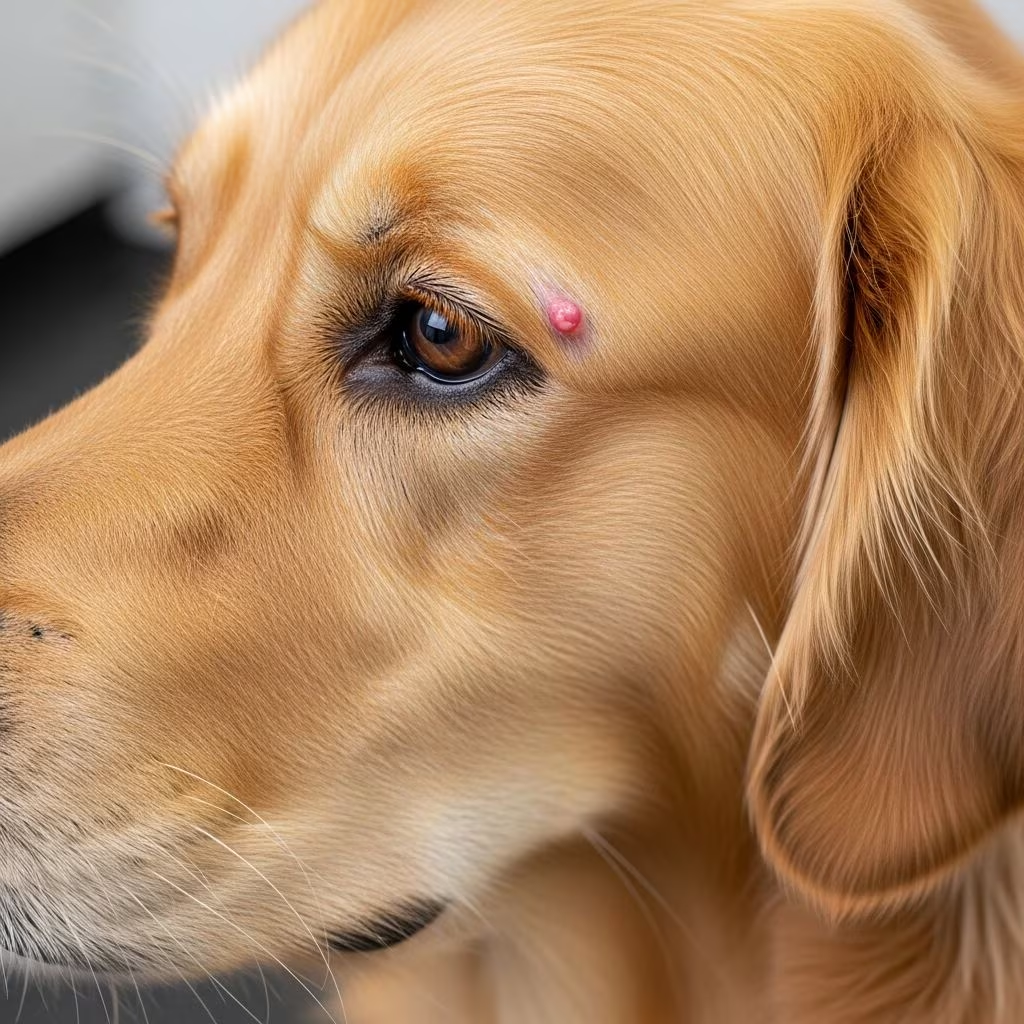
Skin cancer represents a significant health concern for dogs, particularly as they age. While many skin growths are benign, certain types can become malignant, spreading to other parts of the body if not addressed promptly. Owners play a crucial role in early detection by regularly checking their dog’s skin for irregularities. This guide explores the primary forms of canine skin cancer, their clinical presentations, diagnostic approaches, therapeutic interventions, and preventive measures to help safeguard your pet’s well-being.
Prevalence and Risk Factors in Dogs
Skin tumors are among the most frequently diagnosed neoplasms in dogs, accounting for a substantial portion of veterinary oncology cases. Certain breeds, such as Boxers, Golden Retrievers, and Labrador Retrievers, exhibit higher susceptibility due to genetic predispositions. Environmental factors, including prolonged ultraviolet (UV) radiation exposure, elevate risks especially for light-skinned or short-coated dogs. Hormonal influences and chronic inflammation may also contribute to tumor development in specific instances.
Aging plays a pivotal role; senior dogs over seven years are more prone to these conditions. Unlike humans, canine skin cancers rarely stem solely from sun damage alone but combine with hereditary elements. Monitoring becomes essential during routine grooming sessions to identify changes early.
Primary Types of Skin Malignancies
Dogs can develop various skin cancers originating from different cellular layers and components. Understanding these distinctions aids in recognition and management.
Mast Cell Tumors: The Most Common Culprit
Mast cell tumors (MCTs) arise from mast cells in the immune system and constitute the predominant skin cancer in canines. These tumors manifest anywhere on the body but favor the trunk, limbs, and perineal regions. They release histamine, potentially causing gastrointestinal upset, ulcers, or systemic symptoms like lethargy.
Grades determine aggressiveness: low-grade tumors offer excellent prognoses post-excision, while high-grade variants metastasize rapidly to lymph nodes or organs. Clinical variability ranges from small, firm nodules to large, ulcerated masses that fluctuate in size.
Malignant Melanomas: Pigmented Threats
Originating from melanocytes, malignant melanomas often appear as dark, raised lesions on haired skin, lips, or oral mucosa. While cutaneous forms may remain localized, oral melanomas aggressively invade and spread to lungs or lymph nodes. Benign counterparts, melanocytomas, pose minimal risk.
These tumors bleed easily and grow rapidly, distinguishing them from harmless pigmentation changes. Breeds with dark skin pigmentation, like Scottish Terriers, face heightened risks.
Squamous Cell Carcinomas: Sun-Linked Aggressors
Squamous cell carcinomas (SCCs) develop in epidermal cells, frequently on sun-exposed areas such as the abdomen, ears, or nose in lightly pigmented dogs. They present as firm, wart-like growths or crusted sores that erode surrounding tissues without early lymphatic spread.
Though locally destructive, timely intervention often yields favorable outcomes. Chronic UV exposure accelerates progression in hairless or thinly coated breeds.
Other Notable Variants
- Hemangiosarcomas: Vascular tumors forming red-black nodules, prone to rupture and internal bleeding.
- Histiocytic Tumors: Aggressive infiltrative masses in certain breeds like Bernese Mountain Dogs.
- Fibrosarcomas: Fibrous connective tissue sarcomas with high recurrence potential.
Recognizing Warning Signs Early
Vigilant owners can spot anomalies during daily interactions. Key indicators include:
- Persistent lumps or bumps that enlarge or change texture.
- Non-healing sores, ulcers, or crusty patches.
- Discolored growths, especially black, red, or irregular pigmentation.
- Symptoms of discomfort: scratching, limping, or appetite loss.
- Systemic effects like vomiting, diarrhea, or enlarged lymph nodes from MCTs.
Differentiating cancerous lesions from infections or allergies requires professional evaluation. Rapid growth or multiplicity warrants immediate veterinary consultation.
| Type | Appearance | Common Locations | Associated Symptoms |
|---|---|---|---|
| Mast Cell Tumor | Raised, rubbery nodule | Limbs, trunk | Stomach upset, hives |
| Malignant Melanoma | Dark, flat or raised mass | Mouth, skin | Bleeding, rapid growth |
| Squamous Cell Carcinoma | Wart-like, crusted sore | Ears, abdomen | Tissue destruction |
Diagnostic Processes
Accurate diagnosis underpins effective treatment. Initial assessments involve fine-needle aspiration (FNA) to extract cells for cytological review, offering rapid preliminary insights. Confirmatory biopsies provide histological grading and staging information.
Imaging modalities like ultrasound, X-rays, or CT scans detect metastasis. Lymph node evaluation via sentinel node mapping is routine for high-risk tumors. Pathologists assign grades—Patnaik or Kiupel systems for MCTs—to predict behavior.
Treatment Modalities Explained
Therapy tailors to tumor type, grade, location, and patient health. Multimodal approaches predominate for advanced cases.
Surgical Interventions
Primary treatment for most accessible tumors involves wide excision with margins to prevent recurrence. Clean margins correlate with cure rates exceeding 90% for low-grade MCTs and localized SCCs. Limb-sparing techniques or reconstructive surgery preserve function.
Radiation Therapy Applications
High-energy beams target inoperable sites or residual disease post-surgery. Effective for melanomas and nasal SCCs, achieving remission in up to 70% of cases, though recurrence remains possible. Stereotactic radiation minimizes side effects.
Chemotherapy Protocols
Systemic agents like vinblastine or lomustine address metastatic disease, often combined with surgery. Used adjunctively for MCTs and melanomas, they extend survival without severe toxicity in most dogs.
Immunotherapy Innovations
Melanoma vaccines like Oncept stimulate immune responses against tyrosinase, prolonging survival when paired with surgery or radiation. Emerging for select cancers, this modality harnesses the dog’s defenses.
Targeted therapies, such as tyrosine kinase inhibitors (e.g., toceranib for MCTs), block growth signals with fewer side effects than traditional chemo.
Prognosis and Long-Term Management
Outcomes vary widely: low-grade MCTs boast over 95% one-year survival, while high-grade or metastatic melanomas average 6-12 months. Early intervention dramatically improves statistics; many dogs achieve full recovery.
Post-treatment monitoring includes regular check-ups, imaging, and owner vigilance for recurrence. Nutritional support and palliative care enhance quality of life in terminal stages.
Prevention Strategies for Owners
Minimize UV exposure with pet-safe sunscreens, protective clothing, or shaded outdoor time, particularly midday. Routine skin exams during grooming detect issues precociously. Neutering may reduce certain hormone-influenced risks. Maintain ideal weight and avoid carcinogen exposure.
Frequently Asked Questions (FAQs)
Is skin cancer painful for dogs?
Initially not, but advanced tumors cause discomfort from ulceration or invasion. Pain management integrates into care plans.
How often should I check my dog’s skin?
Weekly full-body inspections, more frequently for at-risk breeds or seniors.
Can skin cancer be cured?
Yes, especially localized, low-grade tumors via surgery; aggressive types require comprehensive therapy.
What breeds are most at risk?
Boxers, Retrievers, Bulldogs, and those with thin coats or light skin.
Does diet influence skin cancer risk?
Antioxidant-rich diets support immunity, but no direct causation established; obesity exacerbates issues.
References
- Dogs and Skin Cancer — WebMD. 2023. https://www.webmd.com/pets/dogs/dogs-and-skin-cancer
- Skin Cancer in Dogs — PetMD. 2024. https://www.petmd.com/dog/conditions/cancer/c_dg_hemangiosarcoma_skin
- Skin Cancer in Dogs: Signs, Symptoms, and Types — GoodRx. 2024. https://www.goodrx.com/pet-health/dog/dog-skin-cancer
- Skin Cancer in Dogs: Types, Signs, Symptoms & Treatment — Guilford Jamestown Vet. 2020-05-29. https://www.guilfordjamestownvet.com/site/blog-greensboro-vet/2020/05/29/skin-cancer-dogs
- Skin Cancer in Dogs: Signs, Symptoms, Treatments — AKC.org. 2023. https://www.akc.org/expert-advice/health/dog-skin-cancer-types/



