

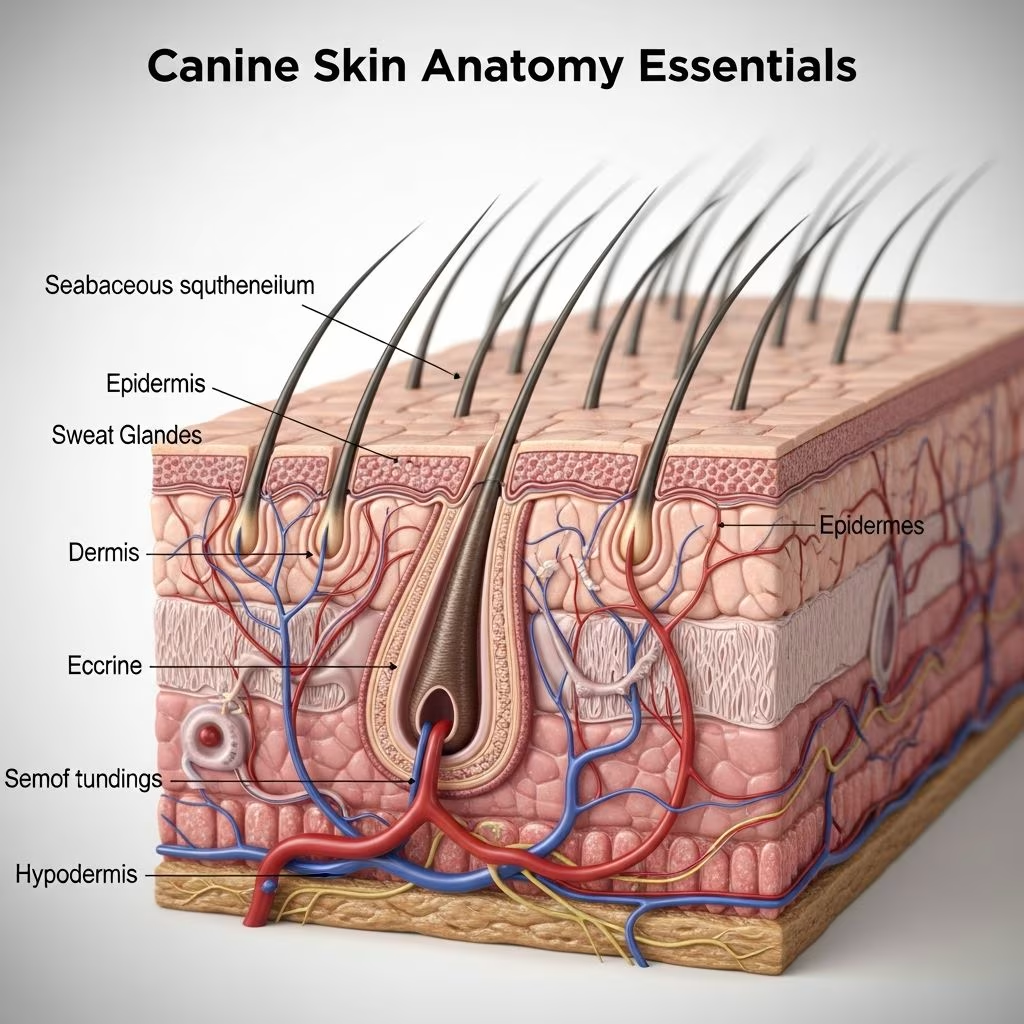
The skin represents the largest organ in a dog’s body, serving as a vital shield against external threats while maintaining internal balance. Comprising multiple layers and specialized structures, it accounts for a significant portion of body weight and performs essential roles in protection, thermoregulation, and sensation.
Primary Layers of Dog Skin
Dog skin is organized into three main layers: the outer **epidermis**, the supportive **dermis**, and the underlying **subcutis**. Each layer contributes uniquely to overall skin functionality, adapting to a dog’s breed, age, and environment.
The Protective Epidermis: First Line of Defense
The epidermis forms the outermost barrier, consisting of stratified cells that renew continuously. Primarily made of keratinocytes, it undergoes keratinization where basal cells divide, migrate upward, and transform into tough, dead surface cells filled with keratin protein. This process creates a waterproof seal that retains moisture and blocks pathogens, chemicals, and physical damage.
Several cell types populate the epidermis:
- Keratinocytes: Dominant cells that produce the keratin barrier, influenced by diet, hormones, and immune activity.
- Melanocytes: Generate melanin pigment at the base, protecting against UV radiation; activity is genetically and hormonally regulated.
- Langerhans cells: Immune sentinels that detect and respond to invaders.
- Merkel cells: Aid in tactile sensation.
Cell turnover varies by region and health status, accelerating with inflammation or certain medications. Canine epidermis is generally thinner than human skin, enhancing flexibility but requiring vigilant care.
Basement Membrane: The Anchoring Interface
Situated between epidermis and dermis, this thin zone anchors layers, facilitates nutrient exchange, and supports healing. Composed of proteins like collagen and laminin, it acts as a selective filter. Autoimmune diseases can target it, leading to blistering and separation.
Dermis: Structural Backbone and Sensory Hub
The thick dermis provides mechanical strength via collagen and elastin fibers, nourishing the epidermis through blood vessels. It houses sensory nerves for detecting touch, pain, itch, temperature, and pressure, plus motor nerves for muscle control.
Key dermal components include:
- Blood and lymph vessels for nutrient delivery and temperature control.
- Immune cells that combat breaches from the surface.
- Sweat and sebaceous glands associated with follicles.
- Hair follicle roots embedded deeply.
This layer’s elasticity allows skin movement over muscles, varying in thickness by body region and breed.
Subcutis: Cushioning and Insulation Base
Beneath the dermis lies the subcutis, rich in fat and muscles like the panniculus carnosus, enabling skin twitching to dislodge parasites. Fat stores energy, insulates against cold, cushions impacts, and reserves fluids. Regional variations affect padding over bony areas.
Skin Appendages: Specialized Extensions
Emerging from the epidermis, appendages enhance skin versatility. Dogs feature compound hair follicles—a primary guard hair surrounded by 3-15 finer secondary hairs exiting one pore—developing postnatally.
| Appendage | Structure | Function |
|---|---|---|
| Hair Follicles | Compound units with bulb base | Protection, insulation, sensory input |
| Sebaceous Glands | Oil-producing sacs | Lubricate coat, waterproofing |
| Sweat Glands | Limited to paw pads | Thermoregulation via evaporation |
| Claws | Keratinized sheaths | Grip, digging, defense |
Guard hairs form the wiry outer coat, while undercoat provides warmth; breed genetics dictate density and type, e.g., dense in herding breeds.
Regional Variations in Canine Skin
Skin thickness, hair density, and gland distribution differ across the body. Eyelids and ears have thin, hairless skin for sensitivity; backs feature thicker dermis for durability. Paw pads boast tough, glabrous epidermis with eccrine glands. Vascular patterns include direct cutaneous arteries, influencing surgical considerations.
Physiological Roles Beyond Structure
Skin synthesizes vitamin D precursors and stores lipids. It modulates immunity via resident cells and cytokines. Hormones like cortisol affect barrier integrity. Healthy skin requires balanced nutrition, especially omega fatty acids and zinc.
Common Disruptions and Maintenance Tips
Allergies, infections, and parasites exploit skin weaknesses. Monitor for redness, hair loss, or odor. Regular grooming removes debris; baths with vet-approved shampoos preserve lipids. Diet impacts coat quality.
Frequently Asked Questions (FAQs)
What percentage of a dog’s body weight is skin?
Typically 12-24%, varying by breed and age.
How does dog skin differ from human skin?
Dog skin is thinner, has compound follicles, fewer sweat glands (pads only), and more direct vascular supply.
Why do dogs twitch their skin?
The panniculus muscle in subcutis contracts to flick off insects.
Can diet affect skin health?
Yes, deficiencies in fats or proteins impair keratinization and barrier function.
What role does melanin play?
It shields against UV damage, concentrated in darker-pigmented areas.
Advanced Insights for Breeders and Vets
Genetic factors influence follicle compounding; brachycephalic breeds may have altered gland function. Histology reveals epidermal pegs interdigitating with dermal papillae for anchorage. Blood flow studies show regional differences, critical for flap surgeries.
Understanding these nuances aids in diagnosing dermatoses. For instance, pemphigus targets basement zones, while atopy involves dermal inflammation.
References
- Structure of the Skin in Dogs — Merck Veterinary Manual. 2023. https://www.merckvetmanual.com/dog-owners/skin-disorders-of-dogs/structure-of-the-skin-in-dogs
- Understanding Your Dog’s Skin and Coat Layer by Layer — Diamond Pet. 2022. https://www.diamondpet.com/blog/performance/skin-coat/dogs-skin-coat-layer/
- The Wonders of Dog’s Skin and Coat, Layer by Layer — Doglyness. 2023. https://www.doglyness.com/blogs/news/the-wonders-of-dogs-skin-and-coat-layer-by-layer
- The Integumentary System in Animals — MSD Veterinary Manual. 2024. https://www.msdvetmanual.com/integumentary-system/integumentary-system-introduction/the-integumentary-system-in-animals
- Anatomy and circulation of the canine skin — PubMed (Peer-reviewed). 1991. https://pubmed.ncbi.nlm.nih.gov/2011061/



