

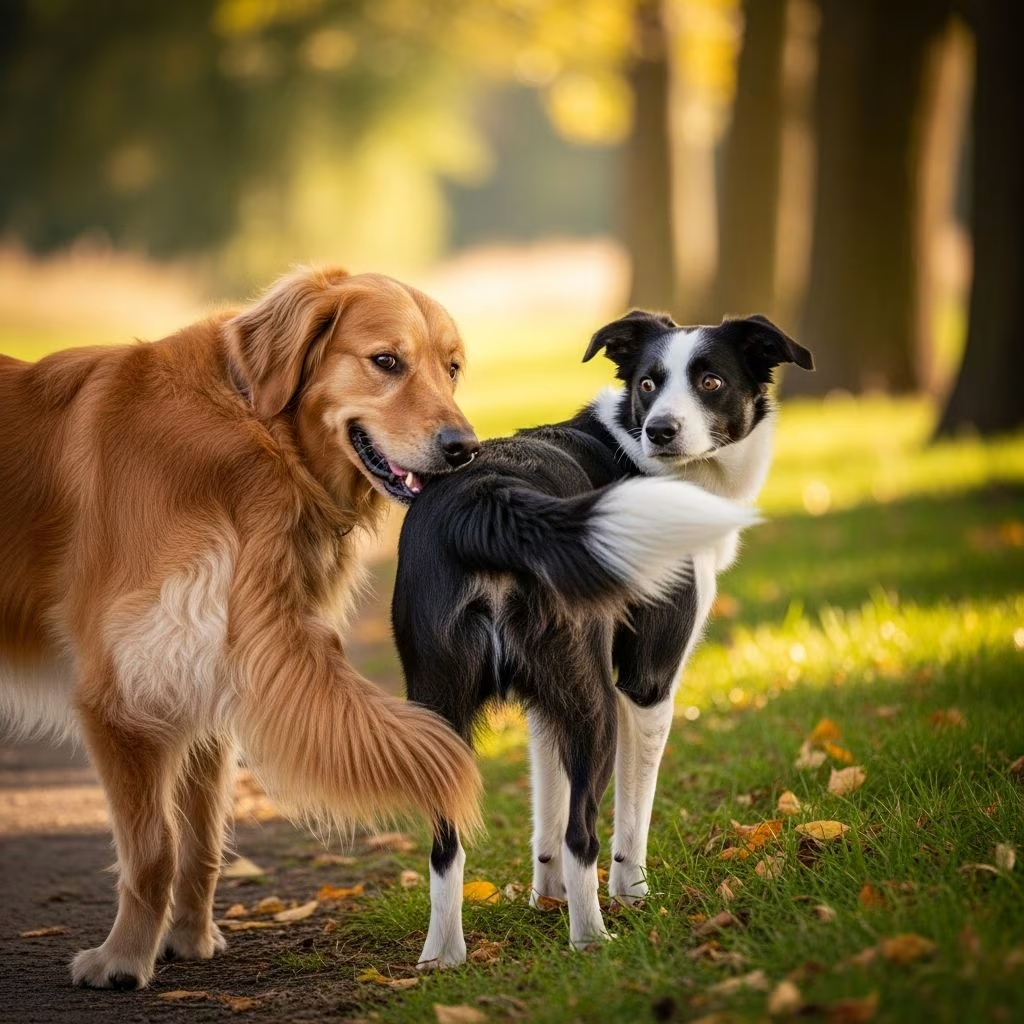
Dogs possess an extraordinary sense of smell that far surpasses human capabilities, enabling them to gather vast amounts of information through sniffing, particularly around other dogs’ rear ends. This behavior, while often embarrassing for owners, serves as a primary form of communication and identification in the canine world.
The Superpowered Canine Nose: A Biological Marvel
Dogs have between 220 million and 300 million olfactory receptors, compared to humans’ mere 5 million, allowing them to detect scents at concentrations as low as one part per trillion. This heightened sensitivity stems from a larger olfactory cortex—40 times bigger than ours—and specialized structures like the olfactory recess, a maze of airways that traps odor molecules even during exhalation.
Unlike humans, dogs sniff in stereo, with each nostril independently sampling air to pinpoint scent directions. They inhale up to 300 times per minute in short bursts, constantly refreshing their olfactory cells with new particles. High-speed studies show dogs sniff at about five times per second, flaring nostrils to distinguish sniffing from regular breathing.
- Olfactory recess: Traps scents for prolonged analysis, absent in primates.
- Stereo sniffing: Separate nostril samples for directional tracking.
- Retention mechanism: Odors linger post-exhalation, enhancing detection.
Anal Glands: The Scent-Rich Calling Cards
At the heart of butt-sniffing lies the anal glands, paired sacs located at a dog’s rear that produce a unique, pungent secretion. These glands empty during defecation or stress, marking territory with a personalized chemical signature.
Each dog’s anal scent is distinct, conveying details like age, sex, health status, diet, and emotional state. Amines and acids in these secretions form the basis of chemical communication, allowing dogs to assess compatibility and hierarchy without a single bark.
| Information Gained from Anal Scent | Examples |
|---|---|
| Identity | Individual dog profile, like a fingerprint |
| Gender & Reproductive Status | Male/female, in heat or not |
| Health | Illness markers or robust vitality |
| Mood | Relaxed, aggressive, or fearful |
| Diet & Lifestyle | Recent meals, activity levels |
Vomeronasal Organ: Detecting Invisible Signals
Dogs augment their main olfactory system with the vomeronasal organ (VNO), also called Jacobson’s organ, located in the nasal cavity roof. This accessory structure detects pheromones—volatile chemicals signaling mating readiness, kinship, or alarm—substances often odorless to regular sniffing.
When activated, dogs curl their upper lip and flare nostrils in the flehmen response, channeling scents directly to the VNO. Nerves from this organ bypass standard smell pathways, linking straight to brain areas governing mating and social behavior. Puppies use it to locate mother’s milk, while adults discern breeding viability.
This dual system—nose for general scents, VNO for pheromones—creates a comprehensive sensory profile no single tool could match.
Social Networking: Sniffing as Canine Handshake
Butt-sniffing functions as a canine greeting ritual, akin to humans shaking hands or exchanging names. A quick rear sniff provides an overview, but prolonged investigation yields deeper insights into the other’s history and intentions.
In packs, this exchange establishes dominance, alliances, and avoids conflicts. Healthy dogs with expressed glands offer clear profiles; issues like impaction can hinder social integration, leading to isolation or aggression.
- Greeting protocol: Mutual sniffing confirms friend or foe.
- Hierarchy check: Scent strength indicates status.
- Reproductive cues: VNO pheromones guide pairing.
Health Insights from a Single Whiff
Beyond social cues, dogs’ noses detect disease markers invisible to medical tests. Trained canines identify cancers (breast at 88%, lung at 99% accuracy), narcolepsy via sweat, and even COVID-19 through subtle volatile organic compound shifts.
This ability arises from sniffing hormonal or biochemical changes—one study showed dogs spotting cancer in blood samples at 97% accuracy across stages. Anal scents may similarly reveal illness in peers, prompting avoidance of unhealthy pack members.
Environmental Exploration: Sniffing the World
Butt-sniffing extends to general scenting; dogs ‘read’ trails left by others, discerning passage time, direction, and group composition. They detect buried scents 40 feet underground or whale feces from miles in water.
Owners restricting sniffing deprive dogs of mental stimulation—sniffing rivals puzzle-solving, burning energy and reducing anxiety. Scent walks, prioritizing sniffing over distance, enhance welfare.
Common Sniffing Problems and Solutions
Excessive or inappropriate sniffing signals issues:
- Anal gland problems: Scooting, licking—vet expression needed.
- Over-stimulation: Train ‘leave it’ for polite interactions.
- Fear avoidance: Dogs dodging sniffs may be anxious; gradual socialization helps.
To support healthy habits, allow off-leash sniff sessions, use scent games, and monitor gland health via regular check-ups.
Training Tips for Polite Pups
- Practice controlled greetings on leash.
- Reward ignoring strangers’ rears.
- Incorporate nosework toys for outlet.
- Consult vets for persistent issues.
Frequently Asked Questions (FAQs)
Is butt-sniffing normal for all dogs?
Yes, it’s instinctual across breeds, though small dogs may do it more discreetly.
Why do some dogs refuse to be sniffed?
Often due to pain, shyness, or gland issues—professional evaluation recommended.
Can I stop my dog from sniffing butts?
Discourage in humans/pets, but permit dog-dog interactions for social health.
How does spaying/neutering affect this behavior?
It reduces intensity but doesn’t eliminate the instinct.
Are there breeds better at scent detection?
Bloodhounds and Beagles excel due to loose skin folding scents, but all dogs are superior to humans.
Embracing the Sniff: A Canine Essential
Understanding butt-sniffing demystifies an odd habit, revealing its role in communication, health monitoring, and enrichment. By honoring this superpower, owners foster happier, well-adjusted companions.
References
- The Secret of a Dog’s Sniffer — Science | AAAS. 2014-05-13. https://www.science.org/content/article/secret-dogs-sniffer
- The science of sniffs: disease smelling dogs — Understanding Animal Research. 2021-04-20. https://www.understandinganimalresearch.org.uk/news/the-science-of-sniffs-disease-smelling-dogs
- How Dogs Use Smell to Perceive the World — VCA Animal Hospitals. 2023-01-15. https://vcahospitals.com/know-your-pet/how-dogs-use-smell-to-perceive-the-world
- Why do dogs love sniffing so much? — Coast and Country Canines. 2025-07-24. https://coastandcountrycanines.org/2025/07/24/why-do-dogs-love-sniffing-so-much/
- The science behind sniffing — Eukanuba Dog Advisor. 2024-11-10. https://dog.eukanuba.eu/en-gb/dog/dog-advisor/behavior/the-science-behind-sniffing



