

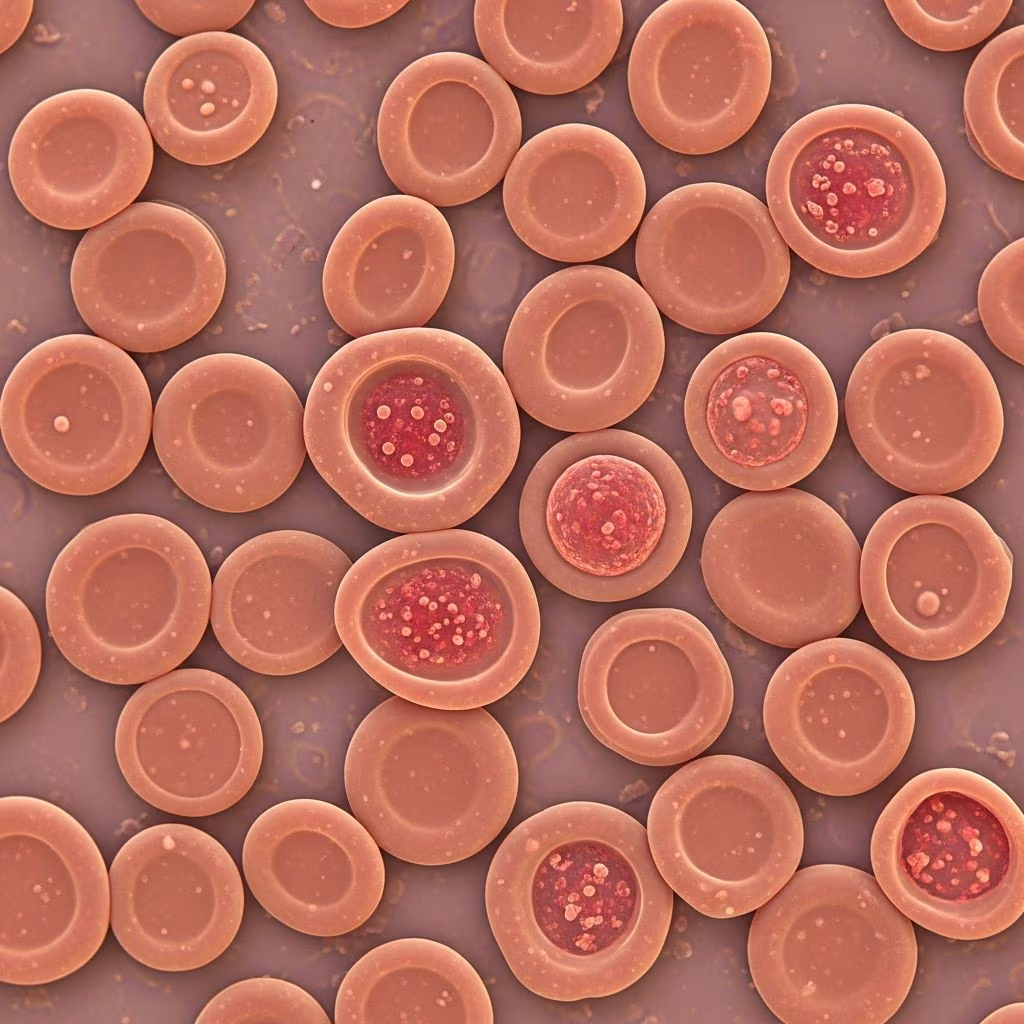
Red blood cells, known scientifically as erythrocytes, are crucial for a dog’s vitality, primarily tasked with transporting oxygen from the lungs to every tissue in the body. These specialized cells contain hemoglobin, an iron-rich protein that binds oxygen, giving them their characteristic red hue and enabling efficient delivery to support cellular energy production.
The Essential Role of Erythrocytes in Canine Physiology
In dogs, erythrocytes ensure that oxygen reaches muscles, organs, and other tissues for metabolism, while also aiding in carbon dioxide removal back to the lungs. Without adequate red blood cell function, dogs experience fatigue, weakness, and reduced stamina during routine activities.
Hemoglobin within these cells not only carries oxygen but also helps maintain blood pH balance. Dogs’ red blood cells are uniquely adapted: they lack a nucleus in maturity, allowing more space for hemoglobin and greater flexibility to navigate narrow capillaries. This biconcave disc shape promotes deformability, essential for circulation through the body’s vascular network.
How Dogs Produce Red Blood Cells
Erythrocyte production, or erythropoiesis, occurs in the bone marrow. It starts with pluripotent stem cells that differentiate into committed erythroid progenitors. These immature cells undergo several divisions and maturation stages before releasing anucleate reticulocytes into the bloodstream, which fully mature into erythrocytes within 1-2 days.
The process is tightly regulated by erythropoietin (EPO), a hormone secreted by the kidneys in response to low oxygen levels, or hypoxia. EPO stimulates stem cell proliferation, accelerates maturation, and promotes early reticulocyte release. Kidney disease impairs EPO production, often leading to non-regenerative anemia in affected dogs.
- Key Production Factors: Adequate iron, vitamins (B12, folate), amino acids, and proper bone marrow function are vital.
- Regulation Triggers: Hypoxia, blood loss, or hemolysis prompt increased EPO.
- Maturation Timeline: In dogs, full maturation takes about 5-7 days in the marrow.
Nutritional deficiencies or toxins can disrupt this pathway, resulting in ineffective erythropoiesis. Chronic illnesses also suppress production through inflammatory cytokines.
Normal Ranges and Morphological Features in Dogs
Healthy dogs maintain packed cell volume (PCV) or hematocrit levels of 37-55%, with red blood cell counts around 5.5-8.5 million per microliter. Hemoglobin concentration typically ranges from 12-18 g/dL. These values vary slightly by breed, age, and altitude.
| Parameter | Normal Range (Dogs) | Notes |
|---|---|---|
| Hematocrit (PCV) | 37-55% | Higher in sight hounds like Greyhounds. |
| RBC Count | 5.5-8.5 x 10^6/μL | Reflects oxygen-carrying capacity. |
| Hemoglobin | 12-18 g/dL | Iron-dependent protein. |
| MCV (Mean Corpuscular Volume) | 60-77 fL | Indicates cell size. |
Under a microscope, canine erythrocytes appear round, smooth, and uniformly sized. Slight variations like mild polychromasia (bluish tint from reticulocytes) can occur in health, but prominent changes signal pathology.
Common Abnormalities in Canine Red Blood Cells
Deviations in number, shape, or function lead to disorders. Microscopic evaluation reveals poikilocytosis (varied shapes) and other clues to underlying issues.
- Acanthocytes/Schistocytes: Spur-like or fragmented cells seen in disseminated intravascular coagulation (DIC) or hemangiosarcoma, indicating red cell destruction.
- Rouleaux Formation: Stacked coin appearance, normal in cats but abnormal in dogs; linked to hyperproteinemia from inflammation or myeloma.
- Target Cells (Codocytes): Bull’s-eye look from excess membrane; associated with liver disease, iron deficiency, or post-splenectomy.
- Polychromasia: Increased immature cells signaling bone marrow regeneration.
Nucleated red blood cells (nRBCs) are rare in circulation and suggest severe stress, toxins, or marrow overstimulation.
Anemia: When Red Blood Cell Counts Drop
Anemia, defined as reduced oxygen-carrying capacity, manifests as pale gums, lethargy, rapid breathing, and exercise intolerance. Causes divide into regenerative (bone marrow responds) and non-regenerative types.
Regenerative Anemia: Features reticulocytosis, polychromasia. Common from blood loss (trauma, parasites) or hemolysis (toxins, infections, immune-mediated).
Non-Regenerative Anemia: Lacks reticulocytes; stems from marrow suppression (drugs, cancer), EPO deficiency (kidney failure), or nutrient lack.
Diagnosis involves CBC, blood smear, and tests like Coombs for immune-mediated hemolytic anemia (IMHA), prevalent in dogs where antibodies attack erythrocytes.
Polycythemia: Excess Red Blood Cells
Conversely, polycythemia elevates red cell mass, thickening blood and straining the heart. Relative polycythemia arises from dehydration; absolute from EPO overproduction (renal tumors) or primary marrow disorders.
Symptoms include red gums, dizziness, seizures. Treatment targets the cause, often phlebotomy for symptom relief.
Immune-Mediated Hemolytic Anemia in Dogs
IMHA is a top hemolytic cause, with antibodies destroying red cells intravascularly or extravascularly (spleen/liver). Triggers: infections (Babesia), drugs (penicillin), vaccines, or idiopathic.
Dogs present with icterus, splenomegaly, fever. Prognosis varies; aggressive therapy with immunosuppressants (steroids) improves survival.
Nutritional and Metabolic Influences
Iron deficiency from chronic blood loss causes microcytic hypochromic anemia. Vitamin shortages prolong cell life or impair synthesis. Metabolic defects, like pyruvate kinase deficiency, shorten erythrocyte survival.
Erythrocytes rely on glycolysis for ATP to maintain membrane integrity; defects lead to fragility.
Veterinary Diagnosis and Monitoring
Routine bloodwork tracks trends. Advanced tests: flow cytometry for reticulocytes, bone marrow aspirates. Owners should note breed predispositions (e.g., Cocker Spaniels for IMHA).
Preventive Care and When to See a Vet
Annual check-ups, parasite control, and prompt care for illnesses prevent many issues. Seek vet if your dog shows unexplained tiredness, pale mucous membranes, or dark urine.
Frequently Asked Questions (FAQs)
What causes anemia in dogs?
Anemia results from blood loss, hemolysis, or poor production; common culprits include parasites, toxins, and kidney disease.
How long do dog red blood cells live?
Approximately 100-120 days, removed by spleen and liver.
Can diet fix red blood cell issues?
Nutrient-rich diets aid mild deficiencies, but veterinary diagnosis is essential for underlying causes.
Is polycythemia common in dogs?
Less so than anemia, but seen in breeds like Dachshunds with primary forms.
What is a normal PCV for dogs?
37-55%; below 30% often indicates anemia.
References
- Red Blood Cells of Dogs — MSD Veterinary Manual. 2023. https://www.msdvetmanual.com/dog-owners/blood-disorders-of-dogs/red-blood-cells-of-dogs
- Red Blood Cells of Dogs — Merck Veterinary Manual. 2023. https://www.merckvetmanual.com/dog-owners/blood-disorders-of-dogs/red-blood-cells-of-dogs
- Blood Smear Review: Erythrocyte Morphology Changes in Dogs — Today’s Veterinary Practice. 2022-10-01. https://todaysveterinarypractice.com/cytology/erythrocyte-morphology-changes-in-dogs-and-cats/
- Your Pet’s Red Blood Cells — Savannah Veterinary. 2023. https://savannahveterinary.com/pet-internal-medicine/your-pets-red-blood-cells/
- Red Blood Cells Morphology — eClinpath. 2023. https://eclinpath.com/hematology/morphologic-features/red-blood-cells/
- Red Blood Cells in Animals — Merck Veterinary Manual. 2023. https://www.merckvetmanual.com/circulatory-system/hematopoietic-system-introduction/red-blood-cells-in-animals



