

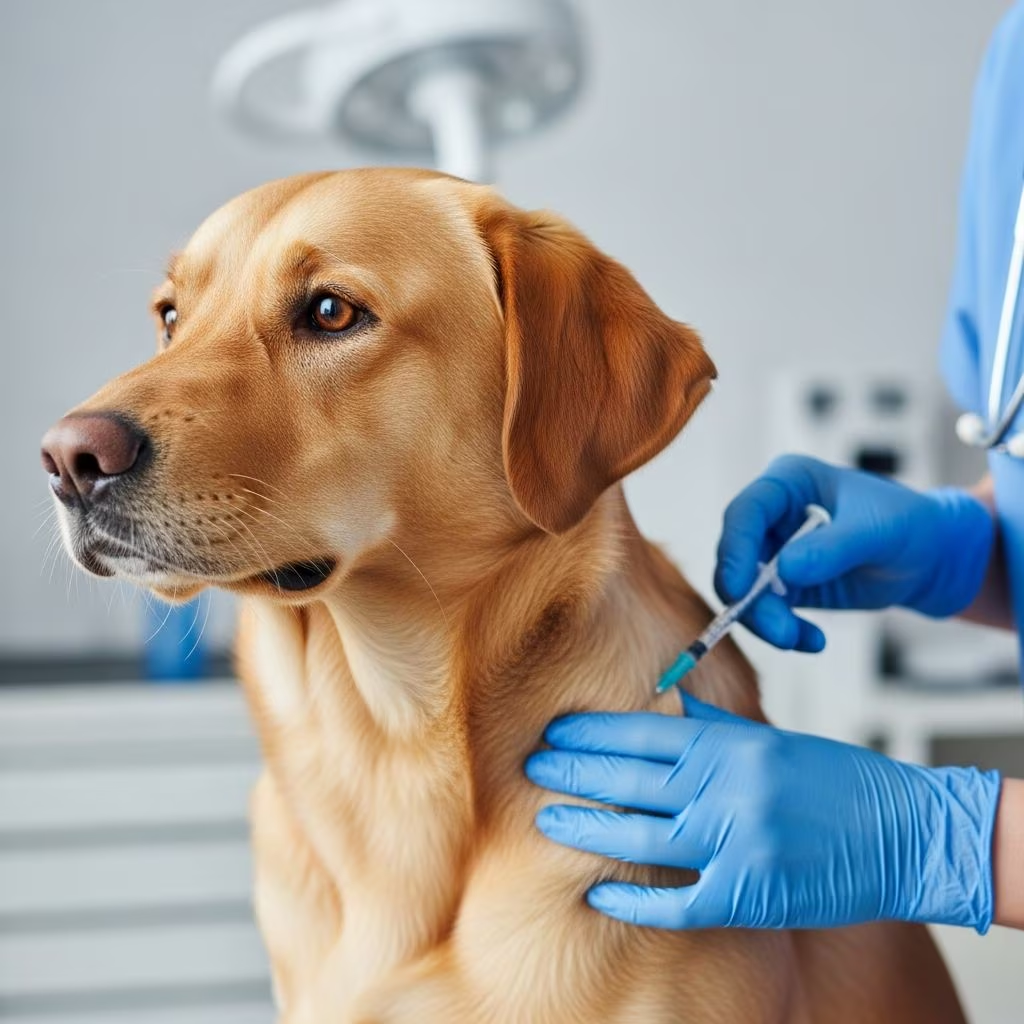
Understanding the Canine Rabies Vaccine
Rabies is one of the most serious diseases affecting dogs and represents a significant public health concern. Unlike many canine diseases that can be managed with supportive care, rabies is invariably fatal once clinical signs appear. Because of this devastating nature and the disease’s ability to transmit to humans, rabies vaccination for dogs is not merely a health recommendation—it is a legal requirement in most states and territories worldwide. The canine rabies vaccine represents one of the most important preventive health measures pet owners can provide for their dogs, offering protection against a disease with a 100% mortality rate.
The rabies vaccine works by stimulating the dog’s immune system to produce antibodies against the rabies virus before exposure occurs. This creates immunity that can protect your dog if they encounter the virus through a bite from an infected animal. Understanding how this vaccine works, when it should be administered, and what to expect is essential for every responsible dog owner.
What Is Rabies and Why Is Vaccination Critical?
Rabies is a viral disease that affects the central nervous system of mammals, including dogs and humans. The disease is transmitted primarily through the saliva of infected animals, typically via bites or scratches. Once the virus enters the body, it travels along nerve fibers to the brain, where it causes inflammation and ultimately death.
What makes rabies particularly alarming is its fatality rate. Once clinical symptoms appear—such as behavioral changes, excessive drooling, aggression, or paralysis—the disease is virtually always fatal. There is no cure for rabies in animals or humans once symptoms manifest. This is why prevention through vaccination is so critical and why rabies vaccines are legally mandated in most jurisdictions.
The rabies virus can be carried by various wildlife species, including raccoons, foxes, bats, and other animals. Dogs can contract rabies if they encounter these infected animals, making vaccination essential regardless of whether your dog spends time outdoors frequently or lives primarily indoors.
Rabies Vaccination Schedule and Requirements
Understanding the proper vaccination schedule is essential for maintaining your dog’s rabies immunity. The vaccination protocol typically begins when puppies are young and continues throughout their lives.
Initial Puppy Vaccination
Puppies typically receive their first rabies vaccine between 12 to 16 weeks of age. Some veterinarians may administer it as early as 8 weeks, depending on local requirements and individual circumstances. This initial vaccination is crucial for establishing the foundation of rabies immunity in young dogs.
Booster Schedule
After the initial puppy vaccination, a booster dose is recommended one year later. Following this booster, revaccination guidelines become more nuanced. Many veterinarians recommend a three-year vaccination interval for dogs that have received the labeled three-year rabies vaccine. However, this recommendation can vary based on:
– Local and state legal requirements- The specific vaccine product used (one-year versus three-year formulation)- Your dog’s individual health status and risk factors- Your veterinarian’s professional judgment
It is important to note that some states and municipalities mandate annual rabies vaccination regardless of the vaccine formulation, even though the three-year vaccine provides protection for three years. When local regulations require annual vaccination, your veterinarian must comply with these legal requirements, even if the vaccine itself is formulated for longer-lasting immunity.
One-Year vs. Three-Year Rabies Vaccines
Rabies vaccines are available in formulations labeled for either one-year or three-year duration of immunity. This distinction often confuses pet owners, who may assume the vaccines differ significantly. However, research suggests that many one-year and three-year rabies vaccines contain essentially identical formulations. The primary difference lies in the regulatory testing and labeling rather than the actual immunological protection provided.
| Aspect | One-Year Vaccine | Three-Year Vaccine |
|---|---|---|
| Formulation | Often identical to three-year vaccine | Often identical to one-year vaccine |
| Legal Requirement | May require annual administration | Meets three-year state requirements |
| Actual Duration | Typically provides 3+ years immunity | Typically provides 3+ years immunity |
| Revaccination Interval | Legally required annually in some areas | Can be administered every 3 years |
This labeling distinction is important because if your dog receives a one-year vaccine, local law may require annual revaccination regardless of the actual immunological protection. Conversely, if your dog receives a three-year vaccine, you may have the option to extend the interval between vaccinations to three years, subject to local regulations.
Vaccine Effectiveness and Protection Duration
The rabies vaccine is extremely effective at preventing rabies infection in dogs. Studies demonstrate that properly vaccinated dogs develop robust immune responses with high levels of neutralizing antibodies against the rabies virus. The vaccine can provide protection for one to three years or longer, depending on the vaccine formulation and the individual dog’s immune response.
While the rabies vaccine is one of the most effective vaccines available in veterinary medicine, no vaccine provides 100% protection. Rare cases of vaccinated animals contracting rabies have been documented, though these occurrences are extraordinarily uncommon. These breakthrough infections may occur due to factors such as incomplete immune response in individual animals, exposure to extremely high viral loads, or vaccine administration errors.
The best approach to maintaining rabies protection is to keep your dog current on all rabies vaccinations according to your local legal requirements and your veterinarian’s recommendations. This ensures your dog maintains protective antibody levels throughout their life.
Administration and Combination Vaccines
Typically, the rabies vaccine is administered as a separate injection at the same time your dog receives other core vaccines, such as the canine distemper combination vaccine (often abbreviated as DHPP or DHPPV). Administering multiple vaccines at the same appointment is safe and convenient for both you and your veterinarian.
The rabies vaccine can also be given alone at a separate visit if needed, or combined with other vaccines such as the Lyme disease vaccine, depending on your dog’s individual needs and risk profile. Your veterinarian will determine the most appropriate vaccination protocol for your dog based on their age, health status, lifestyle, and exposure risks.
Rabies Vaccination Side Effects and Safety Considerations
Most dogs tolerate the rabies vaccine very well with minimal to no side effects. However, as with any medical intervention, some dogs may experience reactions ranging from mild to more serious.
Common and Minor Side Effects
Minor side effects following rabies vaccination are relatively uncommon but may include:
– Mild lethargy or drowsiness- Slight fever- Temporary loss of appetite- Mild swelling at the injection site
A small, firm swelling at the injection site is normal and typically resolves within a few weeks. If a swelling persists beyond three weeks or appears to be enlarging, contact your veterinarian for evaluation.
Serious Side Effects
While less common, more serious side effects can occur and warrant immediate veterinary attention. These include:
– Vomiting or diarrhea- Hives or rash- Swelling of the muzzle, face, neck, or eyes- Severe coughing or difficulty breathing- Facial swelling that affects the dog’s ability to breathe or swallow- Collapse or loss of consciousness
These serious side effects typically occur within minutes to hours of vaccination and may represent allergic reactions or other immune-mediated responses. They constitute medical emergencies requiring immediate professional veterinary care. If your dog experiences any of these symptoms after rabies vaccination, contact your veterinarian or emergency veterinary clinic immediately.
Legal Requirements and State Regulations
Rabies vaccination requirements are mandated by law in most states and many countries worldwide. These legal requirements exist because rabies poses a significant public health threat. When a dog with unknown vaccination status bites a person, public health officials may recommend post-exposure prophylaxis (PEP) for the person, which involves a series of rabies vaccinations. If your dog is current on rabies vaccination, this concern is minimized.
Local regulations can vary significantly. Some jurisdictions require annual rabies vaccination regardless of vaccine formulation, while others accept three-year vaccination intervals for dogs that have received the appropriate vaccine and booster series. It is your responsibility to understand your local requirements and ensure your dog complies with these legal mandates.
Failure to maintain current rabies vaccination can result in penalties, and if your vaccinated dog bites someone, you may face legal liability. Additionally, if an unvaccinated dog is exposed to rabies through a bite from a potentially rabid animal, quarantine and observation requirements may be imposed, which can be costly and stressful.
Special Considerations and Individual Circumstances
While rabies vaccination is considered a core vaccine that all dogs should receive, certain individual factors may influence vaccination timing or frequency:
Puppies and Young Dogs
Puppies should receive their first rabies vaccine according to their veterinarian’s recommendations, typically between 8 to 16 weeks of age. A booster is required one year after the initial vaccination.
Senior Dogs
Older dogs that have a consistent vaccination history may require less frequent revaccination, though local law and individual health status must be considered.
Dogs with Medical Conditions
Dogs with certain medical conditions, immune disorders, or those taking immunosuppressive medications may require special consideration regarding vaccination timing and protocols. Always discuss your dog’s complete health history with your veterinarian before vaccination.
Traveling Dogs
If you plan to travel with your dog internationally or to areas with higher rabies incidence, ensure vaccinations are current and obtain proper documentation.
Frequently Asked Questions About Canine Rabies Vaccination
Q: Is the rabies vaccine mandatory for my dog?
A: Rabies vaccination is required by law in most states and municipalities. Requirements vary by location, so check with your local health department or veterinarian to understand your specific legal obligations.
Q: How often does my dog need a rabies booster?
A: This depends on local requirements and the vaccine formulation used. Dogs with a proper initial series and first booster can typically be revaccinated every three years with a labeled three-year vaccine, though some jurisdictions mandate annual vaccination.
Q: Can my dog get rabies if vaccinated?
A: While extremely rare, vaccinated dogs have very occasionally contracted rabies. However, the rabies vaccine is one of the most effective vaccines available. The best protection is maintaining current vaccinations as recommended by your veterinarian.
Q: What should I do if my unvaccinated dog is bitten by an unknown animal?
A: Seek immediate veterinary attention. An unvaccinated dog exposed to rabies may require a series of post-exposure vaccinations. Quarantine may also be necessary depending on your location and the circumstances of the exposure.
Q: Are there any dogs that shouldn’t receive the rabies vaccine?
A: Most healthy dogs can safely receive the rabies vaccine. However, dogs with severe immune compromise or certain medical conditions should be evaluated by a veterinarian before vaccination. Never skip rabies vaccination without veterinary guidance, as it is legally required in most areas.
Q: Can rabies vaccine be given with other vaccines?
A: Yes, the rabies vaccine is safely administered with other vaccines, including the canine distemper combination vaccine and Lyme disease vaccine, depending on your dog’s needs.
References
- Canine Distemper/Parvo/Bordetella and Rabies Vaccine — VetStreet. 2011-07-12. https://www.vetstreet.com/care/canine-distemper-parvo-bordetella-and-rabies-vaccine
- The present and future of rabies vaccine in animals — National Center for Biotechnology Information (NCBI). 2012. https://pmc.ncbi.nlm.nih.gov/articles/PMC3623496/
- Does My Dog Need a Rabies Vaccine Every Year? — PetMD. https://www.petmd.com/dog/care/does-my-dog-need-rabies-vaccine-every-year
- Dogs & Cats Overdue for Vaccination — Today’s Veterinary Practice. https://todaysveterinarypractice.com/preventive-medicine/dog-cat-vaccination-recommendations/
- 4 Things You Don’t Know About Rabies — VetStreet. https://www.vetstreet.com/dr-marty-becker/4-things-you-dont-know-about-rabies
- Myths & Facts About Rabies — Total Veterinary Care. https://www.totalveterinarycare.com/for-dog-lovers/myths-facts-about-rabies/



