

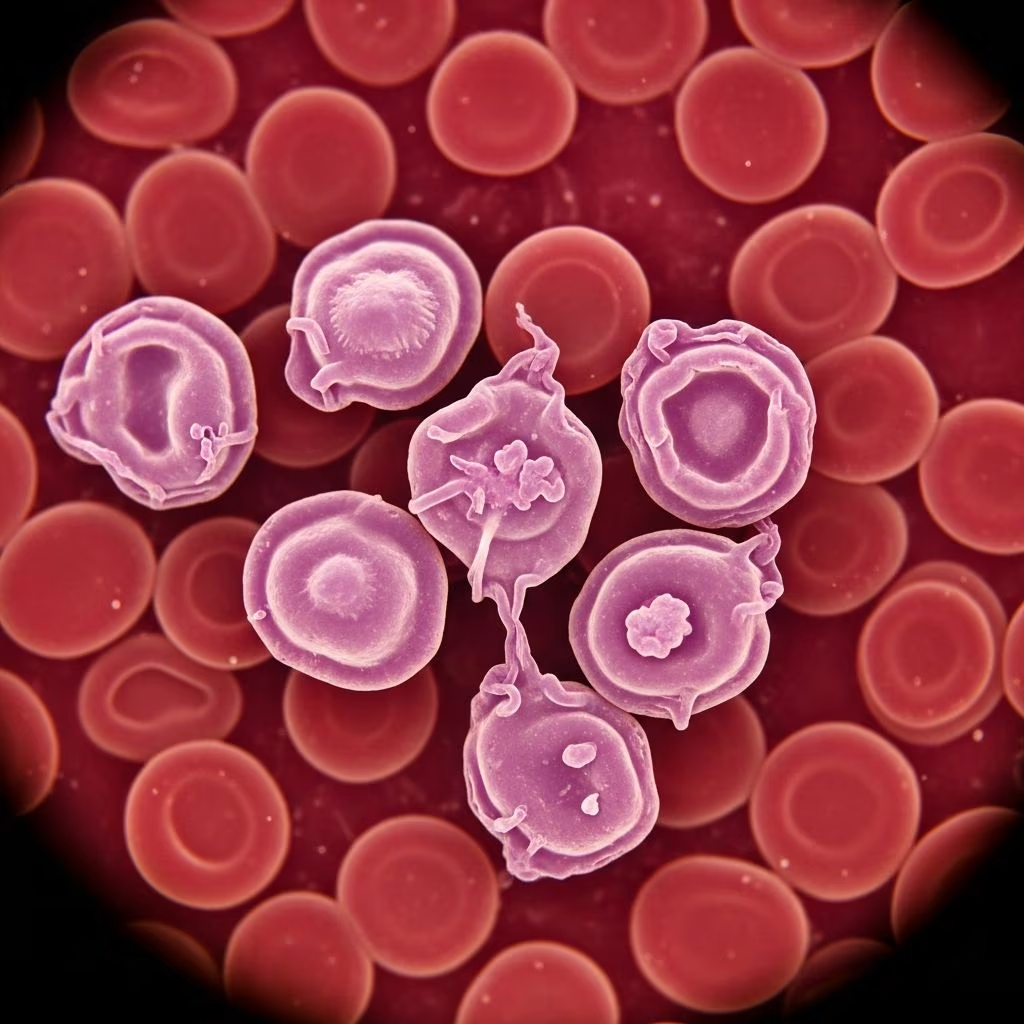
Platelets, or thrombocytes, play a vital role in a dog’s blood clotting process, helping to prevent excessive bleeding after injury. When these tiny cell fragments malfunction or decrease in number, dogs can face serious health challenges ranging from minor bruising to life-threatening hemorrhages. This article delves into the world of **canine platelet disorders**, covering their types, underlying causes, visible signs, diagnostic strategies, and modern treatment options. Understanding these issues empowers dog owners to act swiftly and collaborate effectively with veterinarians.
The Fundamentals of Platelets in Canine Blood
In healthy dogs, platelets are produced in the bone marrow from large cells called megakaryocytes. They circulate in the bloodstream, ready to aggregate at injury sites to form clots. A normal platelet count ranges from 200,000 to 500,000 per microliter of blood. These disc-shaped structures contain granules that release chemicals promoting clotting and vessel constriction.
Disruptions in platelet production, destruction, or function lead to two main categories: quantitative issues like **thrombocytopenia** (low count) and qualitative problems known as **thrombopathia** (poor function despite normal numbers). Thrombocytopenia is far more prevalent in dogs than functional defects.
- Production problems: Bone marrow suppression from toxins, infections, or cancer.
- Increased destruction: Immune attacks or infections consuming platelets rapidly.
- Sequestration: Platelets trapped in an enlarged spleen.
- Dilution: Massive transfusions diluting platelet concentration.
Recognizing Signs of Platelet Problems in Dogs
Dogs with platelet disorders often show subtle early signs that progress if untreated. Common indicators include spontaneous bleeding manifestations that differ from typical wounds.
| Symptom | Description | Severity Indicator |
|---|---|---|
| Petechiae | Tiny red spots on gums, skin, or whites of eyes from capillary leaks | Mild to moderate |
| Ecchymosis | Large purple bruises on skin or mucous membranes | Moderate |
| Melena | Black, tarry stools from digested blood | Severe |
| Hematuria | Blood in urine, often visible or microscopic | Moderate to severe |
| Epistaxis | Nosebleeds, sometimes prolonged | Variable |
Not all low platelet counts cause symptoms; some dogs tolerate levels below 30,000/mcL without issues, while others bleed at higher counts due to concurrent problems. Persistent oozing from surgical sites or venipuncture marks is a red flag for platelet dysfunction.
Quantitative Disorders: When Numbers Fall Too Low
Immune-Mediated Thrombocytopenia (ITP)
**ITP** stands as the leading cause of severe thrombocytopenia in dogs, where the immune system mistakenly targets platelets for destruction via antibodies. Breeds like Cocker Spaniels, Old English Sheepdogs, and Poodles show predisposition. Counts often drop below 10,000/mcL, triggering acute bleeding. Primary ITP lacks an underlying trigger, while secondary forms link to vaccines, drugs, or neoplasia.
Infectious Contributors to Low Platelets
Tick-borne diseases wreak havoc on platelets. Anaplasma platys causes cyclic mild drops with morulae visible in platelets; severe bleeding is rare. Anaplasma phagocytophilum pairs thrombocytopenia with fever and lethargy, morulae in white cells. Ehrlichia canis leads to chronic cases in endemic areas, sometimes without overt signs despite low counts. Doxycycline treats these rickettsial foes effectively in acute phases.
Breed-Specific Inherited Low Counts
Hereditary macrothrombocytopenia affects 30-50% of Cavalier King Charles Spaniels and breeds like Norfolk and Cairn Terriers. A beta-1-tubulin gene mutation produces oversized platelets, mimicking low counts on automated analyzers but posing no clinical threat. Manual smear review reveals the giant platelets, avoiding unnecessary worry.
Qualitative Defects: Faulty Platelet Action
Even with adequate numbers, dysfunctional platelets fail to clump properly, extending bleeding times.
Thrombopathia in Specific Breeds
Seen in Basset Hounds, Landseers, and spitz breeds, this autosomal inherited condition impairs granule release and fibrinogen binding. Dogs present with mucosal bleeds despite normal counts and von Willebrand factor (vWF). Genetic screening aids breeders.
Glanzmann Thrombasthenia
Rare in dogs, this defect prevents platelet aggregation to stimuli like ADP or collagen, leading to poor clot retraction. Blood fails standard tests, highlighting the need for advanced assays.
Scott Syndrome
Reported in German Shepherds, these platelets cannot expose phosphatidylserine, a procoagulant surface. Postoperative bleeding and bruising characterize it.
The Role of von Willebrand Disease
Though not a pure platelet disorder, **vWD** profoundly impacts platelet adhesion via deficient vWF protein. Type 1 (mild, common) reduces levels mildly; Type 2 loses key multimers; Type 3 (severe, in Shelties/Scottish Terriers) abolishes vWF entirely. Prolonged buccal bleeding time flags it despite normal platelets.
How Vets Diagnose Platelet Disorders
Diagnosis starts with history, breed, and clinical signs, followed by bloodwork.
- Complete Blood Count (CBC): Quantifies platelets; automated machines may err with giant forms.
- Blood Smear: Manual platelet estimate, morphology check for morulae or clumps.
- Coagulation Panel: Buccal mucosal bleeding time (BMBT) tests primary hemostasis.
- Tick Panels: PCR or serology for rickettsia.
- Specialized Tests: Platelet function analyzers, flow cytometry for ITP antibodies, vWF assays, genetic panels.
Bone marrow aspirates assess production in persistent cases.
Treatment Strategies for Platelet Recovery
- ITP Management: Immunosuppressants like prednisone (2 mg/kg/day), vincristine for rapid boost, cyclosporine, or mycophenolate. Platelet transfusions for critical bleeds.
- Infection Control: Doxycycline (5-10 mg/kg BID for 3-4 weeks).
- Supportive Care: Keep dogs calm, avoid trauma, use aminocaproic acid for mucosal bleeds.
- Splenectomy: Refractory ITP cases.
- Breed-Specific: Avoid breeding carriers; no treatment needed for benign macrothrombocytopenia.
Prognosis shines for acute ITP (80-90% survival) but dims with underlying cancer.
Breed Vulnerabilities and Prevention Tips
Certain breeds carry genetic risks:
- Cavalier King Charles Spaniel: Macrothrombocytopenia.
- Basset Hound: Thrombopathia.
- Shetland Sheepdog: vWD Type 3.
- Cocker Spaniel: ITP predisposition.
Prevent via genetic testing before breeding, tick preventives, prompt vaccine reaction checks, and annual blood screens in at-risk dogs.
FAQs on Dog Platelet Disorders
What platelet count is dangerously low for dogs?
Below 30,000/mcL risks spontaneous bleeding; under 10,000/mcL is critical.
Can low platelets resolve without treatment?
Mild infectious cases may self-limit, but ITP usually requires intervention.
Is surgery safe with platelet issues?
Rarely, unless counts exceed 50,000/mcL post-treatment and BMBT normalizes.
How do tick preventives help platelet health?
They block rickettsial infections causing thrombocytopenia.
Should I genetic test my purebred dog?
Yes, for breeds prone to inherited disorders like vWD or thrombopathia.
Long-Term Outlook and Monitoring
Many dogs with treated platelet disorders lead normal lives with periodic CBCs. Owners should watch for relapse signs like petechiae and maintain vet follow-ups. Advances in genetic testing and targeted immunosuppressants improve outcomes continually.
References
- Platelet Disorders in Animals — MSD Veterinary Manual. 2023. https://www.msdvetmanual.com/circulatory-system/hemostatic-disorders/platelet-disorders-in-animals
- Platelet Disorders in Animals — Merck Veterinary Manual. 2023. https://www.merckvetmanual.com/circulatory-system/hemostatic-disorders/platelet-disorders-in-animals
- Guide to Hematology in Dogs and Cats: Platelets Overview — IVIS. 2022. https://www.ivis.org/library/guide-to-hematology-dogs-and-cats/platelets-overview-morphology-quantity-platelet-function-disorders-thrombocytopathia-or
- Blood Smear Review: Platelets in Dogs and Cats — Today’s Veterinary Practice. 2024. https://todaysveterinarypractice.com/cytology/blood-smear-review-a-step-by-step-guide-to-platelets-in-dogs-and-cats/
- Platelets of Dogs — Merck Veterinary Manual (Dog Owners). 2023. https://www.merckvetmanual.com/dog-owners/blood-disorders-of-dogs/platelets-of-dogs
- Platelet Evaluation in Veterinary Medicine — Moichor. 2024. https://www.moichor.com/articles/platelet-evaluation-in-veterinary-medicine-comprehensive-assessment-of-hemostatic-function



