

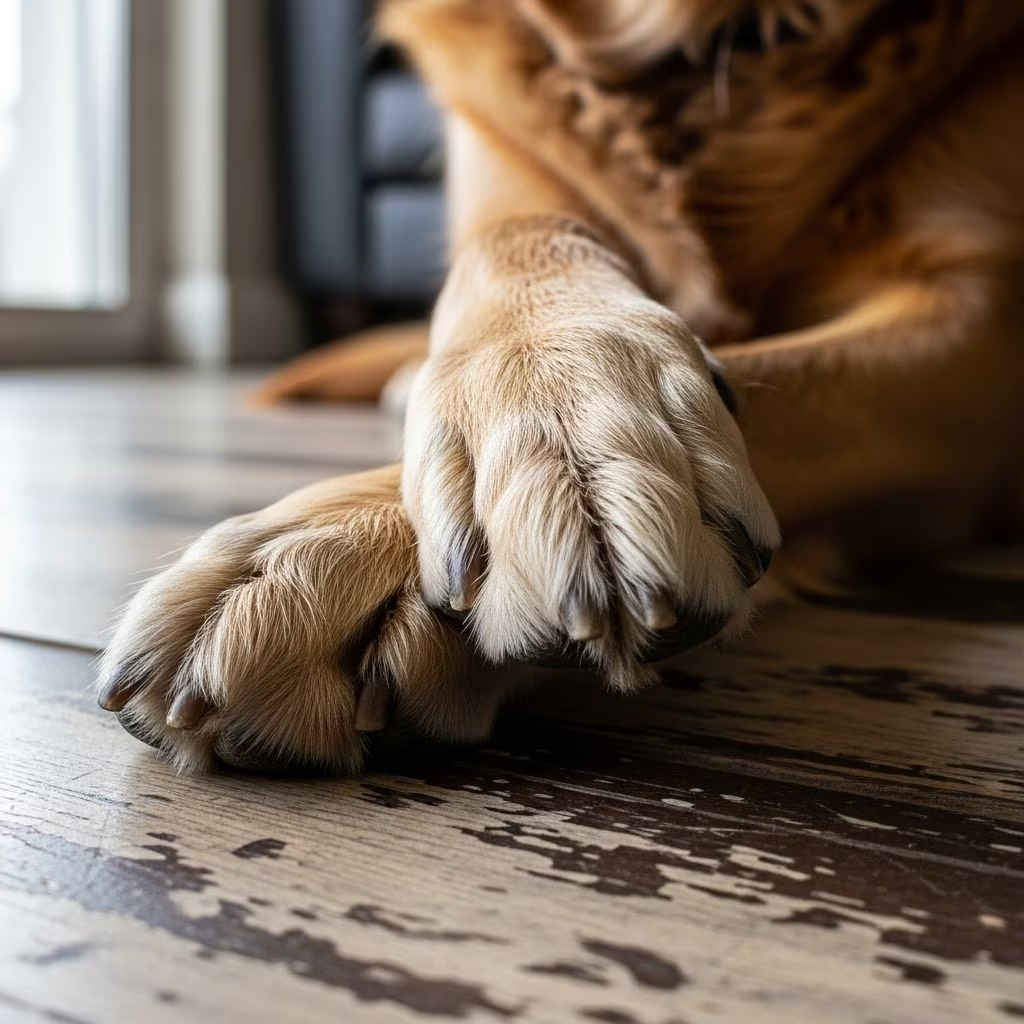
When your dog reaches out and places a paw on your arm, leg, or lap, it often feels like a simple, sweet gesture. However, this seemingly innocent action is far more complex than many pet owners realize. Dogs communicate through their paws much like humans use their hands—to express needs, emotions, and desires. Understanding what your dog’s paw placement truly signifies can transform how you interpret their behavior and strengthen the bond you share.
The Foundation of Paw-Based Communication
Dogs begin using their paws to communicate from birth. Puppies instinctively paw at their mothers to signal hunger and initiate nursing. As they grow, this innate behavior evolves into a sophisticated communication tool that dogs use throughout their lives. What makes paw placement particularly effective is that it typically generates a response from humans. When a dog paws at you and you respond—whether by providing food, attention, or comfort—the dog learns that this gesture produces results.
According to the American Kennel Club, dogs utilize their paws similarly to how humans use hands to convey messages such as “I need to go outside” or “It’s time for my dinner”. This direct form of communication bypasses verbal language and taps into an immediate, instinctive understanding between dog and owner.
Primary Motivations Behind Pawing Behavior
Requesting Attention and Engagement
One of the most common reasons your dog places a paw on you is to capture your attention. Whether your dog is bored, wants to initiate playtime, or simply craves interaction, a well-placed paw serves as a gentle nudge directing your focus toward them. This behavior is particularly common when you’re occupied with other activities—your dog essentially says, “Hey, notice me!”
Dogs quickly learn that pawing works as an attention-getting mechanism. If you consistently respond to pawing by engaging with your dog, they’ll continue using this method. However, if your dog persists in seeking attention through pawing when you’re genuinely busy, offering self-directed activities like puzzle toys or food-dispensing toys can redirect their energy productively.
Expressing Affection and Bonding
Beyond attention-seeking, pawing frequently represents genuine affection. When your dog places a paw on your arm or leg while you’re petting them, they’re essentially petting you back. This reciprocal gesture mirrors human hugging behavior and demonstrates trust, closeness, and emotional connection. The chemical basis for this behavior is rooted in neurobiology: dogs experience love through the same neurotransmitters humans do—serotonin, oxytocin, and dopamine. When these chemicals are activated through positive interaction, dogs naturally seek more contact.
This affectionate pawing often occurs during peaceful moments together, without urgency or intensity. Your dog may rest their paw gently on you while relaxing nearby, creating a subtle but meaningful point of connection.
Signaling Emotional Distress
Pawing isn’t always a positive signal. Dogs frequently use their paws to communicate anxiety, stress, or discomfort. During thunderstorms, fireworks, or other frightening situations, your dog may paw at you seeking reassurance and comfort. Similarly, if your dog experiences separation anxiety or hears an unexpected loud noise, pawing becomes a way to anchor themselves to your presence.
When pawing stems from anxiety, it typically accompanies other stress indicators such as a lowered tail, ears pinned back, heavy breathing, lip licking, or yawning. Recognizing this cluster of body language cues helps you distinguish between playful pawing and distress-based pawing.
Nuanced Contexts and Specific Meanings
Establishing Boundaries Through Pawing
Interestingly, not all pawing represents a request for more contact. In some instances, dogs paw to establish or request personal space. If your dog is tired of being petted or feels crowded, a light paw may be their polite way of saying “Please back up.” This represents sophisticated canine etiquette—the dog communicates discomfort without resorting to more aggressive behaviors.
Understanding this distinction is crucial for respecting your dog’s autonomy. If your dog paws while showing other signs of retreat, such as moving backward or avoiding direct eye contact, honor their request for space.
Initiating Play and Social Engagement
Puppies and younger dogs frequently paw as part of play initiation. This paw placement typically occurs alongside other play signals such as play bows, jumping, mouthing, and energetic tail wagging. The context here is distinctly different from attention-seeking or anxiety-related pawing. Your dog is inviting you to engage in active, fun interaction.
Empathetic Responses to Human Emotions
Research reveals that dogs possess remarkable emotional intelligence. Studies indicate that dogs respond more emphatically when their humans display signs of sadness or emotional distress. If you’re crying during a movie or feeling upset, your dog may paw at your hands, legs, or face as an attempt to comfort you. This behavior suggests dogs can sense human emotional states and feel compelled to provide support.
A study from the University of Veterinary Medicine in Vienna found that dogs not only recognize human emotional states but can adjust their behavior based on context and past experiences. This means your dog’s comforting paw during a difficult moment isn’t random—it’s a biologically wired mechanism communicating, “We’re in this together.”
Self-Soothing and Calming Mechanisms
Some dogs paw at themselves or their owners as a self-soothing behavior, similar to how children might play with their hair when anxious. In stressful environments like veterinary clinics or during transitions, dogs may engage in repetitive pawing to manage their stress levels.
Reading the Complete Picture: Body Language Interpretation
To accurately understand your dog’s pawing, examine the complete behavioral context rather than isolating the paw placement alone. Consider these additional indicators:
- Tail position: A high, wagging tail typically indicates positive emotion, while a tucked tail suggests fear or anxiety
- Ear position: Forward-facing ears show alertness and positive interest, while pinned-back ears may indicate anxiety or submission
- Eye contact: Soft, direct eye contact during pawing suggests affection, while averted eyes might indicate nervousness
- Body posture: A relaxed, loose body suggests contentment, while tension or stiffness indicates stress
- Mouth position: Soft, slightly open mouths suggest relaxation, while lip licking or yawning can signal stress
- Overall energy level: High-energy pawing with movement typically indicates playfulness, while gentle pawing while stationary may signal affection or anxiety
Context-Based Behavior Table
| Situation | Associated Body Language | Likely Meaning | Recommended Response |
|---|---|---|---|
| During storms or loud noises | Ears back, tense body, heavy breathing | Seeking comfort | Provide calm reassurance, petting, and safe space |
| While you’re petting them | Wagging tail, soft eyes, relaxed posture | Reciprocal affection | Continue gentle interaction |
| Near mealtime | Alert ears, focused eyes, excited body | Requesting food | Provide meal on regular schedule |
| When backing away slowly | Ears neutral, body moving back | Requesting space | Respect their boundary and step back |
| During play time | Play bow, wagging tail, bouncing movements | Invitation to engage | Participate in play or offer a toy |
| When you’re upset | Soft eyes, slow movements, close proximity | Attempting to comfort | Accept their gesture; they’re showing empathy |
Frequently Asked Questions About Dog Pawing
Q: Is pawing behavior something I should discourage?
Not necessarily. Rather than discouraging all pawing, redirect unwanted pawing while accepting appropriate pawing. If your dog paws excessively for attention, offer alternative ways to interact. However, rejecting all pawing may prevent your dog from communicating legitimate needs and can damage your relationship.
Q: Can excessive pawing indicate a medical problem?
Pawing can occasionally signal discomfort or skin irritation. If your dog suddenly increases pawing behavior or focuses on specific body areas, consult your veterinarian to rule out allergies, parasites, or other health concerns.
Q: Why does my dog paw more than other dogs?
Individual dogs develop different communication styles based on breed, personality, and learned experiences. Some dogs are simply more tactile communicators than others. Genetics, early socialization, and training all influence how frequently a dog uses pawing as their primary communication method.
Q: Should I respond every time my dog paws?
Responding consistently to pawing can reinforce the behavior. If your dog paws for attention and you always respond, they’ll continue this pattern. For attention-seeking pawing, it’s often better to establish boundaries by responding to calm behavior instead and offering attention on your schedule rather than theirs.
Building Stronger Communication Through Paw Understanding
Recognizing the meanings behind your dog’s paw placements opens a new dimension of pet companionship. Rather than viewing pawing as merely cute or annoying, understand it as your dog’s primary method of expressing their internal world. By learning to decode these messages, you acknowledge your dog’s attempts to communicate and respond appropriately to their needs, whether those are for attention, affection, comfort, or space.
This deeper understanding transforms your relationship from one-directional care into genuine two-way communication. Your dog paws not because they’re trying to manipulate you, but because it’s how they’ve learned to interact with the humans they love. Honoring this communication style while gently guiding them toward appropriate contexts strengthens the bond between you and your canine companion.
Every paw placement is an opportunity for connection and understanding. By paying attention to what your dog is truly communicating through their body language and paw behavior, you become a more responsive, empathetic pet owner—and your dog gets a partner who truly understands them.
References
- Do Dogs Put Their Paws on You? It Says More About… — Smelly Belly (YouTube). Video. https://www.youtube.com/watch?v=3B5KVNmMXUE
- Why Dogs Put Their Paws on People in 2025 – Vet‑Approved Signals & Advice — Ask A Vet. 2025. https://askavet.com/blogs/dog-behavior-training/why-dogs-put-their-paws-on-people-in-2025-vet-approved-signals-advice
- Why Do Dogs Put Their Paws On People? — PetMD. https://www.petmd.com/dog/behavior/why-do-dogs-put-their-paws-on-people
- Animal Behaviors and why dogs put their paws on you — JenLovesPets. 2020-01-15. https://www.jenlovespets.com/2020/01/15/animal-behaviors-and-why-dogs-put-their-paws-on-you/
- Why Does My Dog Put Their Paw On Me? — American Kennel Club. https://www.akc.org/expert-advice/advice/why-does-my-dog-put-paw-on-me/



