

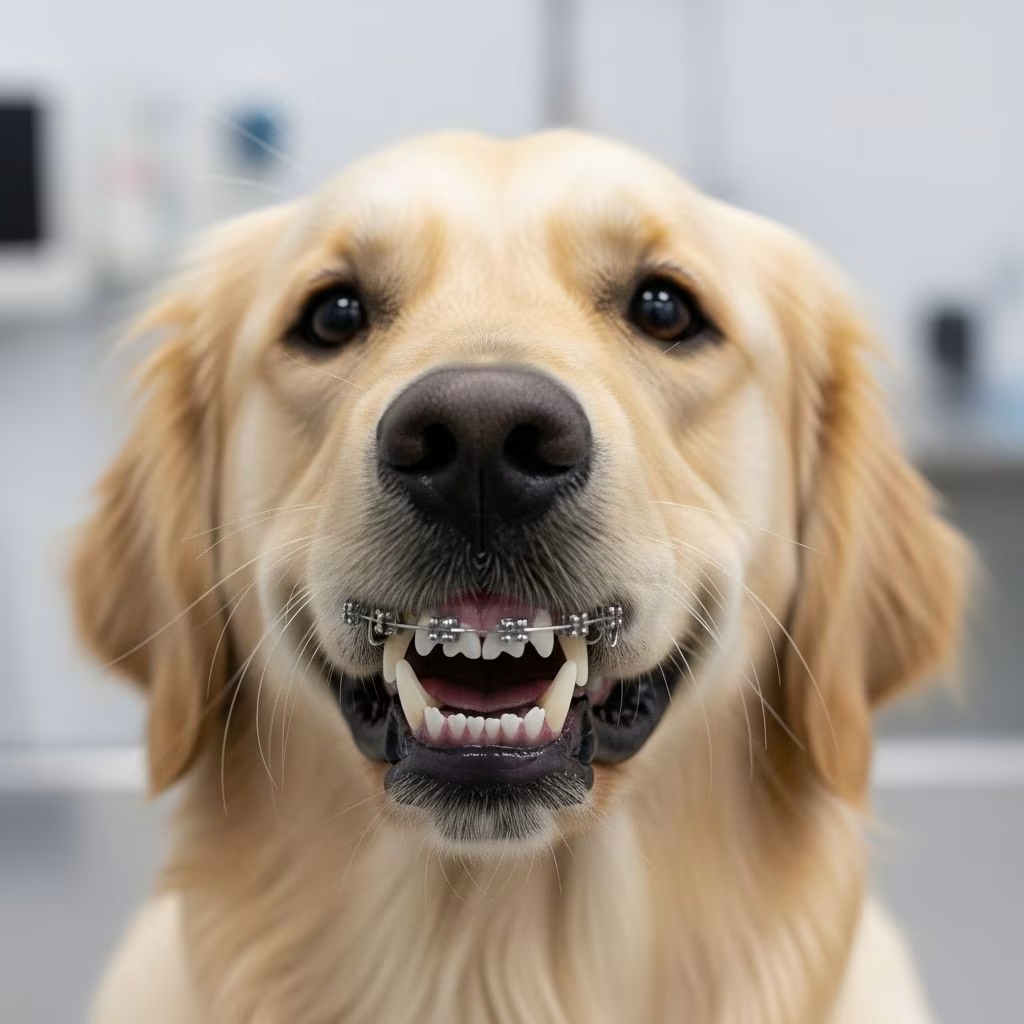
Canine orthodontics focuses on correcting malocclusions—misaligned bites—in dogs to ensure functional, pain-free occlusion. Unlike human orthodontics which prioritizes aesthetics, veterinary treatments emphasize health, preventing trauma, periodontal disease, and improving quality of life.
What is Canine Orthodontics?
Canine orthodontics involves diagnosing and treating abnormal tooth positions or jaw relationships in dogs. A healthy occlusion allows proper chewing, reduces oral trauma, and maintains periodontal health. Malocclusions can cause pain, fractured teeth, and secondary infections if untreated.
The goal is always a **healthy functional bite** rather than perfect alignment. Treatments range from simple extractions to advanced appliances, tailored to the dog’s age, breed, and malocclusion severity.
Normal Dog Bite vs Malocclusion
In dogs with normal occlusion, the maxillary teeth slightly overlap mandibular teeth, with upper canines positioned lateral to lower canines. The scissors bite ensures efficient chewing without trauma.
**Common malocclusions include:**
- Linguoversion of mandibular canines: Lower canine teeth tip inward, traumatizing the palate.
- Class II malocclusion: Mandibular brachygnathism (short lower jaw).
- Class III malocclusion: Mandibular prognathism (protruding lower jaw).
- Anterior crossbite: Lower incisors occlude labial to upper incisors.
- Lance teeth: Elongated canines, common in Shetland Sheepdogs.
These issues often appear as puppies lose deciduous teeth, making early detection crucial.
Causes of Malocclusion in Dogs
Malocclusions result from genetic, developmental, or traumatic factors:
- Genetics: Breed predispositions like brachycephalic faces (Pugs, Bulldogs) or skeletal discrepancies in working breeds.
- Retained deciduous teeth: Baby teeth block permanent eruption, causing linguoversion.
- Trauma: Facial injuries displace developing teeth.
- Developmental timing: Asynchronous jaw growth during puppyhood.
Brachycephalic breeds face higher risks due to crowded dentition, while toy breeds suffer from relative mandibular prognathism.
Signs Your Dog Needs Orthodontic Treatment
Watch for these symptoms indicating malocclusion:
- Difficulty chewing or dropping food.
- Pawing at mouth or reluctance to play with toys.
- Palatal trauma, ulcers, or fractured teeth.
- Bad breath, drooling, or gingival inflammation.
- Visible misalignment during yawning.
Early signs in puppies include persistent deciduous teeth past 7 months or uneven wear patterns.
Diagnosis of Canine Malocclusion
Veterinarians perform comprehensive oral exams under anesthesia for accurate assessment:
- Static occlusion analysis: Tooth contact in centric occlusion.
- Dynamic evaluation: Jaw excursions for interferences.
- Radiographs: Assess root positions and bone support.
- Periodontal probing: Check attachment loss.
Classification uses Angle’s system adapted for dogs: Class I (normal with dental anomalies), Class II (mandibular distocclusion), Class III (mesioocclusion).
Treatment Options for Dog Malocclusion
Treatments prioritize function over cosmetics, with options scaled by severity.
Interceptive Orthodontics (Early Intervention)
Extract deciduous mandibular canines showing linguoversion to guide permanent teeth. Studies show 100% success in Class I cases vs 27% in Class II (p=0.009). Best before 4-5 months.
Ball Therapy
Non-invasive for mild linguoverted canines: Dogs chew firm rubber balls (lacrosse size) 15 minutes, 3x daily. Applies buccal pressure for repositioning; compliance-dependent success.
Inclined Planes
Acrylic/metal ramps direct teeth into position. Fabricated in-lab or chairside, correction occurs in 2-4 weeks. Example: Corrected poodle’s mandibular canine trauma in 2 weeks.
Crown Reduction with Vital Pulp Therapy
Reduces crown height, performs partial pulpectomy, caps pulp, restores with composite. >90% success; preserves tooth vitality. Ideal when extraction isn’t viable.
Strategic Extractions
Removes problematic teeth (prefer incisors over canines). Resolves trauma immediately while maintaining function.
Active Orthodontic Appliances
Braces for dogs: Brackets, wires, elastics move teeth via bone remodeling. Effective during growth phases.
- Expansion devices: Widen maxilla for crossbites.
- Power chains/elastics: Close gaps or tip teeth.
- Orthodontic buttons: Anchor elastics for lance teeth correction.
Camouflage Orthodontics
Builds up teeth with composites to achieve functional occlusion without movement. Removes buccal overgrowth on lower canines.
Surgical Options
Gingivectomy exposes more crown; crown lengthening for impingements. Severe skeletal cases may need orthognathic surgery (rare).
| Treatment | Best For | Success Rate | Invasiveness |
|---|---|---|---|
| Deciduous Extraction | Puppies <6 mo | 100% Class I | Low |
| Ball Therapy | Mild linguoversion | Variable | Non-invasive |
| Inclined Plane | Canine tipping | High (2-4 wks) | Moderate |
| Crown Reduction | Persistent trauma | >90% | High |
| Braces/Elastics | Multi-tooth | Good in growth | High |
When to See a Veterinary Dentist
Refer complex cases: multi-tooth movement, endodontics, severe skeletal issues. General vets handle extractions/ball therapy; specialists manage appliances. Provide photos, radiographs for consultation.
Home Care During Orthodontic Treatment
- Daily brushing with enzymatic toothpaste.
- Soft diet during active movement.
- Compliance with ball chewing or appliance checks.
- Monitor for dehiscence or appliance failure.
Cost of Dog Braces and Orthodontics
Costs vary: Extractions £200-500; inclined planes £800-1500; full braces £2000-5000+. Factors include case complexity, specialist fees, follow-ups. Pet insurance may cover.
FAQs
Do dogs need braces?
Braces treat severe malocclusions causing pain/trauma. Not cosmetic—focuses on function.
Can you fix a dog’s underbite?
Yes, via appliances if skeletal; extractions/crown reduction for dental. Early intervention best.
At what age can you start dog orthodontics?
Interceptive at 3-6 months; permanent teeth 6-12 months during growth.
Are malocclusions painful for dogs?
Often yes—trauma, wear, periodontitis cause chronic discomfort.
Can all malocclusions be corrected?
Most dental yes; severe skeletal may manage symptoms only.
References
- Dog Malocclusion Treatment: A Veterinary Guide — VeterinaryDentistry.net. 2023. https://veterinarydentistry.net/dog-malocclusion-canine-tooth-extraction/
- Dental Corner: Canine orthodontics: Providing healthy occlusions — dvm360. 2023-12-01. https://www.dvm360.com/view/dental-corner-canine-orthodontics-providing-healthy-occlusions
- Does My Dog Need Braces? Canine Orthodontics Explained — Animal Dental AZ. 2024. https://animaldentalaz.com/does-my-dog-need-braces-understanding-canine-orthodontics-treatment-options/
- Understanding Orthodontics in Veterinary Dentistry — Atlanta Veterinary Dentistry. 2024. https://atlantaveterinarydentistry.com/understanding-orthodontics-in-veterinary-dentistry-braces-and-corrective-measures-for-animals/
- Orthodontics (Moving Teeth) in Dogs — VCA Animal Hospitals. 2024. https://vcahospitals.com/know-your-pet/orthodontics-moving-teeth-in-dogs



