

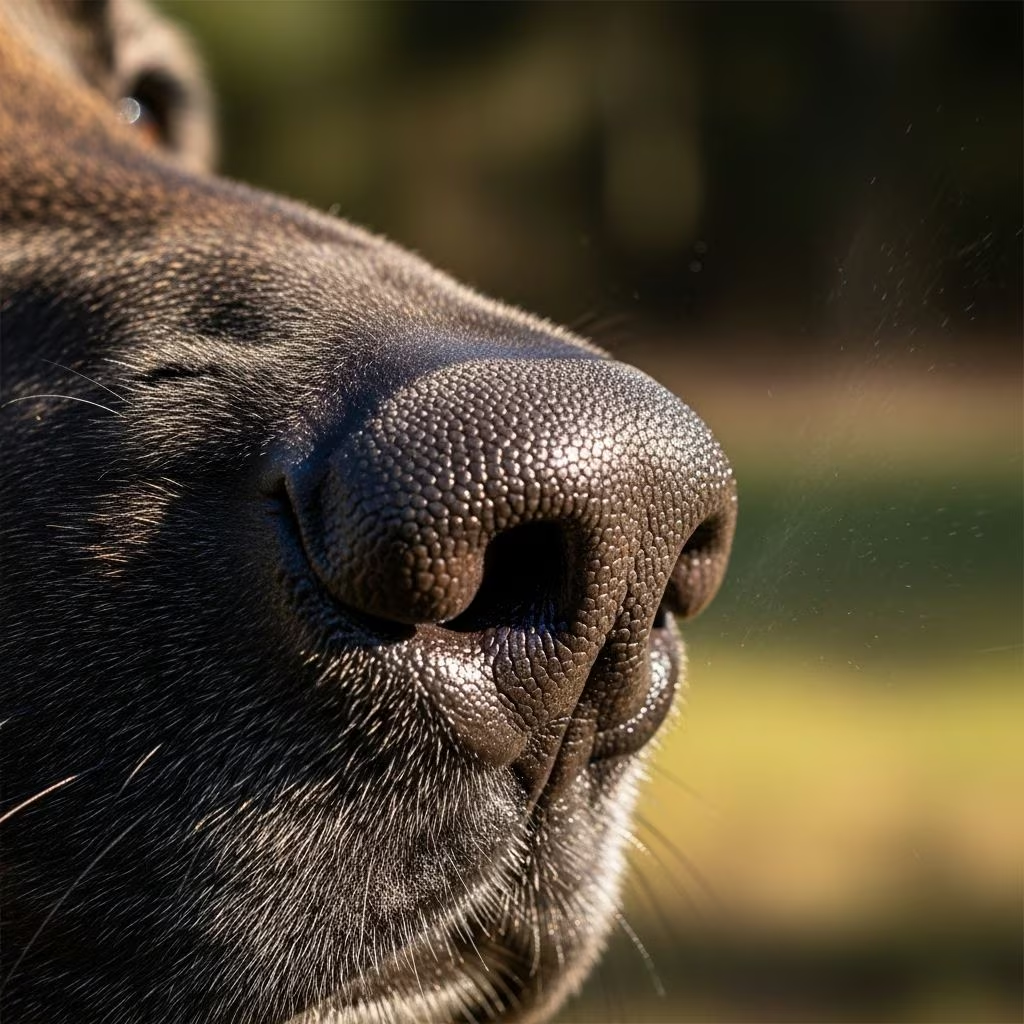
A dog’s nose represents one of nature’s most sophisticated sensory instruments. While humans rely heavily on vision to navigate and understand their surroundings, dogs operate in a fundamentally different sensory world—one dominated by smell. The biological architecture of a canine nose enables abilities that seem almost superhuman, allowing dogs to detect odors at concentrations invisible to human perception and to gather complex information from their environment in ways we can barely comprehend.
The Cellular Foundation of Canine Smell
The remarkable sensitivity of a dog’s nose begins at the cellular level. Dogs possess approximately 300 million olfactory receptor cells in their nasal passages, compared to the mere 5 million found in human noses. These specialized cells, known as olfactory neurons, form the foundation of a dog’s extraordinary ability to detect and differentiate scents.
This vast difference in receptor density translates into dramatic differences in olfactory capability. A dog’s nose can be 1,000 times or more sensitive than a human nose when detecting certain odors. This enhanced sensitivity allows dogs to perceive odors at air concentrations of one part per billion or lower—a sensitivity threshold that exceeds even the most advanced human-made detection instruments in many cases.
The olfactory epithelium, the tissue layer containing these receptor cells, is constantly regenerating. This means that a dog’s olfactory system maintains peak sensitivity throughout their lifetime, continuously replacing old receptor cells with new ones. This biological maintenance system ensures that a dog’s sense of smell remains sharp and responsive to environmental changes.
Dual-Chamber Design: The Nasal Architecture Advantage
Beyond the sheer number of receptors, the physical structure of a dog’s nasal cavity provides a sophisticated filtration and processing system. A dog’s nasal cavity is divided into two separate chambers, each opening into independent nostrils called nares. These nostrils can operate separately, each detecting and processing scent information independently.
This bilateral olfactory system enables a form of “smell in stereo.” When a dog sniffs, each nostril picks up different scent profiles, allowing the dog to determine not just what odors are present, but also their direction and location. This spatial awareness of scents develops within the first few moments of sniffing, giving dogs an almost instantaneous understanding of their olfactory landscape.
Perhaps most intriguingly, research suggests that each nostril has specialized functions. The right nostril appears to sniff out conspecific (dog-related) and novel odors, while the left nostril is more attuned to familiar and non-threatening scents. This functional lateralization adds another dimension to canine olfactory processing, suggesting that dogs may naturally organize their scent information processing based on the novelty and significance of detected odors.
The Turbinate System: Increasing Sensory Surface Area
Within the nasal cavity, a series of complex bony structures called nasal turbinates dramatically increase the surface area available for smell detection. The nasal turbinates protrude from the side walls of the nasal cavity and contain extensive venous networks, with 5–15% of air inhaled by dogs being redirected to these structures.
These turbinates serve multiple functions simultaneously. They warm and humidify inhaled air, making it easier for the lungs to function efficiently. The turbinate system works similarly to a car radiator, using multiple folds and convolutions to increase surface area. Because dogs rely so heavily on their noses for environmental information, the structure ensures that a larger proportion of air they breathe comes into contact with olfactory neurons.
The increased mucosal surface area created by the turbinates allows scent molecules to interact with a vastly expanded network of olfactory receptors. This enhanced interaction capability enables dogs to detect fainter odors and to distinguish between similar scents with remarkable precision. The complexity of the turbinate system varies among dog breeds, with some breeds like Bloodhounds possessing particularly elaborate structures that support their exceptional tracking abilities.
The Accessory Olfactory System: Jacobson’s Organ Unveiled
Beyond the primary olfactory system lies a specialized “second nose” that fundamentally expands what dogs can perceive. The vomeronasal organ, also called Jacobson’s organ, is located on the roof of the dog’s mouth. This sophisticated structure allows dogs to detect pheromones—chemical signals used for communication between members of the same species.
The vomeronasal organ operates as a completely separate sensory system from the primary nasal apparatus. It connects to its own dedicated neural pathway, projecting to the accessory olfactory bulb and from there to the hypothalamus via the vomeronasal amygdala. This means that pheromone information travels through a distinct brain region from other olfactory information, allowing the dog’s brain to process this specialized sensory data separately.
The organ is sustained by distinct classes of genes, including vomeronasal receptors (V1R and V2R) and TRP receptors. These genetic mechanisms produce and maintain the specialized receptor proteins necessary for the vomeronasal system to function as an integrated sensory apparatus. Adult dogs use this remarkable organ to detect potential mates and gather crucial information about reproductive status, while puppies employ it to locate their mother’s milk.
The Moisture Factor: Keeping the Nose Wet for Success
The internal environment of a dog’s nose plays a critical role in olfactory function. The inside of a dog’s nose remains moist due to a continuous mucous membrane that lines the nasal passages. This moisture is not incidental—it is essential for the chemistry of smell.
Scent molecules must dissolve to interact with olfactory receptors. The moisture inside the nose creates an aqueous environment that enables this dissolution process, allowing odorants to be processed by the receptor cells. Additionally, a small amount of saliva is retained in the philtrum—the vertical groove between a dog’s nose and upper lip—and is pulled upward by capillary action, directing odorants from the mouth to the nose’s smell receptors. This mechanism helps keep the dog’s nose damp, if not wet, which in turn facilitates the capture of scent particles from the air.
Many dog owners notice their pets have wet noses, and this is not a sign of illness but rather evidence of a properly functioning olfactory system. The moisture serves as both a chemical medium for scent detection and as a physical trap for odor particles, making it easier for the olfactory receptors to engage with environmental scents.
The Mechanics of Scent Sampling: How Dogs Sniff Strategically
The way dogs sniff reveals the sophistication of their olfactory processing. Dogs sniff at a rapid rate—approximately five times per second—creating a staccato pattern of air intake that is quite different from normal breathing. This rapid sniffing pattern causes turbulence in the nasal cavity that directs air into the dorsal meatus, creating a constant influx of new scent information.
The nasal openings feature specialized slits on the sides that serve a crucial aerodynamic function. As a dog exhales, air vents toward the sides and back of the nose through these slits. This directional venting creates a low-pressure region in front of the nose, which draws fresh air in from the environment. This continuous circulation of air allows the nose to actively bring in new odors while preventing exhaled air from contaminating fresh scent samples.
Dogs can also independently control their nostrils, allowing them to focus their sniffing effort. When a dog needs to gather precise information about a scent source, it can flare its nostrils selectively, changing the shape of the nostril openings to redirect air flow into the upper part of the nasal cavity where olfactory receptors are most concentrated.
Understanding Scent Memory and Discrimination
A dog’s nose does not merely detect odors—it provides sophisticated information about scent composition and source. The combination of 300 million olfactory receptors, the specialized vomeronasal system, and the expanded surface area of the turbinates enables dogs to distinguish between remarkably similar scents. This discriminatory ability makes dogs invaluable for tracking, detection work, and search-and-rescue operations.
The olfactory information gathered by all these structures is processed by a proportionally larger portion of the canine brain compared to the human brain. While smell occupies a relatively modest place in the human sensory hierarchy, it dominates the canine perceptual world. This neural processing priority ensures that olfactory information is analyzed in great detail and integrated with memory systems in ways that create lasting scent-based memories.
Functional Separation: Breathing and Smelling
A remarkable feature of canine nasal anatomy is the ability to separate air flow into distinct functional pathways. Dogs inhale through their nostrils and exhale through slits at the side of the nose, allowing air to move in and out simultaneously. One portion of inhaled air is dedicated to breathing and proceeds directly to the lungs, while another portion is directed toward the olfactory epithelium for scent analysis.
This anatomical separation means that dogs can smell while breathing, a capability that allows for continuous environmental monitoring even during activities like running, playing, or tracking. The efficiency of this dual-function system cannot be overstated—it means that a dog’s olfactory system is essentially always active when the dog is breathing, providing constant sensory input about the environment.
The Philtrum: A Multifunctional Groove
The philtrum, that distinctive vertical groove between a dog’s nose and upper lip, serves important functional purposes beyond mere appearance. Beyond its role in directing saliva to the nasal receptors, the philtrum contributes to the overall efficiency of the olfactory system by helping maintain moisture and facilitating the movement of chemical signals to the olfactory receptors.
Frequently Asked Questions
How many times more sensitive is a dog’s nose than a human’s?
A dog’s nose can be approximately 1,000 times or more sensitive than a human nose when detecting certain odors. This enhanced sensitivity allows dogs to perceive odors at concentrations of one part per billion or lower.
What is Jacobson’s organ and why is it important?
Jacobson’s organ, or the vomeronasal organ, is a specialized sensory structure located on the roof of a dog’s mouth. It allows dogs to detect pheromones and chemical signals, playing a crucial role in social interactions and reproductive behavior.
Why do dogs have wet noses?
A moist nose is essential for olfactory function. The moisture created by the mucous membrane allows scent molecules to dissolve and interact with olfactory receptors more effectively.
Can dogs smell in stereo?
Yes, dogs can detect odors in stereo because each nostril picks up different scent profiles independently. This bilateral detection allows dogs to determine both what odors are present and from where they originate.
What are nasal turbinates and what do they do?
Nasal turbinates are complex bony structures that protrude from the side walls of the nasal cavity. They increase the surface area available for olfaction, warm and humidify inhaled air, and redirect 5–15% of air intake to maximize scent detection.
Conclusion: The Remarkable Canine Olfactory System
A dog’s nose represents far more than a simple sensory organ—it is an integrated system of remarkable complexity. From the 300 million olfactory receptors to the specialized vomeronasal organ, from the sophisticated turbinate architecture to the clever aerodynamic design of the nasal slits, every component works in concert to create a perceptual capability that far exceeds human olfactory abilities.
Understanding how a dog’s nose works provides insight into why dogs experience the world so differently than humans do. For dogs, smell is the primary lens through which reality is understood. The anatomy and physiology that enable this extraordinary sense of smell represent millions of years of evolutionary refinement, creating an instrument of sensory perception that continues to astound scientists and serve humans in countless ways—from detection and tracking to search and rescue operations.
References
- Why’s a Dog’s Nose so Special? — Andy’s Veterinary Clinic. Accessed March 2026. https://www.andysvetclinic.net/post/why-s-a-dog-s-nose-so-special
- How Your Dog’s Nose Works And How To Take Care Of It — The Farmer’s Dog. Accessed March 2026. https://www.thefarmersdog.com/digest/how-your-dogs-nose-works-and-how-to-take-care-of-it/
- Nasal Planum, Nasal Cavity, and Sinuses — Veterian Key. Accessed March 2026. https://veteriankey.com/nasal-planum-nasal-cavity-and-sinuses/
- The Shape of the Nasal Cavity and Adaptations to Sniffing — PMC/PubMed Central. Accessed March 2026. https://pmc.ncbi.nlm.nih.gov/articles/PMC8868339/
- Exploration of a Working Dog’s Nose — DVM360. Accessed March 2026. https://www.dvm360.com/view/exploration-of-a-working-dogs-nose
- Your Dog’s Nose Knows — Danbury Animal Welfare Society. Accessed March 2026. https://daws.org/your-dogs-nose-knows/
- How Your Dog’s Nose Knows So Much | Deep Look — YouTube/PBS Learning Media. Accessed March 2026. https://www.youtube.com/watch?v=Gf4k0VgCQjg
- Anatomy of the Dog’s Nose — Medical Detection Dogs. Accessed March 2026. https://www.medicaldetectiondogs.org.uk/anatomy



