

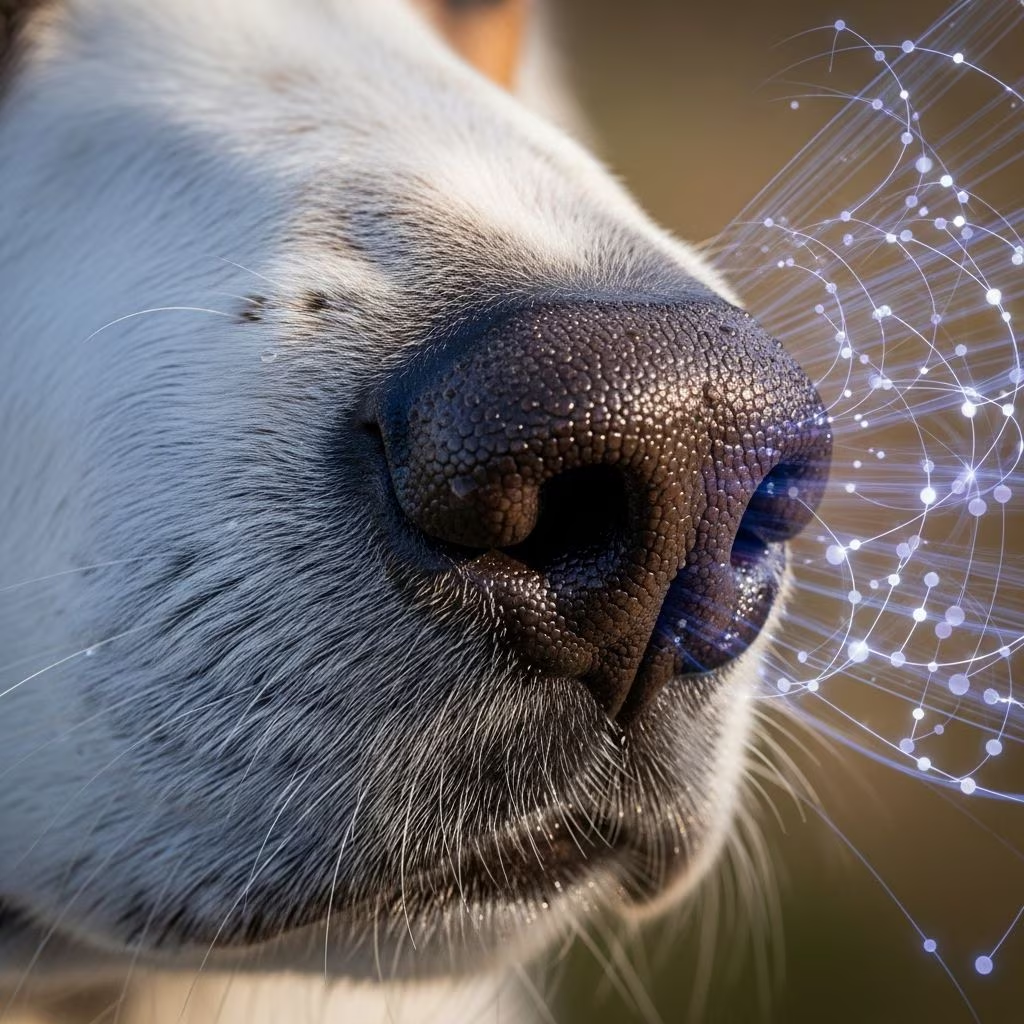
Your dog’s nose is far more than a simple breathing apparatus—it represents one of nature’s most sophisticated sensory instruments. While humans rely heavily on visual information, dogs navigate and understand their world primarily through an intricate network of olfactory structures that grant them access to a chemical landscape entirely invisible to our human senses. This fundamental difference in perception shapes how dogs interact with their environment, communicate with other animals, and respond to their surroundings in ways that continue to astound researchers and veterinarians alike.
The Extraordinary Capacity for Scent Detection
The most striking difference between canine and human nasal capabilities lies in the sheer number of olfactory receptors present in each species. Dogs possess approximately 300 million olfactory receptors, while humans have roughly 6 million—a disparity that fundamentally explains why dogs can detect odors with remarkable precision. This numerical advantage translates into practical sensory superiority: a dog’s nose is often 1,000 times or more sensitive than the human nose at detecting specific odors. This extraordinary sensitivity allows dogs to identify certain scent compounds at concentrations as low as one part per billion, a feat that seems almost incomprehensible to the human mind.
This olfactory prowess stems from specialized cells called olfactory neurons that blanket the dog’s nasal cavity. These neurons are responsible for detecting odor molecules and transmitting signals to the brain’s olfactory processing centers. The abundance of these receptors, combined with the unique structural design of the canine nasal cavity, creates a detection system that far surpasses human capability. Dogs can distinguish between thousands of different scents and can often identify specific individuals by smell alone, recognizing human family members, other animals, and even emotional states through chemical signals.
Architectural Design of the Nasal Cavity
Understanding how dogs achieve such exceptional olfactory abilities requires examining the internal architecture of their nasal passages. The canine nasal cavity is divided into two separate chambers, each opening into an independent nostril or naris that can wiggle and function separately. This bilateral design allows dogs to sample air from different directions and potentially localize scent sources more effectively than species with more unified nasal structures.
Within these chambers exist complex bony structures called nasal turbinates and conchae that dramatically increase the surface area available for olfactory processing. The dorsal and ventral conchae define primary air passages, while ethmoidal turbinates extend deep into the nasal cavity. These structures protrude from the side walls of the nasal cavity and contain extensive venous networks, with approximately 5 to 15 percent of inhaled air redirected through these specialized regions. This architectural complexity serves multiple functions simultaneously: it increases the total mucosal surface area for scent molecule contact, filters and humidifies incoming air, and warms inspired air to near body temperature before it reaches the lungs.
The complexity increases further when examining how air flows through this system. During a sniff, air enters the nasal cavity and flows through these convoluted passages, creating turbulent airflow patterns that maximize contact between odor molecules and olfactory receptors. Dogs typically sniff about five times per second during active scent investigation, with each sniff occurring as rapid, staccato bursts rather than normal breathing patterns. This specialized sniffing behavior, called rapid olfactory sampling, allows dogs to gather continuous streams of fresh scent information while minimizing contamination from exhaled air.
The Ingenious Side-Slit Mechanism
One of the most clever anatomical features of the canine nose is the presence of side slits or openings in the nostrils. These specialized openings serve a critical function in maintaining the efficiency of the olfactory process. When a dog exhales, expelled air vents toward the sides and back through these slits, creating a low-pressure zone in front of the nose. This pressure differential causes fresh air carrying new odor molecules to rush inward to fill the void, ensuring a constant stream of novel scent information reaches the olfactory receptors.
This design prevents exhaled air—which contains stale or already-processed odor information—from contaminating new samples entering the nose. The system works somewhat like a continuous ventilation mechanism, perpetually refreshing the odor stream available for analysis. When a dog flares its nostrils during sniffing, the shape of these openings changes, redirecting air toward the upper portions of the nasal cavity where the primary olfactory epithelium resides. This active nasal muscle control allows dogs to optimize their scent sampling based on environmental conditions and specific detection tasks.
Moisture: The Invisible Partner in Scent Detection
The interior surface of a dog’s nose remains consistently moist due to the presence of a specialized mucous membrane lining the nasal cavity. This moisture plays an essential but often overlooked role in the olfactory process. Scent particles are actually volatile chemical compounds that must dissolve in water before they can bind to olfactory receptors and trigger sensory signals. The moist environment within the nose dissolves these odor molecules, making them accessible to the detection systems embedded in the nasal epithelium.
The moisture maintenance system extends even to the external nose surface. Between the nose and upper lip, dogs possess a vertical groove called the philtrum, which serves a functional purpose beyond simple anatomy. When dogs lick their lips—a behavior observed many times throughout the day—a small amount of saliva is retained in this groove. Capillary action draws this moisture upward into the nose, keeping the nasal surface damp and enhancing the continuous capture of scent particles from the air. This seemingly insignificant feature represents an elegant biological solution to maintaining optimal conditions for olfactory function.
The Vomeronasal System: The Second Nose
Beyond the primary olfactory system, dogs possess an additional sensory structure called the vomeronasal organ, alternatively known as Jacobson’s organ. Located on the roof of the mouth within the nasal cavity, this specialized structure functions as a secondary olfactory system with distinct capabilities. Unlike the primary olfactory system that detects a broad range of odors, the vomeronasal organ specializes in detecting pheromones—chemical signals used for communication between members of the same species.
The vomeronasal organ projects to a completely separate processing center in the brain called the accessory olfactory bulb, which then connects to the hypothalamus via the vomeronasal amygdala. This independent neural pathway means that pheromone detection operates on a distinct brain circuit separate from conscious smell perception. The system maintains its own specialized genetic apparatus, including distinct classes of genes (V1R and V2R receptors) along with transient receptor potential (Trp) receptors that sustain the production and maintenance of vomeronasal system receptors and proteins.
This dual-system arrangement grants dogs remarkable abilities in social and reproductive contexts. Adult dogs use the vomeronasal organ to detect potential mates and assess social status within canine communities. Puppies, meanwhile, employ this sensory pathway to locate nursing opportunities with their mothers. The system essentially provides dogs with access to an entire layer of chemical communication invisible to species lacking this structure, fundamentally enriching their understanding of their social environment.
Bilateral Brain Processing and Lateralized Scent Sampling
The canine nose displays an intriguing lateralized function, with each nostril maintaining preferential connections to the corresponding brain hemisphere. The right nostril directs sensory input primarily to the right brain hemisphere and specializes in detecting novel or unfamiliar odors, as well as odors from other species (conspecifics). Conversely, the left nostril sends information to the left brain hemisphere and handles the processing of familiar and non-aversive odors. This specialization suggests that dogs may have evolved distinct neural processing strategies for routine scent information versus novel or potentially important chemical signals.
This bilateral arrangement combined with the ability of nostrils to wiggle independently means that dogs can sample air from different locations and angles simultaneously. The system enables directional scent tracking, where dogs can determine whether a scent is becoming stronger or weaker, helping them locate scent sources with precision. Combined with the dog’s tendency to move their head while sniffing, this creates a sophisticated three-dimensional mapping capability for chemical information.
Thermoregulation and Respiratory Functions
Beyond olfaction, the dog’s nasal structure serves critical functions in temperature regulation and respiratory health. The multiple folds and extensive surface area within the nasal cavity function similarly to a car radiator, warming inspired air so that it approaches body temperature before reaching the lungs. This warming function reduces the metabolic cost of respiration and facilitates more efficient oxygen exchange in the lungs.
The paranasal sinuses—comprising the maxillary recess, sphenoidal sinus, and frontal sinus—likely contribute to this air warming and humidification process, though their exact functions in canine anatomy remain not fully understood. These air-filled cavities may provide additional surface area for temperature and humidity adjustment, ensuring that air reaching the lungs is optimally conditioned regardless of external environmental conditions.
Health Implications and Clinical Significance
Understanding nasal anatomy and function carries important implications for recognizing and addressing health issues in dogs. The complexity of the nasal structures makes them vulnerable to various diseases and conditions including infections, tumors, foreign bodies, and inflammatory diseases. Early recognition of nasal problems depends partly on understanding normal nasal function. Signs such as persistent nasal discharge, reduced ability to track scents, or changes in nasal pigmentation warrant veterinary evaluation.
The constant regeneration of olfactory receptor cells means that dogs possess a naturally robust system for maintaining olfactory capability throughout their lives. However, certain diseases, medications, or environmental toxins can interfere with normal nasal function, reducing a dog’s sensory capability. Obesity, allergies, and systemic infections can all impact nasal health and olfactory function. Maintaining awareness of these potential issues allows dog owners to seek appropriate veterinary care when problems emerge.
Practical Applications of Canine Olfactory Ability
The extraordinary capabilities of the canine nose have led to practical applications that benefit human society. Dogs have been trained as detection animals for explosives, narcotics, contraband, and medical alerts including seizure prediction and diabetic monitoring. These applications depend directly on the sensory capabilities provided by canine nasal anatomy. Similarly, search and rescue operations rely on the dog’s ability to detect and track human scent across varied terrain and environmental conditions.
Working dogs demonstrate remarkable focus on their olfactory tasks, often ignoring visual distractions to concentrate on scent information. This behavioral adaptation reflects the primacy of olfaction in canine cognition. Understanding the anatomical basis for these capabilities helps handlers and trainers work more effectively with detection dogs and supports better training methodologies.
References
- Dog Nose Anatomy Definition, Parts, and Functions — Country Vet Mom, by AADG, DVM Dr. Gaffud. Available at: https://www.countryvetmom.com/post/dog-nose-anatomy-definition-parts-and-functions-by-aadg-dvm-dr-gaffud
- Why’s a Dog’s Nose so Special? — The Andys Veterinary Clinic. Available at: https://www.andysvetclinic.net/post/why-s-a-dog-s-nose-so-special
- How Your Dog’s Nose Works And How To Take Care Of It — The Farmer’s Dog. Available at: https://www.thefarmersdog.com/digest/how-your-dogs-nose-works-and-how-to-take-care-of-it/
- Nasal Planum, Nasal Cavity, and Sinuses — Veterian Key. Available at: https://veteriankey.com/nasal-planum-nasal-cavity-and-sinuses/
- The Shape of the Nasal Cavity and Adaptations to Sniffing — PubMed Central (PMC). 2023. Available at: https://pmc.ncbi.nlm.nih.gov/articles/PMC8868339/
- Exploration of a Working Dog’s Nose — DVM360. Available at: https://www.dvm360.com/view/exploration-of-a-working-dogs-nose
- How Your Dog’s Nose Knows So Much | Deep Look — YouTube. Available at: https://www.youtube.com/watch?v=Gf4k0VgCQjg



