

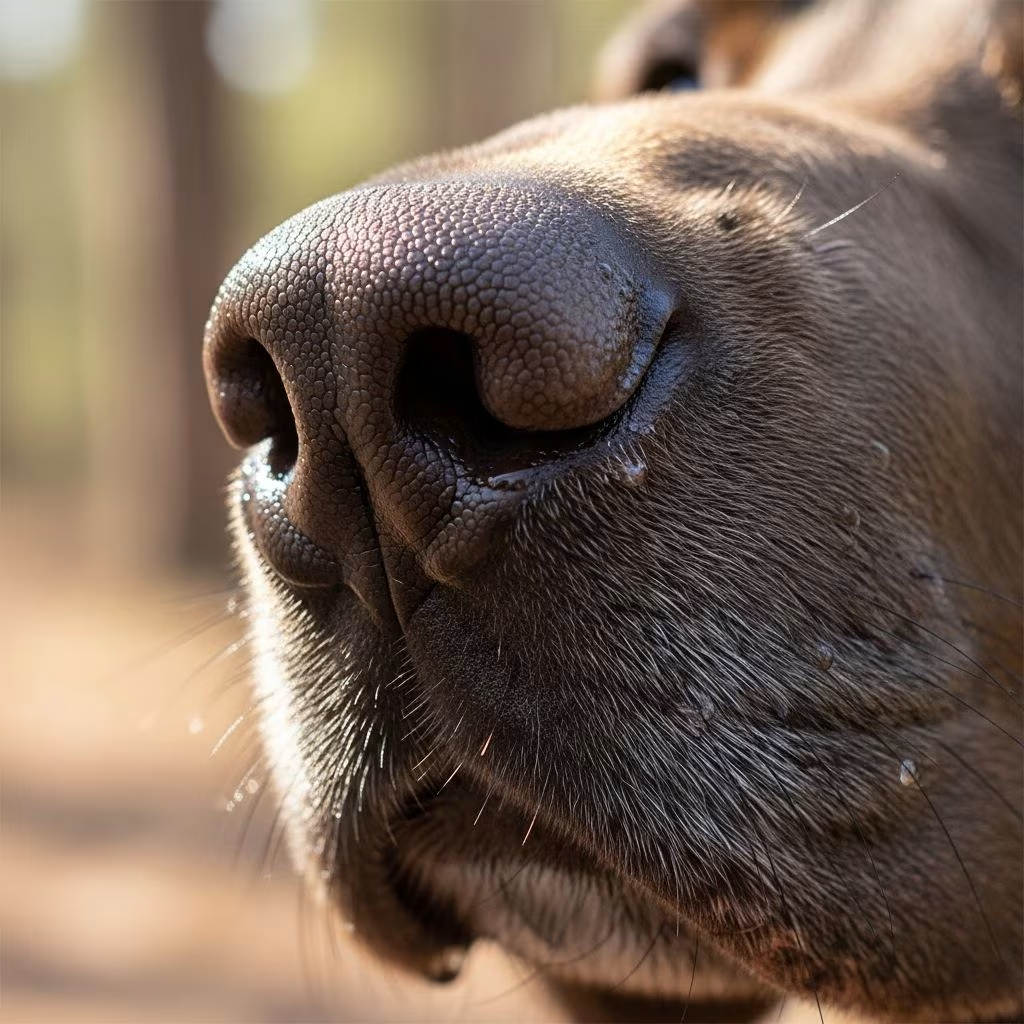
Dogs have captivated human societies for thousands of years, serving roles from hunting companions to detection specialists. One of their most remarkable and underappreciated abilities is their extraordinary sense of smell. While humans navigate the world primarily through vision, dogs experience reality through a rich landscape of scents that remains largely invisible to us. The mechanisms enabling this sensory superpower are far more complex than most people realize, involving intricate anatomical structures, specialized neural pathways, and physiological processes that work in concert to create one of nature’s most sophisticated detection systems.
The Foundation: Quantifying Canine Olfactory Superiority
The most fundamental difference between human and canine olfaction lies in receptor capacity. While humans possess approximately five million olfactory receptors, dogs boast around 300 million of these specialized sensory cells. This staggering numerical advantage represents merely the beginning of canine olfactory sophistication. Beyond raw receptor count, dogs possess dedicated neural architecture, specialized sensory organs, and anatomical adaptations that combine to create detection capabilities that scientists continue to study and marvel at.
The disparity in olfactory receptor numbers translates into dramatically different perceptual experiences. A dog encountering a piece of food experiences not merely the scent of that item but a complex molecular signature revealing its composition, age, preparation method, and numerous other details imperceptible to human senses. This sensory depth informs why dogs excel at tasks ranging from detecting explosives and narcotics to identifying medical emergencies in their human companions.
Nasal Architecture: The Primary Olfactory Pathway
Understanding how dogs process scents begins with examining the physical structures within their nasal cavities. The canine nose contains specialized bony formations called turbinates, which serve as the primary interface between inhaled air and olfactory receptors. Unlike the relatively simple nasal passages in humans, canine turbinates are intricate, convoluted structures that dramatically increase the surface area available for scent molecule interaction.
These turbinates protrude from the side walls of the nasal cavity and contain extensive venous networks. As dogs inhale, approximately 5 to 15 percent of inspired air is redirected toward these structures, allowing scent molecules to contact olfactory receptors with remarkable efficiency. The remaining air continues through the nasal passages to reach the lungs, enabling simultaneous breathing and scent analysis.
The turbinates themselves vary in type and complexity. The dorsal turbinate represents the longest and most prominent structure, forming the skeletal framework of the upper nasal region. The middle turbinate occupies a position adjacent to the dorsal structure, while additional smaller turbinates extend throughout the nasal cavity. In dogs, these secondary turbinates are particularly well-developed compared to many other species, contributing substantially to their olfactory capabilities.
The Dual Airflow System: Breathing and Smelling in Concert
One of the most elegant aspects of canine nasal physiology involves the simultaneous management of two distinct air pathways. When a dog inhales, a specialized tissue fold located just inside each nostril directs incoming air along two routes. The primary pathway—constituting approximately 88 percent of inhaled air—travels directly to the lungs, ensuring continuous oxygenation and normal respiratory function. The secondary pathway diverts roughly 12 percent of air toward the olfactory regions, where scent analysis occurs.
This distribution system allows dogs to maintain normal breathing while dedicating a significant portion of their nasal processing capacity exclusively to scent detection. The olfactory epithelium, which lines the portions of the nasal cavity dedicated to smell, contains the olfactory sensory neurons that detect and process scent molecules. These neurons send signals directly to the olfactory bulb in the brain, creating perceptual experiences of tremendous complexity and specificity.
The Lateral Nasal Slits: Enhancing Continuous Odor Sampling
Perhaps the most visually distinctive feature of a dog’s nose comprises the small slits located on each side of the nasal planum—the fleshy external surface of the nose. These lateral nasal slits play a surprisingly critical role in maintaining continuous scent detection. When a dog exhales, rather than simply expelling spent air like human noses do, these slits create a distinctive swirling motion. This exhalation pattern establishes a continuous cycle, allowing new odorant molecules to enter the nose even as the dog breathes out.
This mechanism enables what might be described as “continuous smelling,” fundamentally different from the discrete olfactory samples humans experience. A dog can maintain perpetual scent analysis throughout the breathing cycle, creating an almost uninterrupted stream of olfactory information. This adaptation proves particularly valuable during tracking activities, where sustained scent detection allows dogs to follow trails with remarkable precision.
Moisture and Temperature Regulation: Supporting Optimal Detection
The characteristic moistness of a healthy dog’s nose serves functions far beyond mere aesthetics. The nasal planum secretes specialized fluids from paired lateral nasal glands that serve multiple physiological purposes. These secretions maintain the mucous membranes lining the nasal passages in an optimal state for scent molecule capture and processing.
The moisture layer proves essential because scent molecules must dissolve in the mucous coating the olfactory epithelium before they can interact with olfactory receptors. A dry nasal passage dramatically reduces scent detection efficiency, making the secretory function critical to canine olfactory performance. Additionally, these secretions contain immunoglobulin A, suggesting a defensive function that protects the nasal tissues from pathogens and irritants.
Temperature regulation represents another crucial function of nasal anatomy. The extensive blood vessel networks within the turbinates and nasal mucosa function similarly to a car’s radiator system. As dogs inhale, air passing across these vascular structures causes heat exchange, warming cold air to approximately body temperature before it reaches the lungs. This warming process protects respiratory tissues while simultaneously optimizing conditions for scent molecule detection. During exercise or exposure to high ambient temperatures, increased blood vessel dilation enhances heat and moisture exchange, with some dogs resorting to panting when evaporative cooling demands exceed nasal capacity.
The Vomeronasal Organ: The Second Nose
Beyond the primary olfactory system lies an entirely separate sensory apparatus known as the vomeronasal organ, also called Jacobson’s organ. Located on the roof of the mouth within the nasal cavity, this specialized structure operates as what researchers sometimes term a “second nose,” with distinct anatomical connections and neural pathways separate from the primary olfactory system.
The vomeronasal organ possesses its own sensory receptors and neural connections, projecting to a distinct brain structure called the accessory olfactory bulb rather than the primary olfactory bulb. From there, signal transmission continues to the hypothalamus and vomeronasal amygdala, regions associated with behavioral and physiological responses. This anatomical separation means that information processed through the vomeronasal organ triggers different neural pathways and responses compared to conventional olfactory input.
The vomeronasal organ specializes in detecting pheromones—chemical signals used for communication between members of the same species. These compounds convey information about reproductive status, territorial markers, individual identity, and emotional states. Adult dogs employ the vomeronasal organ to identify potential mates and interpret social hierarchies, while puppies use this organ to locate nursing opportunities with their mothers. The vomeronasal system maintains its own genetic architecture, with specialized receptor genes (V1R and V2R) and TRP receptors that sustain production and maintenance of the vomeronasal receptor system.
The Philtrum: Connecting Mouth to Nasal Detection
The vertical groove between a dog’s nose and upper lip, known as the philtrum, serves an important functional role in olfactory processing. When dogs lick their lips, small quantities of saliva remain within this groove. This saliva contains dissolved compounds from the mouth environment, which are drawn upward into the nasal cavity through capillary action. This mechanism directs odorants directly to the olfactory receptors within the nose, effectively creating a feedback loop between oral chemical detection and nasal analysis.
This adaptation proves particularly valuable for dogs examining food items, investigating environmental sources of interest, or processing social signals. The philtrum essentially extends the range of olfactory analysis by incorporating information from direct contact and taste, creating a more comprehensive chemical analysis of objects and environments than nasal sampling alone would provide.
Directional Smell: Lateralized Olfactory Processing
Neuroscientific research has revealed that canine olfactory processing exhibits lateralization, meaning each nostril preferentially processes certain types of information. The right nostril appears specialized for detecting novel and conspecific odors—scents from other dogs—while the left nostril preferentially processes familiar and less aversive odors. This functional specialization allows dogs to rapidly categorize incoming olfactory information and allocate attention appropriately.
Furthermore, sensory input from each nostril projects primarily to the ipsilateral (same-side) brain hemisphere. This means that olfactory information detected by the right nostril reaches the right brain hemisphere preferentially, while left nostril information reaches the left hemisphere. This anatomical arrangement may provide dogs with the ability to localize odor sources spatially, similar to how humans use two ears to localize sounds.
The Olfactory Epithelium: Where Chemistry Becomes Sensation
The olfactory epithelium—the specialized mucous membrane lining portions of the nasal cavity and turbinates—represents the actual interface where scent molecules transform into neural signals. This tissue contains olfactory sensory neurons that continuously regenerate, ensuring sustained olfactory function throughout a dog’s life. The regenerative capacity of olfactory neurons protects against damage from environmental irritants and wear.
When scent molecules dissolve in the mucous layer coating the olfactory epithelium, they bind to receptor proteins on the olfactory sensory neurons. This binding initiates a cascade of chemical reactions within the cells, ultimately generating electrical signals transmitted to the olfactory bulb. The olfactory bulb then processes these signals, creating the conscious perception of smell while simultaneously triggering involuntary responses through connections to emotional and memory centers in the brain.
The Olfactory Cleft: Dedicated Scent Processing Zone
Within the nasal cavity, a specialized region called the olfactory cleft exists dorsal and medial to the turbinates. This narrow space receives 5 to 15 percent of inhaled air and contains particularly high concentrations of olfactory sensory neurons. Multiple cranial nerves terminate within the olfactory cleft, facilitating rapid signal transmission to the brain. This dedicated zone essentially represents the canine nose’s command center for olfactory analysis, receiving a carefully filtered subset of environmental air and dedicating maximum neural resources to its processing.
Paranasal Sinuses: Supporting Structures
Dogs possess paranasal sinuses—air-filled spaces adjacent to the nasal cavity—whose precise functions remain incompletely understood by veterinary science. These structures may contribute additional warming and humidification of inhaled air, though their specific roles require further investigation. Their presence throughout the canine skull suggests they play important supporting roles in the overall olfactory and respiratory system, even if their exact contributions remain mysterious.
Sniffing Mechanics: Active Olfactory Sampling
While dogs possess sophisticated passive olfactory capabilities, their active sniffing behavior demonstrates equally impressive adaptive abilities. When a dog deliberately sniffs, air flows in through the front of the nose and exits through the lateral nasal slits. This sniffing pattern enables efficient air sampling and permits the redirection of air currents toward maximally sensitive olfactory regions. The voluntary control dogs exercise over sniffing allows them to modulate olfactory input intensity and direct attention toward specific odor sources.
Comparative Advantages Summary
| Feature | Dogs | Humans |
|---|---|---|
| Olfactory Receptors | Approximately 300 million | Approximately 5 million |
| Turbinate Complexity | Highly convoluted and extensive | Simple passages |
| Vomeronasal Organ | Fully functional | Vestigial or non-functional |
| Continuous Smell Capability | Yes, via lateral nasal slits | No, discrete samples only |
Practical Applications of Canine Olfaction
The remarkable anatomical and physiological adaptations enabling superior canine olfaction translate into practical applications that benefit human society. Detection dogs employ their olfactory capabilities to identify explosives, narcotics, and contraband materials. Medical detection dogs demonstrate the ability to alert owners to impending seizures, hypoglycemic episodes, and other medical emergencies. Search and rescue dogs locate missing persons using scent tracking abilities that defy human comprehension. These applications represent merely the surface of what canine olfactory capabilities enable.
Understanding the mechanisms underlying these abilities not only deepens appreciation for our canine companions but also informs ongoing research into improving detection methodologies and selecting dogs most suited to specific roles. Different breeds exhibit varying degrees of olfactory sensitivity, partly attributable to differences in skull shape, turbinate development, and other anatomical factors.
Conclusion
The canine nose represents a masterwork of evolutionary engineering, combining sophisticated anatomical structures, specialized sensory organs, and refined physiological processes into an integrated detection system of extraordinary capability. From the intricate turbinates that increase olfactory processing surface area to the remarkable vomeronasal organ enabling pheromone detection, every component contributes to an olfactory experience fundamentally different from and vastly superior to human smell. The lateral nasal slits enabling continuous odor sampling, the temperature and moisture regulation systems optimizing detection conditions, and the directional processing of olfactory information through lateralized brain hemispheres collectively create sensory capabilities that continue to astound researchers and inspire practical applications benefiting human safety and health. Recognizing the sophistication underlying what appears as simple nose-sniffing behavior cultivates deeper respect for our canine partners and improved understanding of their remarkable perceptual world.
Frequently Asked Questions
Why is a dog’s nose always wet?
A dog’s nose remains moist due to secretions from specialized lateral nasal glands and the mucous layer coating the nasal epithelium. This moisture is essential for scent molecule dissolution and olfactory receptor activation. The secretions also contain immunoglobulin A, providing defensive protection against pathogens.
Can dogs smell in color or with directional awareness?
Research suggests dogs achieve a form of directional olfactory awareness, with evidence indicating that each nostril preferentially processes different types of odor information. Additionally, separate nostril inputs to ipsilateral brain hemispheres may enable spatial localization of odor sources.
How do turbinates contribute to a dog’s sense of smell?
Turbinates are bony structures that dramatically increase nasal surface area available for olfactory processing. These structures redirect 5 to 15 percent of inhaled air toward olfactory receptors while allowing normal breathing to continue.
What is the vomeronasal organ’s purpose?
The vomeronasal organ, located on the roof of the mouth, detects pheromones—chemical signals conveying information about reproductive status, territorial markers, and social hierarchy. It operates through separate neural pathways distinct from the primary olfactory system.
Why do dogs sniff actively during walks?
Active sniffing allows dogs to deliberately modulate olfactory input and direct airflow toward maximally sensitive regions of the nasal cavity. Voluntary sniffing enables dogs to gather detailed information about their environment and localize specific odor sources with greater precision.
References
- Dog Nose Slits: The Secret of the Canine Superpower — Beverly Hills Veterinary Associates. Accessed February 2026. https://www.beverlyhillsvets.com/blog/dog-nose-slits-the-secret-of-the-canine-superpower/
- Why’s a Dog’s Nose so Special? — The Andys Veterinary Clinic. Accessed February 2026. https://www.andysvetclinic.net/post/why-s-a-dog-s-nose-so-special
- The Shape of the Nasal Cavity and Adaptations to Sniffing in Dogs — PMC (PubMed Central). Accessed February 2026. https://pmc.ncbi.nlm.nih.gov/articles/PMC8868339/
- How Your Dog’s Nose Works And How To Take Care Of It — The Farmer’s Dog. Accessed February 2026. https://www.thefarmersdog.com/digest/how-your-dogs-nose-works-and-how-to-take-care-of-it/
- Nasal Planum, Nasal Cavity, and Sinuses — Veterian Key. Accessed February 2026. https://veteriankey.com/nasal-planum-nasal-cavity-and-sinuses/
- When the Nose Doesn’t Know: Canine Olfactory Function — Frontiers in Veterinary Science. Accessed February 2026. https://www.frontiersin.org/journals/veterinary-science/articles/10.3389/fvets.2018.00056/full
- Exploration of a Working Dog’s Nose — DVM360. Accessed February 2026. https://www.dvm360.com/view/exploration-of-a-working-dogs-nose



